
Fan group suggests crowdfunding to compensate college athletes
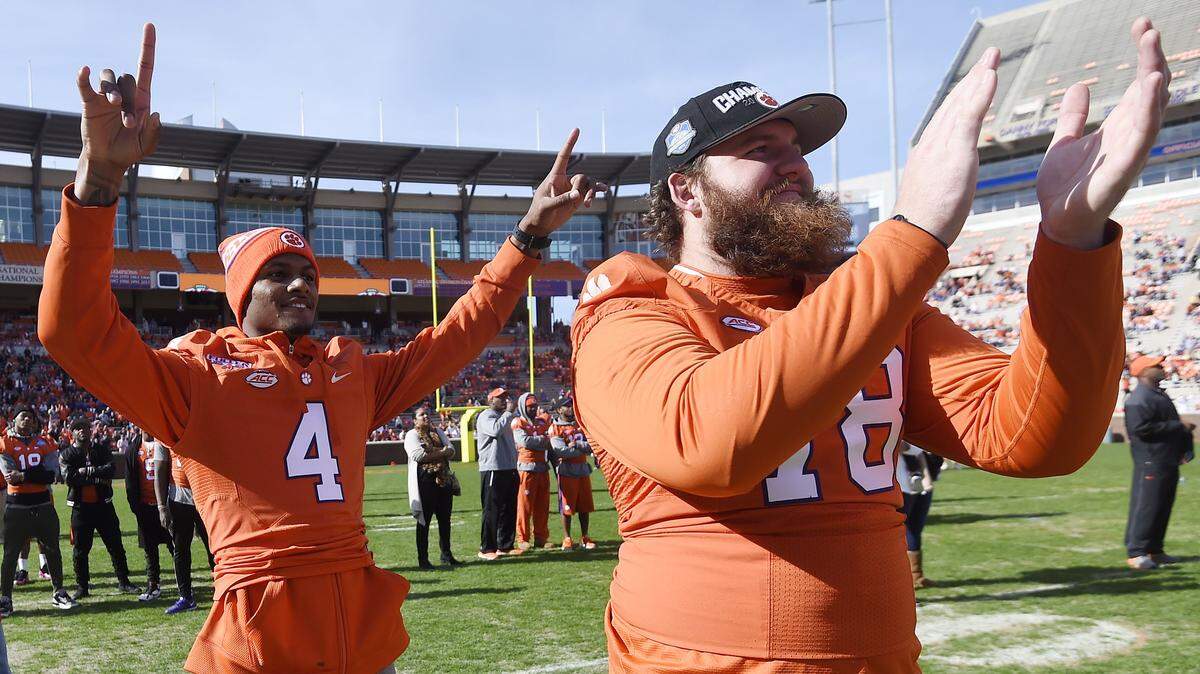
The Clemson Tigers, with a 13-0 record and the No. 1 seed in the College Football Playoff, are perched atop the college football world. Their dream season has produced priceless exposure for the university and a multimillion-dollar playoff payout for the Atlantic Coast Conference, of which the Tigers are a member.
Now, a group with strong Clemson ties wants to make sure the next wave of players is paid for its efforts. And the group's members think they can do it without breaking NCAA rules.
The answer to the riddle of putting money in the hands of amateur student-athletes, who according to the NCAA cannot be paid, is crowdfunding, said Rob Morgan, a Clemson business school graduate and an anesthesiologist based in Greenville, South Carolina. His new website, UBooster, started Friday with the goal of so
liciting payments for high school recruits from fans, and delivering the money to the athletes after their college careers end.
"We think this is the direction college sports is headed," said Morgan, who has been helped in his venture by a former Clemson football player and the interim dean of the university's business school. "At some point, there is going to be an opportunity for players to make money, and here's how we can be a part of it." The NCAA has aggressively pushed back against efforts to pay athletes, including crowdfunding, and officials will most likely challenge this model, too. But Morgan said he and his advisers had examined the NCAA manual and believed they were not violating any current rules.
Morgan, a Clemson football fan, has closely followed the antitrust lawsuit brought against the NCAA by the former UCLA basketball star Ed O'Bannon. Morgan said he agreed with that suit's main argument: that college players ought to be compensated when their images are used in television broadcasts. Last year, he sought advice from one of his former Clemson professors, Robert McCormick, who served as an economic expert for the O'Bannon plaintiffs, on how a private citizen could help players. UBooster is a result. (McCormick has since been named interim dean of Clemson's College of Business and Behavioral Science.)
The business model is simple. Fans pledge money to individual recruits, and can leave public notes on the site urging them to attend their favorite college. Morgan said all high school recruits -- men and women in every sport from Division I to Division III -- would be eligible, though it would seem obvious that most of the interest and money would be directed at top-flight football and basketball prospects. The accounts lock and no more money can be pledged to players once they formally commit to a college. UBooster will then hold the money in a trust before turning it over to the athletes after their college careers. The athletes would eventually receive the money regardless of which university they chose to attend.
The idea, Morgan said, is three-fold: to ease the uncertainty of some athletic departments under legal and public pressure to do more for athletes; to provide players a nest egg to start their lives after college; and to offer fans a direct role in recruiting. UBooster, meanwhile, takes 5 cents of every dollar pledged.
The trust funds, Morgan noted, are similar to those proposed by federal judge Claudia Wilken when she ruled in O'Bannon's favor last year. An appellate court has since overruled the trust funds, a decision O'Bannon's lawyers are appealing.
"Too many players have no connectivity to the job market because of the demands of their sports," said Patrick Sapp, a former Clemson linebacker and UBooster board member who now works in fundraising for Clemson. "This money can be a bridge to that first job." Athletic departments first confronted the issue of crowdfunding last year when a few websites began similar efforts, including an earlier version of UBooster that would have taken fans' pledges and funneled the money directly to university athletic departments. Morgan and another site called FanPay received cease-and-desist letters from a number of colleges that said they were violating NCAA rules. Clemson, which has no association with UBooster, was among the universities that sent a letter to Morgan.
The NCAA, which approved new scholarships that give athletes an extra few thousand dollars this year, also published an educational letter on its website saying that athletes who accepted the promise of pay, even after their college careers, were jeopardizing their eligibility.
Gene Marsh, a former head of the NCAA's Committee on Infractions, remains skeptical that crowdfunding has much of a future in college sports. "This is far more sophisticated than the hundred-dollar handshake, but I don't think it can fly under the current regulatory system," he said, adding the site could give boosters more control over their favorite athletic programs. "If they don't like a coach, they already have their checkbooks out to fire him. Now we want to let them build a war chest to sign one player?" But Morgan said he and his lawyers have combed through the NCAA rulebook, and he insisted that because there is no contact between UBooster and recruits, and the money is delivered after their careers and is not contingent on where they play, his website operates within NCAA rules. He said he welcomed a new round of cease-and-desist letters, noting that he tried to work with the NCAA last year on the first version of the site.
"If we get a cease-and-desist letter from a school, it won't affect our business model because our business isn't with the school," Morgan said.
Indeed, regardless of UBooster's future -- whether it catches on or crumbles under challenges from the college sports establishment -- Marsh said that he recognizes its appeal to those who see an inequity between an unpaid workforce and coaches signing multimillion-dollar contracts in a college sports industry that some estimate is worth $13 billion. Beyond the O'Bannon case, another prominent lawsuit wants to turn high school recruits into free agents, and Marsh said he was contacted a year ago by a California-based hedge fund seeking advice on ways to compensate college athletes.
"Everyone is tired of this system, and the sentiment to make things better for athletes is a popular feeling," Marsh said.
Meanwhile, at Clemson, Sapp said he hoped there were no hard feelings between those on both sides of the debate of paying college athletes.
"Some people agree with the way college sports are going and others don't," he said. "It's a personal opinion, and we'd like to see athletes get a little more."
This story was originally published December 13, 2015 at 11:36 PM with the headline "Fan group suggests crowdfunding to compensate college athletes ."