
Officials: Don't argue with police after traffic stops
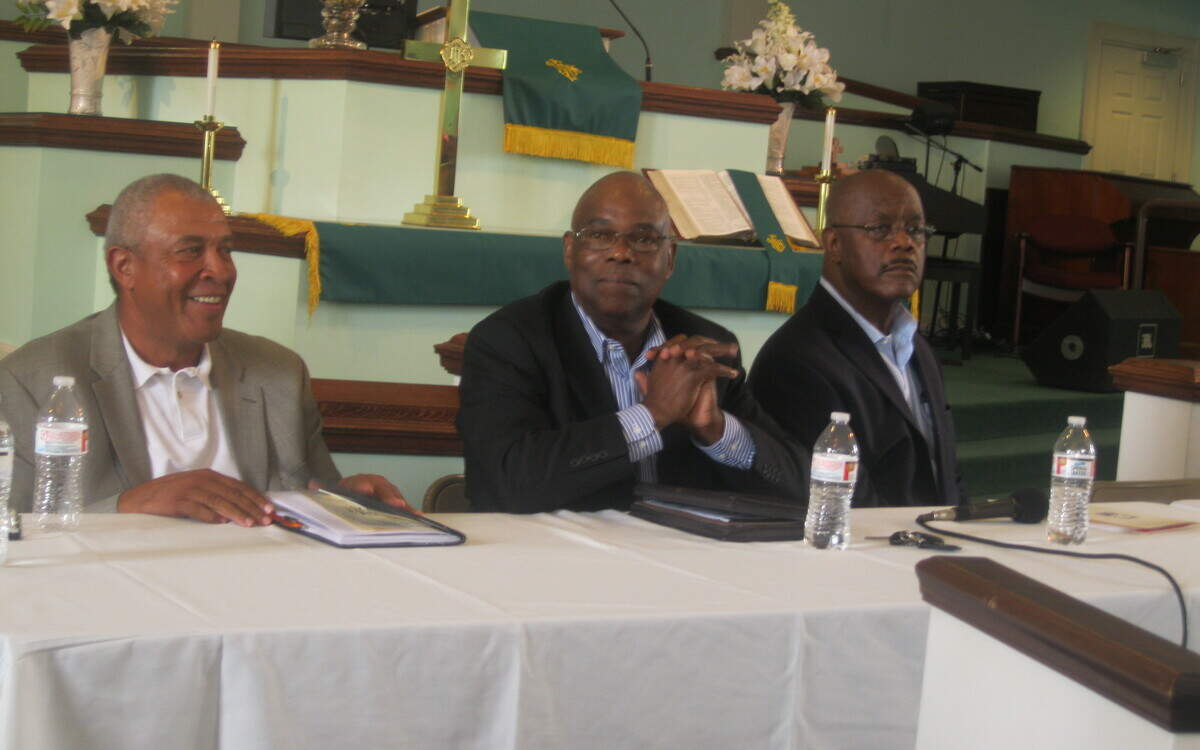
The last place to argue with a law enforcement officer is after you’ve been stopped on the street for a possible traffic violation, a Columbus panel of judges, lawyers and law enforcement officials said Saturday.
A crowd of about 300 filled the sanctuary of St. Mary’s Road United Methodist Church for a 90-minute forum titled, “Live To Fight The Battle Another Day.” It was aimed at educating the community on reducing deadly and dangerous interactions with police. Moderated by retired Superior Court Judge John Allen, the panel included Russell County Circuit Court Judge Michael Bellamy, Fulton County District Attorney Paul Howard, Muscogee Solicitor General Suzanne Goddard, retired Columbus Police Maj. Julius Graham and defense attorney John Wyatt of Chicago.
Pastor L.K. Pendleton, known as Pastor K, said residents were able to hear from officials and understand that they are not powerless when it comes to their rights with police.
“We weren’t trying to make law enforcement the bad guy cause we have a personal responsibility of what happens with us as well,” the pastor of the church on 3993 St. Mary’s Road said. “When it comes to these kinds of arrests, it’s not about a lack of life, it’s a matter of all life. We want to teach our people how to shroud themselves with the social armor necessary to stay alive (and) live to fight this battle another day.”
Howard said he has attended a number of forums on the topic and many resorted to screaming because the right people weren’t there to answer questions. But they were available Saturday. He hopes the discussion will take place on a regular basis and people will make a laundry list of issues that should be accomplished in their communities, including the use of body cameras.
“I certainly think they should be on the list of priorities,” he said. “I think people ought to come back and talk about getting body cameras, but ought to talk about the important issues surrounding body cameras. I think that is the only way we are going to make progress in our country.”
Some police officers in Columbus and Russell County use body cameras while on duty.
If you are stopped on the street by an officer, Wyatt said is not the time to argue with police. You should be respectful and try to be courteous with the officer.
“The only time you have a right to resist is when you feel your life is in danger,” he said.
Among the reasons a driver can be stopped by police is smoking marijuana. The loud odor from marijuana gives police probable cause to make the traffic stop. And after the stop, the vehicle will be towed.
“It’s the worse thing you can do,” Wyatt said. “A lot of young people, they just want to be with the crowd. That’s the wrong thing.”
The judges and lawyers agreed that a traffic stop is not the time to ask for an officer’s name and badge number. If you are stopped, look for the officer’s badge number on the uniform and check his name tag. The panel also said an officer may be identified by the number on the patrol vehicle. Trying to get that information during a stop may escalate the conversation between an officer and the driver.
Graham said officers are required to have sensitivity training to interact with everyone in the community.
“It’s doesn’t matter what their situation or status in life is,” he said. “We encourage that they respect law enforcement. It is not a one-way street.”
Judge Allen said the discussion with law enforcement centers on the Fourth Amendment. The law protects people against arbitrary arrests and is the basis of the law regarding search warrants, stop-and-frisk and other actions by authorities.
He recalled a story about an obstruction case in his courtroom. A group of black youth ran after an unmarked police car drove to their corner and four white officers who were not in uniform jumped out with guns.
“They ran,” the judge said.
This occurred in a black neighborhood. Allen said he dismissed the case.
To help parents, officials handed out a flyer with 10 Rules of Survival if you are stopped by police. They included being polite and keeping your mouth shut, keeping your hands in plain sight and remembering that anything you say can be used against you in court. Drivers also were told to avoid physical contact with an officer, don’t resist arrest, stay calm and watch your body language, don’t run if you are afraid and never make any statement until you have talked with a lawyer.
This story was originally published August 29, 2015 at 6:23 PM with the headline "Officials: Don't argue with police after traffic stops."