One out of three Columbus area kids has this problem. A $5.7 million plan aims to solve it
Responding to a surge in need for food assistance around the Chattahoochee Valley, a Columbus regional food bank is expanding and seeks the community’s help to pay for the $5.7 million project.
Feeding the Valley, one of eight regional food banks in Georgia, is scheduled to conduct a groundbreaking ceremony at 9 a.m., Thursday, March 9, to celebrate the start of constructing the expansion of its warehouse in Midland, at 6744 Flat Rock Road.
During the height of the COVID-19 pandemic, Feeding the Valley saw an increase of 53% in need for local food assistance. Although the pandemic has eased, the level of food assistance still is 35% more than before the pandemic, according to the organization’s news release.
Feeding the Valley cited a 24% increase in food prices since 2021 as a contributing factor while serving its 18-county area (17 counties in Georgia, one in Alabama). Another sign of the increased need comes from St. Anne Community Outreach, a Feeding the Valley partner agency, reporting half of the families requesting help at its food pantry are first-time visitors.
An estimated one out of every three children in Feeding the Valley’s service area are considered food insecure, meaning they don’t have access to a sufficient quantity or quality of nutrition to meet their basic needs.
Frank Sheppard, president and CEO of Feeding the Valley, explained why proper nutrition is so critical.
“Children who are malnourished struggle in school and fall behind their peers. Adults lacking proper nutrition become ill more often, causing them to miss work and the wages essential to their family’s well-being, and seniors who lack a consistent diet will have to make decisions on getting their prescriptions filled or eating a meal,” he said in a statement. “FTV’s mission is to make sure these negative outcomes do not happen.”
Rescuing food waste
Another contributing factor is the “billions of pounds” in annual food waste across the United States, according to Feeding the Valley. The Feeding America network, which includes FTV, reported rescuing 3.6 billion pounds of food that would have ended up in a landfill instead of on people’s plates by partnering with food manufacturers, grocery stores, restaurants and farmers to redirect their excess.
As the food donations have increased, Feeding the Valley often runs out of warehouse space for proper storage and distribution, requiring FTV to rent space elsewhere.
“Food donations are time sensitive,” Sheppard said. “A farmer needs the product off their land, or a manufacturer or retail store needs the space in their facility. If a food bank lacks the capacity to receive a donation on short notice, it will likely be plowed under in the field or sent to the landfill.”
So this expansion will lessen that problem and put Feeding the Valley in position to reach its goal of growing its annual food distribution from 16 million pounds (providing more than 13 million meals) to 23 million pounds in five years.
“We will be able to accept any and all truckloads of healthy lean meats and fresh produce with the increased cold storage and quickly distribute it where needed within the communities we serve,” Sheppard said.
Project’s scope
This project will add 24,000 square feet to Feeding the Valley’s space, boosting its total square footage to 55,000.
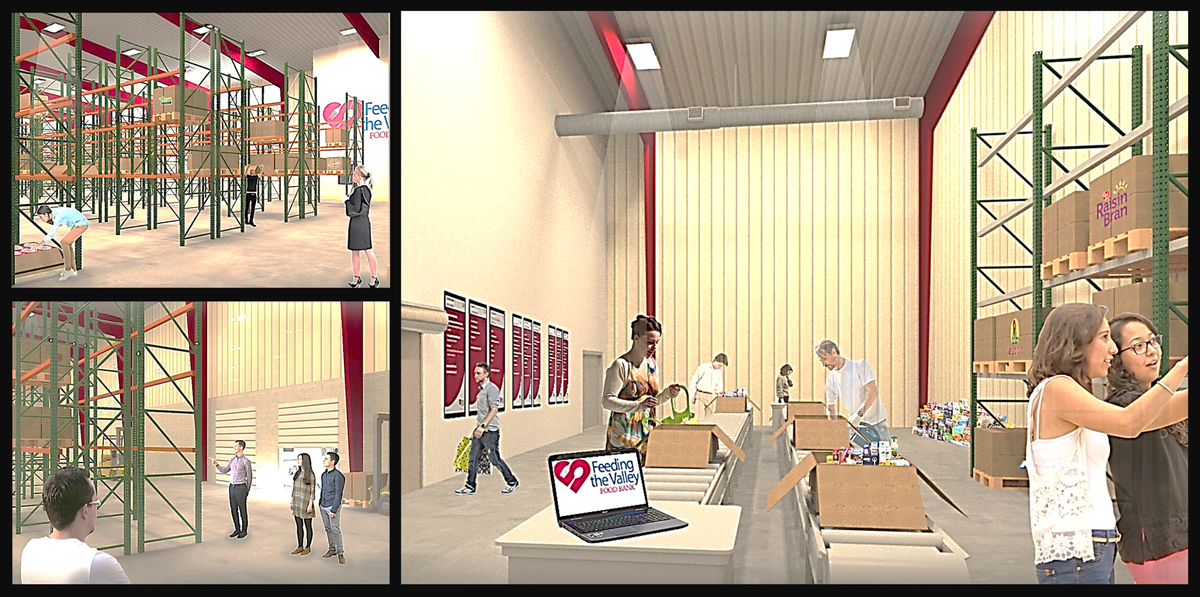
That will double the dry storage capacity, creating 1,000 additional spots for pallets containing an additional 2 million pounds of food.
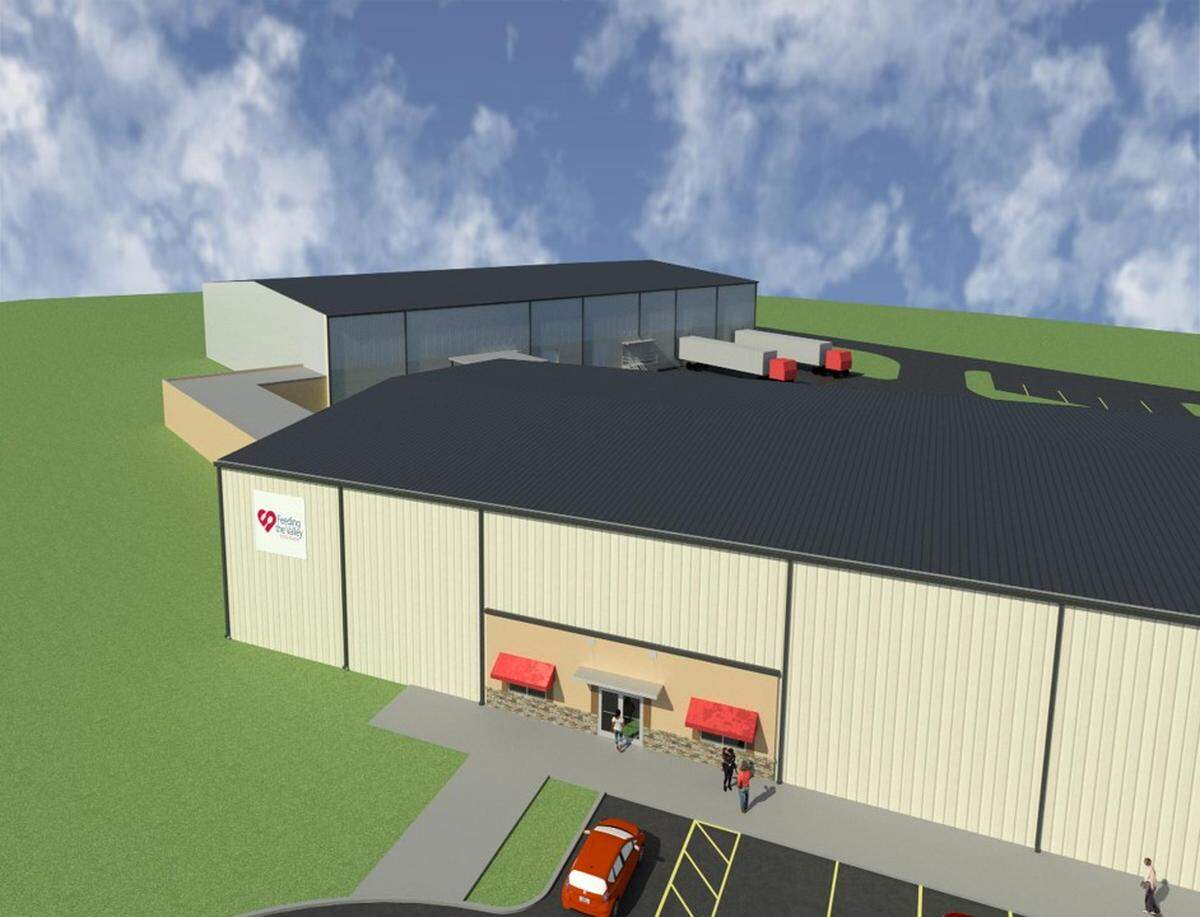
Cold storage will increase by 50%, so more than 500,000 additional pounds of meats and fresh produce could be distributed annually.
A new air-conditioned volunteer center will increase the existing space for volunteers by 50%, allowing more folks to be directly involved with food distribution.
The project is expected to be completed by January. The architect is Jamal Shaukat at Hecht Burdeshaw Architects of Columbus. The building contractor is Thayer-Bray Construction of Phenix City.
Project’s funding
In 2021, Georgia Gov. Brian Kemp reallocated unused funds from the state’s share of the federal American Rescue Plan and the CARES Act to support capital projects for Georgia food banks. This grant will cover 75% of Feeding the Valley’s $5.7 million expansion.
Combined with other revenue sources, Feeding the Valley has secured approximately $5 million for the project, leaving $700,000 still to be raised.
An anonymous supporter has offered to donate a $175,000 Completion Challenge Grant if others contribute enough for Feeding the Valley to raise the $700,000 by December.
Donations can be made online at feedingthevalley.org/columbus or by mail at Feeding the Valley, P.O. Box 8904, Columbus, GA 31908.
This story was originally published March 8, 2023 at 1:11 PM with the headline "One out of three Columbus area kids has this problem. A $5.7 million plan aims to solve it."