
Q&A with Constantina Tsolainou on CSO's performance of Beethoven's Ninth
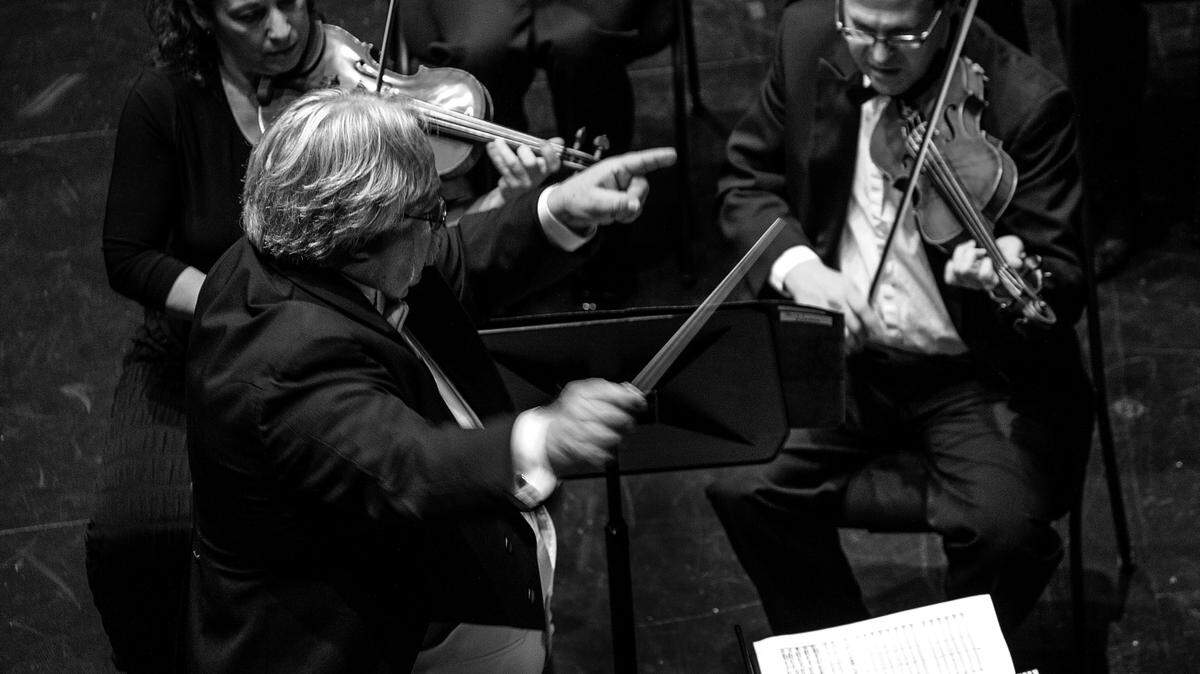
What is your favorite performance you've ever conducted?
Two things come to mind and they were both multifaceted performances. One was Stravinsky's Le Nos with Fort Worth Dallas Ballet, Fort Worth Symphony and the SMU Choral Union. The other was Carmina Burana with ballet, chorus and orchestra as well. So I think my most memorable and exciting experiences were those that were so multi-faceted -- kind of like when you're conducting opera and there's just so much going on at the same time. Those are the memories that stick with me. You are doing it all.
I know you speak several languages. What are they?
I can pretend to speak Greek. That is my second language to English. I have studied conversational French, and I have spent time in Italy so that I've spoken Italian. So I can pretend to speak those languages. I can fake German, but I can't pretend to speak it. I can sing in any of those languages.
What is your favorite choral piece?
I don't think there can be one favorite. I lean toward Romantic music, but I also lean toward French music. So something like a Duruflé requiem, which is so lyrical and chant-based. Beautiful singing, beautiful music, beautiful lines. That's the kind of thing that would be in the list of favorites.
Have you done Beethoven's Ninth before?
Yes. I have sung it in the chorus and I've prepared choruses for the piece. One memorable performance was in Caruth Auditorium at SMU, which has a stage only big enough for standing risers -- not seated risers -- for the singers. So they couldn't be seated on the stage for the first three movements. They had to come in between movements three and four in their stocking feet so that they wouldn't make noise. However, you know a hundred singers coming on stage. We had to practice it so carefully to make sure that it was going to be as subtle and non-disruptive as possible. Then, my grandmother passed away. We were doing two performances of the Beethoven, and because of having to travel to her funeral I missed the first performance. The thing I was most nervous about was not the music, it was not the singing, or anything about how well they had been prepared -- it was whether or not they got on stage quietly enough to not disturb the performance. They did.
I've never sung in my stockings before. I think I would love that.
You know, we've done that here for Kaleidoscope before. Sometimes it's the only way for the University Singers to get on stage in the dark without being disruptive to whatever else is happening in the hall.
I am very interested in the preparation of Beethoven's Ninth. There are multiple choirs. Who are they? Where are they coming from? How is that going to work?
The additional singers are coming from LaGrange College and Auburn University. The LaGrange College Singers are under the direction of Dr. Beth Everett and she was a student of mine when she did her master's degree. So she is someone that I trust and am excited to have her prepare singers. At Auburn University, the singers are under the direction of Dr. William Powell. He was a student of mine at Westminster Choir College when he was completing his master's degree. We collaborated with them for the Carmina Burana and the Brahms Requiem that we have done over the last several years.
So this is not a new collaboration?
No. Every other year for the past five or six years, we have collaborated to perform a major work. First, Carmina Burana, and then the Brahms Requiem. We collaborate so that we can have at least 150 singers on the stage. The orchestra has had seated risers built seven rows deep. We will use the full shell on Bill Heard stage. It is built out for seven rows of singers and then the full orchestra will be in front. It is beautiful.
How many singers will you have for this performance?
We will have about 80 from our Choral Union and then 40 or 50 from each school. We will have at least 150 on the stage for the Beethoven. For Carmina, we had 170 because we had a chorus of 20 children on stage with us.
Are all of the singers students?
Our Choral Union has community members and students. All of the singers from Auburn and LaGrange will be students.
So what is the range of ages you will have on the stage?
18-70 something.
Their experience levels will vary greatly then?
Yes. You have church choir singers who have been singing for 40 years in a church choir, and then you've got an 18-year-old kid who's been singing in a high school choir for a couple of years. So they don't have many years of singing experience and not a lot of vocal training. They have a young voice. So they're actually at a disadvantage because they really don't have the experience or the vocal equipment yet to do Beethoven. So we are taking great care with our young people to make sure we are giving them a wonderful experience, but not letting them feel like they are carrying the burden of the whole piece.
How are you handling the preparation of the German? I am assuming you don't have many German-speaking singers in the choir? Is there a CD?
We used a pronunciation CD with the Brahms Requiem because there was so much German in the score. However, with the Beethoven there really isn't that much text. It will take a lot of repetition for a lot of people, especially the young ones who haven't sung in German very much, if at all. Or the non-music people for whom this is a big deal to begin with -- plus, German is not a language that they know. We haven't even touched the text yet. We have had two rehearsals so far, and tonight will be the first rehearsal we cover some text. It's a cumulative process. It really isn't much text, but it can be overwhelming if German isn't a language you're used to singing.
So is everyone coming here to rehearse?
Everyone is rehearsing separately until the week of the performance. They will come here that Tuesday night for a combined piano rehearsal with Maestro Del Gobbo. Then we have Friday evening and Saturday morning rehearsals with the orchestra, and then a Saturday night performance.
So we are working separately, however for each of us separately Maestro Del Gobbo will come sit in on a rehearsal so that he can see what we're doing and make sure we're on the right track for what he is going to do. It also helps him know what he is going to do on the Tuesday night when we're all combined. We will have 150 people in that room, so it will be very tight.
Working with George Del Gobbo is something you have done many times. What is it like to work with him?
He is wonderful. He is a great man. He is a great musician. He is a wonderful human being. He is so gracious, because he appreciates collaborative efforts. It is not just because he wants to conduct Beethoven's Ninth -- it's because he wants to do something that the Columbus audience will love. He wants to do something that's worth the student's education and curriculum to do. He wants a good play for the orchestra. I mean, he's looking at it from the big picture.
What is the biggest challenge about this piece and the logistics of it?
All parts are written high. It's not just the sopranos hanging over the staff. Everybody has to sing in the upper part of their range for most of the piece. So I have sopranos singing alto and tenors who are singing baritone because the bass part is really a second tenor range. So nobody is off the hook. The problem is that women don't have a falsetto like the men do. The guys can always resort to using their falsetto and the women can't. My solution for that is during all of the measures where the sopranos are supposed to be just hanging up there, I create a rotational breathing system so that the women fall in and out and recover for a few bars before they come back in. This way, you're taking care of them vocally, and as long as they don't close their mouths, the audience will never know who's breathing and who is singing.
Is there anything else the audience needs to know?
I think it's probably important to mention that we as a Choral Union ensemble of 80-100 should not be doing these kinds of works alone. We don't have the horses to do it. Especially when you think about how many young 18-to-20-year-olds are in the group. We can't do large works with the numbers that we need in Legacy Hall. Bill Heard is not a friendly hall unless you have 150 singers. So it's actually a wonderful thing that we have Bill Heard Theater and the risers built to seat 150 people and we can collaborate with other singers from neighboring towns and schools to make it possible for more people to experience major works. These major works should be included in the student's' curriculum over a four-year period.
BIO BOX
Name: Constantina Tsolainou
Hometown: Cleveland, Ohio
Occupation: Paul S. and Jean R. Amos Chair in Conducting and Director of Choral Activities at the Schwob School of Music. Artistic Director and Principal Conductor of the Arts District Chorale in Dallas, Texas.
Interesting Experience: Has collaborated with the Baltimore Symphony Orchestra, Columbus (Ohio) Symphony Orchestra, Fort Worth Dallas Ballet, Ballet Oklahoma, and the Tulsa Opera. Has worked with famous conductors such as James Jordan, Leonard Bernstein, Charles Dutoit, Eric Ericson, Joseph Flummerfelt and Robert Shaw.
More to Know: Has presented master classes and concerts nationally and internationally and developed several videos on the application of language and diction to vocal ensembles.
IF YOU GO
What: Beethoven's Ninth, performed by the Columbus Symphony Orchestra and featuring CSU's Choral Union and choirs from Auburn University and LaGrange College. Mahler is also on the bill.
When: 7:30 p.m. Oct. 24
Where: Bill Heard Theatre, RiverCenter for the Performing Arts
Cost: $30-$38
Call: 1.888.332.5200 or csoga.com
More to know: CSO Conductor George Del Gobbo will host his "Know the Score" preview lecture at 6:30 p.m. before the concert.
This story was originally published October 21, 2015 at 6:53 PM with the headline "Q&A with Constantina Tsolainou on CSO's performance of Beethoven's Ninth ."