
Phenix City school encourages healthy meals for kids
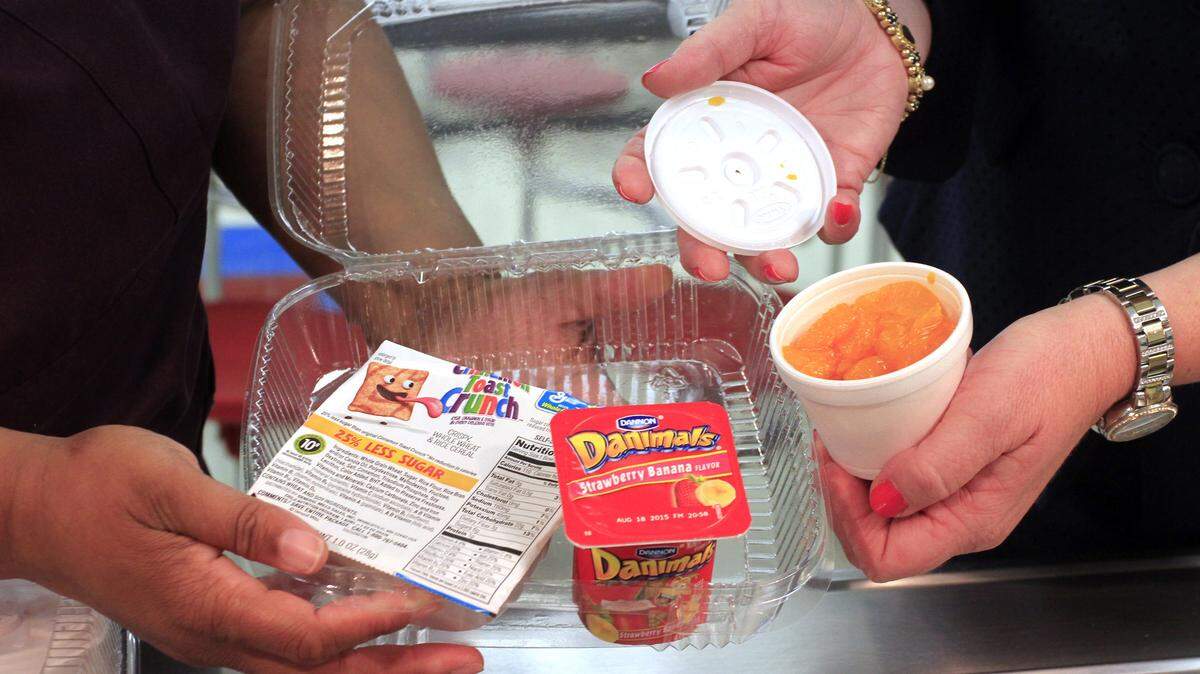
Katrina Sanders says children need to have a good breakfast before each school day, and it doesn't matter whether it's eaten at home or in the cafeteria.
"If children are hungry, they can't think," Sanders said.
Good nutrition, along with the proper amount of sleep, are essential to a student's success, she said.
Sanders is cafeteria manager at Phenix City Intermediate School. Last year, she was honored as cafeteria manager of the year in Alabama.
Each day, she arrives at school around 5:45 a.m. to begin preparing meals.
Because of a pilot program with the U.S. Department of Agriculture, each student in the Phenix City School District is eligible for a free breakfast.
School districts must have at least 60 percent of their students eligible for free or reduced-price meals to qualify for the program.
Since everybody is getting a free breakfast, students now participate who in the past may have skipped free or reduced-price lunches because of the stigma of being labeled low-income.
"We are glad we can provide these breakfasts for our students," said Brindlea Griffin, the school district's director of child nutrition, community education and health services. Like Sanders, Griffin said a good breakfast helps produce good students.
She said breakfast, lunch and even snacks served in Phenix City schools must meet strict USDA standards.
Fruit, vegetables and whole grains are served, meals are low in fat and calories, and limits are set on sugar and sodium. Food portions are established.
"We offer a large variety of healthy food items for students to choose from," Griffin said.
Sanders said there are traditional hot breakfasts, as well as "grab and go" breakfasts which include items such as muffins, yogurt and fruit.
"The cafeteria workers are really the first faces the students see," Griffin said. "They can really help make or break their day."
While breakfast is being served, half of Sanders' staff is already busy preparing lunch.
Sanders said children eat with their eyes. "We try to make everything colorful when it is displayed so it is more inviting," she said.
Posters on the cafeteria walls promote good eating habits. "We even had a person dress up in a cow outfit to promote drinking milk," Sanders said.
Cafeteria workers talk to the students about eating healthy.
Records are kept for students who must have a special diet.
"We get to know the students so we can tell if they are getting something to eat that they shouldn't," Sanders said.
Griffin said that because of allergies, peanut butter has not been in the cafeterias since 2006.
When the school is thinking of adding a new item, Sanders uses students as
taste-testers.
"No use getting it if children won't eat it," she said. "They give it a smiley face or a frown. We value their opinions."
And healthy school meals may lead to healthier meals at home, she said.
"A parent may not know a child likes strawberries until the child says they had them at school and liked them," Sanders said.
Sanders and Griffin know there are many children in Phenix City who are not eating well at home.
The USDA summer feeding program managed by the school district provided 39,912 free meals at 11 sites in eight weeks.
"Children would be lined up waiting for the food and would follow the van down the street," Sanders said. "On the first day of school, I can tell which children haven't had much to eat in the past week."
Asked what is the favorite meal of students, Sanders replied it is fried chicken. She then laughed and said nothing is fried in the schools. "It's really oven-fried chicken," she said. "The kids can't tell the difference."
This story was originally published August 10, 2015 at 9:49 PM with the headline "Phenix City school encourages healthy meals for kids ."