
St. Thomas Episcopal leads 50th anniversary commemoration for civil rights' martyr Jonathan Myrick Daniels
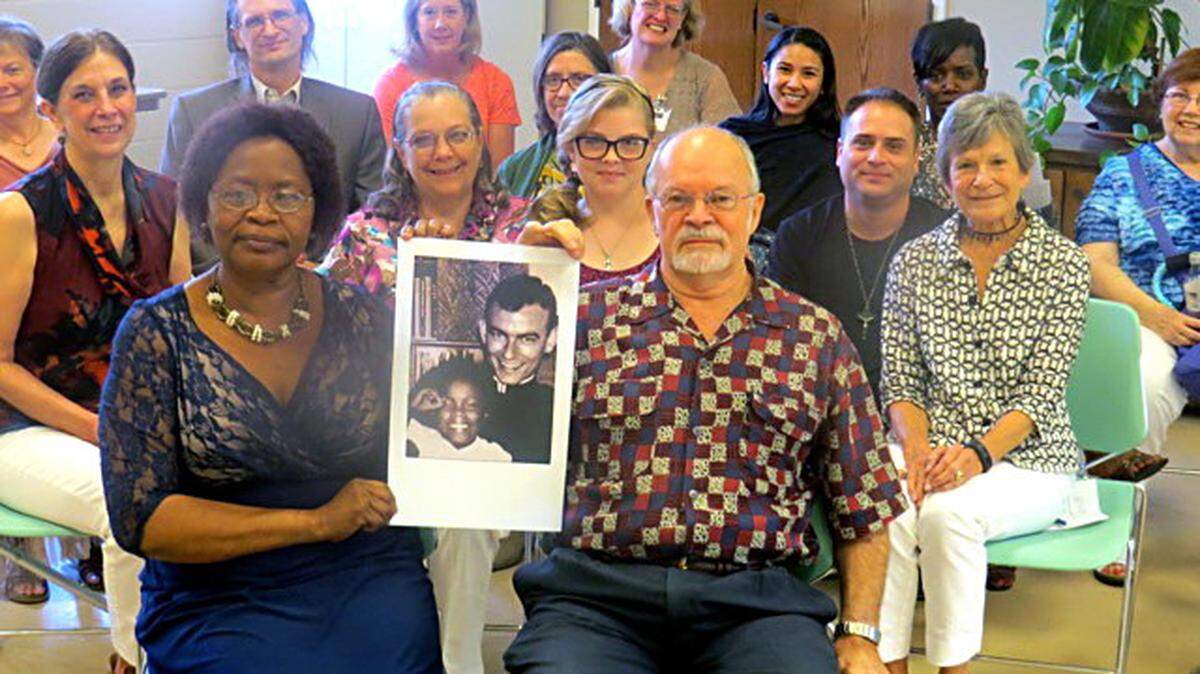
Jonathan Myrick Daniels may not be familiar to most Americans, but his name is forever etched in the annals of civil rights history.
Daniels was a white Episcopal seminarian from New England who responded to the Rev. Martin Luther King Jr.'s call to help secure voting rights in Selma, Ala. That was 1965, the year of one of the bloodiest battles for equality.
After marches in Selma, Daniels settled in Hayneville, a small town near Montgomery, to continue his fight for justice.
On Aug. 20, 1965, he and a Roman Catholic priest escorted two black civil rights workers to a small grocery store. At the front of the store, a white man pointed a shotgun at 17-year-old Ruby Sales, one of the civil rights workers. Daniels knocked Sales to the ground and died in her place.
According to media reports, King later said, "One of the most heroic Christian deeds of which I have heard in my entire ministry was performed by Jonathan Daniels."
Now, 50 years later, Episcopalians and social justice advocates across the nation are commemorating Daniels' heroic deed. In Columbus, the celebration is being led by the St. Thomas Episcopal Church, which launched a series of events in July. Members will participate in an Aug. 15 pilgrimage to Hayneville in Daniels' honor.
Vicky Partin, a member of St. Thomas, is coordinator of the congregation's commemorative events. She said the church wanted to reflect on the 50th anniversary of Daniels' death, as well as the Voting Rights Act of 1965.
Daniels was killed about five months after demonstrators were brutally beaten by law enforcement as they crossed the Edmund Pettus Bridge in Selma. The incident, known as Bloody Sunday, is considered one of the most violent episodes of the civil rights movement. It helped pave the way for the Voting Rights Act, which was enacted by President Lyndon B. Johnson and Congress a few weeks before Daniels' death.
At the time of Bloody Sunday, Daniels was a student at an Episcopal seminary in Cambridge, Mass. When King called for people of good conscience to participate in a march from Selma to the state capital, Daniels responded.
Later, after settling in Hayneville, Daniels lived with black families and worked to integrate the local Episcopal church by taking groups of young African Americans to services. He was arrested along with other civil rights protesters who demonstrated in Fort Deposit, Ala., on Aug. 14, 1965. Six days later, Daniels was released and killed.
Daniels has been designated a martyr by the Episcopal church and is listed among other civil rights heroes at a memorial at the Southern Poverty Law Institute in Montgomery.
Last month, St. Thomas launched the local commemorative series with a discussion led by Catherine Meeks, chairwoman of the Beloved Community: Commission on Dismantling Racism out of the Episcopal Diocese of Atlanta. In the following weeks, the congregation also host
ed a viewing of the film "Here I Am, Send Me: The Journey of Jonathan Daniels" and a presentation by historian Billy Winn, who covered the civil rights movement as a young reporter in the 1960s and recently wrote a book about injustices suffered by the Creek Indians.
Last week, Florence Wakoko-Studstill, an associate professor of sociology at Columbus State University, and her husband, John Studstill, a professor of anthropology at CSU, led the group in a discussion about race relations.
The series will continue 9:30 a.m., today, with presentations by Paula Adams, an associate professor of library sciences at CSU, and Judy Tucker, executive assistant to Columbus Mayor Teresa Tomlinson.
"We will be posing the question, 'What are we going to do personally and (as a group) to work on these issues that we've discovered still exist?" Partin said. The group also will watch the movie "Selma" from 2 to 5 p.m. to prepare for the Aug. 15 pilgrimage.
As part of the series, the congregation has also been reading the book, "Outside Agitator," which parallels Daniels' story with that of Tom Coleman, the man tried for killing him.
Though black residents outnumbered whites by 4-to-1 in Hayneville, Coleman was tried by an all-white jury and exonerated.
The pilgrimage to Hayneville will be the highlight of the commemoration, Partin said.
Visitors to the town will participate in an annual march that will include a Eucharist inside the courthouse.
The altar will be the judge's chair where Coleman was exonerated, Partin said.
Partin said about 200 Georgians are expected to travel to Hayneville for the event. St. Thomas has already reserved two buses, and another three buses will leave from Atlanta.
The keynote speaker for the day will be the Rt. Rev. Michael Curry, who was recently elected the first African-American presiding bishop of the Episcopal Church in America, Partin said.
On Aug. 23, the local commemoration will end with a discussion about what the community can do to carry on Daniels' legacy.
"We will confirm together what we are going to do to help with race relations in our community," Partin said. "A lot of interesting ideas have already come forth."
Alva James-Johnson, 706-571-8521. Reach her on Facebook at AlvaJamesJohnsonLedger
This story was originally published August 8, 2015 at 9:25 PM with the headline "St. Thomas Episcopal leads 50th anniversary commemoration for civil rights' martyr Jonathan Myrick Daniels."