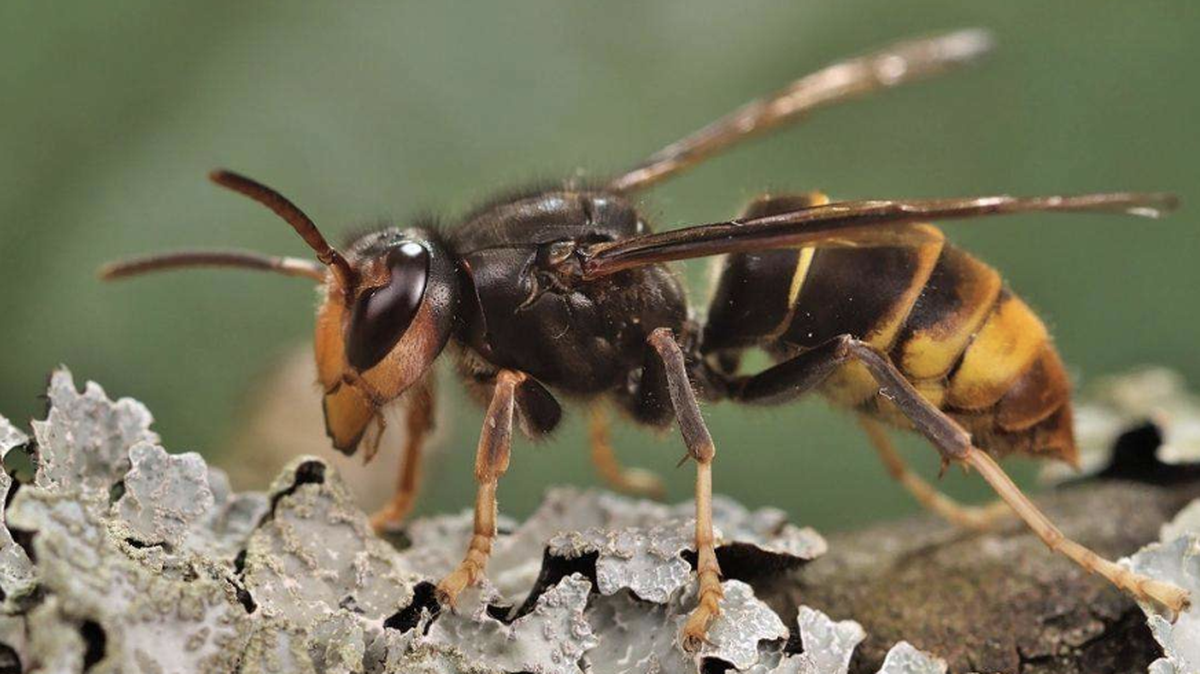
An invasive yellow-legged hornet was found in Jasper County SC in March. They are a threat to honeybees.
U.S. Department of Agriculture/provided
U.S. Department of Agriculture
Georgia is now home to the murder hornet’s first cousin. The yellow-legged hornet is a new, predatory species that is raising alarm among state officials and agricultural experts.
Originally native to Southeast Asia, the yellow-legged hornet is officially living among us. Sometimes known by its scientific name, Vespa velutina, it is an aggressive insect that poses a significant threat to our friends the honeybees and other critical pollinators in Georgia’s agriculture.
This danger is particularly worrisome since agriculture is the state’s leading economic driver the Georgia Department of Agriculture is working closely with USDA, APHIS and UGA to trap, track and eradicate these pests and are asking residents to report sightings of the hornet.
Why Are Yellow-Legged Hornets a Problem?
According to the University of Georgia, this insect has the potential to be dangerously impactful to some of Georgia’s most important industries.
Georgia’s beekeeping industry: The hornet is a voracious predator of honey bees, and even if it fails to kill a colony, it can intimidate bees and cause the colony to decline.
Crop pollination: Honeybees are essential for pollinating crops and produced $3.2 million worth of honey in Georgia in 2017 alone.
Threat to Agriculture: The hornets jeopardize the productivity of Georgia’s farms, which rely on these insects for crop yields.
What should Georgia residents know?
The yellow-legged hornet’s nests can be found hanging in trees and on structures like barns, garages and sheds, so you could likely encounter them in your yard.
Do not approach: Maintain a safe distance as they may sting if threatened. Fatalities are rare but have been recorded in other countries.
Report sightings: Submit photos and location details through the GDA’s online form, use the QR code in the image, or email the GDA at yellow.legged.hornet@agr.georgia.gov.
Beware of nests: Early-stage nests are small, brownish structures often found under eaves or in trees during spring.
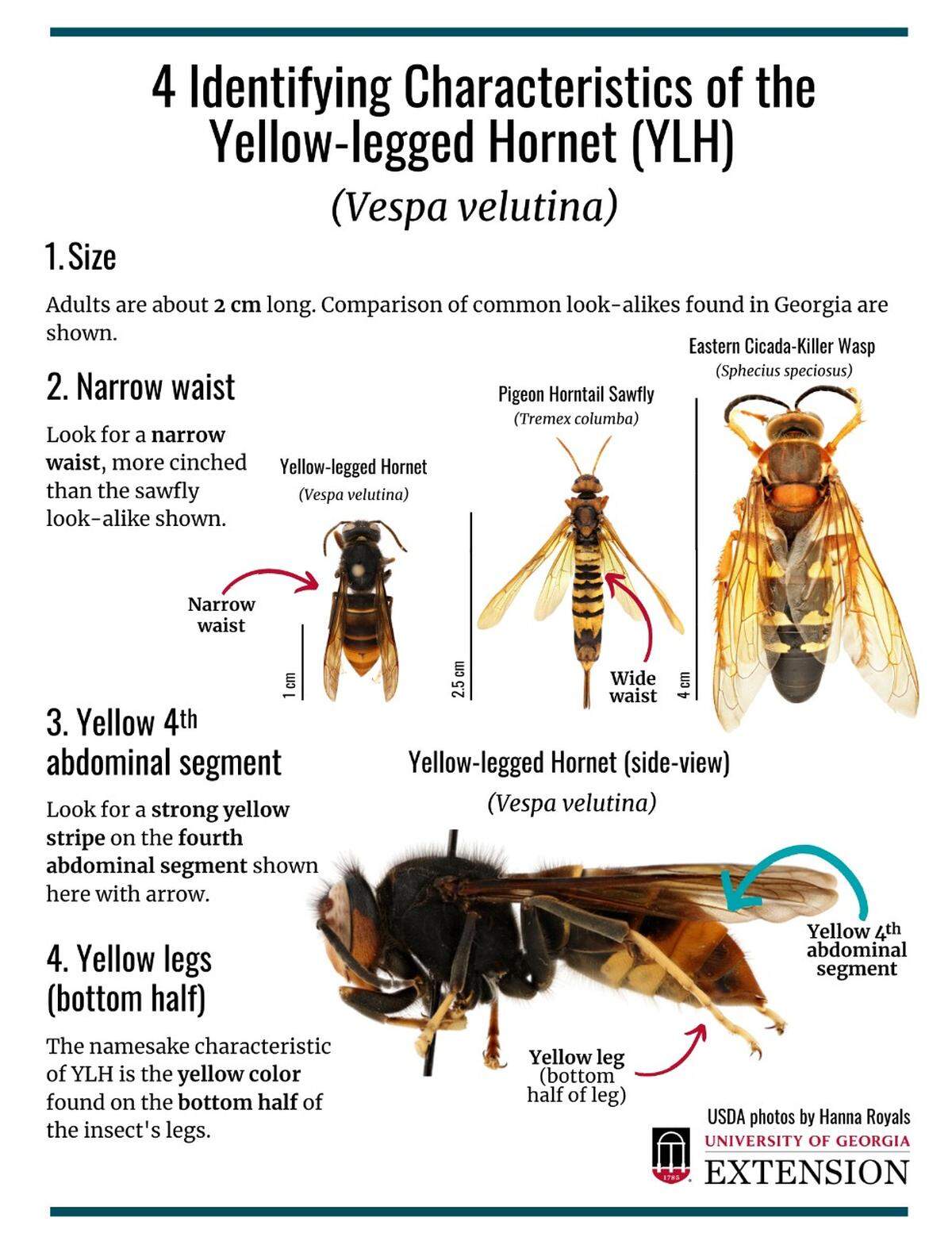
How to identify a yellow-legged hornet (YLH) UGA Extension