How this white pastor of a Black church is overcoming cancer to serve the Columbus community
He came to this Columbus church 49 years ago from a Florida congregation that literally built fences to keep out certain folks. His ministry has been dedicated to figuratively tearing down fences to welcome everyone.
The Rev. Tony Dickerson’s first day as pastor of Pinehurst Baptist Church was his birthday, Aug. 1, and he felt born again.
“What a birthday present — everything I’d looked for all my life,” he told the Ledger-Enquirer.
Dickerson finally found a church he could call home and members he could call family.
At his previous church , the congregation moved three times “to get away from African Americans,” Dickerson said, then built a fence — topped by barbed wire — around the church after Black families moved into the neighborhood.
“Beautiful buildings, every opportunity in the world, but they chose not to allow Black people,” he said. “And I began preaching to them and teaching them that the church is for everyone.”
Not enough members heeded his message, so Dickerson started looking for another church.
While visiting Pinehurst, Dickerson heard the pastor search committee chairman say the church was open to everybody. But when Pinehurst hired him in 1973, the church had one person of color out of 456 members and 50-60 regularly attending Sunday mornings.
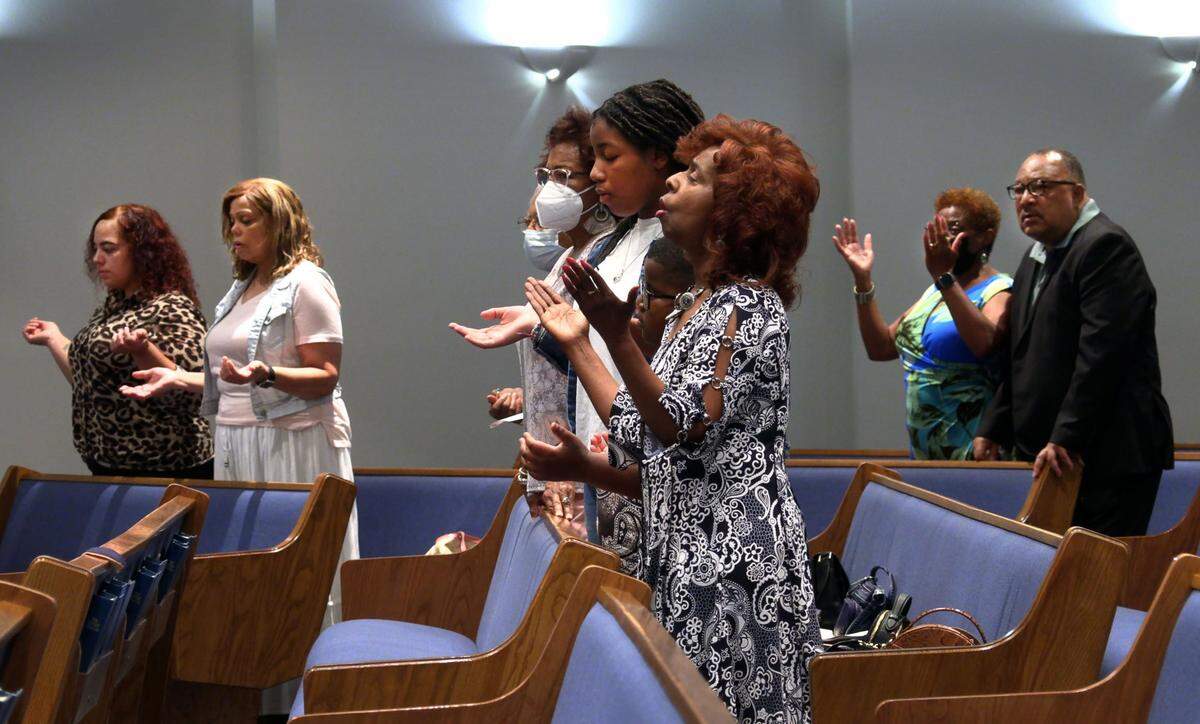
Over the next several decades, south Columbus became increasingly more diverse. While some white churches moved farther north in the city, Pinehurst practiced what it preached under Dickerson’s guidance and now has approximately 3,700 members (1,600 residing in Columbus), with more than 90% Black. The pre-COVID Sunday attendance averaged around 400, now about 110 in person, plus more online.
As the racial makeup of the members became less and less white, Dickerson said, he wasn’t concerned they would seek to replace him.
“Racial diversity has no problem here,” he said. “… I could call it a philosophy, but I think it’s the conviction of our members.”
Being the pastor of a church with members predominantly of a different race isn’t unprecedented in the Chattahoochee Valley, but it’s rare, said the Rev. Jimmy Blanton, missionary for the Columbus Baptist Association. But noting he welcomed all folks to his church during an era when attitudes toward racial differences weren’t as accepting, Blanton called Dickerson a “trailblazer.”
“Through his example and his ministry style,” Blanton said, “he has served the Kingdom well in showing us the way.”
Vanessa Biggers, retired principal of Muscogee Elementary School and Marshall Middle School, is among the Black congregants at Pinehurst who benefits from the Dickerson way.
“He loves each of us as if we were all his family,” said Biggers, a 39-year member. “We can call him anytime.”
Joan Mancil has seen Dickerson’s approach to people as a Pinehurst member for 44 years and the pastor’s administrative assistant for 12 years.
“He doesn’t view anyone as a color or ethnicity,” said Mancil, who is white, “just as human beings, all as God’s creations.”
No wonder at Pinehurst, which bills itself as “The Church of the Open Bible,” they also have an open door.
Grew up in Segregation
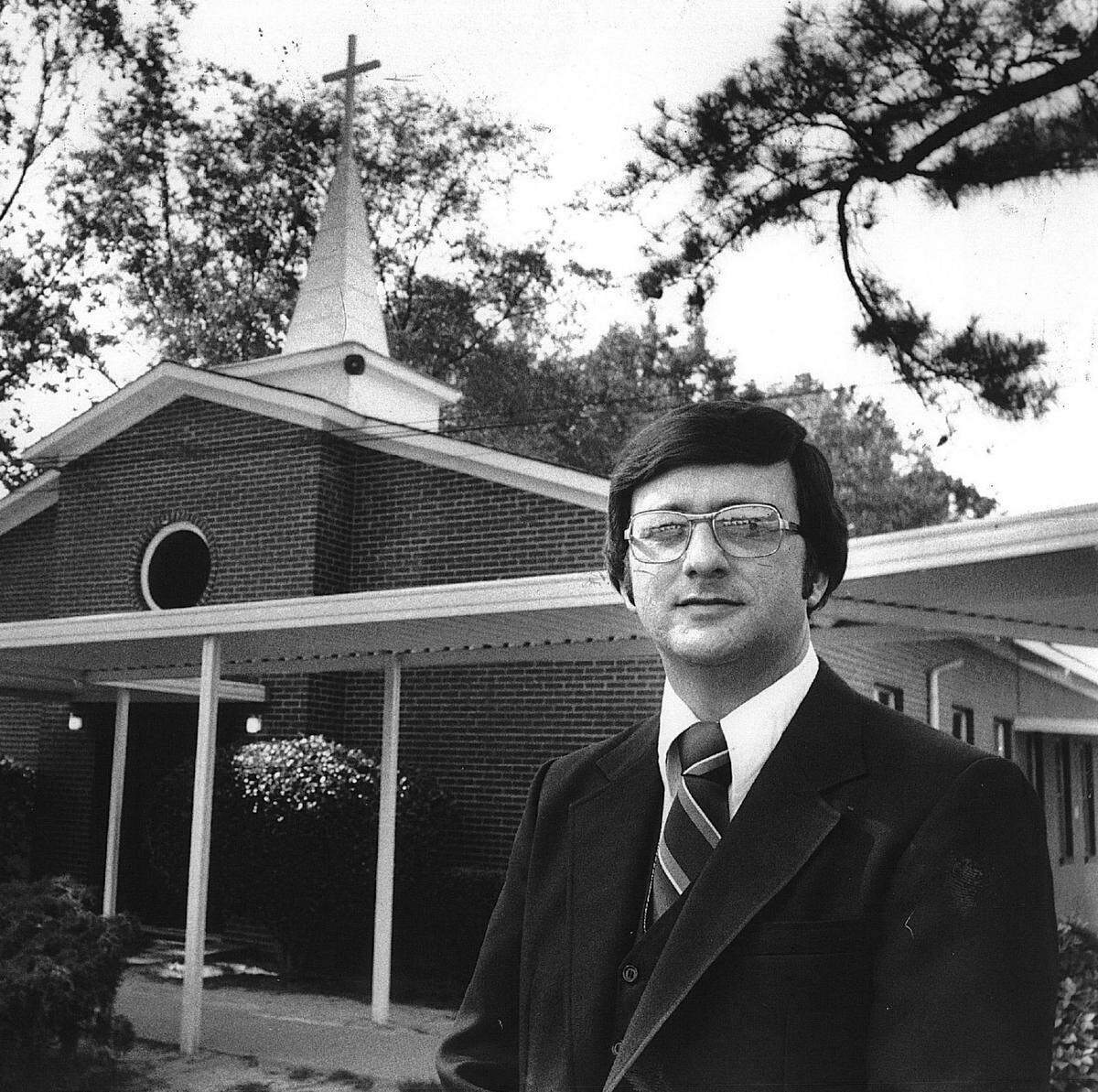
Dickerson, 77, grew up in Dothan, Alabama, during Segregation, but he was taught at home that all people should be treated the same.
A year after he was baptized at age 12, Dickerson said, “something just began to happen within me. I can’t explain it. I wasn’t old enough to describe it intellectually or emotionally and certainly not theologically, but I just knew God had something for me.”
Dickerson told his pastor, “I believe God wants me to be a pastor.”
His pastor replied, “Then you will preach a week from Sunday night.”
In the book “Simple Sermons for Saints and Sinners” by the Rev. W. Herschel Ford of First Baptist Church in El Paso, Texas, Dickerson chose the sermon titled “Two Sinners at Church.”
“I didn’t even know the word plagiarism,” he said, “but I was guilty enough to be convicted.”
Dickerson was allowed 30 minutes for the sermon. He took only 4 to wow the crowd.
Word spread about “that boy preacher,” and Dickerson was invited to preach at other churches. He never has had a different job.
“It felt completely right,” he said.
Key to longevity
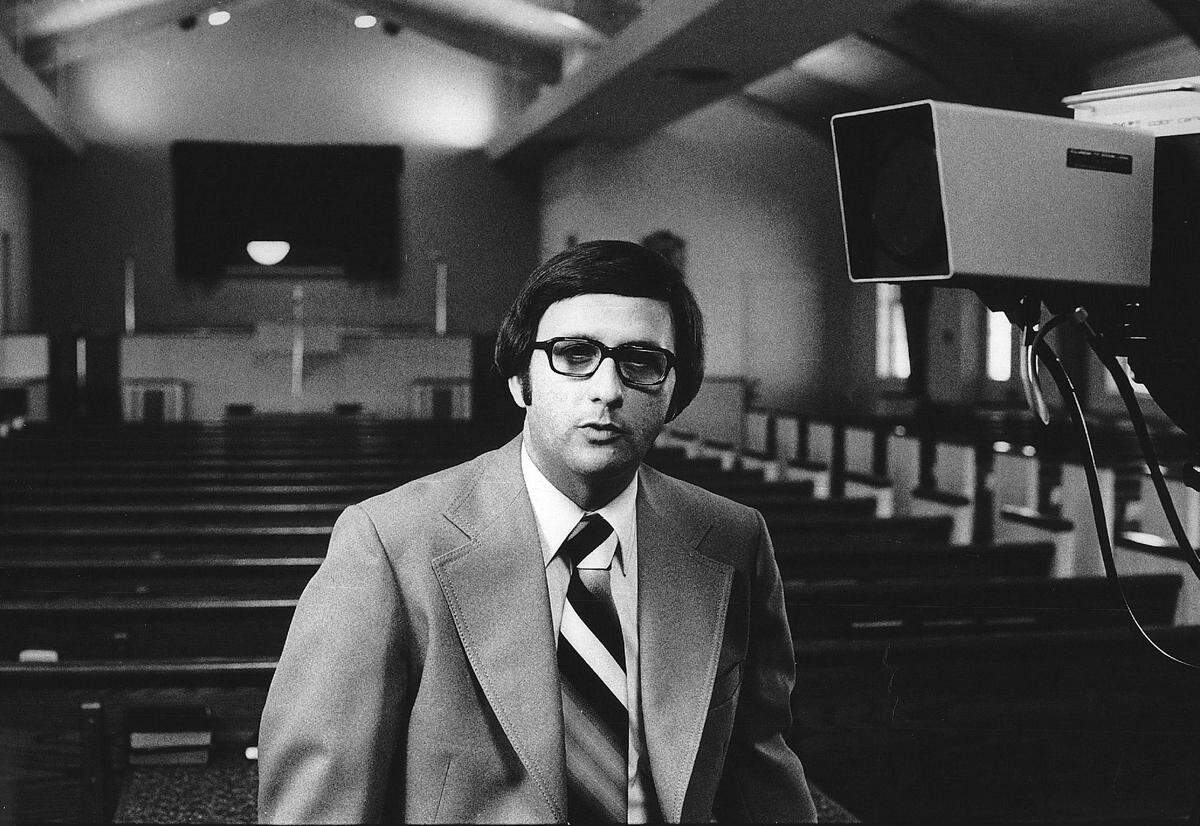
A key to his longevity, Dickerson surmised, is that his sermons stick to Scripture.
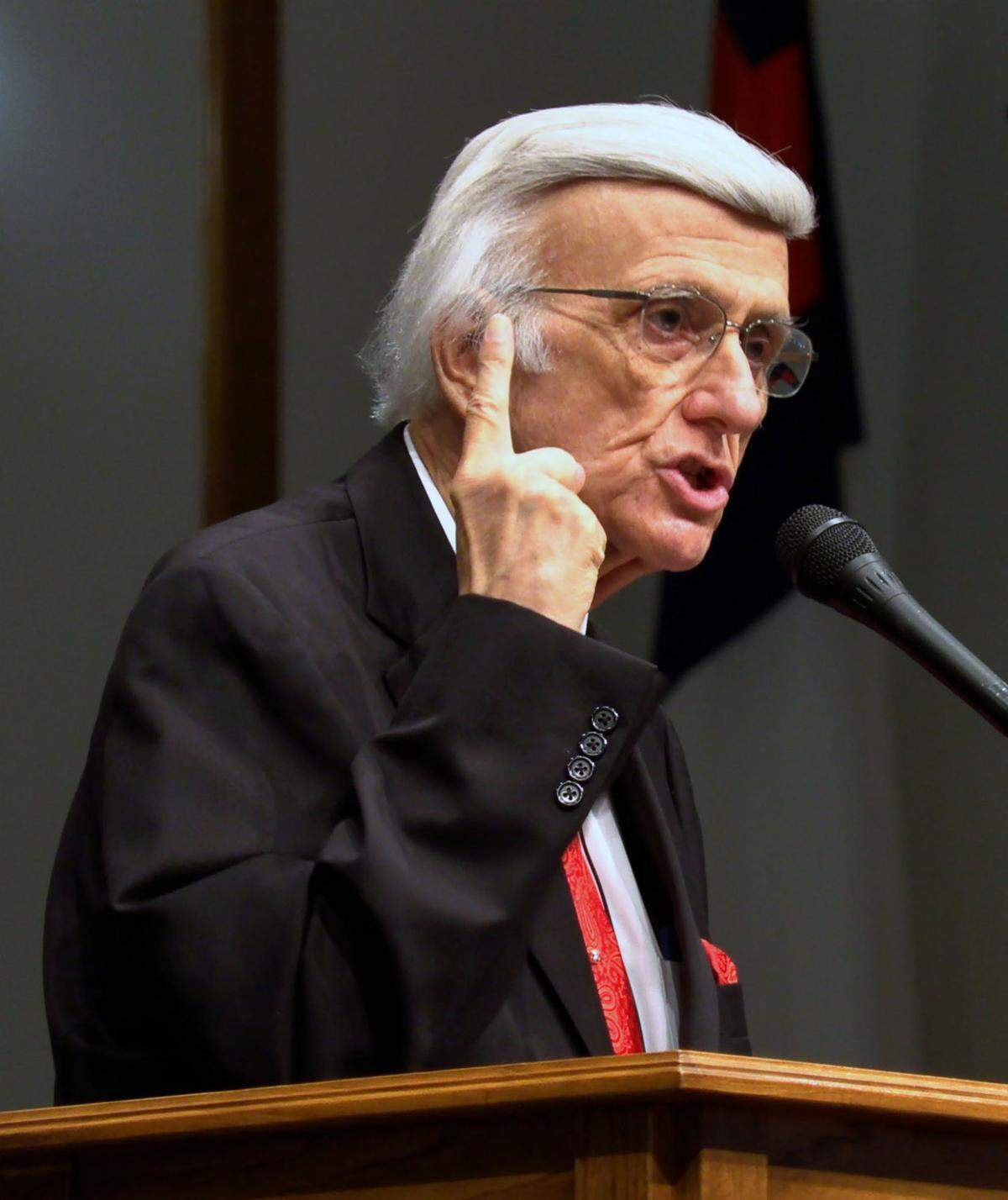
“I don’t do political discourses or pop psychology or lofty principles,” he said. “I just teach the Bible.”
Dickerson preaches the good news then helps congregants live it by being their pastor. He compares the duties to a father.
“It’s impossible for me to separate the role of pastor from preacher,” he said. “I wouldn’t feel qualified to preach to them if our lives weren’t entwined so completely until I could say, like Bill Clinton said, ‘I feel your pain,’ and I do.”
Pinehurst felt the pain of the COVID-19 pandemic. This church with an open culture had to shut down regular operations like all the others during the height of the coronavirus. And the pastor who thrives on human contact had to find other ways to connect to his congregation.
“It was the most frustrating period of my life,” Dickerson said.
He first conducted services in the auditorium with social distancing, then in the parking lot for 18 months. Congregants tooted their car horns to signal amen. A sound system and radio transmitter broadcasted the audio, and the video was streamed online.
“We filled up those two parking lots,” he said.
Dickerson wrote personal cards to congregants, reminding them he loves them and he is praying for them, regardless of their circumstances.
“I want to be part of the fabric of their lives,” he said. “I want to be more than just a professional. … If I am a friend, they will listen.”
Compassionate pastor
Besides preaching and teaching the Bible on Sunday mornings, Dickerson is a confidant and counselor for church members throughout the week. They ask him to be with them during times of joy and sorrow.
“They’ve allowed me to share their most intimate moments,” he said. “… It makes my heart overflow and my soul overflow.”
After another church refused to baptize the biracial great-niece of a Pinehurst member, Dickerson gladly performed the ritual.
When he arrived in the hospital room of a dying Black woman, one of the relatives announced to the family as she opened the door for him, “Everything is going to be all right. The pastor is here.”
Dickerson held the patient’s hand and prayed for her. She lived for several more years and returned to the church as an active member before she died.
“I have the highest calling that could be placed on a human being,” he said. “I know that motherhood is a high calling. I know it’s a wonderful thing to be a Christian politician. My daughter is a teacher. Her mother was a teacher. My son is a global sales representative. All of that is important. But to me, the most important word to me is pastor.”
Dickerson explained why he cherishes that title.
“It means I am the undershepherd,” he said. “Jesus is the great shepherd, the good shepherd, the chief shepherd. I’m the under shepherd. I represent Him in the lives of the people.”
Congregants see Dickerson as a compassionate pastor and passionate preacher who is forgiving toward congregants and strict on Scripture.
“He’s a very generous and giving person, a loving person,” Mancil said. “Some people think he’s stern — but only stern in the way the Bible says we should be.”
Biggers put it this way: “He doesn’t preach to make us happy or feel good but to know the word of God and apply it to our lives.”
When she was diagnosed with breast cancer in 2017, Biggers said, her foundation of faith forged by Dickerson gave her the strength to successfully go through treatment.
“I remembered all those sermons I heard throughout the years,” she said. “I was able to say, ‘Thank you, Jesus, for choosing to give me cancer’ because that allowed me to get a little closer to Him.”
Persevering through illness — and a frightening fall
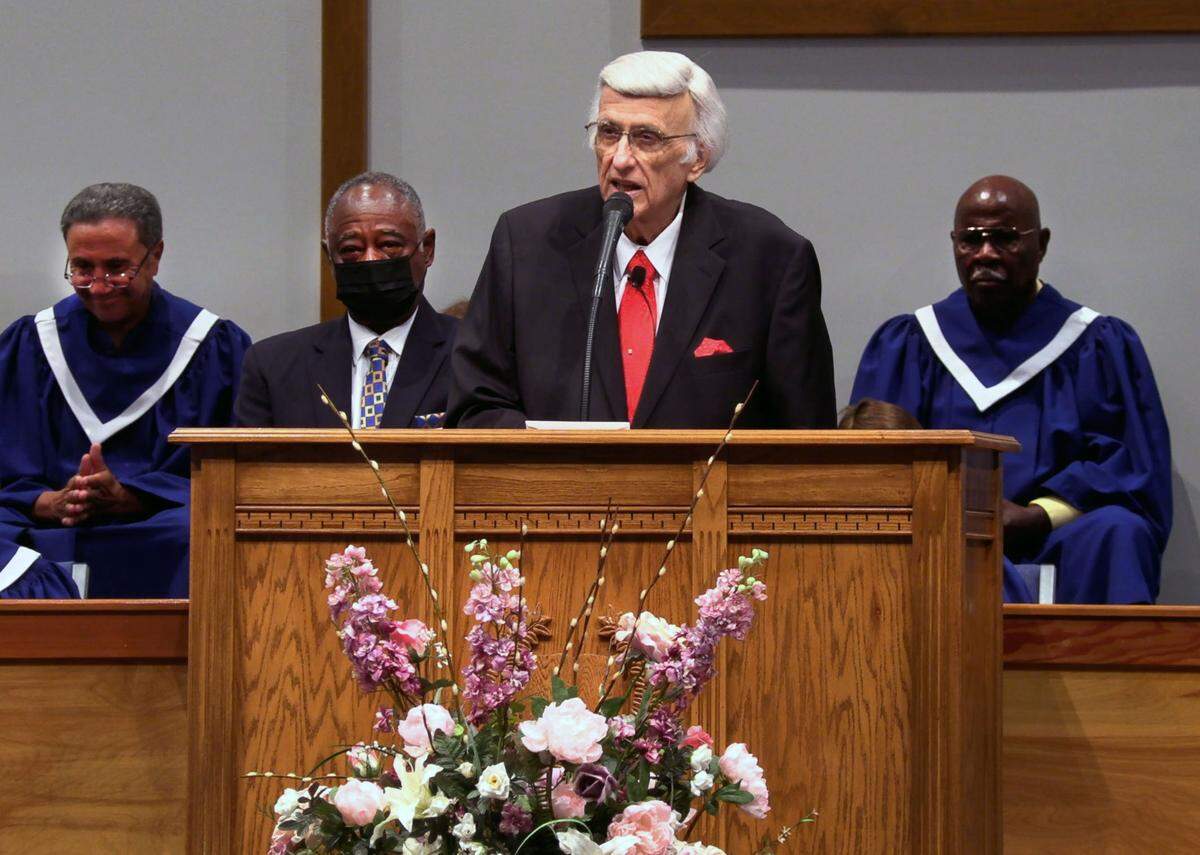
Dickerson deals with a heavy burden of illness: multiple myeloma (a blood cancer), monoclonal gammopathy (a blood disorder), neuropathy (nerve damage), diabetes and an autoimmune disease called pemphigus vulgaris that attacks the membranes of the mouth, which makes it difficult to speak sometimes.
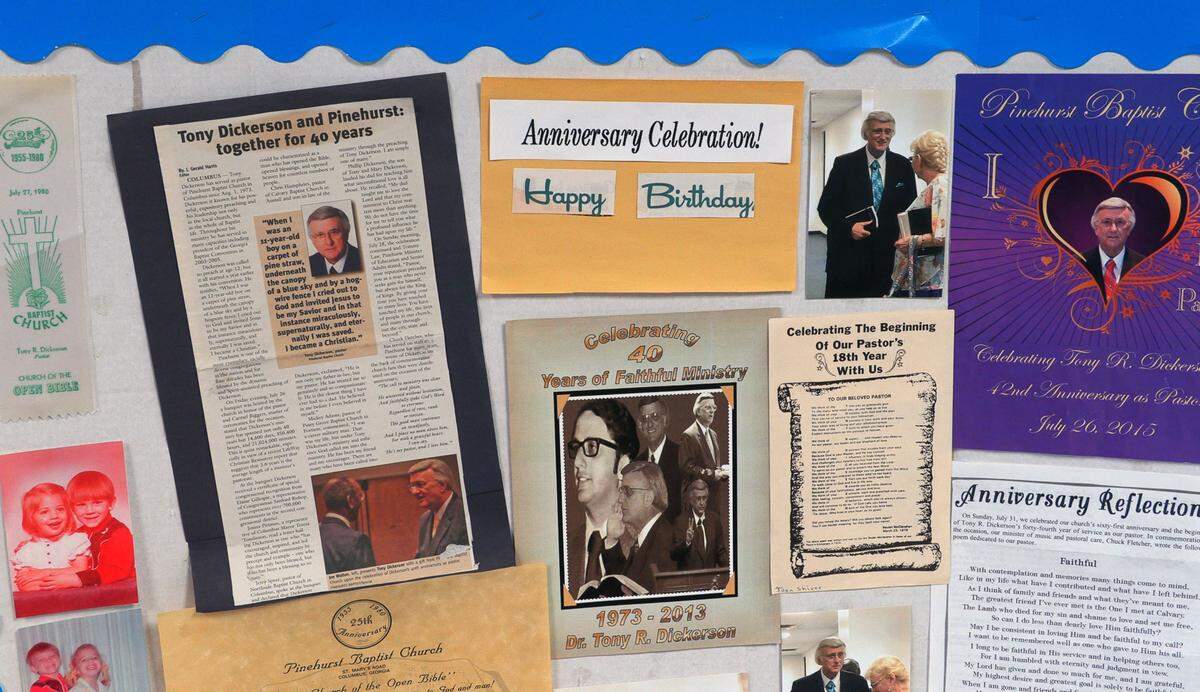
But he has missed only a few Sundays during his 49 years at Pinehurst, whether due to his health or traveling as president of the Georgia Baptist Convention from 2003-04.
“I was taught by my father don’t ever ask anybody to do what you’re not willing to do yourself,” he said. “I know that it would be an unreasonable expectation to believe that every single member of our church can be there every single Sunday. But I think more of them will be there more Sundays if they know I’m going to do whatever is necessary to be there. … If you can, you should.”
Mother’s Day of this year, Dickerson’s blood pressure bottomed out as his driver pulled into the church parking lot while they listened to a preacher on the radio.
“That’s the last thing I remember,” he said.
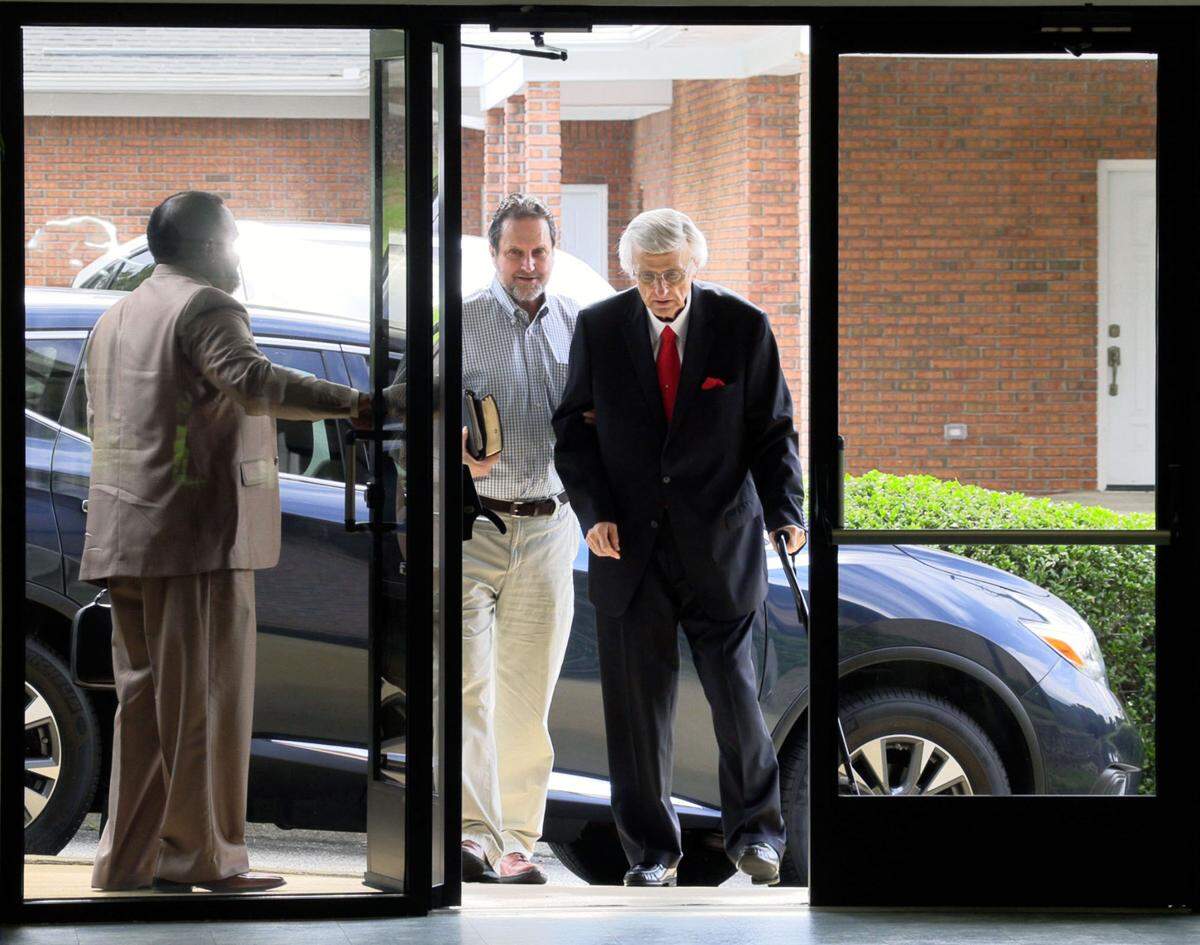
As he emerged from the car, Dickerson wished congregants a happy Mother’s Day and fell to the pavement. He hit his head and suffered a cerebral hemorrhage.
Dickerson never let go of the Bible he clutched in his hand as he fell. He told the responders while they put him into the ambulance, “You have to let me go. It’s time to preach.”
He was rushed to Piedmont Columbus Regional’s midtown hospital. After more than a week there, his neurologist told him he would need six months to fully recover, but Dickerson was back in the pulpit less than three months later.
God isn’t done with him yet.
“I can’t know the mind of God,” he said, “but I have no intention of retiring.”
Thanks to L.B. Murphy, his driver and friend.
“With that kind of support,” Dickerson said as tears welled in his eyes, “who would not want to continue? It’s the joy of my heart. Forgive me for being emotional, but it’s an emotional thing.
“… I feel like I have gone to Heaven. From the first day, I’ve never wanted to be anywhere else. I’ve had some opportunities, … but that was not God’s plan for me. This is my heart, and I don’t think anything could turn my heart away from it at this point.”
Murphy, a Black retired U.S. Army sergeant, has been Dickerson’s driver for about five years and Pinehurst member for 42 years. After moving to Columbus in 1973, he and his wife and daughter would sit on their porch each Sunday, hoping to no avail someone from the predominantly white church across the street would invite them over. Seven years later, Murphy and his family boarded one of the buses Pinehurst sent to transport residents to church.
Murphy was impressed with Dickerson after the service as well as during the sermon.
“On our way out,” Murphy said, “he shook my hand and called me by my name and told me he was glad I came.”
Murphy recalled the day Dickerson returned to Pinehurst after being released from the hospital.
“It was electrifying,” Murphy said. “Man, did he preach the Word.”
To him, the pastor is the same person in the passenger seat as he is in the pulpit.
“What he preaches,” Murphy said, “he demonstrates it with his life.”
Dickerson asks Murphy to stop the car when they see someone on the street needing help.
“He’ll reach in his wallet and hand them money,” Murphy said.
‘Not everything has been rosy in our church’
The Bible sustains him through crisis.
“I live in this book,” he said. “… Not everything has been rosy in our church.”
When someone told him a “troublemaker” was plotting to pressure him out of the church for a reason he still doesn’t understand, Dickerson prayed with his wife, Mary, and suggested, “Let’s see what God has for us,” as he opened his copy of “The Living Bible” to the verse for that day, Proverbs 14:22:
“They that plot evil shall wander away and be lost. They that plan good shall be granted mercy and quietness forever.”
Dickerson told his wife, “There it is. … Everything is going to be all right.”
Lo and behold, a week later, the troublemaker moved out of town.
“No forwarding address,” he said. “No reason given.”
The troublemaker returned to sing at the church years later. When they saw each other, that person asked the pastor, “Would you forgive me for what I did to you?”
Dickerson forgave without hesitation.
“I have no choice, if I am to please God, but to forgive others as He has forgiven me,” he explained.
No wonder he and Mary raised their children with the adage, “A proverb a day keeps the Devil away.”
“It’s almost like having an emergency room physician living in your house,” he said. “… All of my emotional crises, spiritual crises, relational crises, financial crises — I’ve had the full gamut — and every time, the answer has been right there.”
Although he quotes Bible verses from memory, Dickerson admits, “I don’t always have the answer. In fact, there’s probably as many times when I don’t as when I do. But the answer then is, ‘I don’t know, but I’ll do my best to find out, and I’ll get back to you within 24 hours.”
Dickerson’s version of cellular communication is a flip phone, and he’s admittedly “computer illiterate,” so he relies on the books in his home and the thousands of volumes about The Book — the ultimate smart device — in three library rooms at the church.
“It’s as modern as tomorrow, even with antiquated language,” he said. “The principles, precepts, ideas, interpretations are as modern as the day after tomorrow.”
Final sermon
Asked what he would preach in his final sermon, Dickerson said, “If God gave me the privilege of choosing the last one, I’d go to what Paul said to Timothy: ‘I have fought a good fight. …’”
Dickerson paused to fight back tears and continued.
“I have finished my course.”
Then he added, in a voice strained with emotion, “I just want to finish well. You see, if you live 70 years and nobody can find anything justifiably accusatory against you and you mess up the last day, that’s all they remember. And there’s been times I messed up terribly, and I’m glad that wasn’t the last day. I was able to redeem myself by making apologies where apologies were needed and changes where changes were needed. So that’s what I would like the last one to be.”
Asked to share his biggest mistake, Dickerson said, “I wouldn’t even want to dignify it by talking about it.”
So how has he risen above regret?
“The forgiveness of God,” he said.
Obeying the wisdom in the Bible, Dickerson said, “keeps us from the practice of sin, but it also cleanses us from sin after it occurs.”
Whether in private or public, he said, “I’m better at apologizing than anything I do. … When I’ve offended, disappointed, I go back with a sincere apology, and if they don’t forgive me, that’s on them. I can’t fix how they feel, but I’ve fixed how I feel.”
Dickerson has helped make countless congregants feel loved through learning God’s lessons. Blanton considers him to be among the greatest preachers he has heard.
“He’s got the unique ability to take a passage of Scripture and preach it directly to what the people need to hear from it,” Blanton said. “… He can make his words sound like they come straight from Heaven.”
That’s why Blanton isn’t surprised Dickerson overcomes his ailments to continue serving his congregation.
“He is a man of prayer, and he trusts the Lord to fill him with the Holy Spirit to preach with the boldness that he always does,” Blanton said.
Pinehurst organist Laila Fletcher, a congregant for 34 years, marvels at the vigor Dickerson still oozes as he preaches. It’s a remarkable transformation from the frailty of needing a cane to reach the pulpit.
“You know he’s in pain, but he’s strengthened by the Lord,” she said. “It’s almost as if he comes to life up there.”
And for as many Sundays as he can foresee, Murphy gladly will pick up Dickerson on his way to Pinehurst.
“He’s going to keep preaching,” Murphy said, “until the Lord calls him home.”
This story was originally published December 21, 2022 at 11:43 AM.