
Power ‘blinks’ have residents wondering what’s up. Squirrels playing havoc with lines
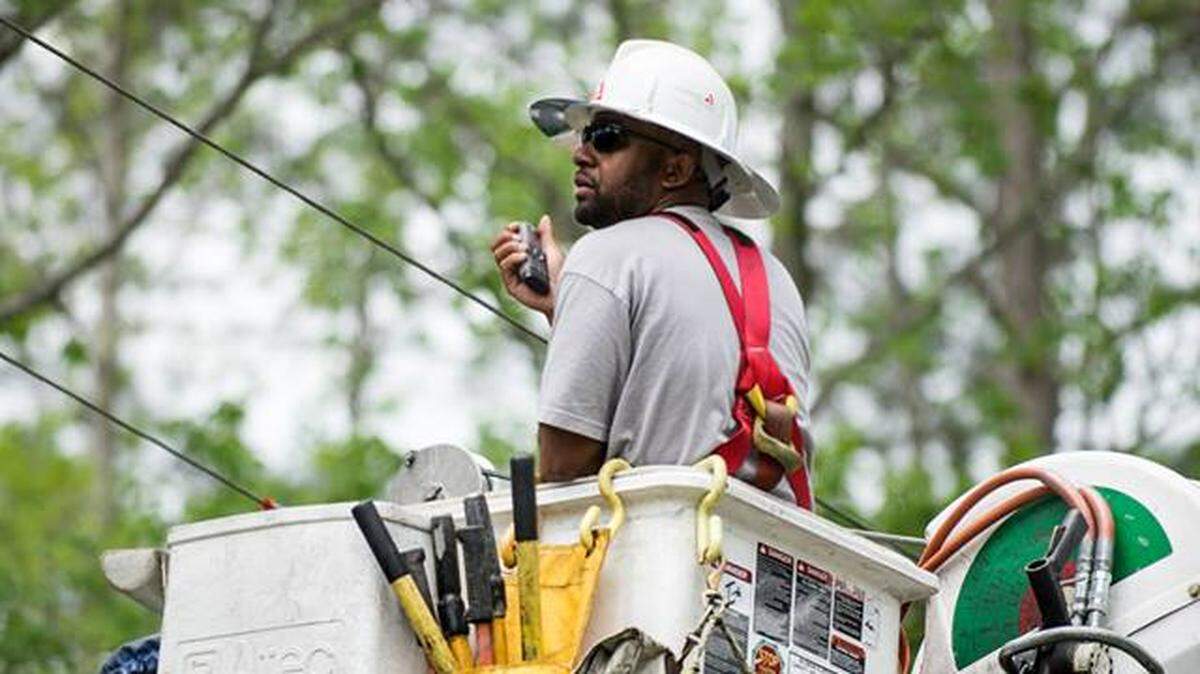
It appears squirrels have been causing havoc in the power lines in and around the Smiths Station areas just north of Phenix City and Columbus, resulting in occasional, but persistent power outages over several weeks.
On Sunday, Lisa Keeble Deason, planning administrator and communications director for the city of Smiths Station, relayed a response to Neighborhood Watch followers, saying she had received a note from an Alabama Power engineer confirming that squirrels on a line near the Smiths Station substation have been triggering one of three breakers.
“Which is why so many people have been seeing the power blinks,” the engineer told Keeble Deason. “These blinks are basically the same as turning on and off a light switch. When something creates a fault on the line (squirrel, limb, etc. ..) the breaker will open in an attempt to let whatever caused the fault fall from the line and then close.”
The engineer, in his note, said there’s not much that can be done to keep squirrels off the power lines, although devices are installed to protect energized parts from failing, even temporarily, “but rodents will be rodents and find ways to beat out efforts.”
More than three dozen customers vented their frustration recently on a Smiths Station Neighborhood Watch Facebook page, with some referring to surges rather than outages, but most saying the problem has been occurring multiple times. A few have complained that their appliances have gone on the blink and that the matter has become a nuisance by setting off alarms and requiring clocks to be reset routinely.
“We had (outages) all weekend out Lee Road 294,” posted Robert and Kim Serda on the Facebook page. “Was going to call power company, it will probably be more (with) the business and people building houses in our area. It’ll be hard (for) power company to keep up … unless they build power substation.”
“We just had to buy a new freezer,” wrote Sandy Collins. “Got single outlet surge protectors at Lowe’s for large appliances. Didn’t know they made them. Gonna put one on washer and refrigerator too. Hopefully that will keep them protected.”
Said resident Wendy Harrell, “The kids are having a fit here because it’s happened a few times,” and customer Jaime Shirah Joiner, “I’m in Rocky Ridge just past the lea market. It’s happened a few times today.”
Parker Goodman, manager of engineering and operations with Tallapoosa River Electric Cooperative, which serves east Alabama customers from Clay and Randolph counties southward through Tallapoosa, Chambers, Lee, Russell and Barbour counties, flatly denied Friday that the problem outages are related to his company. He was provided the Lee Road numbers from the Neighborhood Watch page complainants.
“I just did a search in Google and very, very few of those involve anybody that we could serve power to. Those should all be Alabama Power customers,” he said. “I guess you’ll need to follow up with them.”
Alabama Power, likewise, said a search of their records indicate that most of the people saying they are having outages do not appear to be its customers. The utility serves about 60,000 customers in Lee County and about 22,000 more in Russell County.
Tallapoosa River Electric and Alabama Power use completely separate lines to supply electricity to their customers.
Linda Brannon, public relations representative with Alabama Power’s office in the Eufaula area, did offer an explainer on what can cause outages, to include the squirrels that some customers say they have been told by the utility’s linemen is causing brief outages.
“Animals don’t cause surges. They do cause outages,” she said. “Surges very rarely occur and when they do they’re caused by lightning, something very catastrophic.”
Brannon said the industry refers to animal interference with power lines “blue sky outages” and that they do happen more frequently than the power company would like.
“A tree could fall and nobody see it, or a squirrel could get into a line,” she said. “We take a lot of steps to mitigate animal problems, but they’re still going to happen. We put lightning arresters and things like that on our lines. We also take a lot of steps to prevent weather-related outages, but those types of outages are out of our control. We take as much precaution as we can. But the blue sky outages are hard for customers to understand.”
Brannon said Alabama Power has automated its power lines and accompanying equipment to manage outages so that when one occurs — knocking out electricity to residences and businesses — the system automatically reroutes power around the trouble spot to restore service.
“It will switch over and provide electricity to customers by alternate means until the original cause of that outage can be repaired and they can be put back to normal,” she said, pointing out that before automation crews would have to physically drive to a location to find the outage and repair or reset everything.
Brannon noted that development in the Smiths Station area should not be a factor in any outages within the community because the utility plans for such growth and believes it currently has adequate infrastructure in place to handle the populace’s needs. The city has about 5,400 residents, although Smiths Station and the unincorporated area around it has a population of at least 22,000 residents, according to U.S. Census data.
One thing that customers need to do to help Alabama Power or any other electric utility, Brannon said, is to report outages so that the company can document when and where they are occurring and how many people are being impacted. It also would be wise to report any tree limbs, large or small, hanging from or laying on power lines.
For Alabama Power, you can report outages by calling 1-800-245-2244 or by doing so online at www.alabama.power.com and logging in to your account. Tallapoosa River Electric asks that customers call1-877-456-8732 to report an outage. It also has a power outage map online at http://trecoutages.com/
This story was originally published September 28, 2018 at 6:21 PM.