
A $9.1 million hit: How coronavirus is hurting the economy in Columbus
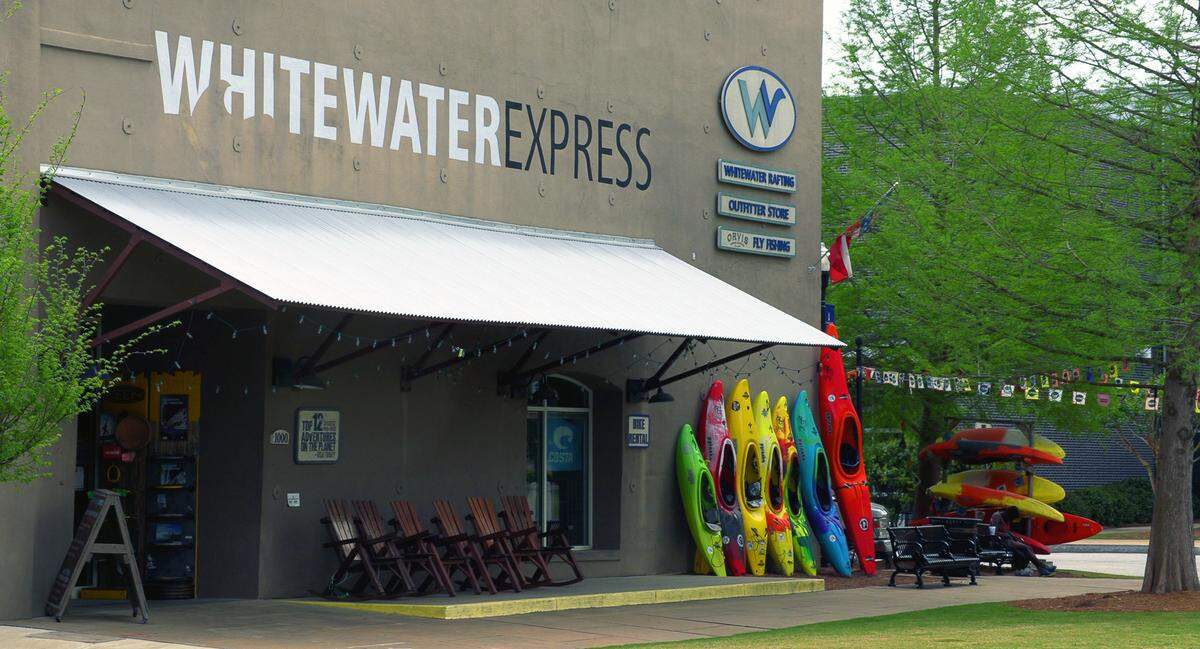
By this time each April, downtown Columbus’ Whitewater Express would employ over 200 people and be in the process of training up to 70 new whitewater rafting guides.
But right now, impacts of the novel coronavirus have led the outfitter to reduce employees to a small group of core staff, and no one is taking group rafting trips down the Chattahoochee River.
“This coronavirus couldn’t have picked a worse time for summer businesses, for tourism,” Whitewater Express owner Dan Gilbert told the Ledger-Enquirer Thursday.
In a typical season, his company sends upwards of 50,000 people down the rapids or across the Blue Heron zip line between Columbus and Phenix City, Alabama. 87% of those people drive more than an hour to get here.
This year, those numbers will likely be drastically lower.
“It hit us right as we’re gearing up and getting ready for the summer,” Gilbert said. “Most of our income comes in June and July, so it’s hit us hard.”
Events that typically bring thousands of additional people to the riverfront, like Paddle South and RiverFest, were canceled in the wake of COVID-19. Paddle South, a kayak competition and festival, was supposed to take place April 10 and 11. RiverFest, a celebration of the river and uptown businesses that has drawn as many as 17,000 people, was set for the first weekend in May.
Those aren’t the only events that have been canceled since COVID-19 was declared a global pandemic.
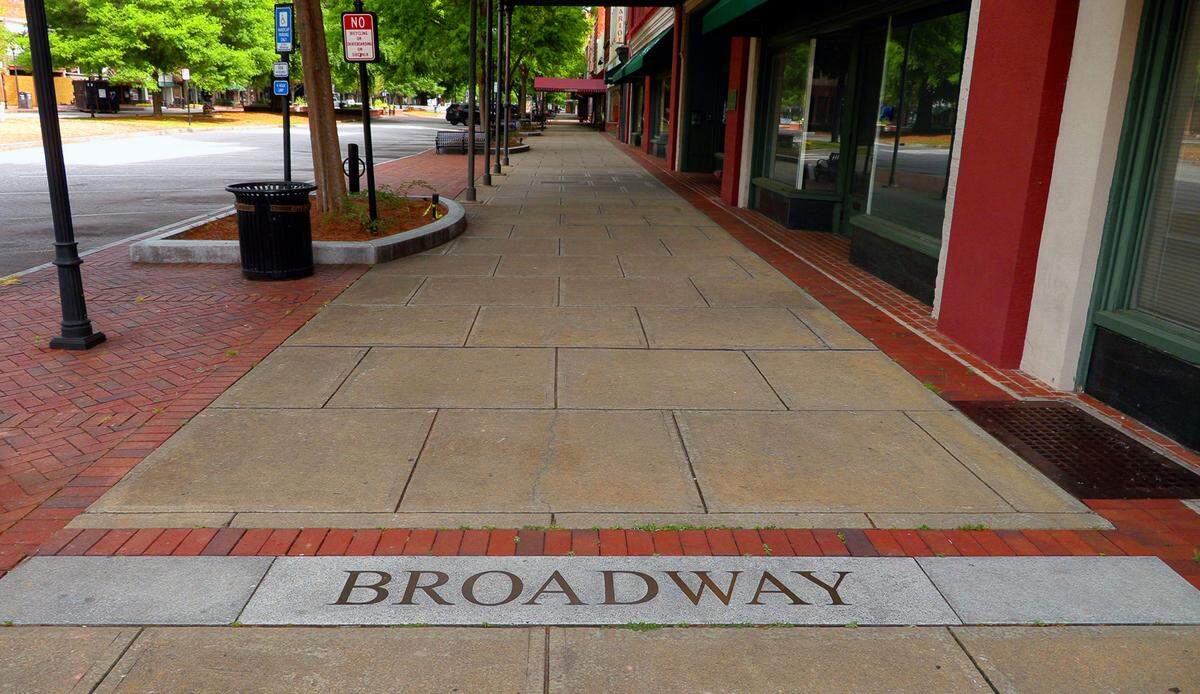
There’s the absence of families visiting soldiers at Fort Benning — each graduation brings $168,000 of economic impact alone. No meetings or events fill up hotel rooms and halls of the convention center. And the lack of leisure travel means no flocks of tourists are walking the streets of uptown enjoying local restaurants and shopping.
Events like food truck festivals, market days and Friday night concerts have been halted as performances at the Civic Center, Springer Opera House and RiverCenter have been canceled or rescheduled.
Peter Bowden, president and CEO of Visit Columbus, the city’s convention and visitor’s bureau, has watched it all unfold into an estimated $9.1 million loss.
A $9.1 million hit
Normally Bowden’s job is to promote the city as a tourism destination and attract as many visitors as possible. But hundreds of out of town visitors are the last thing anyone wants in the middle of a global pandemic.
Bowden typically determines how much economic impact the city of Columbus will see from a convention or event using a formula that takes into account the number of anticipated visitors and the number of hotel nights they’ll be staying, as well as dining, shopping, entertainment and fueling of vehicles at local gas stations.
Normally, that number is a positive one, especially in the spring when weekends downtown are packed with events. Due to a large number of cancellations that started mid-March and now stretch as far as September, Bowden says, the economic impact is in the negative.
So far, the visitor’s bureau has tallied 72 groups that have canceled or postponed events in Columbus, representing $9.1 million in lost revenue for the city.
April seems to be the hardest hit so far.
“Most people I think knew that April was going to be a month where people were going to have to really take precaution and May may see some rebound, but our industry consultants are telling us its probably going to be June before we see a turnaround, and that’s if there is nothing catastrophic with the virus,” Bowden said. “Spring is really when we see our season rebound from wintertime, so all of this is hitting the city pretty hard.”
Columbus is not alone: the state of Georgia has already seen a marked decline in travel spending, with weekly spending dropping from $582 million at the end of February to $135 million at the end of March, according to Travel Economics, an Oxford Economics company.
The numbers for the end of March represent a $483 million drop from weekly travel spending during the same week in 2019.
The virus has also taken its toll on the U.S. economy, with millions filing for unemployment in numbers greater than the 2008 recession.
Oxford Economics issued a report of the economic impact of coronavirus due to travel losses, and has projected that a decline in travel spending will result in a total economic loss of $910 billion in economic output nationally.
According to the March 24 report, travel industry losses will exceed that of any other sector, and with losses seven times the impact of 9/11.
The report also states the U.S. will see a decline of $62 billion in taxes as a result of travel declines in 2020, and the country is expected to lose 5.9 million jobs by the end of April as a result of travel declines.
Preparing for the future
Bowden and his team have had to pivot, like many other organizations and businesses, to try to make the most of the situation.
“The sales team is focused on helping meeting planners reschedule to make sure Columbus is top of mind for them, and the marketing and social media folks and visitors center folks are working to promote what we do, the information that we have available, to a local audience,” Bowden said. “Typically a visitor’s bureau focuses all of its advertising marketing outwardly, but now like hundreds and hundreds of other convention and visitor’s bureaus, we’re trying to be a positive resource for the communities that we work in.”
On a positive side, Bowden said the vistor’s bureau consultants believe that because Columbus is a “drive-to” market, the city could see its leisure market rebound quickly once people are told they can travel safely.
“There is going to be this pent-up demand for travel so the leisure market could come back fairly quickly, and that’s what we’re in the process now of looking at is how do we position Columbus to capture as much of that and make ourselves available to people who are looking for things to get away and do,” he said.
Gilbert said he’s counting on that pent-up energy.
“I know families, people are ready to get out of their house and get back to fun, but we want to do it when it’s proper and when it’s safe,” Gilbert said.
For now, the company is applying for federal relief like other small businesses across the nation in hopes of hiring back the staff that was let go.
He’s also working on changing the business model so that in the future, smaller groups go down the river rather than the groups of 100-plus people that are normally corralled for the trips. Gilbert says he thinks most businesses are going to have to find new models that fit better for the “new times.”
Despite the difficulty and uncertainty, he remains optimistic.
“What is so good about our city, in Columbus and Phenix City, is we’ve got outstanding leadership in the private sector, in the business community and in government, we’ve got terrific leadership and that enables us to have great optimism for the future,” Gilbert said.