About 165 years later, Columbus man’s descendant brings his Irish moonshine back
Ambrose Brannan and his fiance Mary Anne Murray presumably stowed away to travel from Ireland to Savannah in the 1840’s before the Irish Potato Famine caused 2 million of his fellow Irish citizens to immigrate to the United States.
The couple then traveled by horse and carriage to Columbus, where they settled and began a life by pursuing farming. Ambrose took advantage of a land grant program to build a farm on a property in Russell County, Alabama.
“Unfortunately, it was designed to push the (Native Americans) out by giving property to people,” said Jon Brannan, a descendant of Ambrose’s.
The work on the farm was tough, Jon said, and the wages were low. Success was dependent on how good the crops were.
But the crops were not always good.
Ambrose wanted a side hustle. So, he leaned on what he knew — Irish moonshine.
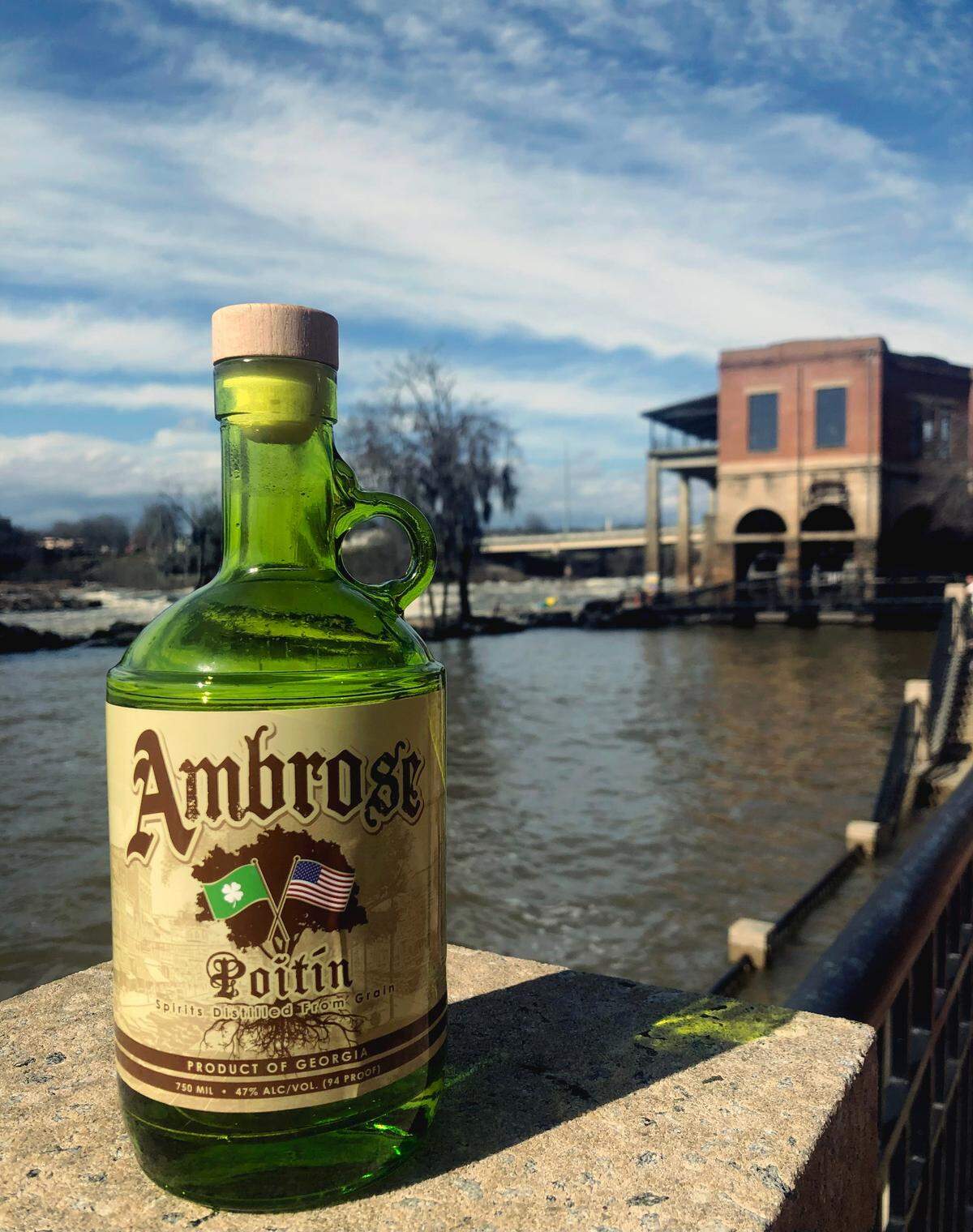
This decision would leave behind a legacy that his descendant, Jon, would build upon to manufacture his version of his ancestor’s liquor called poitín (pronounced “po-cheen”) that will be on sale exclusively in Columbus beginning this summer.
History of Poitín
Close to 150 Irish citizens were living in the city by the 1850’s, according to Callie McGinnis of the Muscogee Genealogical Society.
Immigrants from Scotland and Ireland brought the practice of distilling alcohol to Georgia and other colonies beginning in the 18th century, and Ambrose was among them with his own Irish moonshine recipe.
Poitín dates back to the 1st century in Ireland, according to the BBC, and is a precursor to whiskey in the region. The drink was outlawed by English landowners in 1661 because of taxation on alcohol and only became legal to produce again in 1997.
“The king at the time was really upset because the drink was so popular and they weren’t collecting taxes on it,” Jon said. “And as governments love to do, they wanted a piece of the action.”
Similarly to prohibition in the United States, outlawing the drink inadvertently made it more popular, Jon said, and the underground market for it flourished. Poitín was given coded nicknames and phrases.
People would ask if “the cow is milking today” or refer to poitín as Mountain Dew, which is where the modern soft drink gets its name, Jon said.
Traditionally a potato-based drink, poitín is typically made using one pot with potatoes and sometimes fruits like plums or raisins, McGinnis said. Ambrose used corn and barley in the drink he sold that was likely based on a family recipe, she said.
An advertisement appeared in the paper in 1858.
“The subscriber is now manufacturing the real Irish Poteen Whisky, at his place one and a half miles from Columbus, which he warrants to be pure and genuine and equal to the best Poteen Whisky manufactured underground in Ireland,” the listing read.
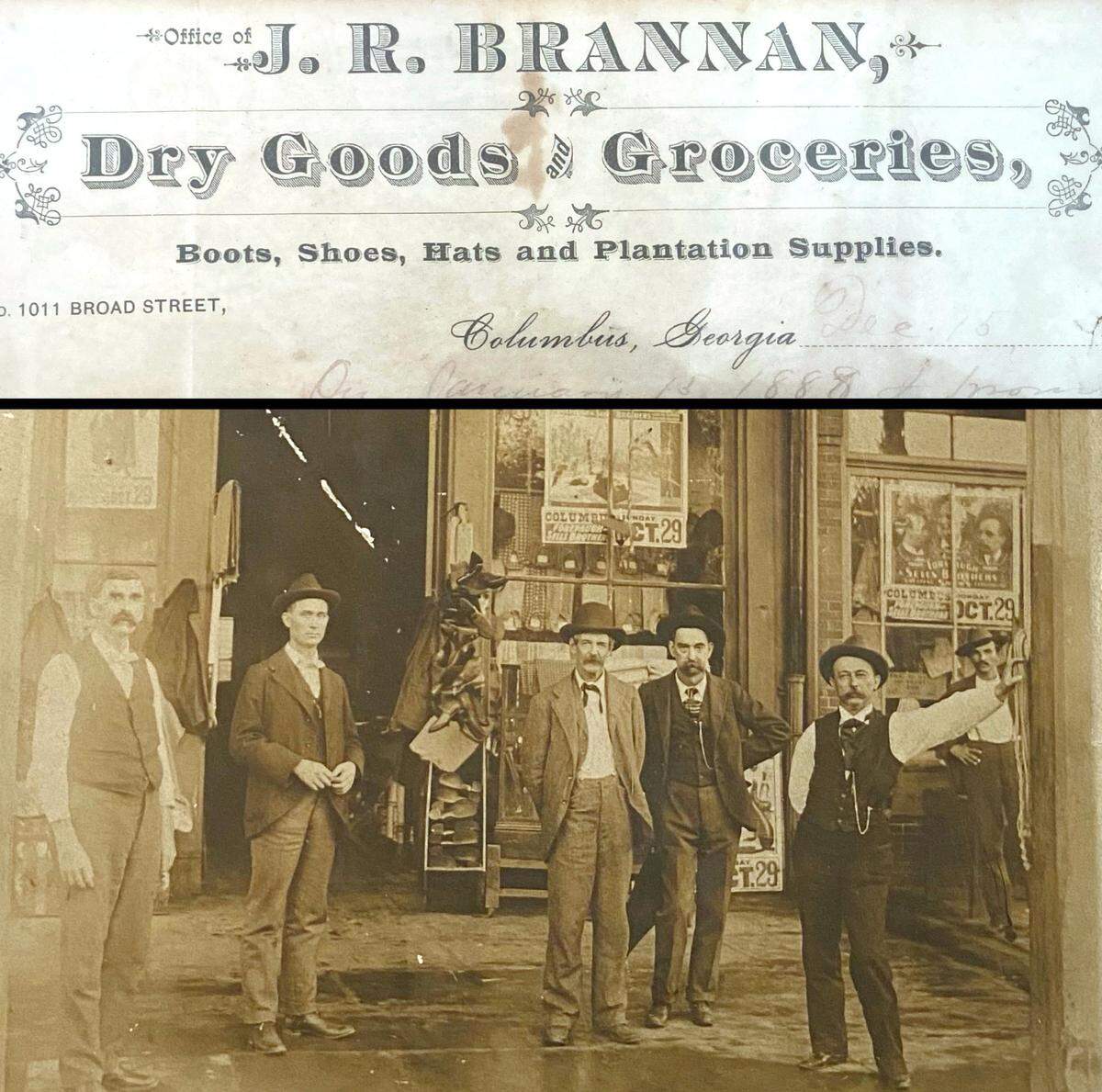
Ambrose’s poitín gained popularity in the region, and eventually one of his sons opened a store in Uptown Columbus. The building still stands today and houses Samurai Japanese Cuisine & Sushi Bar.
“We have a picture from 1887 of that building with my family,” Jon said. “And you can look in the background and see it’s the exact same brick.”
COVID-19 leads to family research
Growing up, Jon knew he had a great-great-great grandfather named Ambrose who was Irish. He knew that most of his family stayed in Columbus over the years, but Jon didn’t know many details other than what was passed down through word of mouth and what he’d learned from dabbling on ancestry.com.
When the pandemic began, Jon found himself with free time and stumbled back on the website to look up information from his family’s past. He pulled on the thread and went down the rabbit hole learning more about his history than Jon had ever delved into before.
“It was really a rush,” he said. “Just adrenaline because you find the clue that matches with what you previously found. So, you can confirm that this is the case, and you have documented records that match.”

Jon found the experience to be somewhat addicting, he said,
Around the same time, McGinnis and other members of a Facebook group called Early Columbus Georgia and the Chattahoochee Valley decided to start a project they could work on from home.
“I came up with the idea of writing a blog post everyday for the group,” McGinnis said.
Using old Columbus newspapers, she blogged about what happened in the past on the same month and day of the current date. She enlisted four friends to help: Daniel Bellware, Mimi Childs, Rachel Dobson and Linda McCardle.
The group kept up the blogs, some of which can be found on the Muscogee Genealogy website, from April 28, 2020, until the summer of 2022. McGinnis found Ambrose’s advertisement about a year into the project and forwarded it to Jon’s aunt when she recognized the family name.
“It was an amazing catalyst,” Jon said. “I mean, it was like winning the lottery.”
Creating a modern recipe
After learning more about Ambrose and his family, Jon felt called to resurrect poitín and sell it to the people of Columbus again. While there were companies in the United Kingdom making poitín, he said, no one was making the drink here in the United States.
“I can’t really describe it,” Jon said. “But I just felt like this is a product that people in the United States don’t know about. It’s rich in my family’s history, and I’m proud of my family.”
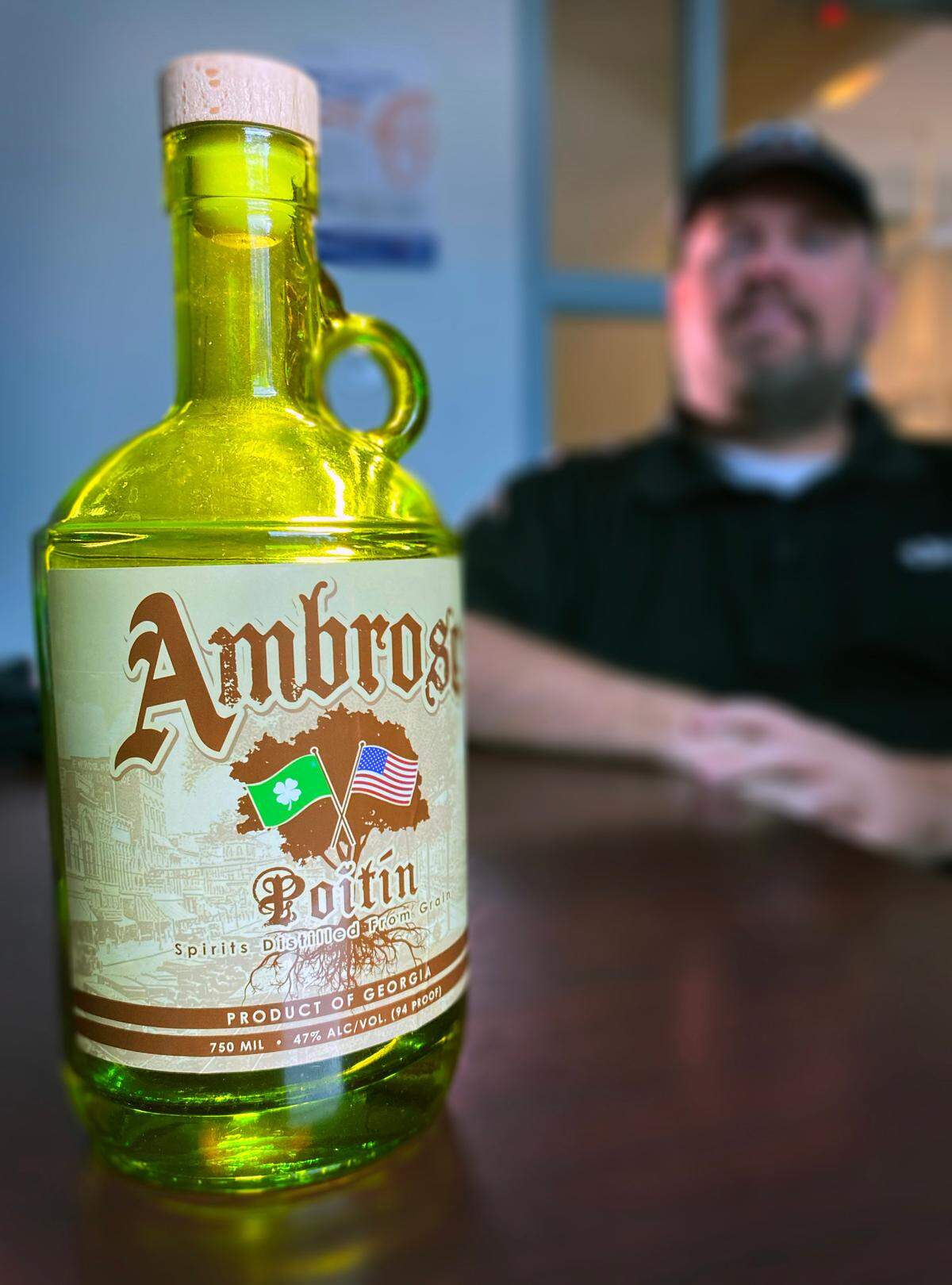
He approached Britt Moon, owner of Swamp Fox Distilling Company in Buena Vista, to pitch his idea. When Moon confirmed his company does contract distilling, Jon told him his family history and pitched his idea.
“What do you think?,” Jon asked Moon. “Do you think that this is something?”
“I think you could have something,” Moon answered him.
So, Jon had brands of poitín shipped over from Ireland to taste. He used the imported liquor and the partial family recipe he’d discovered through his research to reverse engineer Ambrose’s poitín.
“(We) added the secret ingredients that we knew from the recipe and came up with this formula that we think is special,” Jon said.
Ambrose Poitín is 94-proof, he said, meaning that it’s about 47% alcohol.
“It will punch you in the face,” Jon said. “But it tails off way smoother than other alcohols.”
To test his new recipe, Jon reached out to mixologist Phil Wills from Bar Rescue to have him taste Ambrose Poitín.
They met in Atlanta where Wills was filming an episode of Bar Rescue, and Jon gave him a couple of samples watching Wills’ body language as he tried it.
“His exact words were, ‘That is so intriguing,’” Jon said. “And he proceeded to drink all the samples I had.”

From there, Jon created a variety of cocktail recipes including the Ambrose Poitín Peach Tea, Strawberry Basil Lemonade, Irish Fare Thee Well and the Columbus Cola.
N3, Jon’s company selling Ambrose Poitín and named after a historic Irish road, will launch the drink this summer. Initially, sales of Ambrose Poitín will be limited to Columbus.
Jon expects the military will provide a big market for the drink, and expects people will eventually be able to order it only as they slowly expand to more markets.
For now, Jon continues to work as a sales representative at United Rentals to support his 14-year-old daughter as he gets N3 and Ambrose Poitín off the ground. He hopes that one day his daughter will appreciate the history and legacy of her family.
“When she gets older, I would like to think that she’ll look back and be proud and happy that I went back and found this information,” Jon said. “I think it gives people a sense of belonging. She’ll be able to carry the torch if she chooses to.”
This story was originally published March 13, 2023 at 5:00 AM.