EVs are big business in Georgia, but Peach State struggles on consumer incentives
Georgia produces more electric vehicles than any other state, but it struggles mightily to encourage its residents to buy them.
The Peach State leads the nation in electric vehicle (EV) manufacturing subsidies but is second to last in the national scorecard in the state’s efforts to incentivize Georgians to transition to EVs.
The American Council for an Energy-Efficient Economy (ACEEE) released its latest edition of the state transportation electrification scorecard last week, and Georgia ranked 32 out of 33 states the group analyzed.
“Georgia has made some progress in overall transportation electrification outcomes, although the state has declined in rank (from 27 to 32) since our last edition two years ago,” Peter Huether, the lead author of the report of the council wrote in an email.
ACEEE is a D.C.-based nonprofit that develops policies to reduce energy waste and combat climate change. This is their second national scorecard for EV ranking.
Transitioning to an electric vehicle from a gas-powered car, which runs on fossil fuels and emits carbon dioxide (CO2), a greenhouse gas, is one way people can mitigate added effects of climate change.
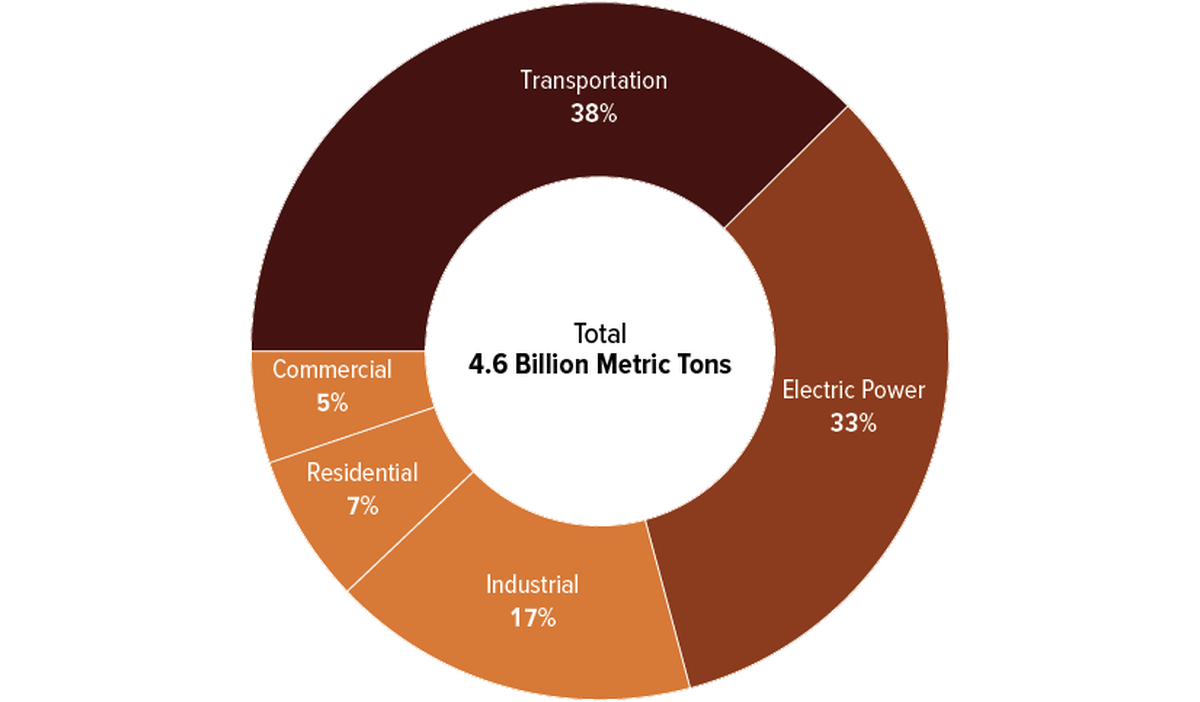
Transportation is the largest source of greenhouse gas emissions in the U.S. In 2021, there were 1.7 billion metric tons of CO2 released from transportation in the U.S. — the most of any sector in the economy, according to the Congressional Budget Office.
The nonprofit used five categories to calculate a state’s transportation and electrification score: planning and goals, incentives, system efficiency, grid optimization, and outcomes. Georgia’s highest score was in outcomes at 8/9.5 and its lowest was planning and goals which earned a zero out of a possible 15 points and three out of 21.5 for incentives.
An outcome score was determined by factors like light and heavy-duty vehicle registration, charging facilities, and electric transit facilities per 100,000 people.
The Southeast Energy Efficiency Alliance (SEEA), a clean energy promoter and long-time partner of ACEEE suggests the state was an early EV leader in the 1990s, providing incentives to purchase EVs leading to good outcomes today.
“In 2015, at the time the individual rebate ended, Georgia was No. 2 in the nation for EV adoption, just behind California,” Sydney Roberts, director of technology and market solutions and Justin Brightharp, senior program manager of SEEA, wrote in an email. “Georgia Power also encouraged a lot of early sector growth by building public fast-charging infrastructure, especially along interstates.”
There are 282 EVs per 100,000 Georgians, higher than the national average of 280, Heuther wrote.
Prioritizing the industry, not consumers
Georgia is No. 1 in the nation among EV manufacturing subsidies and leading the way in bringing jobs and investment to the EV economy.
“The state has pursued job creation opportunities along the entire supply chain, resulting in more than $22.7 billion in investments and the creation of over 28,400 jobs since 2020,” Gov. Brian Kemp said in June.
EV manufacturer subsidies in Georgia total $3.6 billion as of October 2022, the highest of any state by over a billion (North Carolina is second at $2.1 billion). Meanwhile, there is no Georgia-state tax credit for buying an EV, only a federal tax credit of $7,500. Additionally, there is an annual licensing fee of $210.
Purchasing incentives, as well as a lack of access to charging stations — also known as ‘range anxiety’— keep drivers from making the switch to an EV. Range anxiety is when drivers are fearful that there may not be another charging station between driving locations, especially during longer travel, to replenish the battery.
In Muscogee County, there are nearly 50 public EV stations and 467 EVs, just 1% of all of Georgia’s electric vehicles.
“Supportive state policies are needed to ensure that the electric grid is ready and that all households and businesses, including those in underserved communities, can use EVs and have adequate access to charging,” Heuther wrote.
The scorecard can be downloaded here.
This story was originally published July 10, 2023 at 3:22 PM.