
Will proposed Columbus data center fulfill job promises? Experts say it’s complicated
When Georgia communities recruit data centers, the job projections can sound like a huge boost to the local economy.
But for the proposed hyperscale data center called Project Ruby in Columbus, the Ledger-Enquirer has learned this pending agreement doesn’t include an incentive to compel the undisclosed company to fulfill its hiring promise. This is part of a broader statewide pattern in which data centers can deliver economic activity while overstating long-term labor impacts.
Here’s an overview of what we learned about Project Ruby’s promised jobs:
Project Ruby job creation estimations
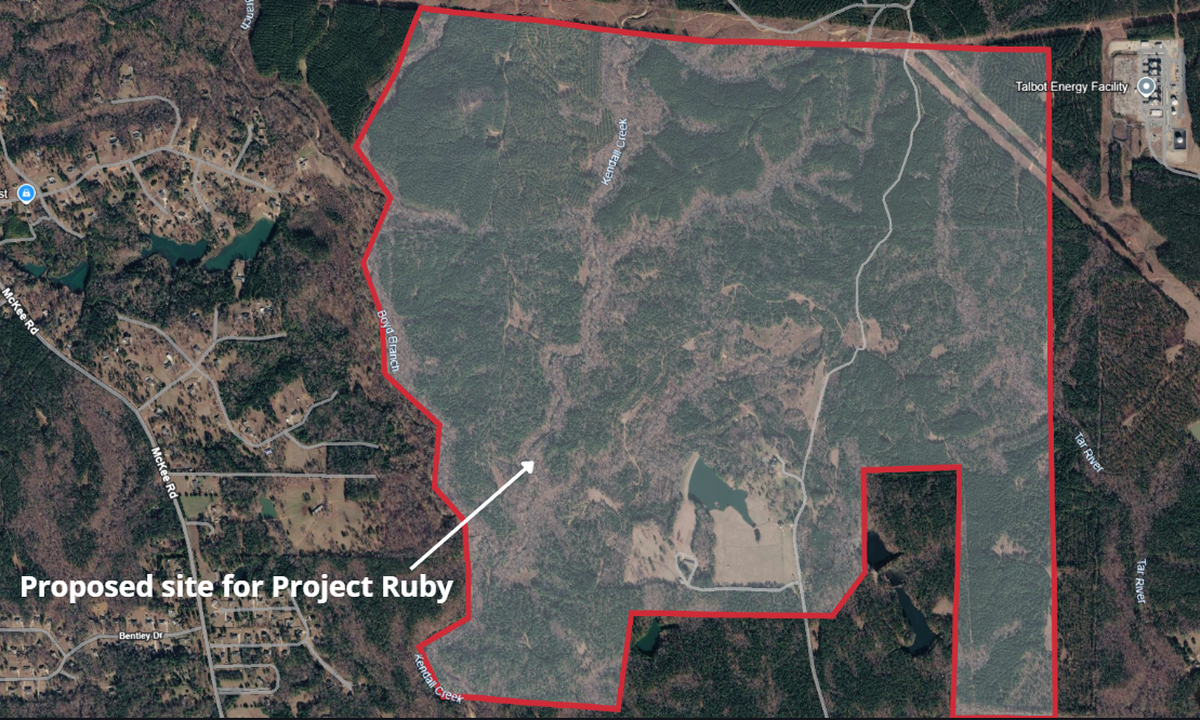
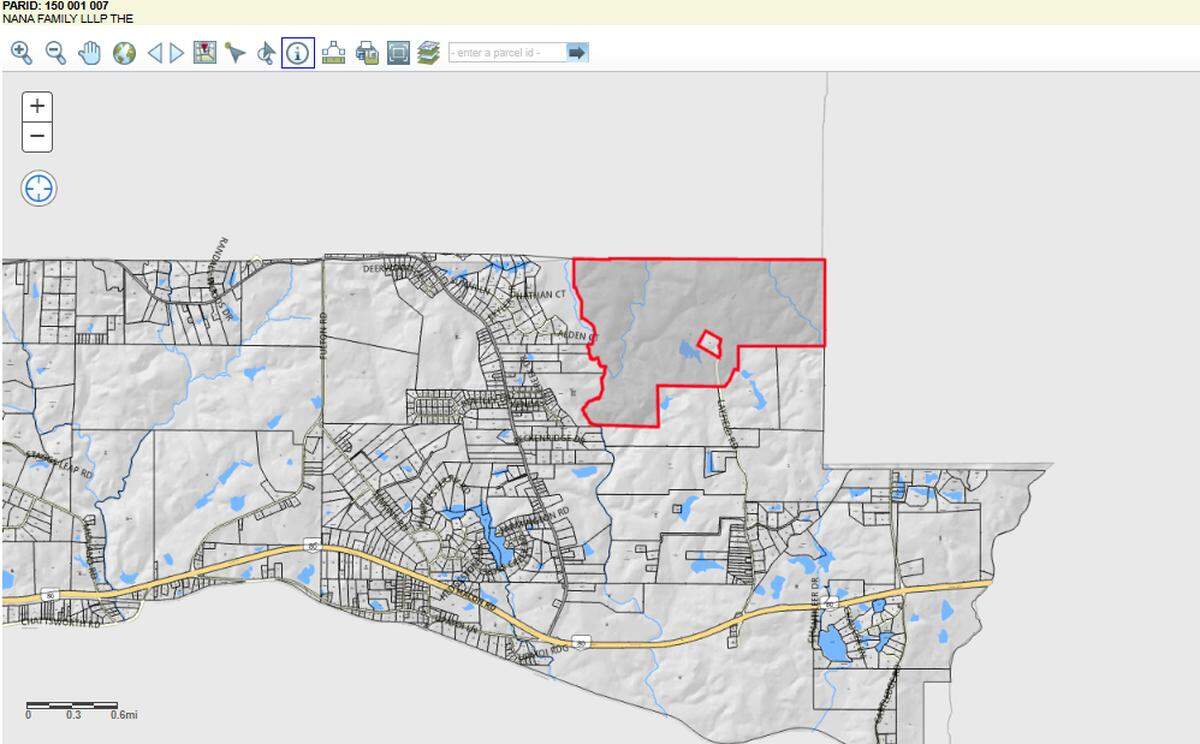
Project Ruby is expected to create 195 permanent jobs, with salaries ranging from $80,000 to $120,000 per year, according to the Feb. 12 news release from economic development organization Choose Columbus. The targeted site comprises 865 acres of wildland in northeastern Muscogee County, bordering Harris County and Talbot County.
In an interview last month with the Ledger-Enquirer, Missy Kendrick, president and CEO of Choose Columbus, estimated that an additional 1,500 construction jobs will be created to build the data center if:
- The Columbus Council approves the proposed technology overlay district ordinance,
- The Columbus Planning Advisory Commission and the city council approve a yet-to-be-submitted rezoning request
- The applicant receives permits for environmental and regulatory compliance.
Kendrick explained the complex situation for Project Ruby to achieve its jobs estimate.
Because the Development Authority of Columbus is not offering tax incentives for the project, Kendrick clarified that there is no contractual obligation for the data center developer to meet their hiring estimations. Tax incentives require transparency reports with actionable consequences.
“When we offer incentives to a company, we have annual reporting that we require,” Kendrick said. “We require that you prove that you’ve hired the number of people that you say you’re going to hire, that you’re paying the wage rates that you’ve told us that you’re going to be paying — because, if you don’t, we’re going to claw back the incentives, and you’re going to have to pay them back.”
Project Ruby did not receive incentives because they weren’t needed, Kendrick said.
“In a perfect world, everybody would be lining up to come here, and we wouldn’t have to offer incentives,” she said. “But that’s not the case. We have to compete with other communities, just like ours, all over the country and around the world. So we offer incentives. I did not think that we needed to offer incentives on this project.”
Her estimation matches statewide data.
In a December 2025 report posted by the Georgia Department of Audits and Accounts, researchers from the Carl Vinson Institute of Government at the University of Georgia estimate 70% of data center construction in Georgia would have happened regardless of state tax exemptions. This differs greatly from their 2022 report, which estimated nearly 90% of data center construction in Georgia was encouraged by the statewide tax exemptions.

Regardless, Kendrick said during a Choose Columbus public meeting March 20 that every job created in Columbus matters.
“We need every one of those jobs in Columbus,” she said, “and we are pushing for higher-wage jobs, but we need the whole spectrum of jobs in Columbus.”.
Data centers and the Georgia labor market
Data centers in Georgia have, in most cases, overstated their positive economic impact, according to the most recent report posted by the Georgia Department of Audits and Accounts.
According to the review published in December 2025, there are an estimated 63 active data centers around Georgia, with 35 under construction and 249 plans announced.
The report said data centers have created 28,350 construction jobs, adding $3.4 billion to the state economy. They also created 5,471 additional data center operations jobs, adding $823 million to the state economy.
The influx of data centers has created a net economic gain for Georgia’s economy, but their impact on the labor market, especially in communities where data centers are located, is complicated.
The report says it is unlikely newly created data center jobs will go to the residents already living in communities that approved the projects.
“Unfortunately, research shows that, in most states, only a portion of newly created jobs go to target residents,” the report says. “Skills mismatch between the new company and the current residents reduces the effectiveness of aiming economic development at economically distressed localities. It is politically and practically difficult to maintain a program focused on one area or population without acceding to the demands of other areas and/or populations that want to be granted similar policy instruments.”
Zanele Munyikwa, an economist at New York-based Revelio Labs, shared with the Ledger-Enquirer an overview of her research into the relationship between data centers and Georgia’s labor market. She discussed the impact of data center hiring across the United States, especially in Georgia.
“In Georgia, we found that hiring was very cyclical versus linear,” Munyikwa said. “It wasn’t just a constant increase in jobs.”
In her research, Munyikwa scraped over 700,000 company websites to assess demand for data center-related roles across the country. She found the average salary for data center jobs in Georgia is much less than in other states with heavy data center construction, like Virginia or California.
“The labor cost is a part of the competitiveness for why Georgia has been becoming an attractive place for data centers,” she said.
Long-term stability from data-center related jobs depends on many factors, Munyikwa said. Overreliance on hyperscale developers for employment is one of the major ones. Hiring for data center jobs is shared across tech firms and contractors, with tech firms being responsible for bringing in permanent jobs.
“That’s what makes the labor market more fragile,” she said. “It looks like there are about 20% of jobs that are formally [created] through these big 10 companies. There’s also contractors, … but it’s still reliant on these large tech firms to bring in these jobs and to continue bringing them in.”
Ultimately, Munyikwa said, the community must decide whether the initial cost is worth the jobs potential.
“It’s about understanding that it’s not going to be a straightforward boom in long-term employment that one might expect,” she said. “The question is whether it justifies the big upfront investment for a community.”
Have previous data center projects fulfilled their labor promises?
Before she became Choose Columbus CEO in May 2025, Kendrick was involved in three data center projects in Rome, Georgia, but only one of those projects has a named hyperscale data center like is proposed for Columbus.
That project, dubbed Project Firecracker, is a Microsoft facility on a 347-acre property off Huffaker Road in Floyd County, according to the Rome-Floyd Development Authority announcement. The facility is slated to be operational in January 2027.
In an interview with the Rome News Tribune, Microsoft’s director of community engagement, Paul Englis, said the company would create 150 jobs at the data center.
“We tend to underpromise and overdeliver,” Englis told the Tribune.
The Ledger-Enquirer asked Microsoft to confirm the number of employees hired so far for that project.
Erik Burton, a public relations spokesman for Microsoft, said the company does not provide official employee headcount figures. However, he shared the average number of job positions created in a typical Microsoft data center project.
Burton said the project will generate approximately 510 jobs at the peak construction phase. Once operational, the data center will employ approximately 50 employees per building. Microsoft typically builds 1-3 buildings per project, according to its Georgia fact sheet. Burton declined to confirm how many buildings will be constructed at the facility.
Burton declined to say whether Microsoft is the proposed hyperscale developer for Project Ruby.
While data centers can bring significant investment and short-term construction jobs, their long-term employment impact remains uncertain, particularly in cases like Project Ruby, where the data center company isn’t required to fulfill hiring projections.
This story was originally published April 16, 2026 at 5:00 AM.