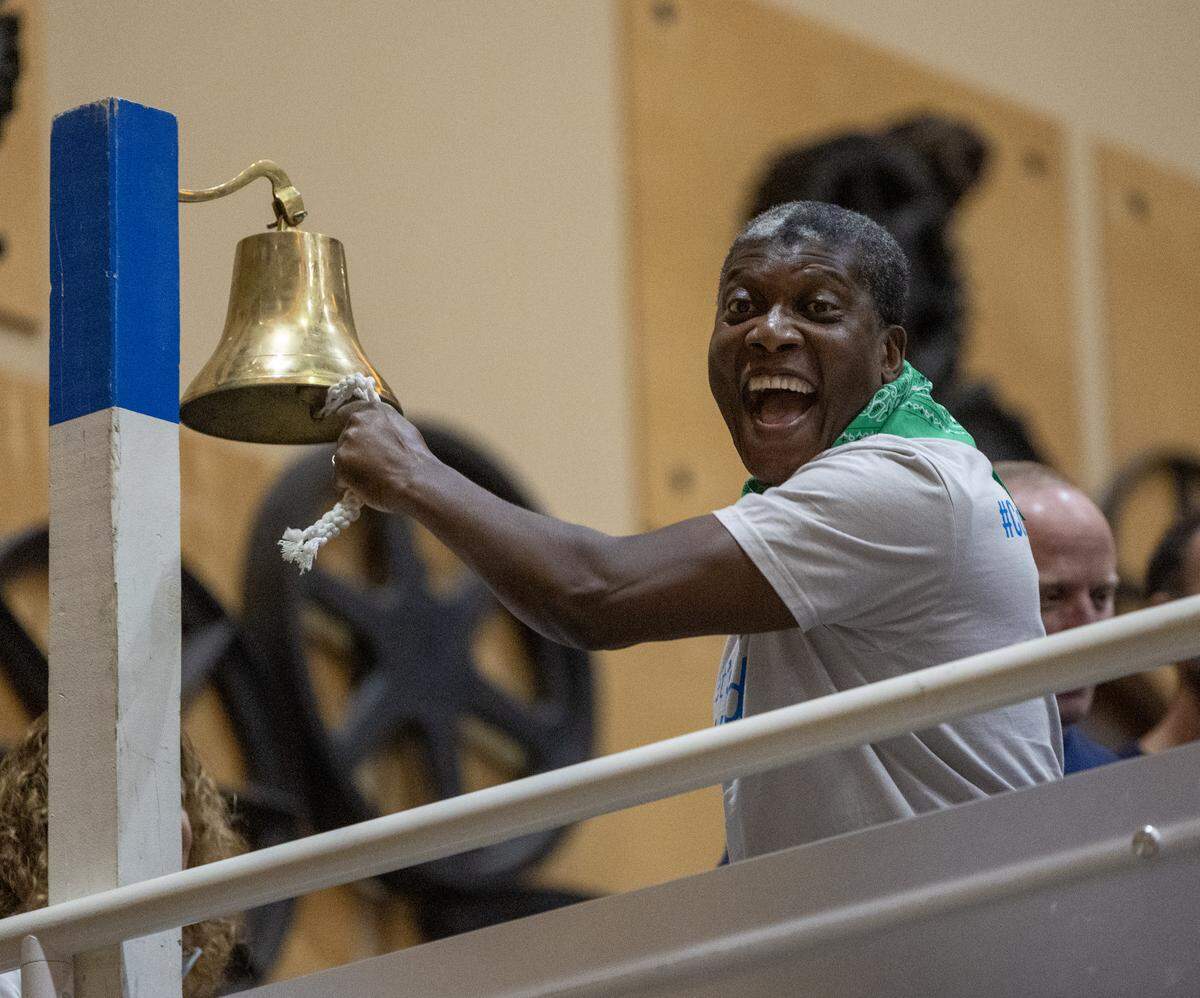
After Synovus merger with Pinnacle, CEO bets big on culture at Columbus event
As Nashville-based Pinnacle Financial Partners and Columbus-based Synovus Financial Corp. work through one of the largest mergers in Southeast banking history, the combined company’s executives are betting culture, not just scale, will determine whether the integration succeeds.
During a team-building orientation event this month at the Columbus Convention & Trade Center — in the city where the Synovus roots were planted 138 years ago — Pinnacle CEO Kevin Blair spoke with the Ledger-Enquirer about how he views company culture as a key element in the business.
“We’re building a bank that has scale with a soul,” Blair said. “And that soul is what you’ve known about Synovus for so long. It’s that same environment, that same culture, and the same investment in the community.”
The merger brings together two of the nation’s top-performing regional banks. Blair noted strong client satisfaction and continued loan and deposit growth since the deal was finalized this year. He said the integration has progressed faster than expected.
“We just had our first-quarter earnings, and we are way ahead of schedule,” he said. “What you hear from the investment community and others, most mergers don’t go that way.”
Blair, however, emphasized the more difficult challenge is unifying the employees from both institutions. He described the integration as being front-loaded with cultural programming.
A main part of the process is the Pinnacle onboarding program, which includes culture training and team-building exercises, conducted during multiple sessions in Columbus, Atlanta and Orlando. The combined events brought together over 1,000 employees.
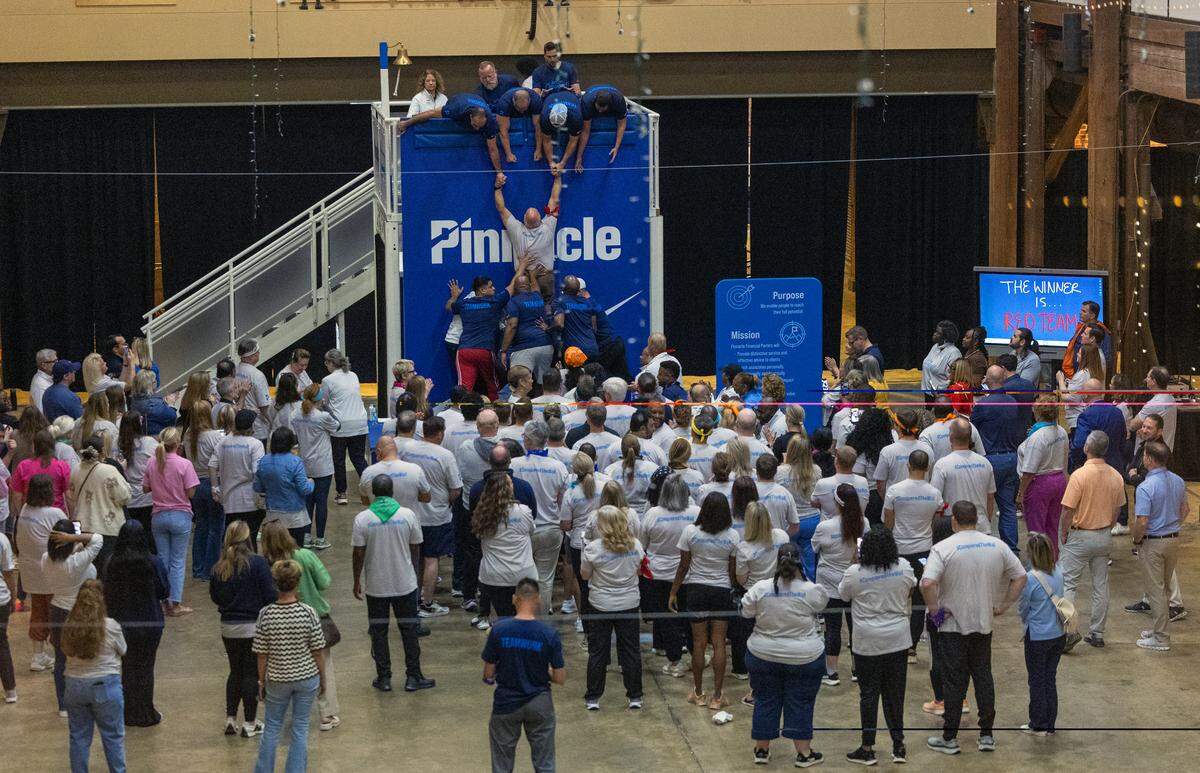
The orientation stems from a pre-merger tradition Pinnacle has maintained. Blair talked about how integrating their orientation is a step to restoring the “emotional bond” among Synovus employees and management that was lost during the COVID-19 pandemic.
“Every new team member who used to join Synovus came here to Columbus, and they were onboarded as a new team member,” Blair said. “When we had COVID, and we weren’t in the office, we created a virtual experience for that, and we got lazy after COVID left us. … I get a little frustrated that we made some changes post-COVID that got away from that emotional bond that we had created for so many years.”
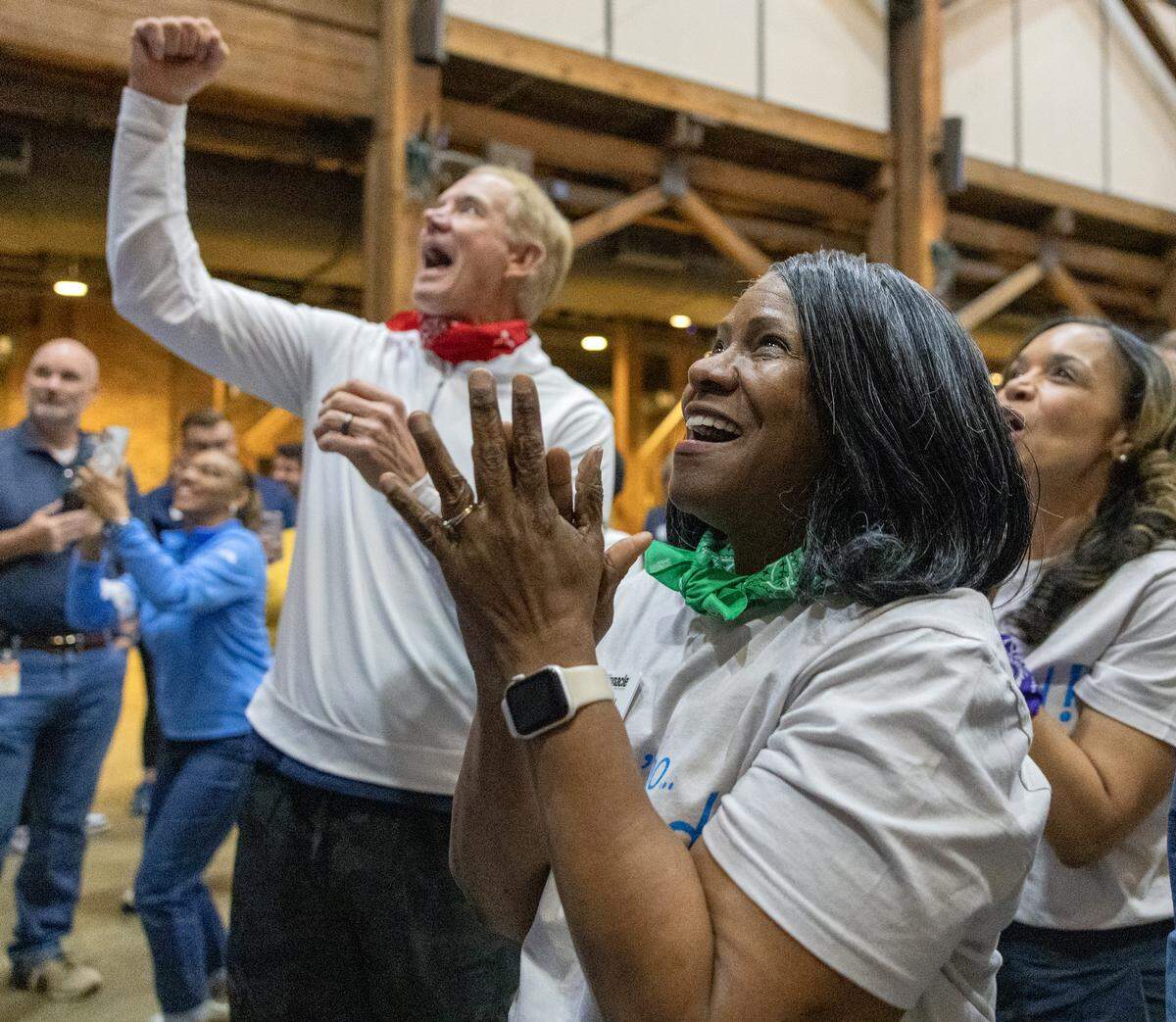
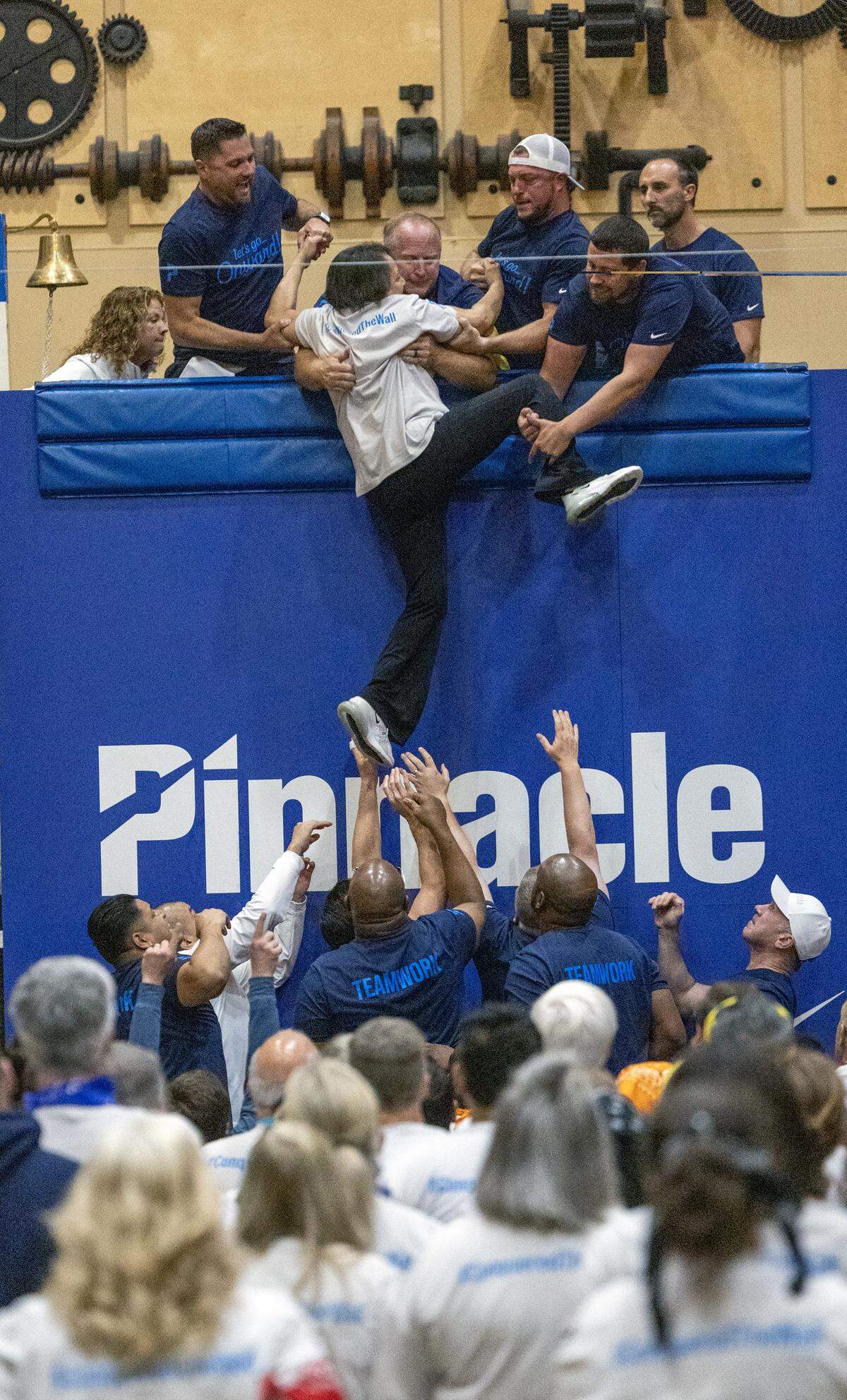
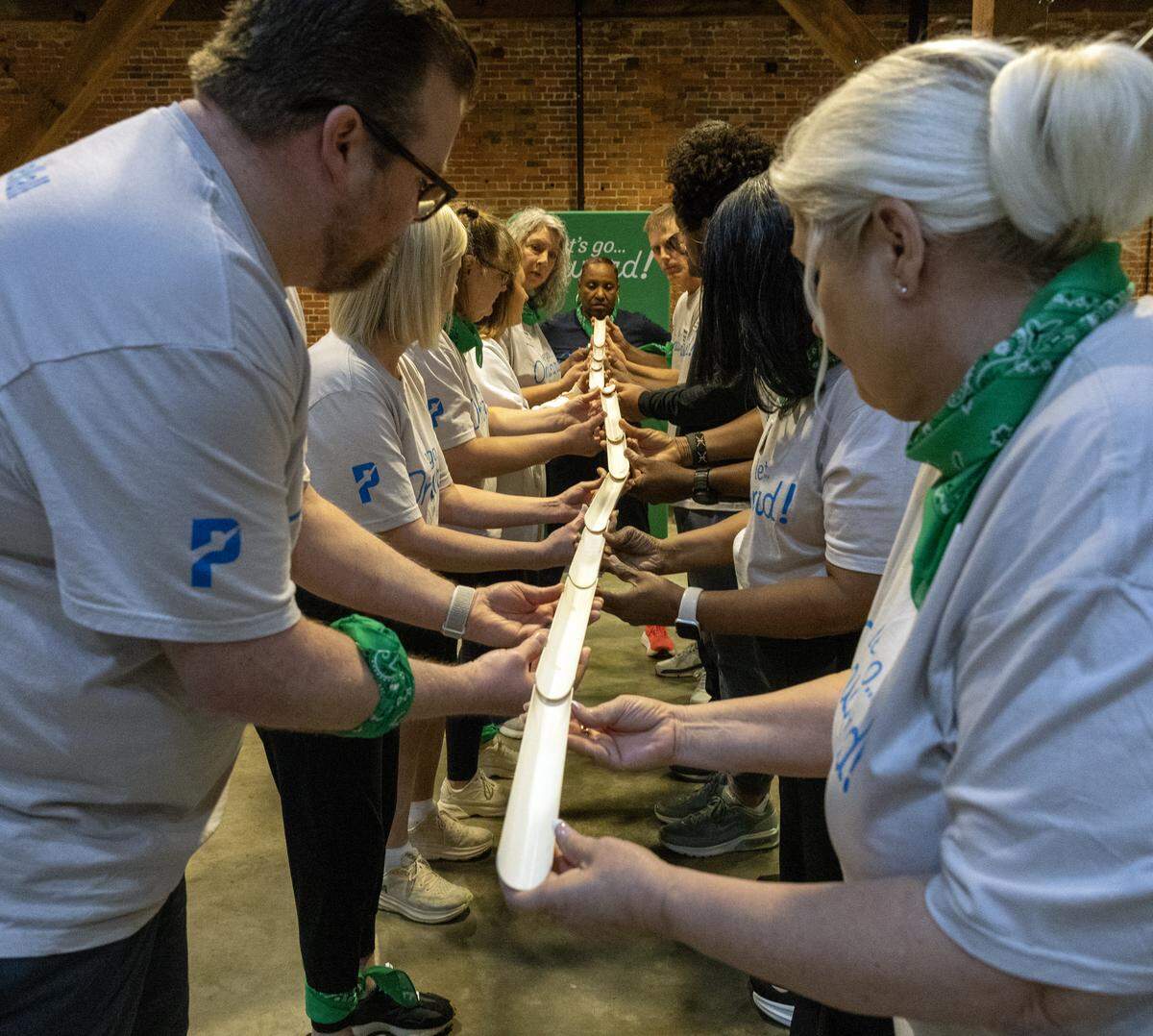
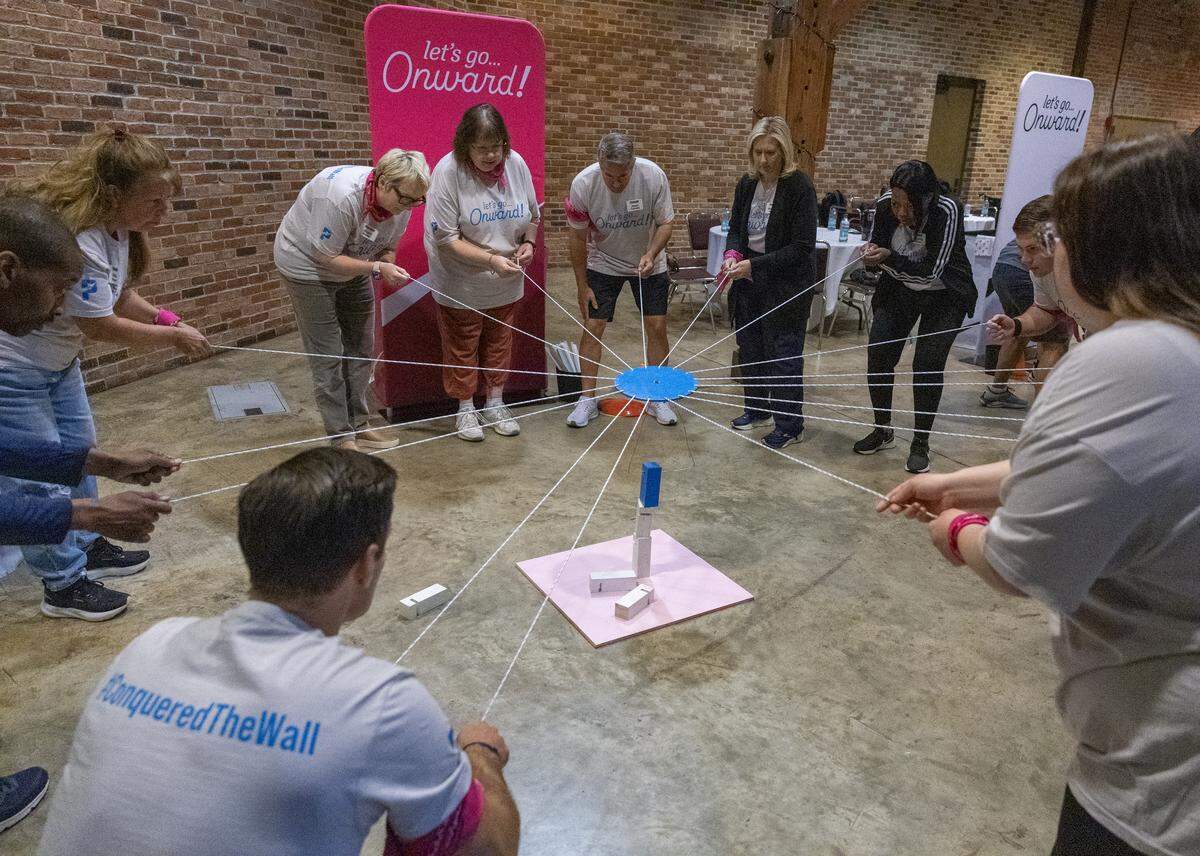
On the final day of orientation, bankers lined up in matching team colors for a series of competitive exercises designed to test collaboration: games with names like the “Toxic River,” stacked-block challenges and a 12-foot wall climb requiring employees to lift one after another over the barrier.
“It’s a statement I got from (management consultant) Peter Drucker: ‘Culture eats strategy for breakfast,’” Blair said. “If you can’t take team members and connect to them on a personal level, on an emotional level, [strategy] doesn’t matter. So, this is so important to go through these sorts of exercises, so that everyone leaves here being on the same page culturally.”
The merger also arrives during a period of significant transition for the regional banking industry nationally, as midsize banks face mounting pressure from rising compliance costs, technology demands and economic uncertainty.
For Pinnacle and Synovus, the timing was partly driven by scale.
Blair said part of the rationale behind the merger was the increasing difficulty for regional institutions to compete independently as they approached federal regulatory thresholds. When banks exceed $100 billion in assets, they become Category IV banks, which are subject to enhanced prudential standards. Pinnacle became a Category IV bank when the merger with Synovus finalized in January 2026.
“It’s gonna cost us about $80 million to do that every year,” Blair said. “By merging, … it makes you a bigger bank, so you can absorb those regulatory costs much more easily.”
At the same time, bank executives are navigating broader economic uncertainty, including pressure from inflation and geopolitical instability that continue to shape business and consumer confidence across the financial sector. “The world is a crazy place,” Blair said. “The biggest risk for us is just looking at the economy, and you see the inflation numbers, which makes it very difficult for the consumer, then that translates into making it more difficult for our commercial clients. It has more geopolitical risk and economic risk, but that’s not going to change how we deliver.”
Blair, however, said his focus remains on preparing for the operational demands of the merger’s systems conversion scheduled for 2027. “The real big roadblock is just getting through this conversion because we’re making a lot of progress on cultural alignment,” he said.
As the merger progresses, Blair reaffirmed the company’s commitment to continue growth and investment in the Columbus and the Chattahoochee Valley.
“I want the community to know, just as we promised, we’re going to make this a bigger but better bank — and not lose who we are,” he said. “We’re not going to leave these communities that we’ve served for so many years. I think we’re proving that each day, one at a time.”