
Online petition aims to save the Sibley Center at Callaway Gardens
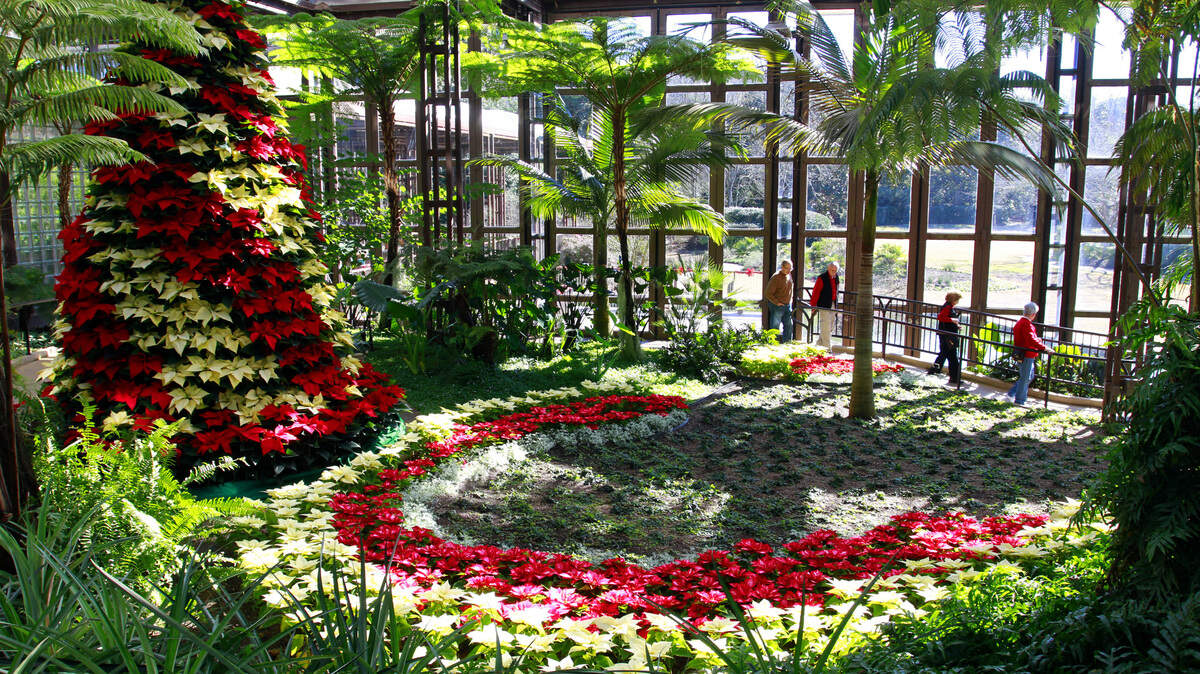
A Phenix City resident and annual pass holder to Callaway Gardens has launched an online petition to save the John A. Sibley Horticultural Center, which is being closed Thursday after three decades of serving the public.
Columbus native Jason Horne, 36, said he grew up visiting the attraction in Pine Mountain, Ga., about 45 minutes north of Columbus. He and wife, Mary, cherish the gardens and visited it a dozen times last summer, including two or three stops at the horticulture facility.
“The Sibley Center has kind of grown into the heart of the conservation mission at Callaway Gardens,” he said. “Being a production greenhouse, a lot of the plants across the entire property are grown and raised there.”
Horne, and others leaving comments on the online petition, which is listed on the site www.change.org, believe that pulling the plug on the center and other parts of Callaway Gardens “is contrary” to the basic mission of fostering healthy environmental awareness and educating the public in ways that they can participate in that.
“It seems to me at the rate they’re going, there won’t be any gardens in Callaway Gardens somewhere down the road not too far,” Horne said. “They’re going to be left with nothing but just another golf resort.”
Callaway Gardens was founded in 1952 by the late Cason J. and Virginia Hand Callaway. Aside from the Sibley Center, the tourist destination’s management recently shut down Mr. Cason’s Vegetable Garden, a 7.5-acre attraction dedicated to its founder, with plans to relocate it to a smaller site elsewhere in the future.
The Sibley Center was dedicated in March 1984 in honor of John A. Sibley, the late Georgia banker, attorney, conservation advocate and friend of the Callaway family. He also was a longtime trustee on the Ida Cason Callaway Foundation, the nonprofit organization that oversees the gardens.
Mr. Cason’s Vegetable Garden was dedicated in 1962, with the goal of making it a “scientific, educational and practical applications” attraction for visitors. Cason Callaway died the year before its opening.
William “Bill” Doyle, who was hired six months ago to replace Edward Callaway as president and chief executive officer of Callaway Gardens, said the vegetable garden land might end up being the site of a golf course clubhouse or a hotel or both. The gardens has two 18-hole golf courses, Lake View and Mountain View, the latter hosting the PGA’s Buick Challenge tournament a dozen times.
Doyle, in a response to the petitioners on the change.org site, thanked them for their “heartfelt” sentiments, while also laying out his rationale for making the decisions to close the Sibley Center and the vegetable garden.
“The vision of our Founders still guides the leadership of Callaway Gardens today,” the CEO said. “Early on our founders knew that in order for this great place to exist it needed support beyond what daily visitation could support.”
He pointed out a corporation, Garden Services Inc., was formed in 1958 to operate lodging, food concessions, the golf courses and Robin Lake Beach, with those profits benefiting the not-profit Ida Cason Callaway Foundation and the resort’s annual operating costs.
“It is of upmost importance that Callaway Gardens always has a viable, relevant and profitable resort operations to support the Gardens,” said Doyle. The attraction also operates a butterfly center, a Discovery Center visitor facility, and holds major events that include a Fourth of July celebration, a Masters Water Ski Tournament and the upcoming Fantasy In Lights holiday display.
“Over the past several years the Gardens’ cost to operate has exceeded the intake of funds to cover these costs,” he said. “We have mandated that we will no longer operate more than we can afford to do so.”
In recent years, Callaway Gardens management has sold off about 7,000 of the gardens’ 13,000 acres to put it on stable footing, previously saying it had cut debt of $44 million down to several million dollars. It cited slumping attendance exacerbated by the Great Recession in 2008 and 2009.
Doyle said his decision to close the Sibley Center and Mr. Cason’s Vegetable Garden “does not come lightly,” but that “sacrifices today will allow us to fund operations in a prudent manner.” He also acknowledged the “strong feelings” generated by the closings and that he plans to create “better experiences” for visitors in 2016.
“The reality of the financial conditions at Callaway are being addressed in a meaningful manner so that we are here for many more future generations,” the CEO said. “This ‘online’ plea to keep the Sibley Center open is appreciated but will not result in a change of decision for 2016.”
Doyle said the horticulture facility — which was built with private funds and renovated in 2003 — needs another multimillion-dollar improvement, while also costing several hundred thousand dollars to operate annually. He did not say what will happen to the eight-acre center once it is shut down.
“Many of the comments do express a desire to support Callaway in some way,” he said of the petitioners. “My plea to all of you is to continue to support Callaway Gardens now more than ever ... Not renewing an annual pass or coming for a daily visit is certainly a choice. All of us at Callaway Gardens desire your return and want to thank you in advance for those who continue to do so.”
Asked Monday if he thinks his petition will make a difference in saving the Sibley Center, Horne said he wasn’t sure. He conceded the gardens is struggling with its budget and cash flow. But he also said its leadership has become too “obsessed” with making money.
“I don’t know if it’s even a viable option for them to keep it open at this point,” he said. “But we would like to try anyway.”
As of late Monday afternoon, the online petition had been “signed” by just over 900 people.
This story was originally published November 9, 2015 at 4:45 PM with the headline "Online petition aims to save the Sibley Center at Callaway Gardens."