
Job Spotlight: Debbie Avery, associate director of facilities at TSYS
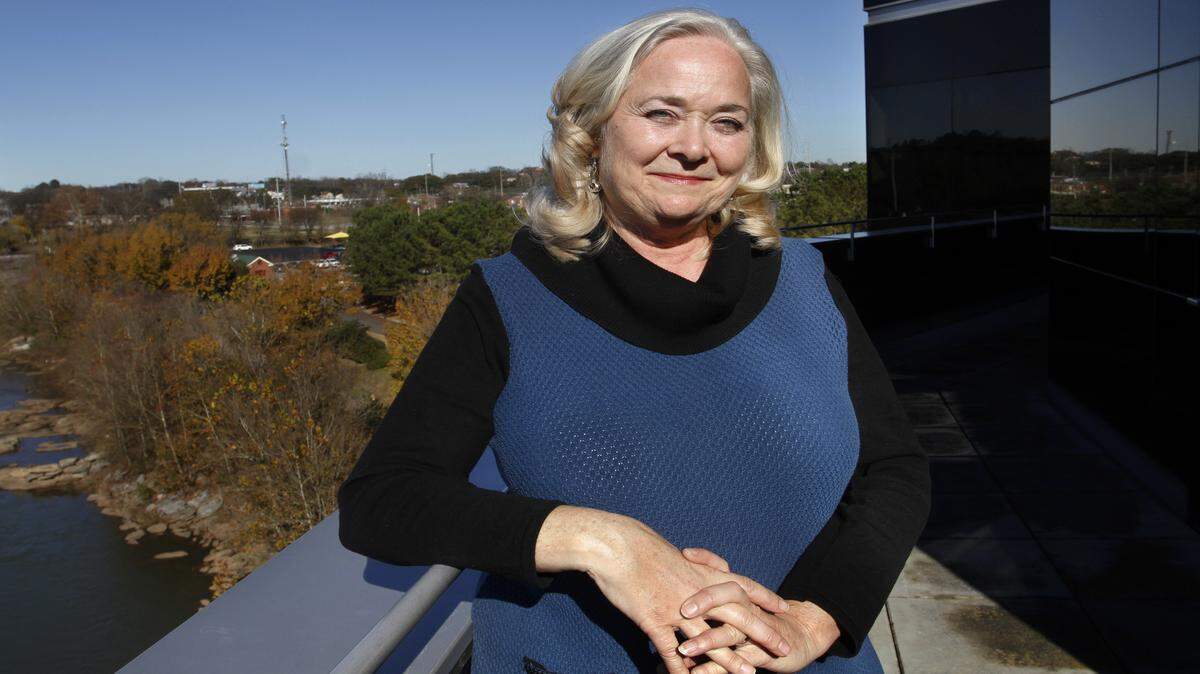
It’s a 542,000-square-foot corporate headquarters on 46 acres overlooking the Chattahoochee River, with about 2,400 working inside.
For Debbie Avery, that means the office complex that global credit-card and payments processor TSYS has called home since 1999 is filled to the brim.
“We’re very full, so we’re trying to find creative ways to work in today’s new environment,” said the associate director of facilities at TSYS in Columbus. “There are work-from-home programs that our HR department manages for us. But there are also opportunities to change the concept of how we work.”
The bottom line for Avery — who started out in the collections department at Columbus Bank and Trust in 1979, transferring to TSYS 24 years ago — her job is to keep the firm’s facilities in a top-notch state that maximizes employee productivity and happiness.
The Ledger-Enquirer sat down recently with Avery, 59, at the $110 million office complex, which includes a signature atrium in its main entrance. She discussed her job, what it’s been like to work with TSYS for so many years, and the emotions she felt when a historic building called the Mott House went up in flames on the campus in September 2014.
This interview has been edited for length and clarity.
What was your job when you first came to TSYS?
Actually, when they shipped me over here, I was still in the collections field, and I did that for a few years. Then they decided we didn’t want to do that. We wanted to do a TS2 (processing system) rewrite. That was a huge undertaking for TSYS. They asked me if I’d go work on that project.
You ended up eventually in facilities. What were your duties back then?
I was suppose to be able to move people from point A to point B. Back then we were in 19 different locations and, as a result of those 19 different locations, we had to constantly move people, and get more property, and put more people in there, because we continued to grow with no growth plan.
As a result, my boss, Chip Torbert, who’s the (corporate real estate) executive here, had been in numerous conversations with consultants on what we needed to do. In several of the meetings, they decided that we needed a corporate campus and where would that location be. The city of Columbus made a play for TSYS to stay here along with, I think we were talking to Huntsville back then and someplace in South Carolina that had technology driven teams there.
The city sealed the deal with Columbus State University launching the Intellectual Capital Partnership Program (ICAPP) to train computer-savvy workers. How did you evolve with that?
I went to Chip’s office. That was right before Christmas in December ’96, when we were about to go on vacation ... He said, ‘I’ve got some good news for you. You’ve been selected to work on the campus project.’ And I’m like, ‘Yes!’ I was so excited because this company is awesome. I thought this will be a wonderful opportunity to help people change how we work.
How has it changed?
There’s more collaboration space to entice these new, young people, fresh out of college. They don’t sit in cubes like we have in the past. I’m probably showing my age by saying that. They want to sit in open areas. They want to collaborate, which means whatever they’re working on in terms of projects are going to be delivered faster because they’ve already worked out the details from just working in the same area.
There’s no need to construct more buildings now with all the growth?
Not right now. If we continue down this growth pattern, we’d have to either go lease some more property or consider building the next phase. But I don’t think we’re there yet.
Are you in charge of the North Center complex off Moon Road as well?
I am responsible for North Center 300, which is a beautiful building. It reminds you of something you would see maybe in a Google world. The cubes are lower. They’re glass, wide open spaces, huge ceiling lines, beautiful color, lots of collaboration space, lots of it.
So you handle people and their office environment?
As far as people space, (Chip) always felt like I could deal with our team members better because I’ve worked here for so long. When they’re explaining their work processes, I get it.
What do you do on a daily basis?
It depends on the needs for the day. I’m still responsible for how we allocate our space. If there’s ever a major change in who reports to who, they call me and say, ‘Debbie, I want to move my team’ ... Our testing team, for instance, we moved 200 people, which sounds very easy, to another floor in building A. Well, to get space for 200 people I had to move 600 and relocate them to different portions of the building without disrupting their workflow. It’s like everyday there’s a giant puzzle and you’re going to shake the pieces up, and you’re going to try to make them fit for what works best for TSYS and the team members.
How often do you have to do something like that?
Probably every couple of years ... There’s movement every single day, but large shake-ups where you have a lot of movement are probably every 18 months to 24 months.
Are you in or out of your office a lot? On the phone a lot?
I am on phone calls, and in the average day, getting 300 emails is nothing because every time a person moves I’m notified. When they’re going to move, what day they’re going to move, and when they arrived. There’s a lot of pieces.
I’m also responsible for our contract with our food providers, which is Sodexo. The only place that has a cafeteria is really here at the main campus. Landscaping at the other locations I’m responsible for. Grant Environmental does our campus landscaping here (at the headquarters campus), which they do a phenomenal job. (Retired Chairman and CEO) Phil Tomlinson one time had a client come in and he said, ‘I knew I was in the right place when I pulled up because of the attention to detail in your landscaping and in your building.’
What’s the hardest aspect of your job?
On a day-to-day basis, it’s probably the movement of people because you want to make sure they’re in the right places. We outsource that (moving company) portion to Livingston. We deal local whenever we can. Between that and cleaning up behind 2,400 people is huge. You’re thinking, well, it can’t be that bad. But just taking out the trash for 2,400 people is a major issue.
We also decided somewhere along our journey that we wanted to be green friendly. As a result, we recycle our Styrofoam. We’re one of the biggest recyclers of Styrofoam in Columbus, Georgia, according to Dart, who we purchase from. They pick it up every month from our recycling center on site. We recycle cans and plastics and paper; we do it all.
Is it difficult to keep employees satisfied with their surroundings?
Making sure that our team members are happy is tough in general. They’re more productive if they’re happy in their work environment. Sometimes they may not be happy where they’re sitting, there’s too much light, not enough light. As part of that green initiative ... we decided we would try lights out Friday and it was a huge success. But my phone and the emails blew up because you still have probably, out of 100 percent of the people, 20 percent of the people do a lot of paperwork, so they still need light. However, the rest of them that were on their computers all day wanted those lights out.
Happy employees can lead to more profits, they say?
Right. When we were building the campus, (retired Chairman and CEO) Rick Ussery said, ‘Go out and ask the team members what they really want in a new facility,’ and we did. We interviewed and did surveys and talked to everybody. It’s real funny because everything they asked for was incorporated into this. We have a bank on site. They do mortgage loans. They will help you set up a safe deposit box. They’ll sell you movie passes, your corporate cookbooks. They will do your car loans. They’ll open up a Visa account for you. That bank is one-stop shopping. There’s ATMs in the campus.
Another thing they asked for was a fitness center, and we have the YMCA that’s located downstairs ... You need to go check it out. It’s beautiful. We just remodeled.
They wanted a child-care center; they felt that was important. We put in a child-care center. They wanted food service on site so they didn’t have to go out to get lunch or breakfast. They also have take-home dinner service. They wanted a corporate store, so if they want a snack or a cappuccino in the middle of the afternoon, or some fresh popcorn, or a yogurt, you can go to the store.
So this headquarters building has been open going on two decades. Does it need a little paint and remodeling?
We have talked about that. I think that would be our next venture. That is something that has to be approved by (current Chairman, President and CEO) Troy Woods and our executives on what they think our next step would be. But that is one of the possibilities, is we’ll start renovating the floors. The way we worked 17 years ago is not the same way we work today.
So when we say renovation, you’re not talking simply a coat of paint and new furniture? You’re talking ergonomics, etc.?
We have been doing ergonomics probably since we opened this campus. We always chuckle when somebody calls and says, ‘We need an ergonomic chair,’ and we’re going, ‘You’re sitting in one.’ We were buying ergonomic seating before ergonomic was really a word because we felt like it was important that our team members were comfortable in their work environment. A chair, for instance, in a work environment is a big deal because you’re spending a lot of hours in two places in your life. That’s your mattress at home in your bed, and in your work chair.
So we felt like to make you comfortable makes you productive. If you’re uncomfortable, that’s not good for us and it’s not good for you.
Are you guys looking at any other major projects?
I don’t see anything on the horizon ... But we do need to renovate, and freshen up, and redo some space. It’s aging, it’s 17 years old.
Doing it one floor at a time would take how long?
It would take more than a year. There’s 350 people per floor, and if you do the math, taking 350 people and trying to move them somewhere when you don’t have 350 empty spaces, that’s going to be a huge challenge. We still have to work out the logistics of how we would do that. We would probably have to lease some other property and stage the work so that we can move people in and out as we redo a floor. It would take several years to get the entire facility done if we did it with people in place.
Talk about the fire at the Mott House (built in 1841), which was being renovated in a major way for conference space.
That was bad. I got a phone call, I guess it was about 2 that morning, and it was from one of our maintenance guys. He said, ‘Debbie, I hate to wake you up, but I think you need to know what’s going on. This isn’t a joke, but the Mott House is on fire.’ ... It’s just surreal when you think about it. It just didn’t seem like that could happen.
You were closing in on wrapping the project up?
We were so close to being finished and they were way ahead of schedule. They were actually putting sample paint in the board room that weekend for me to look at on Monday morning, that’s how close. Once the paint starts going up, you’re home free. We were probably at least two months ahead of the schedule.
That would’ve been a signature project for you?
It would’ve been one of the best projects, yes.
You get emotional over that structure and its eventual fate?
I do, I do. I can remember when we were told we were going to work on the project for the campus and that one thing that we had to salvage was the Mott House. I’m going, ‘What house?’ ... I drove past here three times on the Alabama side, looking for the house. Eventually, somebody said, ‘Do you see the columns on the mill?’ I went, ‘Yeah.’ They said, ‘That’s the house,’ and I said, ‘It’s the mill,’ and they went, ‘It’s a house.’
When you go back that far and you start peeling away the layers and all of a sudden there’s a house, and it’s beautiful, you sort of get a little attached.
Back to your job, if someone wants to be a facilities person, should they take your path or is there a more traditional route?
I think there are more traditional routes in getting to where I’m at. Chip, who I work for, has an electrical degree from Auburn. I work with another lady that has a design degree from Auburn. I just happened to wander into it with just a love for people and a love for design. It just felt like I could make a difference for TSYS. I hope I do. I hope I do every day.
I want to make the team members proud of where they work, and our management proud. I want our clients to come here and go, ‘Wow, this is a cool place.’ I guess the best thing that could happen is that after you give a big tour and at the very end somebody goes, ‘Can I give you my resume, because I would love to work here?’ That’s the perfect way to end a tour.
For you, how long do you see your career lasting? No retirement soon, right?
I feel like I’ve got about 15 more years.
It sounds like you’re going to love pretty much every minute of it?
I will, I do. A big tip of my hat for our management team. I’ve always worked for people that have open eyes and can see the future with me. They’ll tell me their vision and I’ll share what I feel like our team members are asking us for or what the industry is saying: This is where you need to go; this is the path. As a result, we’ve got a perfect marriage going on. Everybody works together.
BIO
Name: Debbie Avery
Age: 59
Hometown: Born in Abbeville, Ala., although she considers Columbus home
Current residence: Lives on Lake Harding in Valley, Ala.
Education: 1974 graduate of Spencer High School; has taken classes at Columbus State University
Previous jobs: Worked in the collections department at Columbus Bank and Trust and Synovus
Family: Single with three children — Josh Mathis, Matthew Avery and Crystal Avery — and four grandchildren, Caden Cole Avery, Mady, Helina and Ryder Mathis; and her mother, Lurlene Horton
Leisure time: When not at work, her passion is spending time with her family; also loves to garden
Of note: She has always wanted to visit Ireland and Scotland, so she and daughter, Crystal, are planning a special trip there next year to celebrate her 60th birthday
This story was originally published December 26, 2015 at 8:49 PM with the headline "Job Spotlight: Debbie Avery, associate director of facilities at TSYS."