A more resistant strain of norovirus is likely to hit Columbus. How can you stay healthy?
The highly contagious norovirus has been rapidly spreading throughout Georgia, and Columbus is following suit at an alarming rate.
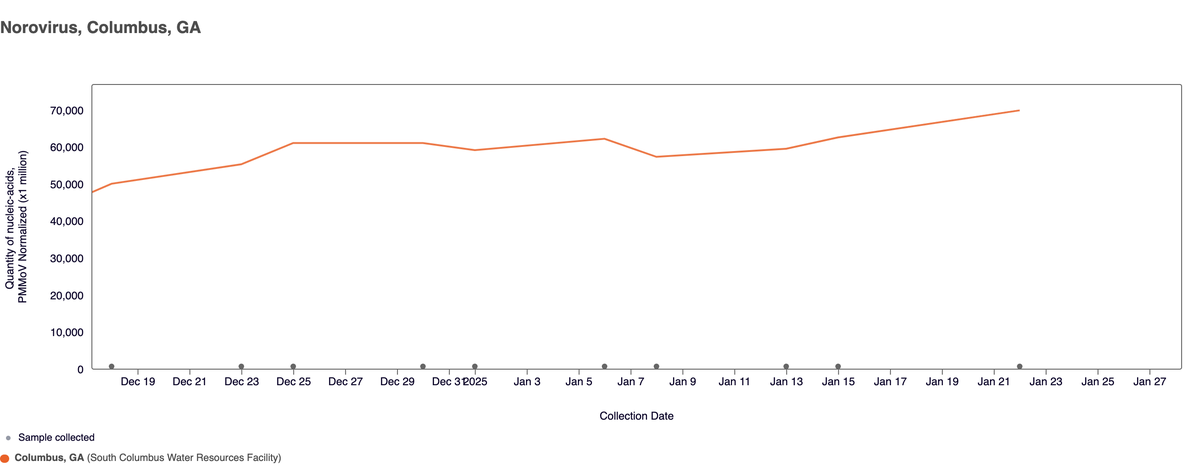
The scientific water testing organization, WastewaterSCAN, tracks a total of 11 infectious diseases across the country, and their tested samples from the South Columbus Water Resources Facility show a concerning level of norovirus.
The metrics for the rating system measure concentrations in wastewater over the last 21 days and changes in the levels of infection based on how often it is detected in wastewater. Based on these guidelines, the results have put Columbus in the “high” category,
What’s happening in Columbus?
This rating translates into a lot of sick people in Columbus, and although doctors and health care professionals aren’t obligated to test or report, there are definite signs.
Dawn Brown, MSN, FNP-C, is a board certified nurse practitioner at Piedmont Physicians Pediatrics at Midtown Columbus and has treated a lot of children who have come to her with virus. She told the Ledger-Enquirer, “Although I don’t necessarily test for it, it is norovirus ‘season’ and the numbers, so far, seem much, much higher.”
While there are some exceptions, Brown says that even though “there’s no treatment, it usually only lasts 1 to 3 days.”
How do officials know what norovirus levels are?
The U.S. Centers for Disease Control and Prevention collect data from 14 states through the Norovirus Sentinel Testing and Tracking network, which is strictly voluntary and states are not required to report. Georgia does not participate, but neighboring states Alabama, South Carolina and Tennessee do.
The reporting system in these states reveals increasing rates of a new strain of norovirus, called GII.17[P117], which has become the dominant strain in the United States, making up 69.7% of norovirus outbreaks from Sept. 1 to Dec. 31. This tenacious strand has a significant likelihood of making it to Columbus, and is most likely here already.
The main concern with this new strain is not its severity but rather its potential to cause more infections due to lower population immunity.
Should locals in Columbus be concerned?
The total number of cases in Columbus and surrounding areas can’t be known definitively because many people may not seek, or can afford, health care, but doctors know it when they see it.
Most people recover from norovirus without serious consequences. The virus commonly causes nausea, vomiting, diarrhea and abdominal pain. It may also lead to fever, headache and body aches. However, it is responsible for 109,000 hospitalizations and 900 deaths in the U.S. annually. The virus itself is what makes you sick, but its side effects are what can cause complications.
As with all norovirus infections, the primary risk is dehydration, especially for young children, older adults, and those with weakened immune systems.
Brown reminds parents and caregivers to take special care of these vulnerable populations by drinking a lot of fluids and treat any fever by alternating acetaminophen and Motrin.
This story was originally published January 24, 2025 at 11:23 AM.