Georgia is the riskiest state to have a baby. Here’s why
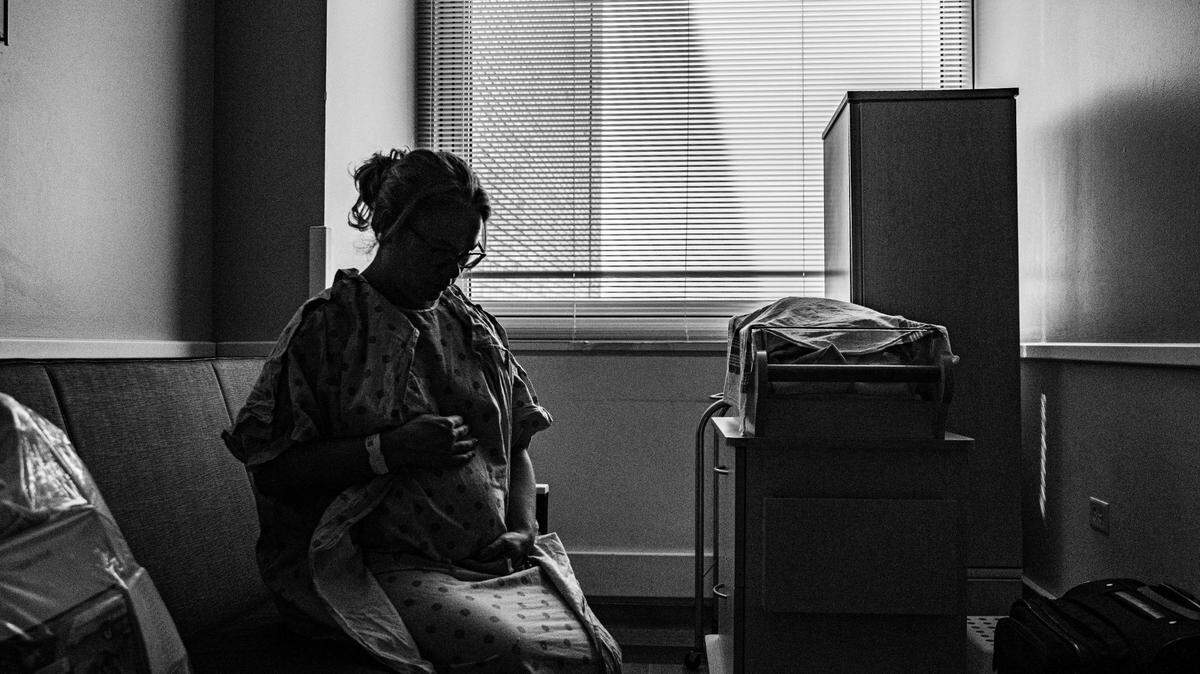
Georgia mothers are facing a health care emergency — and Black women are disproportionately bearing the brunt of it.
Although the United States has the highest maternal mortality rate among high-income countries, according to the Centers for Disease Control and Prevention (CDC), Georgia’s numbers are among the worst in the nation.
In fact, Georgia is routinely ranked near the bottom, with a maternal mortality rate that nearly doubled to 49.2 deaths per 100,000 live births in a single year, according to the National Library of Medicine.
The crisis is particularly devastating for Black mothers
Data from the National Center for Health Statistics shows that Black women make up more than half of maternal deaths in Georgia, dying at a rate more than twice that of white women. Factors like socioeconomic status, rural hospital closures, and systemic racism within the health care system are driving forces behind this alarming disparity.
“Cuts to Medicaid have put lives at risk — and so has Georgia’s refusal to fully expand Medicaid,” said Kristen Wilder, an organizer with the advocacy group Moms Rising, during an interview with the Ledger-Enquirer. “Medicaid covers nearly 50% of births in rural communities. When women can’t access care, outcomes suffer.”
Why is maternal mortality so high in Georgia?
There are many interconnected factors that contribute to Georgia’s crisis:
Limited Medicaid coverage: Georgia has not adopted full Medicaid expansion. Instead, it launched a Pathways to Coverage program, intended to serve more people. According to Wilder, enrollment has fallen far short of its 100,000 goal after nearly two years, leaving critical federal dollars untapped.
Medical deserts: Since 2010, nine rural hospitals have closed in Georgia, reports Georgians for a Healthy Future. This means many women have to drive hours for obstetric services.
Medical racism: The American Association of Medical Colleges (AAMC) published a study showing that Black women’s pain and symptoms are often minimized by medical professionals, leading to delayed or inappropriate care — a reality acknowledged by both national research and advocates like Moms Rising.
Impact of COVID-19: The Georgia Department of Public Health found that COVID-19 was the second leading cause of pregnancy-related deaths from 2019 to 2021.
Data disputes: Measuring maternal deaths can be complex. A 2024 study in the American Journal of Obstetrics and Gynecology argues that the CDC’s numbers may overstate mortality due to flawed death certificate check boxes. The CDC stands by its figures, emphasizing that maternal deaths are a growing and urgent crisis.
A new case causing maternal safety concerns
The case of Adriana Smith, reported by the Atlanta Journal-Constitution has become a flashpoint in the conversation about Georgia’s maternal safety and the state’s abortion law.
Smith, a 30-year-old Black nurse and mother from metro Atlanta, was declared brain dead in February after suffering a medical emergency while about nine weeks pregnant, the AJC reported. Georgia’s strict abortion law has been cited as a reason she has remained on life support for over 90 days.
Doctors are maintaining her organ function until her fetus can reach viability, the AJC reported. The Georgia Attorney General’s office has clarified that taking a braindead person off life support would not violate the state’s abortion law, according to Fox 5 Atlanta.
What can be done to help Georgia mothers?
Wilder stresses a few key components to help Georgia’s pregnant people.
Knowing your rights and options can be life-saving:
Seek out an OB/GYN or a midwife as early as possible. Many complications are preventable with timely care.
Explore local organizations. Black Mamas Matter offers directories and support for finding Black doulas, home birth midwives and culturally competent care providers.
Understand your Medicaid eligibility. Medicaid and CHIP provide health coverage for many low-income pregnant women in Georgia.
Advocate for full Medicaid expansion. Moms Rising and other advocacy groups encourage contacting your state representatives.
Stay informed about local hospital services and closures, especially in rural areas.
Be cautious about misinformation. Trust data from reputable organizations like the CDC, Black Mamas Matter Alliance and the Georgia Department of Public Health.
There are also many resources for pregnant people in Georgia.
As of June 2024, about 1.3 million women are covered through Georgia’s Medicaid programs, per the Kaiser Family Foundation but without expansion, millions of dollars in federal aid are left unused.
Georgia’s maternal mortality crisis is solvable and every mother, regardless of race, income or location, should have access to a safe and healthy pregnancy and delivery.
If you know of any resources available locally that I didn’t mention here, or need help finding some resources, email me at srose@ledger-enquirer.com or find me on social media.
This story was originally published May 8, 2025 at 11:03 AM.