
Procedure could help prevent esophageal cancer in patients
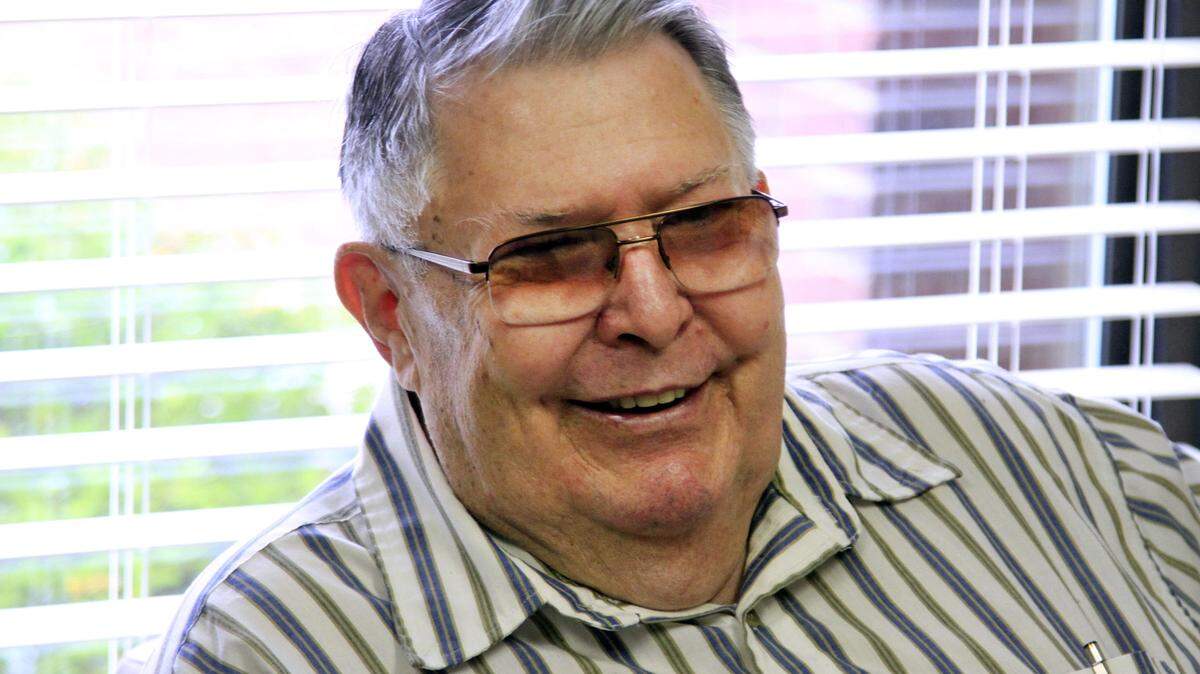
Hubert Hill laughs and says his doctor used a microwave to solve a serious health problem.
The 74-year-old Phenix City man was referring to radiofrequency ablation.
While a microwave oven uses microwaves to heat food, radiofrequency ablation uses radio waves to create heat that removes abnormal cells in the esophagus, the muscular tube that moves food from the throat to the stomach.
Last year, Hill was treated for the condition known as Barrett's esophagus by bariatric surgeon Paul Cartwright of the Minimally Invasive Surgical Institute.
Cartwright said if Barrett's esophagus is not taken care of, it can lead to esophageal adenocarcinoma, a deadly form of cancer.
While esophageal cancer does not get the attention of other diseases, every 36 minutes someone in America dies from it, according to the Esophageal Cancer Action Network. Barrett's esophagus patients have a 1-in-20 chance of developing esophageal cancer compared to the 1-in-500 odds faced by the general population.
"The problem with cancer of the esophagus is there are no symptoms until it is at an advanced stage and the person finds it hard to swallow anything," Cartwright said.
Hill said there were no symptoms to his Barrett's esophagus. The retired Army sergeant first class and convenience store owner was undergoing tests for an unrelated medical problem, getting a colonoscopy and upper endoscopy.
The EDG revealed a stomach ulcer and Barrett's esophagus.
"I was lucky," Hill said.
Cartwright said Barrett's esophagus and most cancer of the esophagus is a result of gastroesophageal reflux disease -- a chronic regurgitation of acid from the stomach into the lower esophagus.
"The acid is supposed to stay in the stomach," Cartwright said.
A result of the burning can bring a change in the lining of the esophagus with new tissue being created that does not belong, tissue that is more like the lining of the intestines. That is Barrett's esophagus.
If the new cells look highly different in size and shape from the normal cells, that is considered high-grade dysplasia which has the best chance of becoming cancer. Hill had high-grade dysplasia.
Hill said he has suffered from heartburn for many years but never thought he had a reflux problem.
"I thought it was just from eating spicy foods. I kept popping Rolaids and Tums," Hill said.
During the radiofrequency ablation, Cartwright inserted an electrode on a balloon catheter down Hill's throat to the lining of his esophagus.
The device delivered heat energy and was able to burn away abnormal precancerous cells discovered there. Healthy cells were not damaged.
Cartwright said to treat a condition such as Hill's once required surgery.
"This is less invasive. The beauty of it is there is no incision," the surgeon said.
The procedure, which takes less than an hour, has been around for about 10 years. Cartwright said he introduced it here in early 2014.
Cartwright said anyone who has suffered from GERD for a long time needs to start getting a screening because it could save their life.
This story was originally published October 19, 2015 at 9:33 PM with the headline "Procedure could help prevent esophageal cancer in patients ."