
‘A different frontier.’ Will small businesses in Columbus bounce back after coronavirus?
When Columbus Mayor Skip Henderson signed a declaration of local emergency to help curb the spread of COVID-19 in the community, he knew the impact it would have on local businesses.
The order shut down dining rooms, leaving restaurants with curbside pick up and delivery options only, as well as bars, indoor recreational facilities and all body care services that put provider and clients in close proximity.
“We understand and recognize that the coronavirus is a medical health emergency, but it’s going to have long-lasting financial repercussions on our small business owners,” Henderson said in a video announcement of the order.
“We’re acting on the premise that if we can get everybody to pull together and make a difference in a short period of time, then the economic pain from two or three weeks being closed is going to be a lot less than if this thing just continues for the next four or five months,” he subsequently told the Ledger-Enquirer.
Local businesses were already feeling financial and social pressure in the week leading up to Henderson’s March 20 decision.
A decline in sales meant restaurants had been forced to pivot, offering dine-in seating with tables spaced far apart or relying more heavily on takeout services.
Some took more drastic measures. On March 18, the ownership of a trio of some of downtown’s most beloved restaurants announced on Facebook that they would be shutting down completely through the rest of the month.
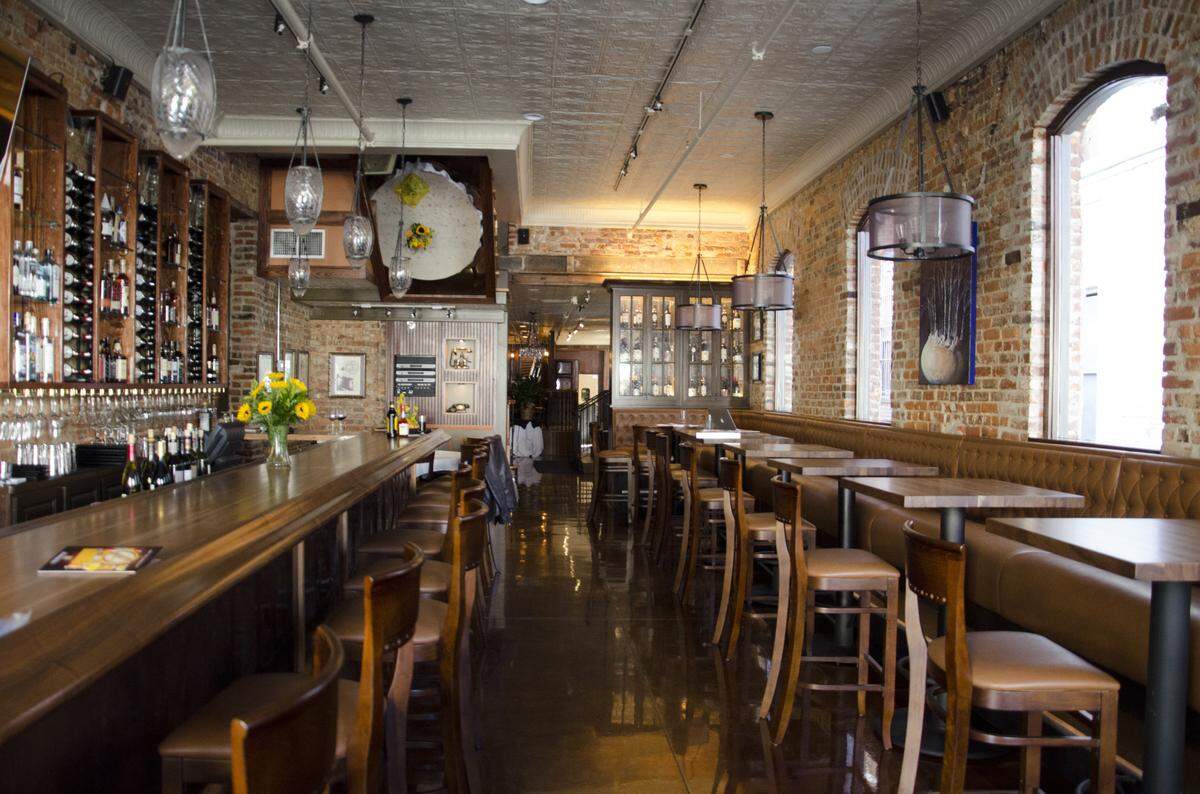
Buddy Nelms, partner in the ownership of Mabella’s Italian Steakhouse, saltcellar. and The Loft, said that the decision to close was one of the most challenging decisions in his career.
The Loft has been open for 28 years, Mabella’s for six and saltcellar. for one, Nelms said. There’s never been a time in The Loft’s near three decades where the restaurant had to close.
“This is a different frontier,” Nelms said. “Nobody really has the answers and we don’t want to pretend that we have the answers. There’s so many conflicting messages out there...but it feels like the most responsible thing we could do for our staff and our patrons,”
The three restaurants typically employ about 160 people. Nelms said four of those employees are currently pregnant, and many others live at home with elderly parents and grandparents. Others are nursing students.
“We’re a real popular place and people were still coming out and according to the (Centers for Disease Control) it was really counter to what we needed to be doing,” he said. “I hope with everything that I have that we’re overreacting, but we sure don’t want to be guilty of under-reacting.”
Unemployment is available to a lot of the employees, Nelms said, and he plans to bring people back on once signs of the virus spreading subside. The company is taking time to do some deferred maintenance while the stores are closed, he said.
“It’s important to us that we have a job for (our employees) to come back to and we have to ensure that through our leadership,” Nelms said. “It felt real counterproductive with all we know to make this move, but we are sure we have made the right move and we think other people will follow suit and we’ll all work together to build it back.”
Nelms said he anticipates gathering for a huge celebration once the restaurants reopen and life gets back to normal.
“We’re already planning it,” he said.
Curbside delivery a new normal
Country’s Barbeque owner Grif Morpeth too felt the impact to his business prior to the mayor’s order.
Morpeth said recently his business was down at least 50% from normal, and that the decline kicked up March 17, following President Trump’s request for Americans to avoid gatherings of more than 10 people and forego restaurants and bars for the next 15 days.
“To combat that we’re trying to focus on deliveries, to-gos, pick up,” he said. “We’ve added curbside service at all locations. We’ve always had it downtown just never really utilized it.”
Country’s three locations tried to keep dining rooms open, an operation that has now stopped.
Waitr is used at the downtown location and Morpeth said he’s trying to implement DoorDash and temporary online ordering.
“We’ve definitely scaled back on what we’re ordering because we’re not using it, but if you come to the drive-thru and curbside pickup we still have the full menu,” he said Monday.

Morpeth said he’s had to cut staff down from 250 people overall to around six people at each store.
“It used to be a lot more than that and hopefully it will be soon,” he said. “We will do whatever the mayor tells us to do or the state tells us to do. If they tell us we have to shut down then we’ll shut down and try to tough it out.”
Morpeth remains confident his business will survive.
“We’ll get through it and come back,” he said.
Salons, barber shops forced to close in Columbus
While restaurant servers and cooks may be some of the hardest hit in the time of novel coronavirus, those in other industries are also feeling the hardship.
Barbara Braswell Holladay is a hairstylist at D’Allen’s Salon on Old Whittlesey Road. The salon bills itself as the largest full-service salon in Columbus, and all of its employees are now out of work due to the mayor’s order.
“We got the call on Friday that they were shutting the salons down so we raced to reschedule our clients,” she said. “It’s just a really like strange, disorienting time for us.”
Holladay’s plight is compounded by the fact that she works as an independent contractor, like scores of other hairdressers, barbers, massage therapists, tattoo artists and others in the body care industry. She pays rent for her space at the salon instead of working as an employee.
She said March 23 that as far as she knows, she doesn’t qualify for unemployment benefits due to her status as a contractor, and that she is anxious about the future.
“This is something that no hairstylist has ever planned for, it’s unprecedented,” she said. “Most of us are prepared to cover our bills for like a month, but if you just had a bad month or something, this came out of nowhere and there was no time to prepare financially. And we don’t know when we can get back out there and start making money — that’s scary too.”
But there are positives as well, Holladay said, and that’s where she is focusing her energy.
“It’s kind of forced me to slow down a little bit. Hairstylists are fast-paced, they don’t take lunches, they have long hours, and because I know I can’t go to work I’m just kind of sitting back and thinking of things I can do to make the salon better when it does reopen,” she said.
Holladay said she expects innovative ideas to come out of the industry while they wait to get back to work. She plans to do video tutorials to help clients who are likewise stuck at home waiting out the coronavirus.
“A lot of my clients are like ‘I don’t know how to curl my hair, I don’t know how to do this, do that,’ well now is the perfect time to do it,” she said. “There’s a lot of really great opportunity.”
Limits on gatherings put event industry out of business
Another industry hard-hit by state and local orders to limit gatherings of people to 10 or less is those in the wedding and event business.
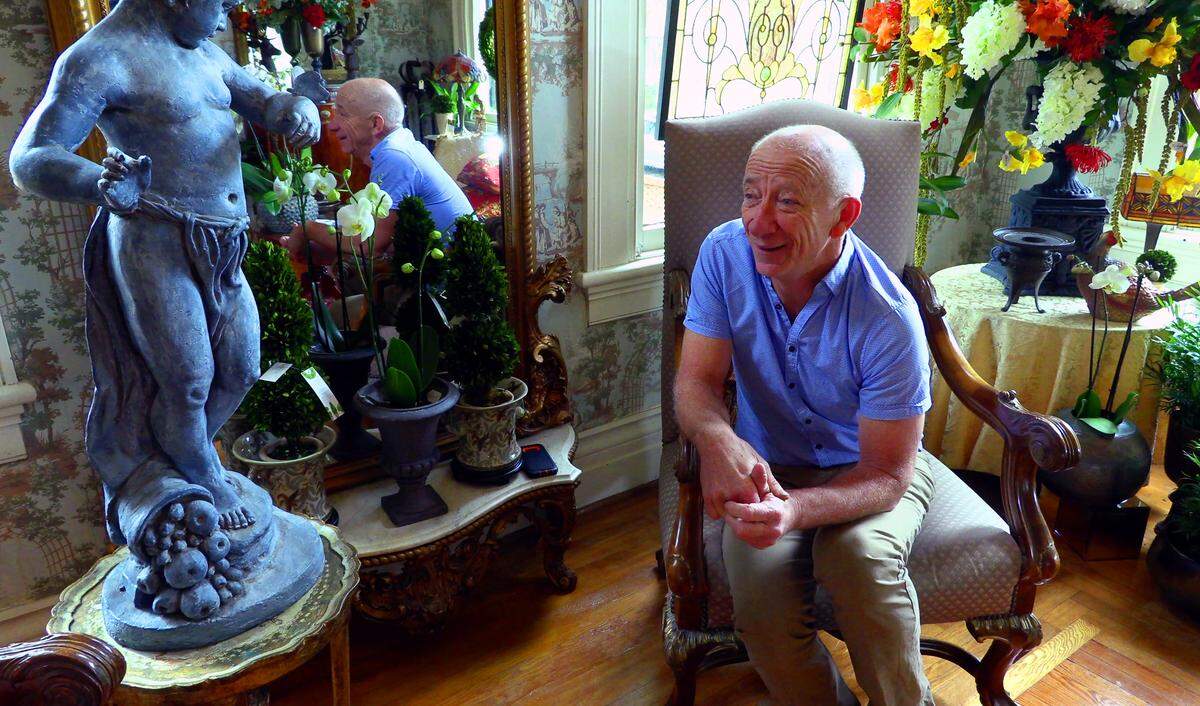
Local florist David Benefield said Wednesday that his business has definitely been affected by the coronavirus.
“Last week, we got notice of seven wedding cancellations, almost back to back,” he said, “one of which we had already purchased the flowers. The day the flowers came in was the day we got notice that the venues had shut down.”
Because the flowers had already been paid for, Benefield said he will honor that when the wedding is rescheduled.
To attempt to recover some of the cost, he sold as many as he could at his store, and took the rest to the bride’s family and to local nursing homes that would accept them.
“Last week was the worst week,” Benefield said. “We had a huge party that got canceled, and all of the dances, and every social function...that has really decreased tremendously.”
He has two employees, and says he hasn’t let anyone go or decreased anyone’s salary because they rely on their jobs to feed their families.
“It also has affected all the way to where the flowers come from,” Benefield said. “In Holland they’re throwing away trainloads of flowers that just aren’t selling because so many florists are not going to survive this.”
Though his operation is not included in the mayor’s mandate of stores that must close, as a small retailer he must count heads to ensure no more than 10 people are in his establishment at one time.
He said what will likely save his business is delivery, which can be done without contact as drivers leave the flowers on front porches and door steps.
“A lot of people who can afford to are sending flowers just to make people happy because they’re shut in,” he said. “It’s going to be very hard for small business to hold on unless people support it.”
Benefield said he is strong in his faith and he believes everything will work out.
“We’re going to survive, I’m going to make sure we survive one way or the other,” he said.
How you can help local business
There are 9,200 businesses in the Chattahoochee Valley, which is a Georgia Metropolitan Statistical Area that includes Muscogee, Harris, Chattahoochee, Marion, Stewart and Talbot counties as well as Russell County, Alabama.
Of the 9,200 businesses in the MSA, about 90% are small businesses, according to Amy Bryan, executive vice president of community development and growth for the chamber. Small businesses are defined as those that employ 500 people or less.
Bryan said small business is therefore extremely important to the heartbeat of the region, which is centered around Columbus.
The number one thing she said will help businesses survive is support from the community.
“If you can, go get curbside to-go or go get your favorite drink at Jarfly...stay in touch with them, whether it’s following them on social media or just checking in and see if they’re still operating in some capacity,” she said. “We love the whole gift card idea. Buy a gift card that you can use in the future. Look to see who’s doing what and how you personally can support them.”
Bryan said the chamber is looking to help any business during this time, whether they’re a member of the chamber or not. She also said the chamber has been in constant contact with not only state officials but also federal ones about the affects of COVID-19 on local business.
“We’re working through the details of the stimulus relief package and once that is passed, the chamber will help identify a road map for our small businesses and what resources will be available to them,” she said. “We’ll be partnering with our banking institutes to make sure they’ve got the support that they need as well because they’re obviously going to be inundated once this relief package passes.”
She also said the local government has been working with the chamber and that the crisis has highlighted the strengths Columbus has to collaborate and make things happen with public-private partnerships.
“It’s been super inspiring and I think it’s indicative of what kind of community this is and how we can come together in times of need, to see everyone supporting each other as best they can,” Bryan said.
The chamber staff are working remotely but can still be reached via email, and have compiled a list of resources to help small businesses.