
What’s next for Georgia? Learning ‘how to live with the virus,’ Kemp says on Columbus tour
Gov. Brian Kemp told reporters in Columbus Wednesday that Georgians must learn to live with the novel coronavirus and a reclosing of the state’s economy would be unlikely.
“It was never to keep our economy shut down until the virus is gone,” he said. “And if the virus comes back, I don’t see us shutting down our economy anymore. We’ve got to figure out how to live with the virus. There are some very smart people doing that every day. ...We’re going to figure that out, but we’re definitely not at the point where the virus is in the rearview mirror.”
Kemp’s comments come as new cases appear to be rising in Georgia while current hospitalization rates across the state are lower than they were earlier this month.
“We asked people to help us buy some time to build hospital bed capacity, to get our supply network up,” he said. “And that’s what they did.”
Testing and new cases in Georgia
As of 1 p.m. May 28, Georgia reported 45,070 coronavirus cases and 1,962 deaths. More than 445,000 tests for active infections have been performed in Georgia. Data from the department shows new cases are rising.
An analysis from the Atlanta Journal-Constitution reported that newly confirmed cases for the week ending on May 24 rose 26% compared to the week before.
Kemp attributed the increase to a Georgia-based private company partnered with the state and Augusta University reporting 15,000 tests over a two-day period. Those tests date back to the end of April, he said.
“It’s not like a hotspot causing that,” he said. “It was just a backlog of cases.”
Testing Georgia’s nursing home residents and staff members continue to be a top priority for state officials. As of Wednesday, 61% of nursing home residents and 32% of staff members have been tested for the novel coronavirus. Increased testing of those populations will result in a higher number of confirmed cases, Kemp said.
“We know that when we do that, we’re going to have a higher rate of positives because that is just a community that has been very hard hit,” he said.
Georgia’s medically fragile
Moving forward, Kemp said the state faces two battles — the battle against the virus itself and the battle to reopen the economy as the pandemic negatively affects businesses and workers trying to make ends meet.
Guidance from public health officials and monitoring key data points will continue to be important as the state takes “measured steps,” he said.
“We have to get people back to work. We can’t continue to survive as a state and a country sheltering-in-place. I think the American people and the people of the state are ready for that. ...We’re still going to have community spread. What we want is there not to be widespread, community spread.”
A key metric, Kemp said, will be the state’s hospital capacity. As of May 28, the Georgia Emergency Management and Homeland Security Agency reported that 902 people are currently hospitalized with COVID-19. Those numbers don’t include people being investigated by health officials for possible infection.
If the spread of the virus remains low and hospital rates continue to decline, that’s a win, he said.
A shelter-in-place order for the state’s elderly and those with certain chronic health conditions is set to expire late June 12. Kemp said he is considering whether or not to extend that order.
“We’re looking at that right now,” he said. “Regardless of what happens with that order, this virus really hits hard with medically fragile people and elderly. ...If you’re in that category you need to be very careful.”
Instilling confidence
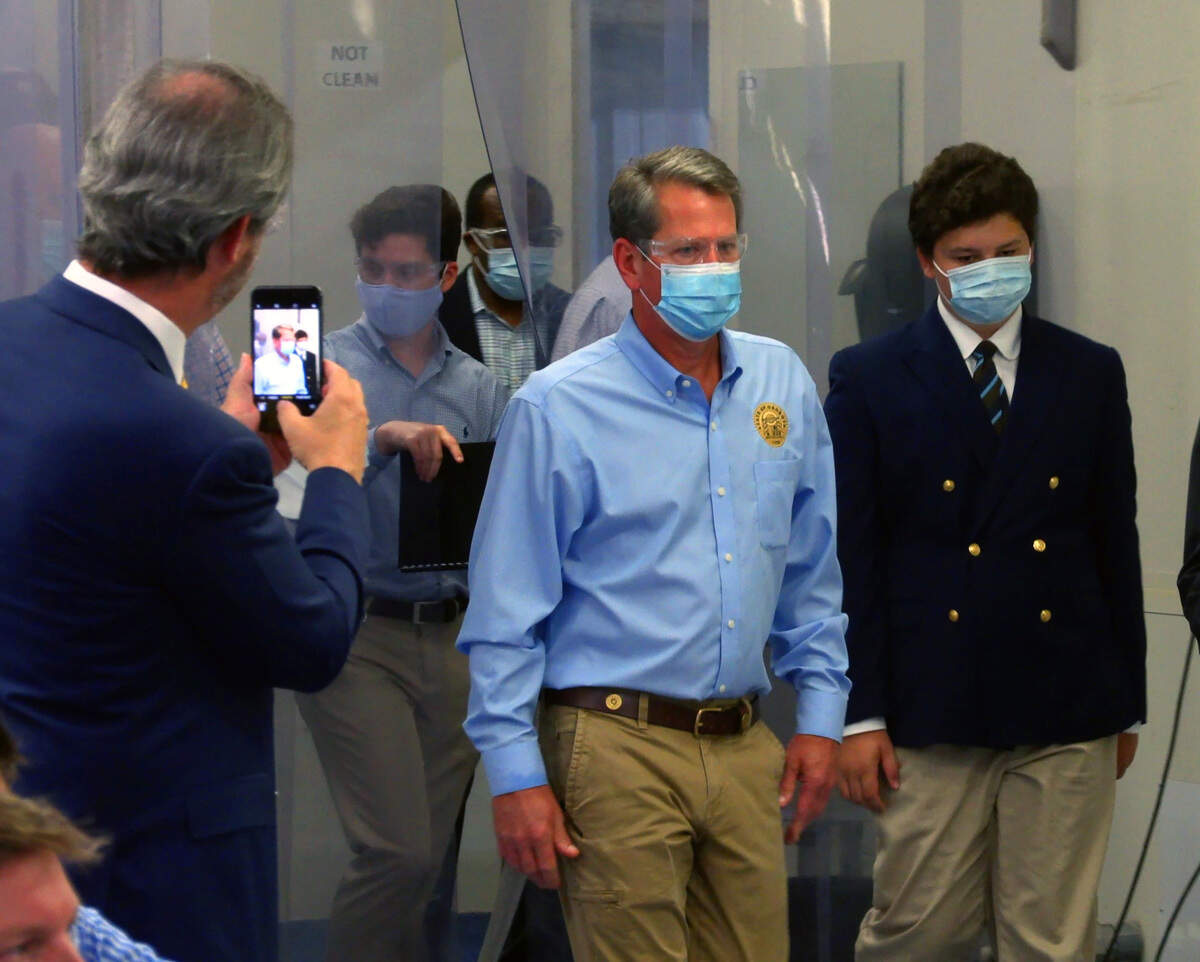
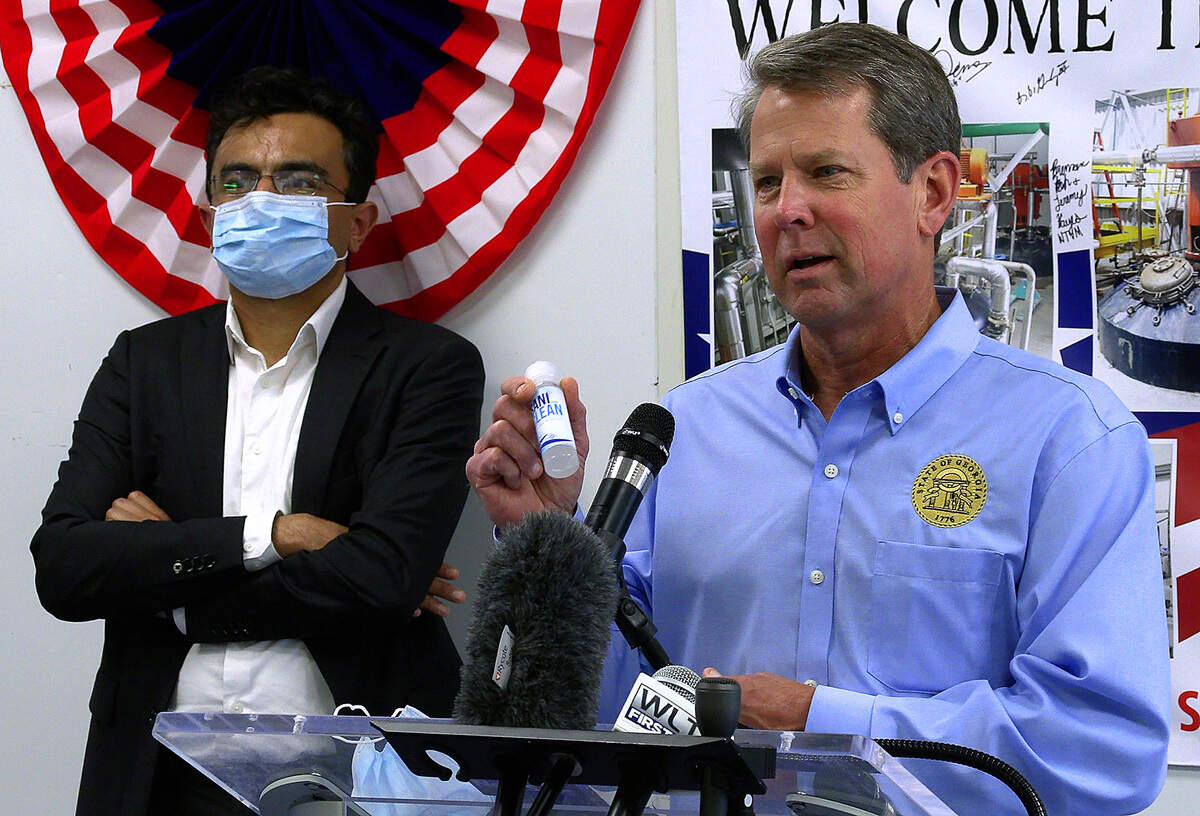
Kemp’s trip to Columbus included stops at financial technology company Global Payments and biopolymer manufacturer High Performance Product Engineering (HPPE).
HPPE’s biopolymers — organic, chain-like molecules — are used in several fields, including agriculture and biomedicine.
But the Columbus company’s production of hand sanitizer to meet needs during the pandemic is part of what prompted the governor’s visit. The company has produced roughly 200,000 gallons of hand sanitizer and counting, said Brian Burr, HPPE’s General Manager.
Columbus was Kemp’s second stop of the day. Earlier in the day, he spent time in Macon visiting a temporary medical pod at Navicent Health.
In the last couple of weeks, Kemp said he’s eaten at four restaurants, including a sit-down meal with Vice President Mike Pence. He’s visited hospitals and had two haircuts since barber shops reopened.
The goal is to instill confidence, he said.
“That’s why I’m on the road,” he said. “I believe that as time goes by, people are getting more comfortable with that.”
“Not everybody is ready to go back, and I didn’t order anybody to go back,“ he added.
This story was originally published May 27, 2020 at 6:27 PM.