
‘We’ve got to be reasonable.’ Kemp addresses mask mandate challenge in Columbus tour stop
As a coastal Georgia city’s mask mandate went into effect Wednesday, Gov. Brian Kemp told reporters in Columbus that residents shouldn’t need a law requiring them to “do the right thing” by wearing face coverings to prevent the spread of COVID-19.
“I haven’t talked to the legal team about what the Mayor of Savannah (Van R. Johnson II) is doing,” Kemp said, standing outside of Piedmont Columbus Regional with other state officials. “But we both agree, everyone should wear a mask if they are out in public and can’t socially distance themselves. ...What I’m encouraging mayors to do is show public support for people wearing a mask and socially distancing themselves. That’s the best thing to do.”
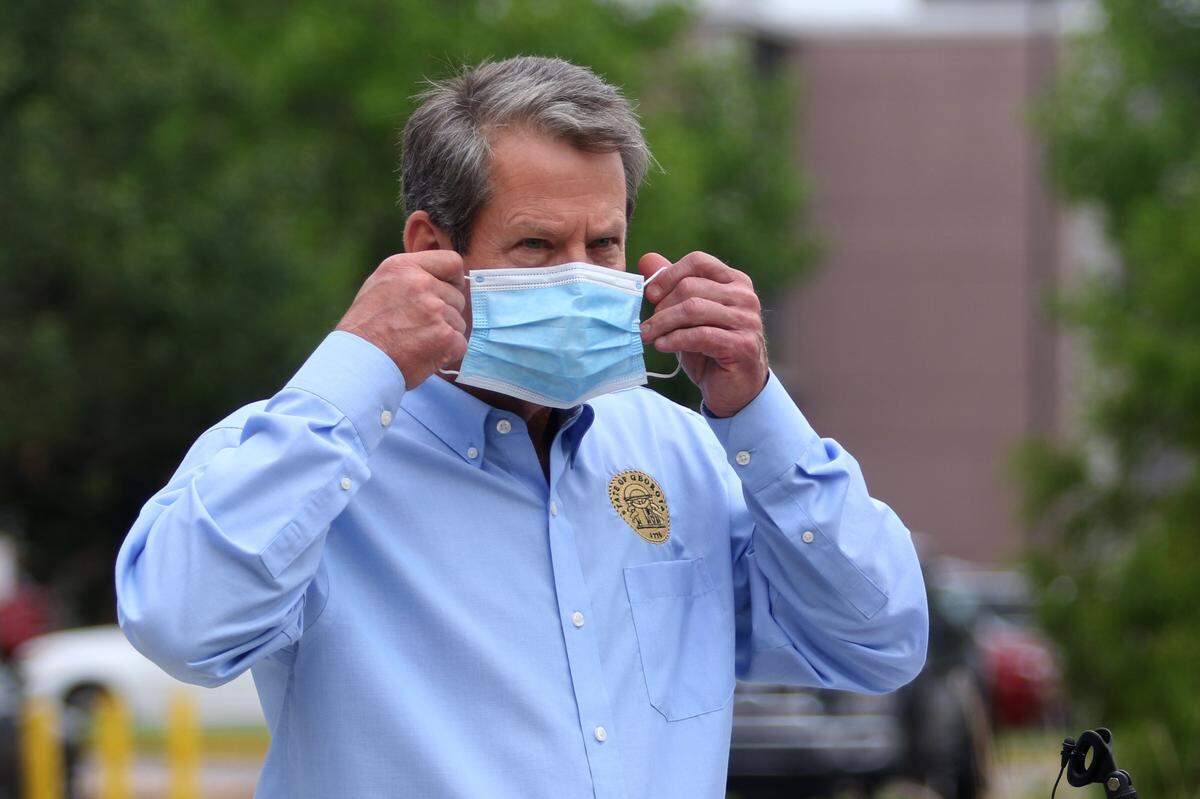
Kemp and state health commissioner Dr. Kathleen Toomey visited Columbus on a statewide tour to promote the use of masks ahead of the Fourth of July holiday as coronavirus cases and hospitalizations increase in Georgia. He signed executive orders Monday which extended the public health state of emergency as well as social distancing, sanitation and other safety guidelines that businesses and other entities across the state must implement in an effort to contain the illness.
While Kemp encourages the use of face coverings, a mask mandate isn’t needed, he said.
“We don’t need a government mandate to do the right thing,” he said. “We’ve got a government mandate on speed limits and people break it every day. ...We’ve got to be reasonable.”
Savannah’s mask order and what it means for Georgia
Kemp’s statewide mandates are designed to prevent local governments from implementing more strict or relaxed coronavirus restrictions.
Kemp faced criticism in the earlier stages of the pandemic from some Republican lawmakers, top Democrats in the state House and local politicians across Georgia for not using his emergency powers to implement statewide restrictions. Instead, local leaders implemented their own policies, but public health experts warned then that the patchwork approach could undermine the state’s virus-fighting efforts, the Atlanta Journal-Constitution reported in March.
As Kemp has implemented or ended coronavirus restrictions over the past several months, he’s done it without allowing local governments to enact additional measures.
“People are not blind to politics. There are pandemic politics that are going on,” he said. “Dr. Toomey and I don’t have time for pandemic politics. What we are dealing with is science and data.
“(Mayors and I) may have disagreements about how we would tackle a problem. There’s nothing wrong with that,” he said. “We all agree people need to wear a mask. We can disagree on whether we need a mandate to be able do that or if it needs to be enforced.”
Johnson’s emergency mask order, which as of Wednesday morning requires the use of face coverings when out in public spaces and inside commercial establishments within Savannah’s city limits, challenges Kemp’s statewide approach.
If Kemp attempts to block Savannah’s mask order, legal proceedings could follow. If the order stands, local governments might implement additional measures of their own.
Legal interpretations of Kemp’s orders differ among local governments across the state. Before Wednesday’s press conference, Columbus Mayor Skip Henderson said the city’s legal team doesn’t believe it has the authority to implement a mask requirement, but they are watching the events in Savannah closely.
“There’s a couple of issues in my mind,” he said. “One is the practicality of the enforcement — making sure you have a mechanism in place to enforce what you have on the books. ... I think everybody is watching this.”
When asked if he’d implement a mask order similar to Savannah’s if their mandate holds up, Henderson said he would consider it.
“We want to watch and see how that’s gonna work in practical application and from an enforcement aspect,” he said. “But yeah, absolutely. It’s something that we would consider if we thought it was going to help keep our community safe.”
Rep. Calvin Smyre (D-Columbus), dean of the Georgia House of Representatives and a member of Kemp’s coronavirus community outreach taskforce, said he would support either a local or statewide mask requirement.
“I, for one, always tend to lean towards local control,” he said. “When you’re the mayor, you’re the CEO of that city. You’re directly responsible for that city. ...(So) having that local power over the things that happen in your city is always a good thing.”
What are some concerns for state officials?
The governor said communicating public health guidance with Georgia’s Spanish-speaking residents and the increasing cases among the state’s young adults are big concerns at the moment.
Georgians of Hispanic/Latino ethnicity account for more than 13,200 COVID-19 infections as of June 30, according to state data. The state’s insurance commissioner John F. King, born in Mexico and a fluent Spanish speaker, is in the midst of touring the state to assist with public health outreach, Kemp said.
Georgians ages 18 to 29 account for more than 17,500 of the state’s COVID-19 cases, more than any other age group in the state, according to the latest data from the Georgia Department of Public Health.
“I think the word and truth is starting to sink in with (young people) right now because their friends are getting sick or their friends end up in the hospital,” he said.
There are some positive signs as well, Kemp said. While current hospitalizations are increasing, trends statewide suggest patients are not showing as severe of symptoms as they were six to eight weeks ago. Remdesivir, a drug used to treat severe COVID-19 patients, and plasma treatments are working well. Patients also seem to be getting out of the hospital sooner.
Columbus’ hospitals have refused to released coronavirus hospitalization numbers to the public. But available data analyzed by the Ledger-Enquirer shows total COVID-19 hospitalizations for Muscogee County residents more than doubled from June 1 to June 28.
Controlling the spread of COVID-19 over the next several weeks is key, Kemp said.
“If you want to have college football with fans in the stadium, if you want to go to a Braves game, if you want to go to your kid’s game and watch them on the field,” Kemp said, “I would urge you to wear a mask over the next two to three weeks, especially over this busy July Fourth weekend. ...It will help and it will work.”
This story was originally published July 1, 2020 at 1:31 PM.