Thousands in Columbus are facing eviction. This program has millions of dollars to help
Thousands of evictions have been filed this year in Muscogee County and as the federal moratorium deadline nears, local advocates hope residents will take advantage of millions of dollars available in relief.
More than 3,000 evictions have been filed so far in 2021, despite a moratorium issued by the Centers for Disease Control and Prevention in September 2020. The order was extended a number of times, and the latest extension to July 31 was announced as the final one.
In order to take advantage of the CDC moratorium order, tenants are required to provide their landlord with a written declaration stating they qualify as a covered person under the order and that losing their housing would leave them homeless or living in close quarters with others.
As of July 1, only 85 eviction cases are on hold in the Muscogee County Magistrate Court due to the CDC moratorium.
Local advocates say demand for rental assistance has been high, but relief may be slow for some tenants and landlords.
‘Seeing a record number of folks’
According to data from the Muscogee County Sheriff’s Office, 753 evictions were executed in the fist six months of 2021. This matches 2019’s pace with 1,565 evictions carried out in the year, according to records kept by St. Anne’s Community Outreach.
Educating people on available resources to avoid eviction is one of the biggest challenges facing local advocates, says Candace Muncy, 211 coordinator for the United Way of the Chattahoochee Valley.
“I am surprised every single day in our community of the number of people who aren’t aware of 211,” Muncy said.
211 is a free phone and text messaging service available to help people find help for issues including, but not limited to, housing, rental and utility assistance, food and clothing.
In the past 16 months, 211 has answered about 11,500 phone calls, an increase from years past, according to Muncy. She said approximately 16% of callers were impacted by COVID-19 and of those calls, 11% were about housing.
The service also saw a 42% spike in call over the last month and a 53% increase in COVID-19-related calls during the same period, she said.
“A lot of that probably points to people who are out of their tax refunds, out of their stimulus money, and extra money in unemployment stopped,” Muncy said. “And we had 13 newly homeless intakes that were directly related to COVID just last month.”
In addition to an increase in the number of evictions, advocates are also reporting an increase in people requesting rental and utility assistance. Katie Byers, director of St. Anne Community Outreach, said they have helped 225 clients so far this year. Last year, the program assisted 111 clients and in 2019, 115.
“We’ve had an eviction prevention program for about seven years now, and we are seeing record numbers of folks for assistance,” Byers said. “During the moratorium, evictions were still happening, but not on the scale that they would have been happening if there hadn’t been the CDC moratorium.”
She said the moratorium has helped give families time to apply for assistance since application processes can be delayed. Byers is concerned about the July 31 cutoff, saying more families struggle financially in the summer. With children at home, households can experience higher utility bills or a longer grocery list.
Millions of dollars available to help
Despite the increased demand for assistance, Muncy and Byers say there is help for people who need relief from the economic impact caused by the pandemic. Georgia received $552 million in stimulus funds through the federal Emergency Rental Assistance Program, and launched the Georgia Rental Assistance Program on March 8.
The program will help pay rent directly to landlords and utility companies on behalf of tenants. The cap is $15,000 per household and no more than 12 months of rent.
In order to qualify, tenants must show hardship due to COVID-19, demonstrate a risk of homelessness, have a household income at or below 80% of the area median income or receive a monthly federal subsidy.
“It does feel like it’s something that’s too good to be true because when does the government ever come and say ‘we’re going to help you with your past due rent,’” Tonya Cureton, deputy commissioner of housing for the Georgia Department of Community Affairs, said. “That normally doesn’t happen, right, because everybody’s working, everybody’s paying their own rent and government services are provided for some things, but usually not in that way.”
Extraordinary circumstances caused by the pandemic showed the federal government that funds were desperately needed, Cureton said. The biggest challenges in rolling out the program was combating the belief that it was a scam and ensuring the applications are filled out correctly.
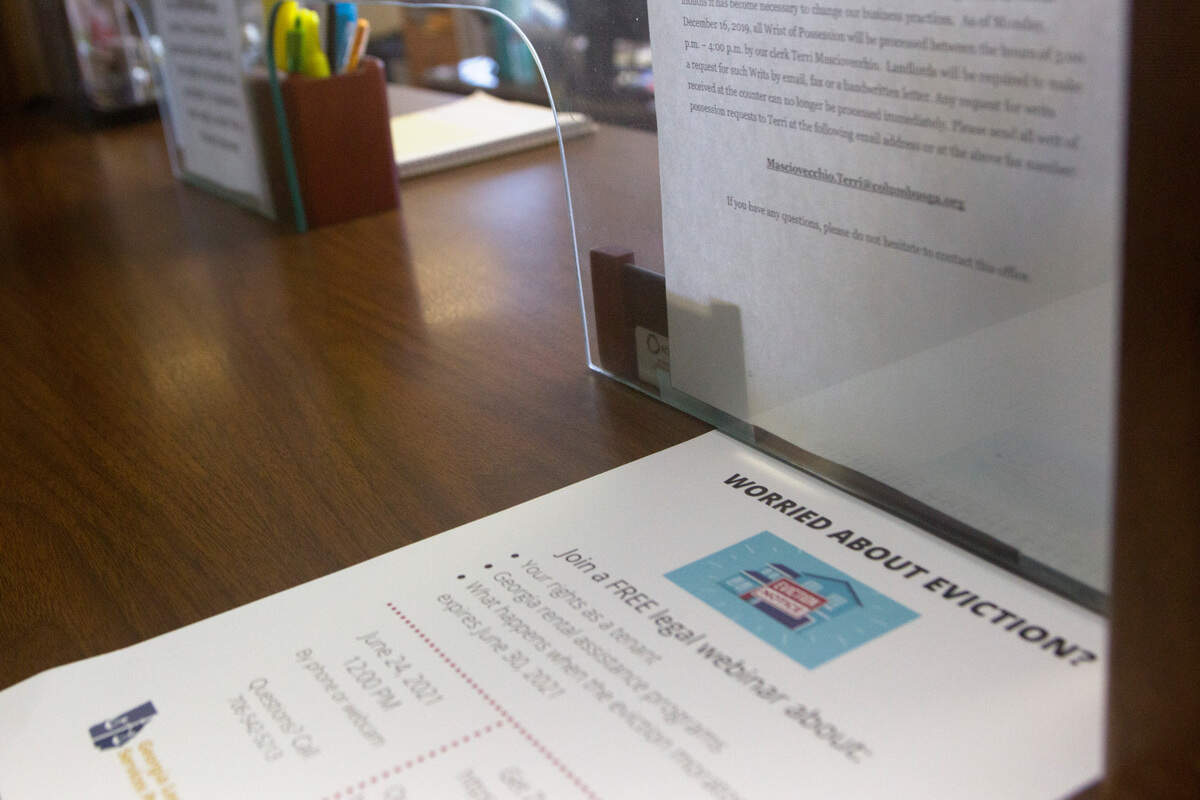
Long processing times are a major concern, Byers said. St. Anne Community Outreach has assisted with 38 applications, but have only seen five applicants receive funds.
Cureton said processing can be delayed if there are inconsistencies in the applications.
“There is going to be some follow up because maybe you submitted and said you were three months past due, and we only have evidence of one month,” she said. “So there’s gonna be a communication that goes back to that tenant to say, ‘we need the rest of the evidence,’ so we need people to complete the process. And that might take a couple of communications.”
However, Cureton said the process has been refined and their office has over 200 people processing applications. DCA has reported that 8,673 applications have been submitted to the program and 1,873 tenants have been paid. $11.2 million has been distributed.
How to get help now
Locally, officials and advocates have been working to make sure people who need help know about the program and have the resources they need to submit applications. Robert Scott, director of the Community Reinvestment Program in Columbus, said his department has made accessibility to this resource a priority.
“Some people just need internet access, especially in some low, moderate income neighborhoods,” Scott said. “Trying to do something on your cell phone is all the means that they’ve got.”
The office has partnered with city libraries to help educate residents about the program, provide computer access to submit applications and receive assistance with navigating the process.
Muncy encourages those in the community with the capacity to give back to support agencies that provide basic needs.
Residents who need immediate assistance paying their rent, food and utilities or have other needs should call 211. The free service matches residents’ needs with local programs that have the resources and funding to assist.
“There are resources there to help you,” she said. “But you have to be willing to ask for help and follow the guidelines.”
This story was originally published July 15, 2021 at 10:30 AM.