These Columbus influencers are taking ‘leap of faith’ to turn social media into full-time jobs
A cut in her work hours during the COVID-19 pandemic turned out to be the start of a new career for 23-year-old Columbus social media influencer Mailee Barkdull.
Barkdull, who in the spring of 2020 was pregnant with her daughter Hazel, got used to working two days a week at Blue Door Boutique rather than four.
Her husband, Paxton Barkdull, is as a youth pastor at North Highland Church and doesn’t work on most weekends. But Mailee worked weekends at the boutique, which meant the couple’s off days didn’t line up. The soon-to-be mother wanted more flexible hours so she could be home at the same time as her family.
“I just kind of realized how much life it felt like I was missing at home,” she said.
Barkdull had already been branding herself on Instagram (@maileebarkdull), showcasing different products in exchange for free merchandise or cross-promotion. It was a side hustle, but as the COVID-19 pandemic dragged on she saw more opportunity.
She and Paxton decided to see if she could make being an influencer work full-time.
Barkdull is one person in a wave of American workers who have decided to make a career change during the pandemic.
One in 5 workers has changed professions completely in the past year, according to Prudential’s 2021 Pulse of the American Worker Survey, with half saying those changes are permanent. The reasons for this change include gaining a better work-life balance, higher compensation and trying something new.
‘Your schedule is completely up to you’
Influencers are social media personalities that have a certain amount of followers and credibility, and are able to persuade others to try a product or visit a location, said Katie Bishop, co-founder and chief buzz ambassador for Columbus-based Yalla PR.
Content creators are people who know how to produce media, such as photography or edited videos, Bishop said, and they can do it for agencies or small businesses. Content creators may also be influencers, she said.
The influencer marketing industry is set to grow to approximately $13.8 billion in 2021, according to the annual Influencer Marketing Benchmark Report, with Instagram being the most common platform for influencer campaigns. Additionally, the number of campaigns increased from 590 in the first quarter of 2018 to 2,901 campaigns in the fourth quarter of 2020, according to the report.
Bishop said she has seen a trend of more people moving into content creation and influencing in recent years.
“The cool thing about content creating and being an influencer is your schedule is completely up to you,” she said. “I think flexibility, for most millennials and Gen Xers, is extremely important.”
Younger generations have grown up with social media platforms, Bishop said, and spend a lot of time on platforms like Instagram or TikTok. The thought of using those apps as a creative outlet, getting paid for it and being able to dictate their own schedules makes for a great package, she said.
It can take a long time to accumulate followers, Bishop warns, and newcomers may find themselves needing to pump in money on the front end to grow their accounts so they can be desirable for companies looking for influencers to market their products.
Ensuring that accounts have a large enough following is not the only potential drawback to taking a chance in this industry.
‘Influencers are not charging enough’
Savanna Bingham, born and raised in Columbus, ventured into influencing around 2018, catering to an audience of plus-size women. The 25-year-old Bingham and her friend would go to Midtown Coffee House, have a drink and capture content for the day.
It was awkward at first. While seeing influencers out in the wild might be a normal occurrence in large cities like Atlanta, she said, it was strange in Columbus.
“I’m at a coffee shop, and people are looking at me weird because I want to get a cute picture with my coffee,” she said. “And now they’re silently judging me.”
That feeling lessened over the years, and Bingham embraced having fun and not caring about the looks she received. At the start, Bingham said she was more of a “micro-influencer” without many followers.
But around the summer of 2019, she created an Instagram post that was “just a basic full-body picture” and it garnered over 1,000 likes, she said. After that her follower count began to grow quickly. Bingham now has over 17,000 followers on the platform under the handle, @savvybing.
When the pandemic began, Bingham realized she would have to be more creative since she could only make content from her house, backyard and a local parks. As time went on, she realized she was putting in a lot of work and only receiving products or $100-$250 in return.
“I have this larger platform,” Bingham said. “I had been seeing all these things about how influencers are not charging enough.”
She asked one company for more money but was told they didn’t have the budget for it. Bingham’s concern about her long-term financial stability, compounded by the fact that she wasn’t having as much fun doing this as a career, made her choose to stop influencing this summer.
Still, the experience paid off for the Columbus State University graduate. The human resources manager for Opelika boutique Chic Soul, a business Bingham previously influenced for, found her on LinkedIn and reached out for a phone interview. She currently works there as a social media manager.
‘Realizing my value’
The risk of financial instability also was a fear for Barkdull.
Like Bingham, she realized in mid-2020 her work might be undervalued compared to other creators in the field. When Barkdull began influencing full-time, about 70% of the campaigns she was doing were for gifts, while the rest were paid.
“It was definitely a leap of faith,” she said. “Are these brand deals going to come when we need it? Am I going to get paid in a timely manner?”
Barkdull learned a lot about the industry in a short amount of time. She got better at working with brands and creating more long-term, sustainable relationships rather than doing a one-off collaboration, she said.
“Nobody expects to work for free,” she said. “Realizing my value, and the time, equipment and creativity that I have made me realize that I should just start charging.”
While Barkdull still does some product exchange deals for small businesses or people that she knows don’t have the budgets for it, she now focuses on bigger brands. These include Hello Fresh, Dolce Vita, Solly Baby, Wild Birds and others.
Influencer marketing is huge, Bishop said, and Yalla PR hosts influencer campaigns for accounts that have a regional reach. The company will email or DM (direct message) influencers in the areas they need a campaign in, and often will trade services. For some larger accounts, Bishop said, they will pay in cash.
Although Bingham has stopped being a full-time influencer, she loves seeing how much the industry has grown in Columbus. Bingham said she noticed when the pandemic began, social media became even more prevalent because it was all people had to do.
“I see so many people (downtown) all the time,” she said. “They were just taking pictures in parking garages and stuff like that.”
It still may not be as common a sight as it is in Atlanta, Bingham said, but it’s definitely not as weird as it used to be. She is leaving the door open to possibly returning to the field, but doesn’t plan to do so anytime soon.
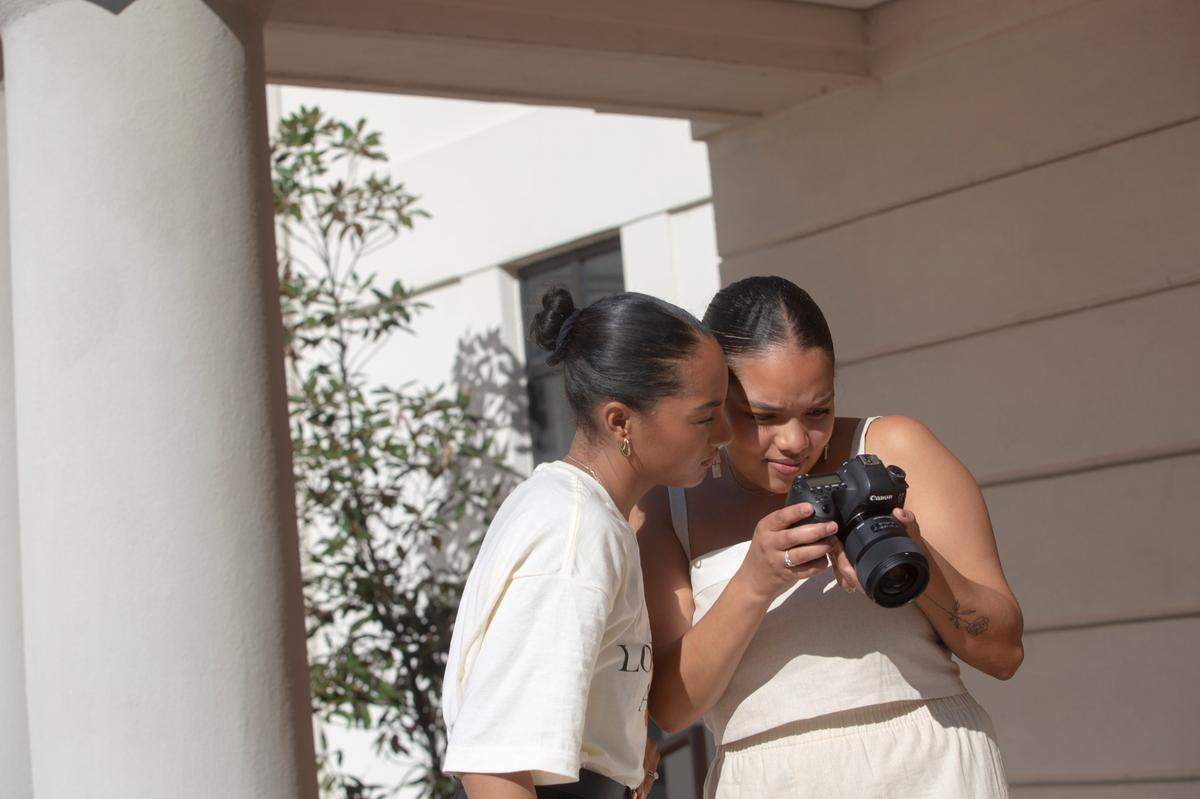
For Barkdull, she’s happy to be part of the group of people that left their job to try something new. She said that if the pandemic had never happened, she would still be working in retail and afraid to take a chance without the promise of a consistent income.
“I feel like sometimes GenZ and millennials can get a lot of slack for ‘being lazy’ and things like that,” Barkdull said. “But I will say one thing that I am really proud of about my generation is that they are really passionate about doing work that they love.”
This story was originally published December 16, 2021 at 6:00 AM.