How this Columbus hair braider helped women embrace their natural beauty during COVID
Standing out in the Columbus hair braiding industry became even more important during the pandemic when spending hours in close contact with clients risked COVID-19 exposure.
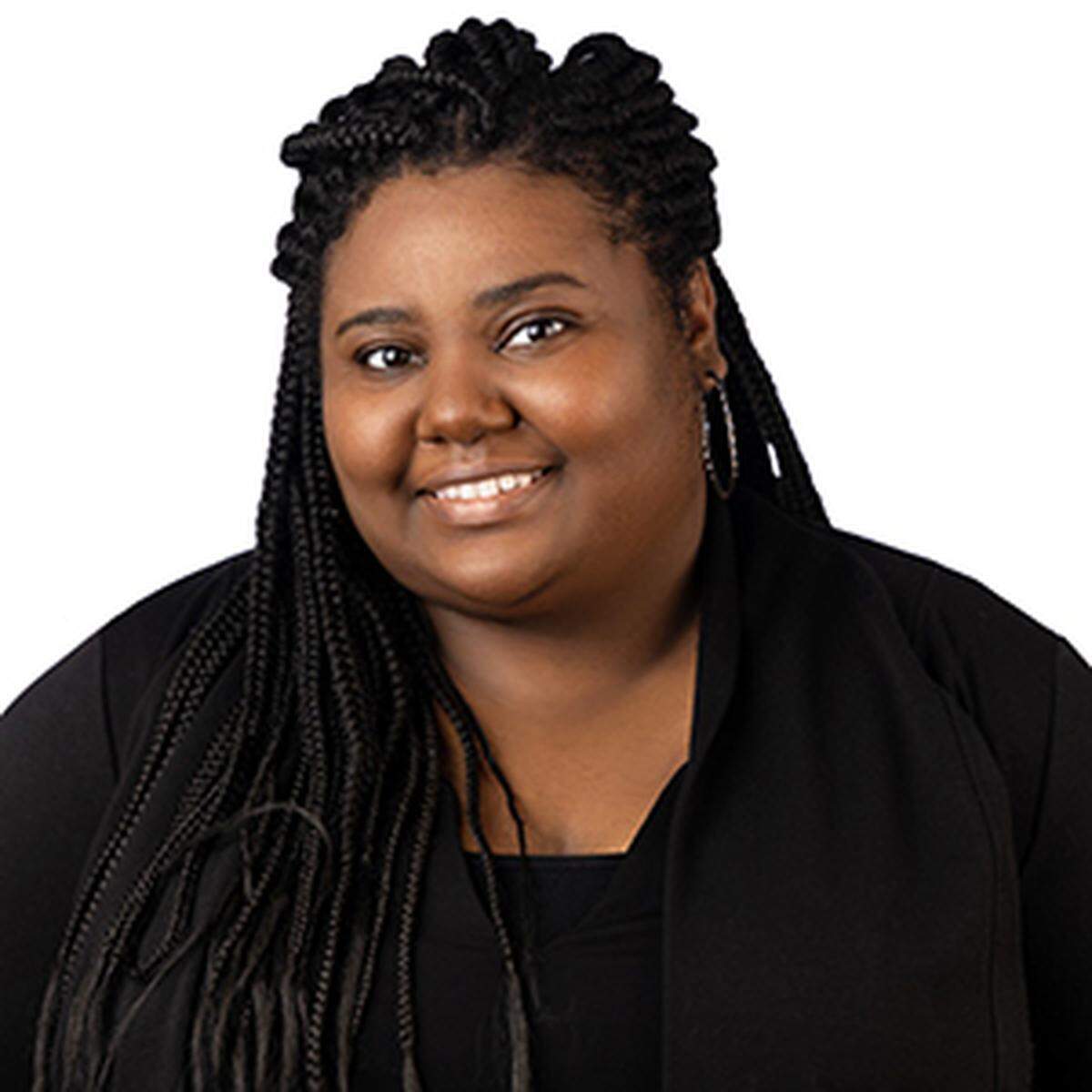
Hair braiding shop owner Taniesa Taylor and her fellow stylists are continually learning more about their craft to grow their businesses in Columbus while keeping themselves and their clients safe.
Taylor opened her shop, Locs, Twists, Braids & Crochets, last June at 5870 Veterans Parkway.
At the start of the pandemic, Taylor worked as a mobile stylist. She wasn’t following the news and didn’t realize COVID-19 was serious until her family began urging her to shut down.
Taylor closed her business, not knowing when she’d be able to open again. She remained optimistic and spent the time with her family doing home projects.
But her income stream halted.
Fortunately, people who were self-employed qualified for pandemic unemployment assistance, she said.
“It allowed me to be OK,” Taylor said. “Because otherwise, I don’t know what I would have done had I not qualified for the unemployment that was given to us during that time.”
Off and on, the business was closed for around 9-12 months during the pandemic, she said. Each time there is a COVID-19 exposure, she has to shut down and quarantine for two weeks.
“A couple of weeks ago, my daughter had a COVID exposure at her daycare,” Taylor said. “Her daycare shuts down. I shut down because now we’ve got to get tested.”
When she opened the shop in June, concern about the spread of the virus was a big priority for her.
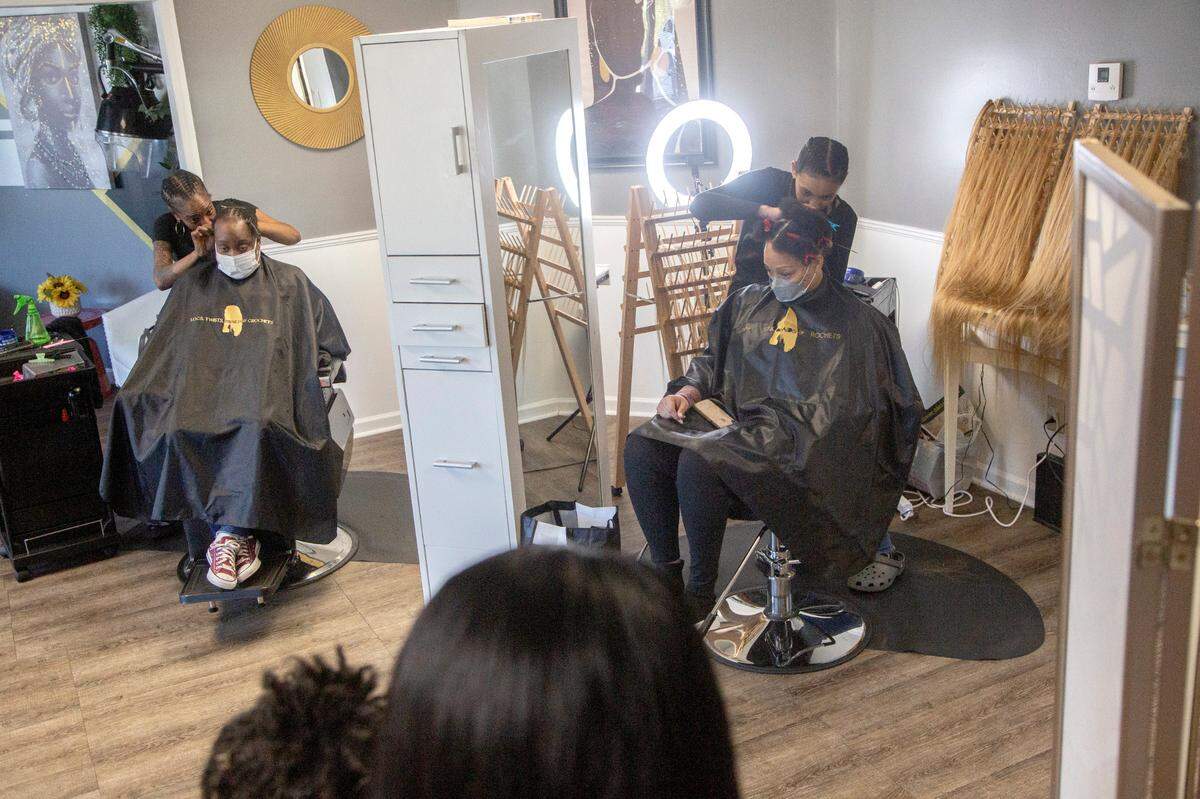
Signs are posted asking people who enter the braid shop to wear a mask, and a clear container of hand sanitizer sits upfront by the door on a table with various business cards.
There are strategically placed white barriers separating the three workstations six feet away from each other. Despite the barriers, conversation flows easily among the women.
Sanitation policies are strictly enforced by Taylor and the other three stylists who work for her. She structures her appointments to have a 15-minute gap in between, so there’s time for cleaning between clients.
When the vaccine became available, Taylor didn’t initially feel getting vaccinated was necessary because she felt she had immunity from having previously had the virus. This changed when a client in their 70s called to cancel their appointment to get micro locs installed.
The client’s husband had health conditions and the woman didn’t feel comfortable sitting with Taylor for eight hours if she wasn’t vaccinated.
Taylor got her first dose of the vaccine later that day, she said.
The stylists who work for her are not asked to be vaccinated, Taylor said, but those who are not vaccinated are expected to keep their masks on when servicing a client.
“My goal is to make sure my customers are protected at all times,” Taylor said.
‘I laugh when I’m in here’
Taylor worked in disability claims at Lincoln Financial Group in Atlanta before starting her own business.
She was pregnant with her now 4-year-old daughter when she decided to quit her job. Taylor last did hair around 20 years ago, she said, but starting up again with no solid customer base was a risk worth taking.
“I laugh when I’m in here,” she said. “I listen to music and talk to amazing people all day and do something that I’ve been doing since I was like 3 or 4 years old.”
Taylor now has an expansive network of people in Columbus who make up her customer base, including members of historically Black sororities and other professionals.
The network of women share information and support each others’ businesses, she said, which is an experience she never had working a corporate job.
Despite her growing network, Taylor and the other stylists in her shop know they have to do more to stand out among the many other braiders competing for clients.
“We’ve become obsessed with getting better at our craft,” Taylor said.
The stylists are always taking online classes and seizing opportunities to learn from other stylists. One woman in Atlanta has been giving people with long hair protective styles in a bob without cutting their hair, Taylor said, and she is determined to learn how to do it.
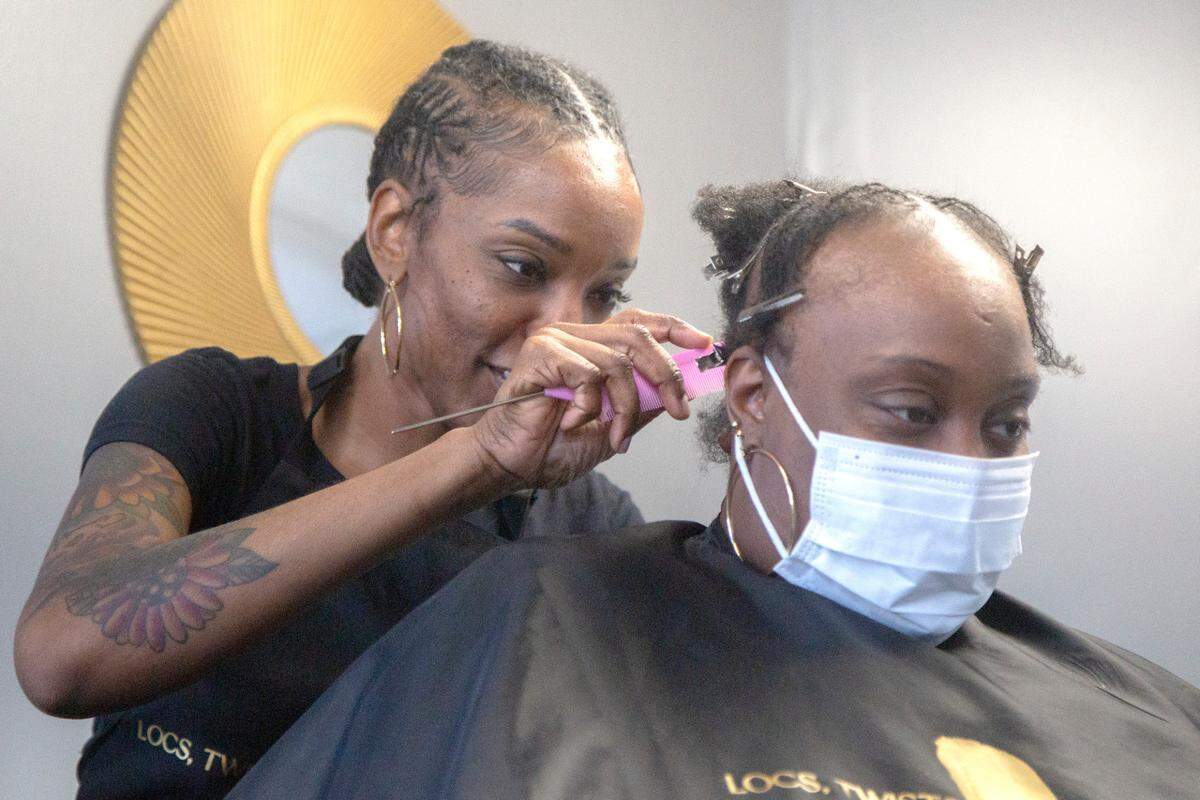
Jamie Scott, another stylist in the shop, was installing knotless braids for a new customer with a custom blend of braiding hair. Each strand had been separated into small pieces and hung meticulously on a wooden thread rack next to her.
Scott, who is biracial, has been braiding since she was 8 years old. She had to learn, she said, because her mother didn’t know how to do her hair when she was growing up.
“She tried,” Scott said. “But torture was what it was. So, I just one day took the brush and comb.”
She learned how to braid using a mannequin head doll.
Scott previously worked as a phlebotomist for 10 years and was in nursing school. But when the pandemic began she felt burned out and realized healthcare wasn’t her passion.
Building a clientele during a pandemic is hard, Scott said, and she had to learn to charge what she’s worth during this time. She initially felt less experienced than other stylists, which motivated her to focus on bettering her craft.
Scott stayed up all night in the beginning, sometimes until the early morning hours, practicing on a model head. She also signed up for online classes to learn more, wanting to avoid anything in-person during the pandemic because she’s a cancer survivor.
Despite the challenges, the relationships Scott has built with clients validate that things are working out.
‘Journey of self-acceptance’
Taylor looks forward to growing her business and sharing her craft with her daughters who are ages 25 and 4.
Her older daughter, Tanasia Tinzie, is currently in school and also works with Taylor at the shop. She helps with the overflow customers. Taylor hopes to integrate her more fully into the business once she’s done with school.
But braiding, twisting and installing locs isn’t just about the business for Taylor. It’s part of Black culture, she said, and the styles protect the hair and help it grow.
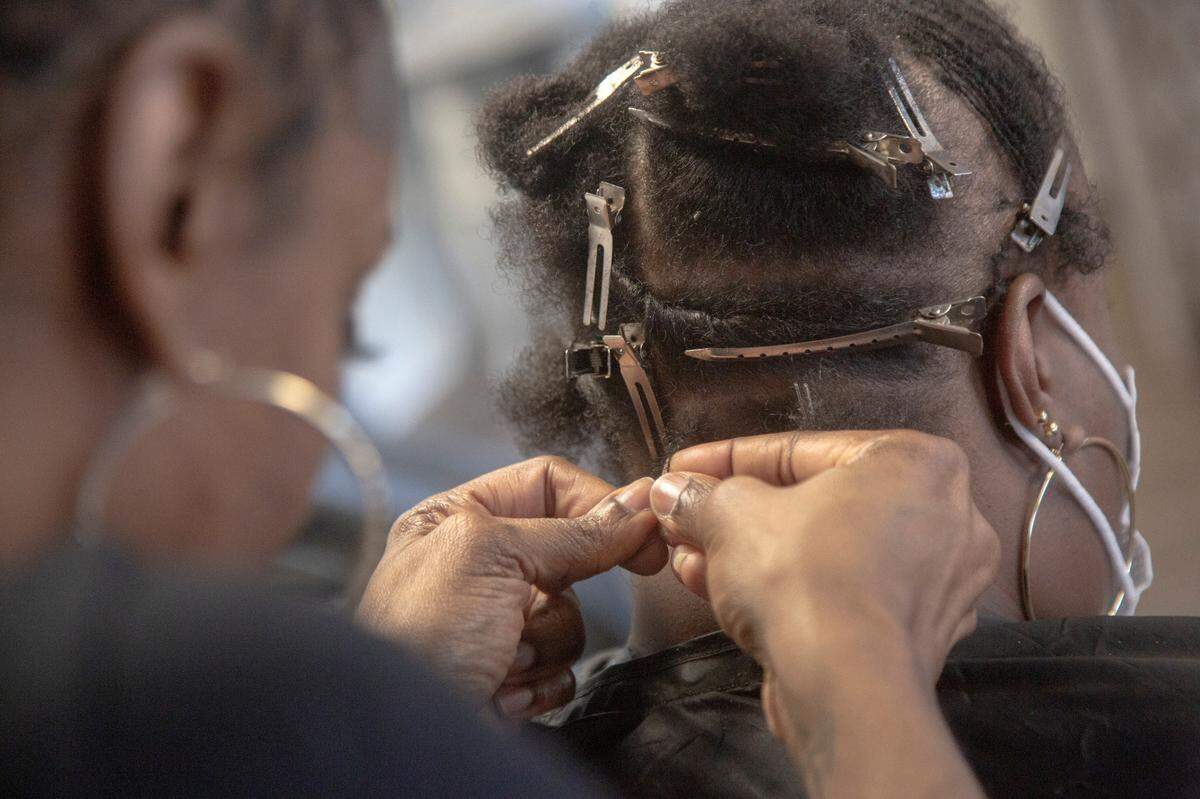
Blowouts and chemical relaxers or perms are commonly used to straighten textured hair, but the practice damages hair, Taylor said.
Her clients may be going on a “journey of self-acceptance” from relaxed hair to natural hair, and from natural hair to locs, she said.
There are days when women struggle with their natural hair and growing locs, Taylor said, and they may not feel as pretty. As a stylist, she likes going through this process with her clients to find styles they will be happy with.
“There is a morphing phase that you go through,” Taylor said. “It’s like the caterpillar turned into a butterfly, and you feel so much more beautiful when you’ve gone through that process of transformation.”
This story was originally published February 23, 2022 at 6:50 AM.