Medical experts say COVID is not going away. Here’s what Columbus should expect
Columbus residents are ready for normalcy as public health officials and policymakers prepare to co-exist with COVID-19.
Local doctors and public health experts say COVID-19 may become endemic in the near future, meaning the virus will not disappear and residents will likely get regular booster shots similar to getting their annual flu shot.
Muscogee County reported 112 new cases of COVID-19 in the last two weeks on March 8, the lowest it has been since last July, according to the Georgia Department of Public Health.
Jacob Johnson, a freshman at Columbus State University, is ready to get back to fully engaging in his theater program as cases decrease, he said. The pandemic prevented him from doing many of the activities he would have otherwise gotten to experience in high school and now college.
“I really hope we’re in the last quarter of this ball game,” Johnson said.
Relaxed guidelines for wearing masks

Muscogee County’s COVID-19 community level is medium, according to the Centers for Disease Control and Prevention, meaning that people do not need to wear a mask indoors unless they are at a high risk of severe illness.
This new guidance is due to the CDC’s new framework in determining community levels, putting more weight on hospitalizations rather than the number of new COVID-19 cases.
“They decided to use these metrics because they thought that they were a better indicator of the community level,” said Dr. Jayne Morgan, executive director of the COVID Task Force at Piedmont Healthcare.
The new framework uses hospital capacity, new COVID cases and new hospitalizations to determine whether the community level is low, medium or high, she said.
The number of hospitalizations in Columbus has significantly decreased since the peak of the omicron surge, Mayor Skip Henderson said, with 45 patients in area hospitals as of March 9.
“Fortunately, there weren’t as many critical cases (during omicron),” he said. “We didn’t have as many people on ventilators. There weren’t quite as many folks in the ICU rooms.”
Rivertown Pediatrics has not had a positive case of COVID-19 since Feb. 10, Dr. Susan McWhirter said, after having the highest peak of their practice with 400 cases in January. The drop in cases allowed the pediatric clinic to refocus on projects and activities they haven’t been able to do during the pandemic.
“We’ll still mask here in the office for now,” McWhirter said. “But I’m kind of excited for kids to get out in the community unmasked and have fun.”
The new mask guidance from the CDC was a large factor in the decision to lift the mask mandate in city-owned buildings, Henderson said. The CDC has been conservative throughout the pandemic, he said, and if they and the local health department were comfortable with masks being optional then he was as well.
“We recognize people are just tired,” Henderson said.
Johnson is hesitant to stop wearing his mask indoors, he said, because of the amount of singing and movement that is involved in his theater classes. But he said his concern about COVID varies depending on where he is.
“If it’s out to dinner,” Johnson said. “I’m not that concerned about it because you’re going to have to take your mask off to eat anyway.”
How COVID will be treated going forward
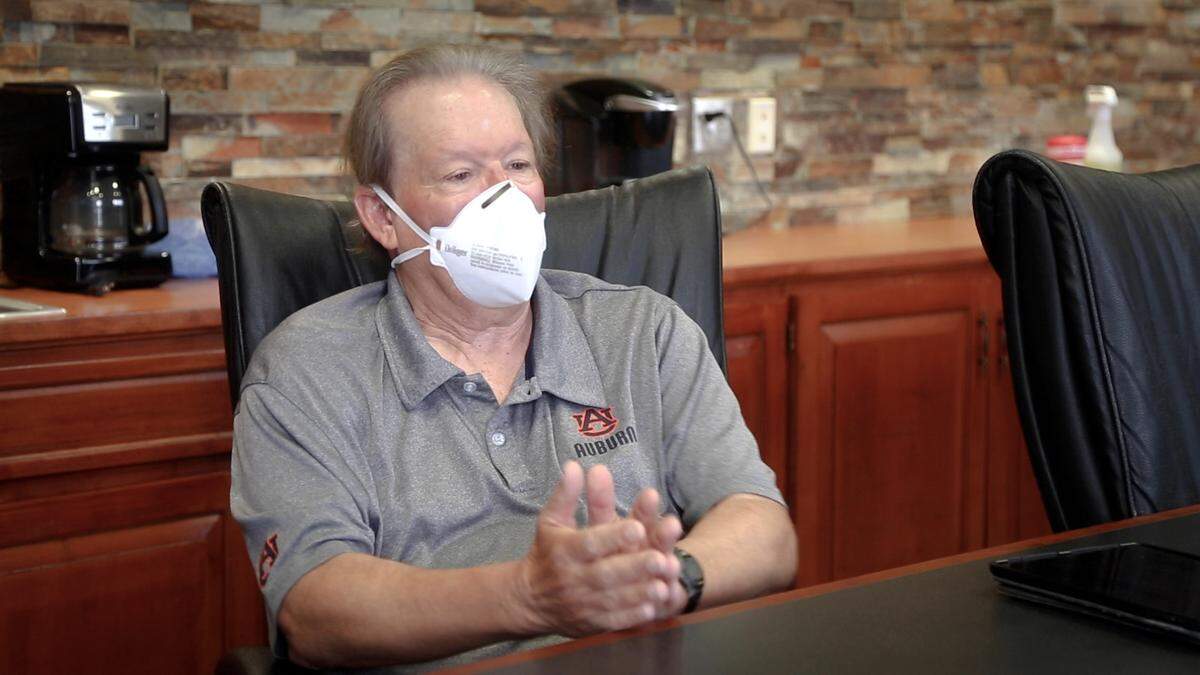
The nation is armed with more ways to combat COVID-19 than it was three years ago, said Dr. Joseph Giambrone, professor emeritus in the Auburn University’s Department of Poultry who began researching coronavirus and animals 48 years ago.
People now have access to vaccines, medical masks, free at-home rapid COVID tests and oral antiviral treatments that will help lessen the impact that the virus has on communities, he said.
DPH began allocating Merck and Pfizer oral antiviral treatments to pharmacies across Georgia on Dec. 30. The antiviral treatments may reduce severe outcomes from COVID-19, according to a news release from DPH, and are recommended for people who are at high risk for severe COVID-19 or have underlying medical conditions.
Both of the drugs require a prescription and should be initiated within five days of symptom onset. West Central Health District spokesperson Pam Kirkland said pharmacies in Columbus that were allocated oral treatments include:
Midtown Pharmacy-Good Neighbor Pharmacy at 2660 Buena Vista Rd.
Walmart #1338 at 3515 Victory Dr.
Walmart Care Clinic #1311 at 5448 Whittlesey Blvd.
The availability of oral antiviral treatments is a nice tool for doctors to have when treating people 12 years or older that are at high risk for severe illness with COVID, McWhirter said.
“We have antivirals specific for flu,” she said. “And it’s great that we have it for COVID as well because we know COVID could also cause serious consequences.”
During President Joe Biden’s State of the Union Address earlier this month, he announced his administration would launch a nationwide Test to Treat Initiative. This program will allow people who test positive for COVID in a pharmacy to get the oral treatments there without a prescription, Giambrone said, and then quarantine for a period of time.
“Once your symptoms are gone, you can go back and have a life,” he said. “And also, you’ll have immunity. But no one knows exactly (how long immunity lasts).”
A website will be launched in mid-March that will allow people to find Test to Treat sites near them, according to the Department of Health and Human Services.
Although oral treatments are now available to help treat COVID-19, DPH contends that vaccination is still the best prevention against the virus. All Georgians ages 5 and older are eligible to be vaccinated. Individuals ages 16 and old may receive boosters six months after completing their primary vaccine series of Moderna or Pfizer and two months after their Johnson & Johnson vaccine.
“We think now we’re entering the endemic stage,” Giambrone said. “Where we’re going to have to have yearly boosters, and that there could be small epidemics in areas where individuals are not highly immune because they’ve not been vaccinated.”
Optimism for the pandemic going forward
Paul Pantiru, a temporary resident from Romania, said he has never been very worried about the virus but believes the situation is getting better. He’s tested positive for COVID twice, with the latest positive test coming during the omicron surge in January.
“It was nothing,” Pantiru said. “I mean, compared to the first time. I actually only knew I had it because of the test, otherwise, I would not have known.”
The experience of having had COVID had the opposite effect on another Columbus resident. Ruqiyah Barr said she thinks about the virus often when she goes out in public because she remembers losing her sense of taste and smell at the beginning of the pandemic.
“It is a little worrisome,” she said. “It’s a whole virus and people have died from it, so it is a little concerning.”
She’s hopeful that things are getting better now, she said, and that people will continue to use best practices to avoid spreading COVID and other illnesses. She said she worries about her kids going to school with masks being optional after they have already been sent home multiple times due to exposure.
Although the guidance is saying that people don’t have to wear masks, that doesn’t mean they can’t still wear one, McWhirter said. The masks helped keep infections down overall when people were wearing them consistently, she said, and she would support parents who would choose to keep themselves and their children masked.
Going forward, protection from new variants will be determined by the level of immunity in an area, Morgan said. One warning sign of another surge is if the number of COVID cases plateau, or stop dropping, she said.
“I think people should keep their masks handy,” Morgan said. “Do not throw out your masks. Make sure you have a well-fitted N95 mask.”