GA’s West Point Lake had a record-level amount of algae in 2023. It poses multiple threats
The recreation haven West Point Lake suffered a dramatic spike in algae in 2023, triggering concern among scientists and water policy experts.
The record-breaking amount of algae — it was the worst amount in the past nine years — threatens the lake’s recreational and aquatic functions and signals a taste of what’s to come from climate change and human influences.
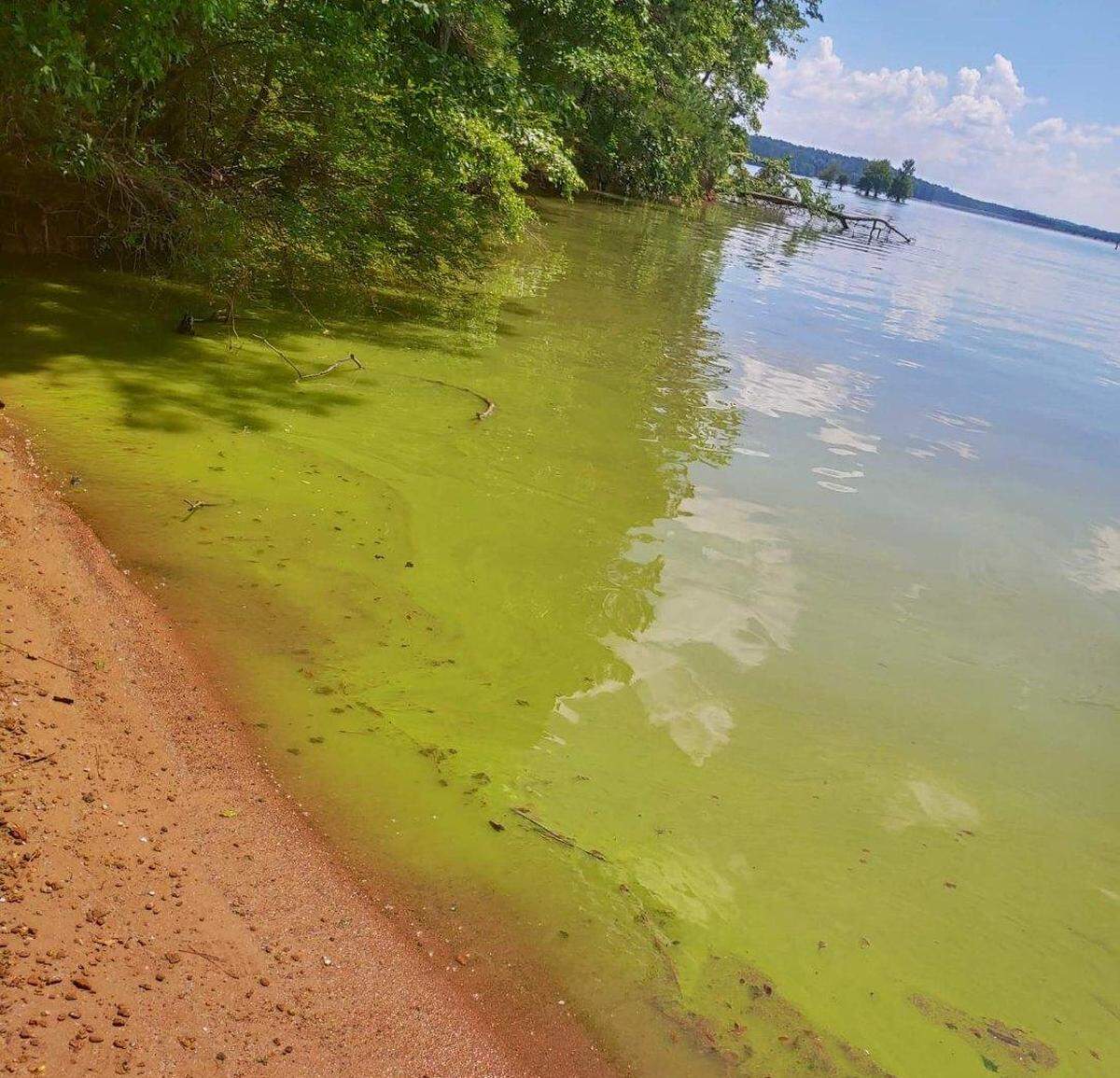
The small but mighty bacteria (algae) are naturally occurring. With the right amount of sunlight, nutrients and temperature, the algae can burgeon into a bright green, neon, scummy bloom.
Some of these blooms are toxic and known as Harmful Algal Blooms (HABs). Coming into contact with HABs or drinking water near a HABs can have serious consequences.
“Humans might get a rash if you come into contact, but if your dog drinks or gets near a HAB water it can die within a few hours,” Ashely Desensi, Technical Program Director of the Chattahoochee Riverkeeper (CRK) said. “Our biggest issue is a species [of HAB] that is capable of damaging your liver.”
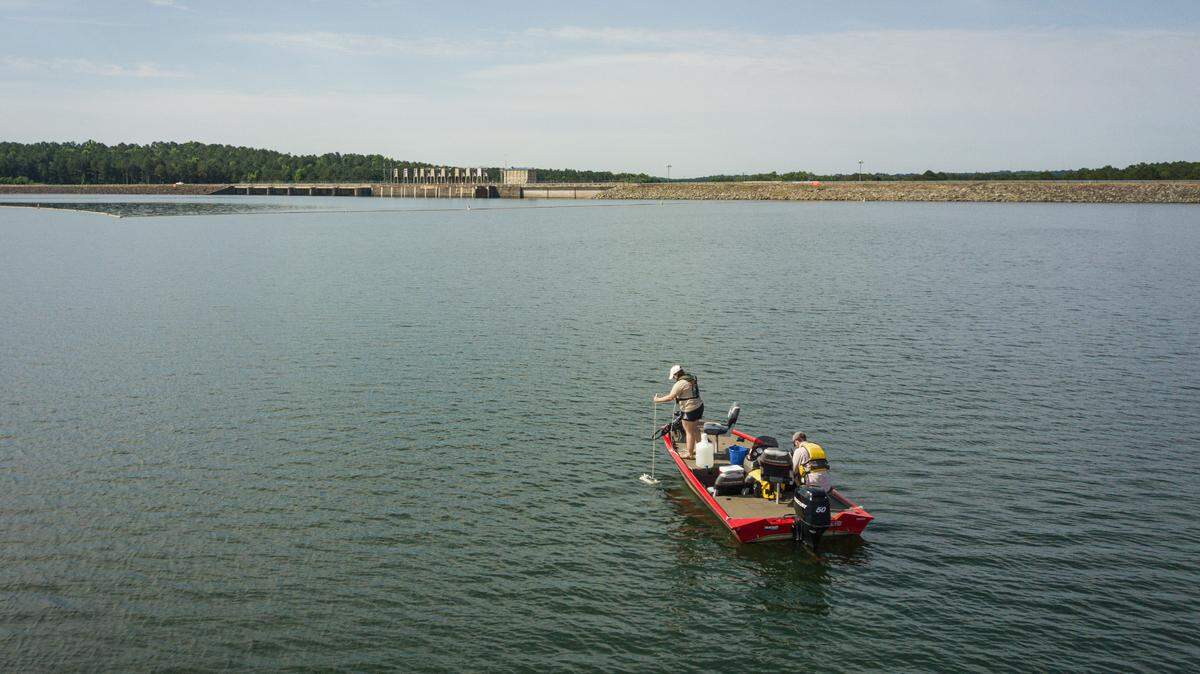
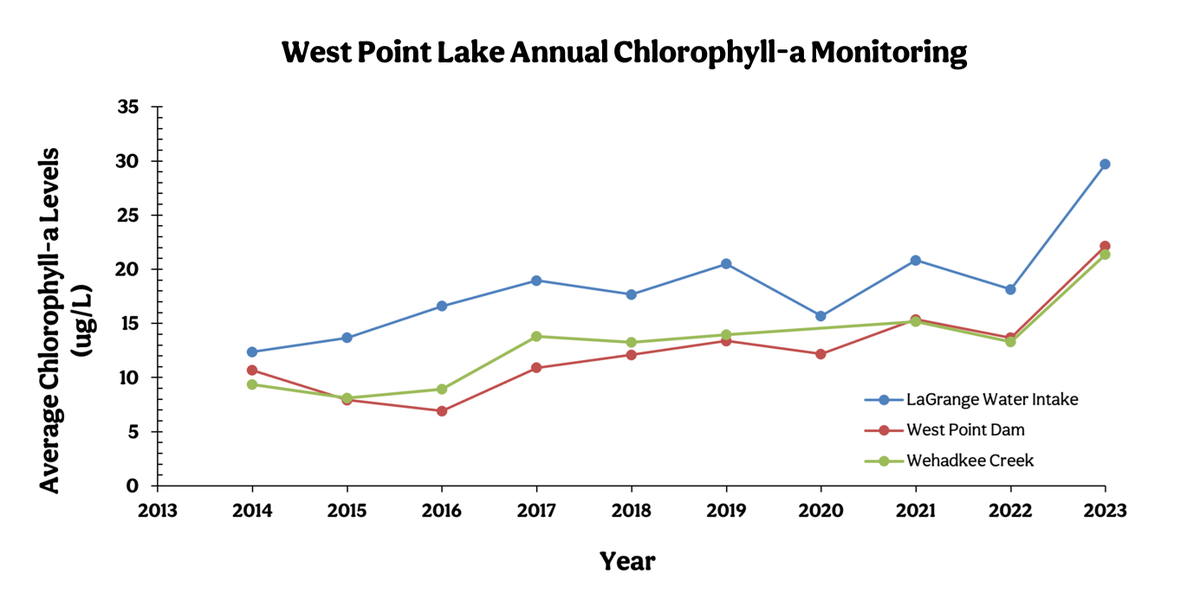
The river watchdog group, CRK, has recorded levels of chlorophyll-a, an algae indicator, since 2014. Chlorophyll-a, is a green pigment that allows algae to use sunlight to grow. Its presence is a clue to the negative health of a water body. It represents an increase in nutrients which can influence the likelihood of HAB.
The lake is located 45 minutes drive north of Columbus. It has levels of chlorphyll-a, above state standards, concerning CRK Deputy Director, Henry Jacobs.
“We’re concerned about the health trajectory that the Lake is currently on,” Jacobs said. “In 2014, the indicators [Chlorophyll-a] were below the state standards of 24 ug/L (Micrograms per liter) for the yearly average.”
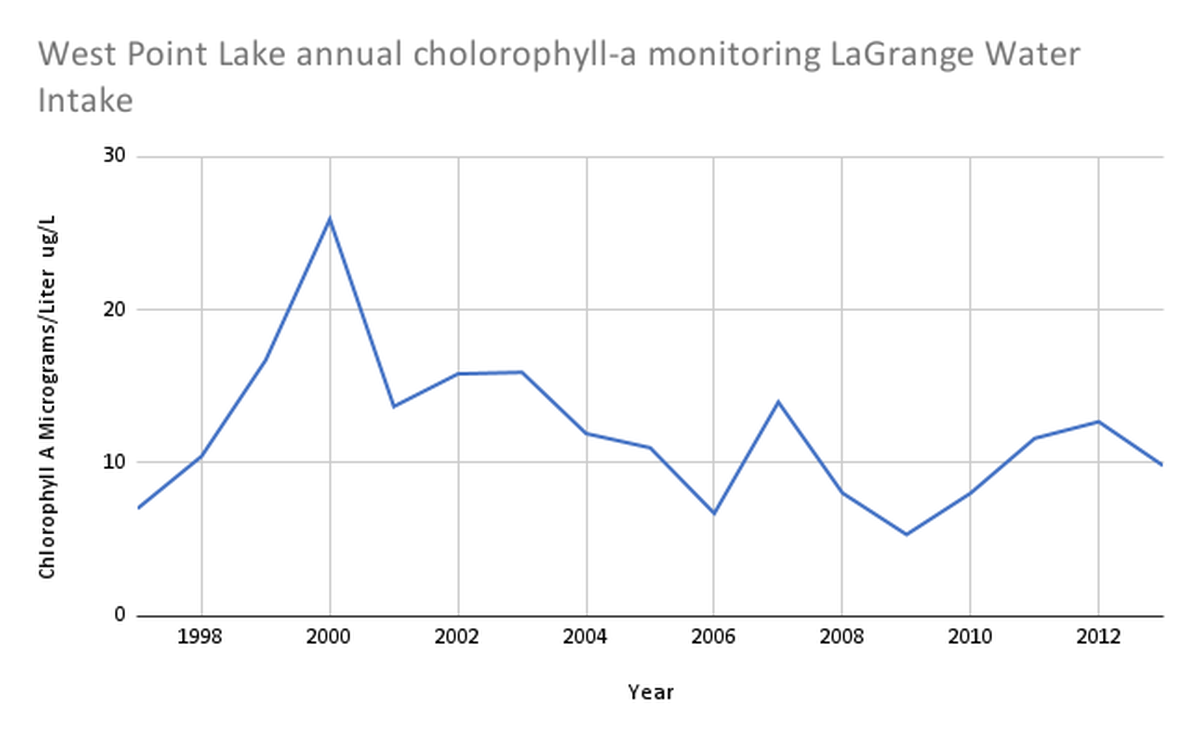
The latest samples, in 2023, hit an average of 30ug/L--with a huge spike occurring in October at 69 ug/L. The highest ever recorded since the record keeping began in 1997 by the state.
The 24 ug/l benchmark was deemed safe by the Georgia Environmental Protection Division (EPD) in 2013.
For decades, the yearly averages of chlorophyll-a have hovered between 5-25 ug/L as recorded by the Georgia EPD which took samples from 1997-2013, before CRK began sampling as well.
If the yearly average is exceeded twice in a five-year period, it would trigger a state-required cleanup plan called a “Total Maximum Daily Load.”
CRK takes algae samples between April and October because the right amount of daylight exists to for chlorophyll-A and algae to thrive.
Temperature and nutrient levels are the only variables that have changed in the last 20 years on West Point Lake from sewage, agricultural runoff, and extreme temperatures brought on by climate change.
“HABs are increasing in frequency and severity due to climate change, farming practices, storm and wastewater runoff, and other environmental issues,” according to the Center for Disease Control’s One Health Harmful Algal Bloom System OHHABS).
In 2021, there were 368 reported HAB events from 16 states that resulted in 117 human illnesses, 79 animal illness events--with headache and fever as the most common symptom for humans and lethargy as the most common symptom for pets.
The Atlanta Sewage and nutrient basin
The 1962 West Point Dam created the West Point Lake that acted as a means for flood control, hydroelectric power and a place for boaters and anglers to recreate. But it also became a large basin to receive all of Atlanta’s treated (and untreated) sewage. Sewage, even treated, is considered a nutrient and a catalyst for chrolophyll-a and algae.
Chattahoochee Riverkeepers worked to mitigate untreated sewage in the 1980’s and 1990’s that made its way down the 80-mile stretch of the Chattahoochee River to West Point Lake through lawsuits shortly after the river watchdog group was founded.
“The [nutrient] levels in the 80’s and 90’s were extremely high because of the sewer outflows coming out of Atlanta–happening maybe 70 or 80 times per year,” Jacobs said. “When CRK formed in ‘94 and a lawsuit occurred in ‘95, we held them accountable for a broken sewer system. In the early 2000’s we saw a reduction of 80% of bacteria levels in West Point Lake.”
The other major type of nutrient is agricultural and urban runoff. Fertilizers for greening lawns in Atlanta, nitrogen and phosphates for large agricultural operations south of Atlanta, and manure from farms, are all agriculture runoff nutrients that end up flowing into the Chattahoochee and stew at West Point Lake. Experts call this nonpoint source pollution. Sewage is managed at the point and is a “point-source pollution”--which is heavily regulated.
“There is no legislative work in this area in the Georgia General Assembly,” Chris Manganiello, Water Policy Director of CRK said. “When it comes to nonpoint source pollution it’s really hard to enforce. Period. Green infrastructure in municipalities like rain gardens and bioswales help reduce the flush of stormwater that the rainwater picks up.”
Manganello said the best way to tackle the nonpoint source pollution problem at “this stage in the game” is through local implementation of stormwater management.
“Yes we have drought conditions in the summer, but then crazy rain events where there will be five inches dumped in three hours...our land can’t handle that,” Desensi said. “A lot of the roadways at parking lots are impervious so chemicals and nonpoint source pollution adds to all of the runoff.”
Temperature extremes and safety
The third ingredient that creates a recipe for more chlorophyll-a and perhaps a harmful algal bloom (in addition to daylight and nutrients) is temperature.
“HABs are becoming more frequent and severe because of warmer water temperatures caused by climate change and increased nutrient content in water due to agricultural and wastewater run-off,” according to the Cornell University Wildlife Health Lab website.
Last year was the hottest year on record, since record-keeping began. In Georgia, records were broken left and right ranging from 6-month average extremes as well as daily high temperatures in the summer time as high as 104 F in August in Macon and 102 F in Columbus on August 26, 2023.
“People should recognize the effects of a changing climate are happening here in our backyard,” Jacobs said. “This is why we need to take action.”
HAB events have increased nationally from 242 events reported in 2019, to 227 in 2020, to 368 in 2021 according to CDC data.
The 1.5 million people who visit West Point Lake annually to camp, boat, and recreate shouldn’t fear visiting the lake because of the high levels of chlorophyll-a and HABs.
“The message is not to stay away, but be mindful of these hot summer days, and the long-term meaning of this news on a warming planet,” Jacobs said. He added there are implications for La Grange water treatment. “The City of La Grange is likely going to have to spend more money to treat the water when there are higher algae levels.”
This story was originally published February 1, 2024 at 12:00 PM.