Columbus saw 3 times more rain, hotter temperatures in May. What it means for residents

Columbus saw abnormally heavy rain and high temperatures in May, the type of weather that can affect sewage systems and more as the city experiences the type of heat streak that others around the world are seeing too.
Though no high-temperature records were broken, the monthly average temperature changed (again, as it did in April) by almost 3 degrees Fahrenheit, and a new rainfall record was broken in Columbus.
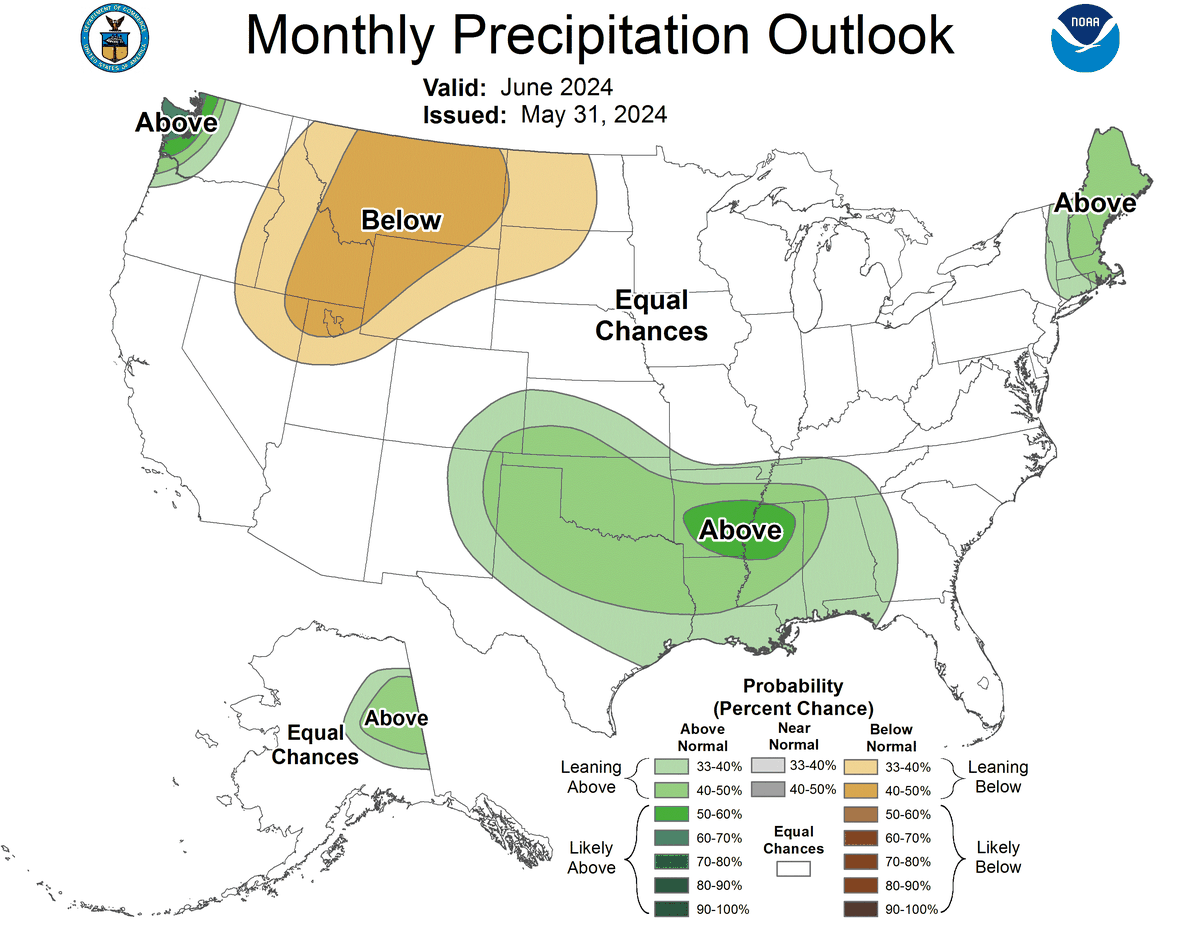
The warming trend is poised to continue in June and there is a 33 to 40% probability for more precipitation to occur in Columbus for the month of June.
Columbus got nearly triple the amount of rain it normally receives in May, which is unusual because the wet season in the area peaks in the spring.
“Late December to the end of March is the southeast’s wet season,” said Todd Hamill, hydrologist for the Southeast River Forecast Center.
On May 10, 2.42 inches of rain poured down — a major reason the normal monthly average was 179% higher at 5.6 inches.
“That rainfall of 2.42 inches set the record,” according to Sam Marlow, Forecaster with National Weather Service at Peachtree City. “The previous record was 2.11 inches set in 1990,” he said.
Cost of such heavy rain? Sewage drains can spill over
Excessive and increased rainfall can have a variety of consequences. For example, heavy downpour events can overwhelm the sewage system in Columbus, which uses a combined sewage overflow.
The drainage system is designed to route raw sewage to a treatment facility, where the water can be cleaned before it is discharged into the Chattahoochee. But heavy rain events of 0.63 inches per hour or more can cause the drainage system to spill over directly into the Chattahoochee.
The events in mid-May revealed drainage pipes that couldn’t handle the extreme downpours in Opelika, Alabama, which received even more rain than Columbus. This impacted local Mama Mocha’s ability to run their business, WRBL reported. Their story also indicated that the city will have to replace the current infrastructure with bigger pipes.
Scientists say warmer air causes water vapor to increase.
“One of the strongest links between rain and climate change is that we expect to get more large downpours in a warming world,” Lauren Casey, meteorologist at Climate Central said in an email. ”This is because a warmer atmosphere can hold more moisture, about 4% for every 1°F of increase.”
Another fallout from the rising temperatures might be increased pressure on cooling systems, more heat-related health incidents and higher energy bills from increased use of air conditioning.
The first weeks of May gave way to several rainfall events, including the event on May 10. But the last half of May was when the heat started to turn up and Columbus had its first 90-degree day.
“The average high is around 85°F in May,” Marlow said. The average is based on temperatures from 1991 to 2020. “The warmest day was on the 28th reaching 91°F.”
For four days prior, from May 24 to May 27, the low never slid below 70°F at night. That high-low temperature this early in the year can have bad repercussions for agriculture. Low temperatures getting into the 70s were experienced last August, when the heat is at its peak.
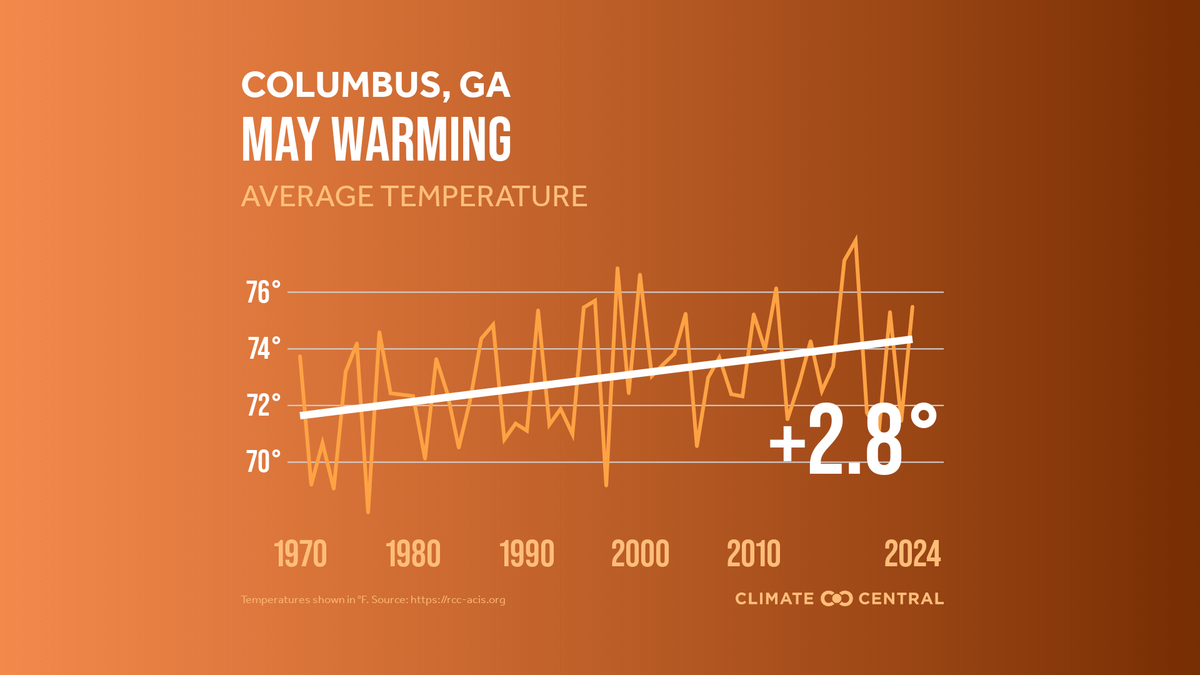
“Mays in Columbus are getting hotter, leading to a change of 2.8°F since 1970,” Lauren Casey a meteorologist with the NWS wrote in an email.
Three degrees may not seem like much, but an increasing average is significant because the normal baseline is shifting.
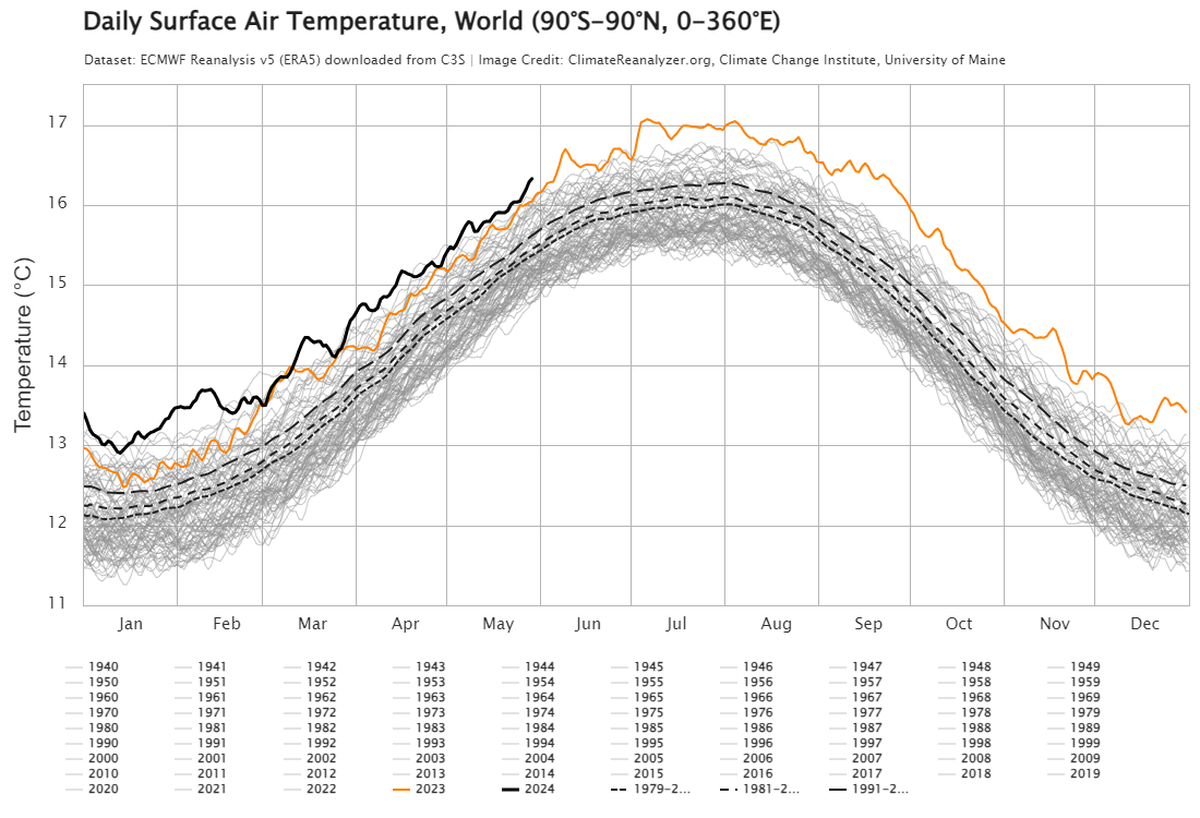
Columbus is not alone. The entire globe is reaching uncharted territory with 12 months of consecutive heat, continuing a record-breaking streak.
This story was originally published June 4, 2024 at 12:47 PM.