Unsafe levels of bacteria in Chattahoochee River from Phenix City plant, watchdog says
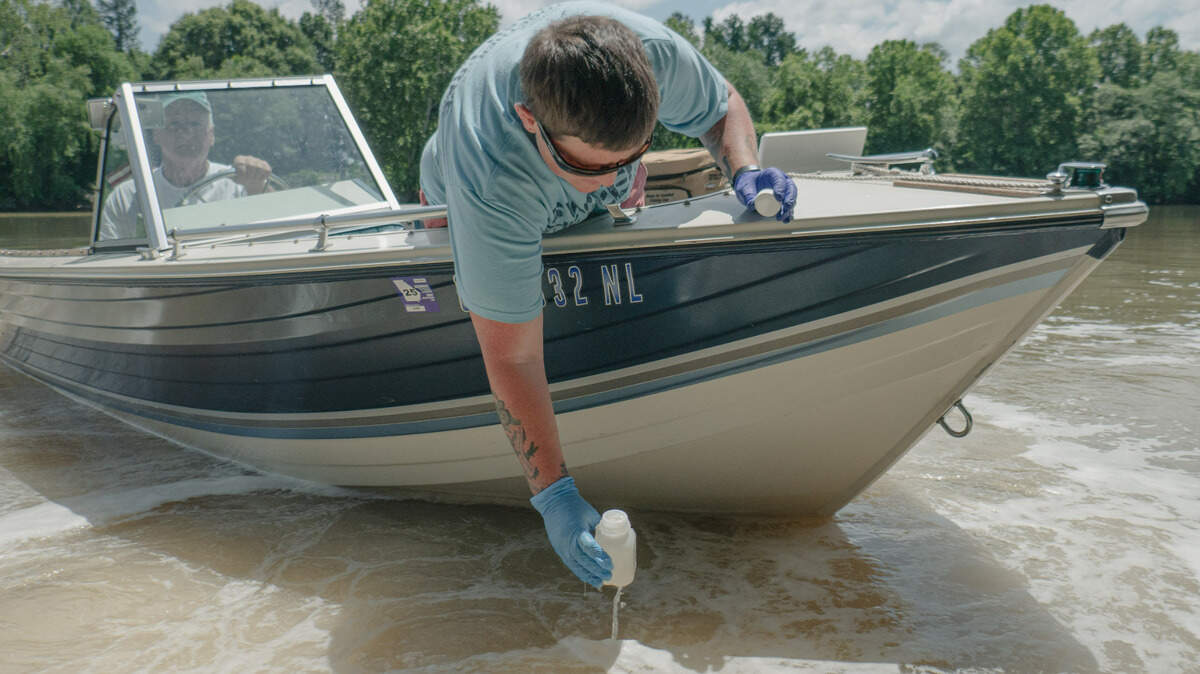
The Phenix City wastewater treatment plant is discharging significantly more E. coli bacteria into the Chattahoochee River than the facility is permitted to, a river watchdog group has alleged.
Chattahoochee Riverkeeper, the river watchdog group, has been collecting samples near the water outfall spot near Rigdon Park and South Columbus neighborhoods more periodically since last fall. On Wednesday, the group said it found “spikes in E. coli bacteria” from “undertreated sewage flowing.”
The Environmental Protection Agency recommends that water used for recreation have no more than 126/100 CFU ML of E. coli, on average over multiple samples and days. This measurement assesses the number of clusters of bacteria growing together.
The Alabama Department of Environment’s daily maximum is 298/100, according to Jess Sterling, the Chattahoochee Riverkeeper’s technical programs director. Sterling said the Phenix City water treatment plant was discharging 17,000 MPN, which is another measure of water contamination that is comparable to CFU.
Phenix City addressed the issue in a news release Friday, highlighting several measures it has taken to try to improve its wastewater treatment, including putting millions of dollars into the facility and thanking the Riverkeepers for being attentive on water quality issues.
“The health and safety of our community and the protection of our natural resources are of utmost importance. We are committed to resolving any issues promptly and ensuring our waterways remain clean and safe,” John Spraggins, Phenix City utilities director, said in a statement.
The Riverkeepers are urging people to exercise caution anywhere downstream of this plant.
“The risk of harmful bacteria exposure is high,” the group said. “Avoid fully submerging underwater, wash your hands after contacting the water — particularly with children, elderly, and immunocompromised.”
If you are upstream of the water outfall, you do not have to worry. Fishing is still ok, but wash hands and use hand sanitizer, the group advised.
But, “exercise caution from water turbulence after a heavy storm,” Sterling added.
Why is this happening?
The river watchdog group says this is not the first time the wastewater treatment plant has seen issues with water contamination.
The ADEM previously gave notice to the Phenix City utilities department that it was violating a pollution discharge permit on Dec. 19, according to a copy of the permit provided to the Ledger-Enquirer by Chattahoochee Riverkeeper. That’s why the watchdog group has done periodic testing in the area.
“The plant has had other exceedances for other parameters,” Sterling said. “It indicates that their plant is not functioning very well. We’re disappointed to see how not great it is.”
After a violation is given, representatives from a plant typically negotiate and reach an agreement to fix equipment causing the contamination. Spraggins said the Phenix City and ADEM have been in constant contact.
“We got the notice of violation and responded with ADEM, addressing the items and told them, ‘we’ve been under construction at the waste water plant’, he said. They know about the construction.”
The Chattahoochee Riverkeeper is working with Phenix City officials to try to fix the plant. Their representatives have spoken with Chan Gamble, assistant city manager and an attorney for the city of Phenix City, and Spraggins.
Phenix City says it’s working to correct problems
In 2022, the city began extensive upgrades to the Wastewater Treatment Plant, including a $12.3 million dollar upgrade followed by a $2.15 million improvement in 2022 and more recently a $439,000 improvement, according to the news release.
These improvements include: new electrical controls, new grit system piping and pumps, new aeration basins, additional secondary clarifiers, grinding equipment for the reduction of solids, a complete reconstruction of the distribution arms of four large trickling filters, clarifyers, and a new screw pump.
During these repairs and replacements, major components at the facility can go offline. This is what’s causing issues, according to Spraggins.
“During these outages, the plant has worked to treat the wastewater to the best of its ability, but achieving permitted levels was not always possible,” the city said in its news release.
“We think within 45 days we should be completely back in compliance since we put our trickle filters back online,” Gamble said.
This story was originally published June 6, 2024 at 6:01 PM.