Hydrogen energy could power your flight in a few years. Here’s why it could take off in GA

Politicians in the Southeast are betting that hydrogen energy can power the next generation of air travel.
Scientists say hydrogen is the simplest, most abundant, and lightest element and just might be the solution to decarbonizing aviation, combating energy security and climate change. They also say it is complex to execute.
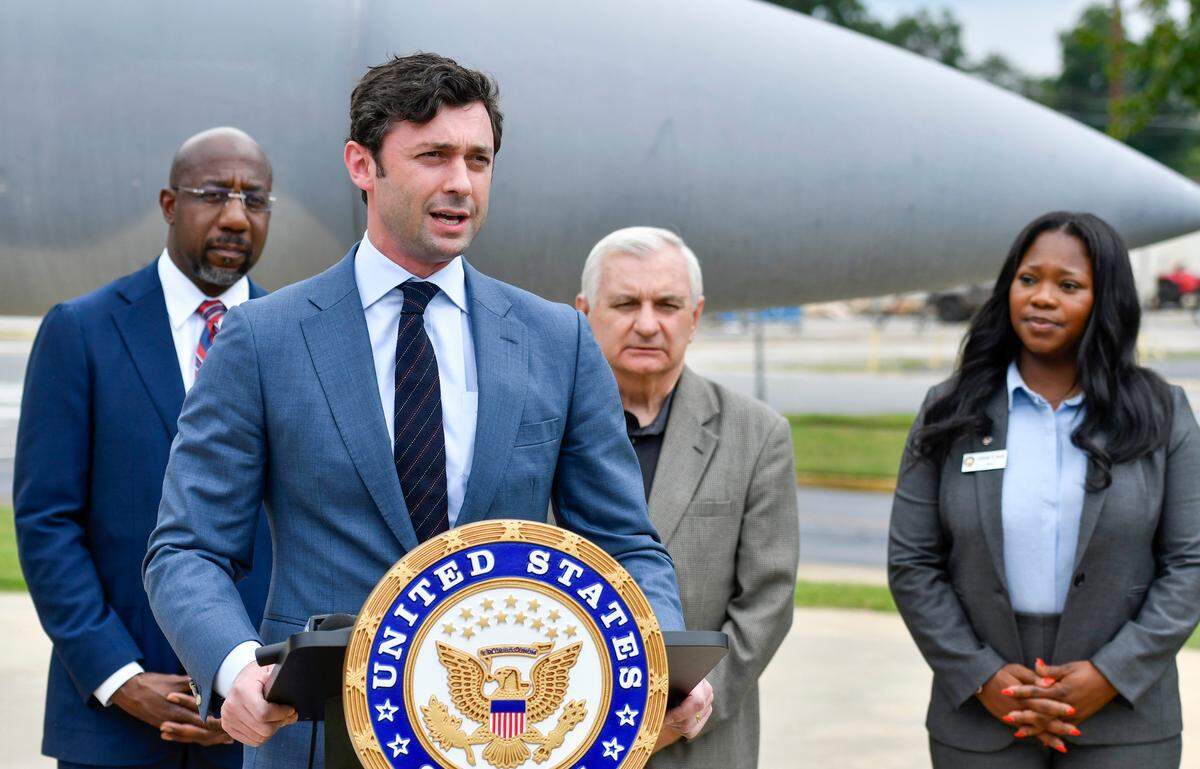
But U.S. Senators Jon Ossoff of Georgia and Lindsey Graham of South Carolina along with U.S. Rep. Hank Johnson of Georgia wrote a bill that will move the aviation industry closer to a hydrogen-aviation reality. Together, they proposed the Hydrogen Aviation Strategy Act, which requires the Federal Aviation Administration (FAA) to research and consult with industry partners to advance the new technology.
Ossoff called hydrogen energy “promising” and said, “it will create new Georgia jobs, strengthen American energy security, and reduce greenhouse gas emissions in multiple sectors, including transportation,” in a press release last Wednesday.
Johnson shared sentiments and added, “Hydrogen is a key player in helping us get to zero emission air travel”.
The bill was part of the FAA reauthorization (updated every four to five years) and signed into law last month by President Joe Biden. The Hydrogen Aviation Strategy Act requires the FAA to complete its development strategy on the safe use of hydrogen for civil aviation one year from now.
Georgia’s place in the race
Last October, the Department of Energy (DOE)announced $7 billion dollars to fund seven regional clean hydrogen hubs established by the Bipartisan Infrastructure Law.
“The hubs aim to produce three million metric tons of clean hydrogen per year, helping to achieve the 2030 hydrogen production goal. The seven Hydrogen Hubs will eliminate 25 million metric tons of carbon dioxide per year,” the White House press release said. Two-thirds of the total project investments are associated with electrolysis-based production, according to the White House.
The regions that won the funding include the Mid-Atlantic, Appalachian, California, Gulf Coast, Heartland, the Midwest, and Pacific Northwest, but not the Southeast.
Georgia was not one of the winners, even after being led by Ossoff and Public Utility Commissioner Tim Echols’ Hydrogen Energy Braintrust at Georgia Tech.
Despite the Southeast not winning the federal funds, the work of the Hydrogen Energy Braintrust and Ossoff’s hydrogen agenda has persisted. Last year Hyundai announced it would continue to lean on Georgia Tech’s expertise to advance the use of hydrogen as an alternative fuel source in commercial vehicles.
Ossoff has been part of the hydrogen conversations and round tables throughout the state, leading conversations with business and research leaders and key partners in Camden County, according to his press release.
Johnson, who represents the fourth district in Georgia, mainly the eastern portion of Atlanta, is a senior member of the House Transportation and Infrastructure Committee and Aviation subcommittee. He recognized the challenges in aviation and the opportunities it can bring to Georgia jobs in his statement.
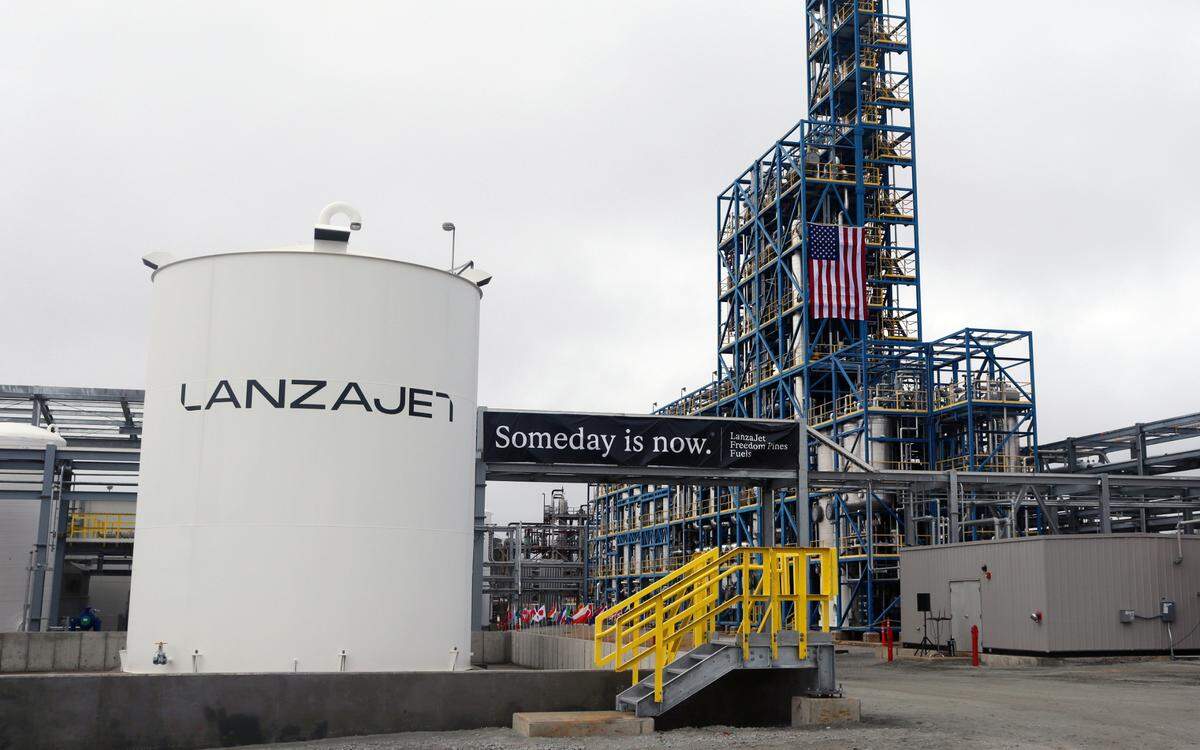
The world’s first-ever Sustainable Aviation Fuel (SAF) plant is operating in Soperton, Georgia. It uses an alcohol-to-jet technology that uses carbon from ethanol, not pulling fossil fuels from the ground. The company, LanzaJet and the facility Freedom Pine Fuels was awarded $18 million by the DOE.
Why the interest in hydrogen
Dr. Tim Liewen is the executive director of Georgia Institute of Technology’s Strategic Energy Institute and a professor in the School of Aerospace Engineering is at the helm of Ossof’s Braintrust. He likened hydrogen to a “carrier” not a fuel itself.
“Oil is an energy source and a carrier,” he said. “People call hydrogen a fuel but it’s a way of moving energy and storing energy. Right now we move electricity through a transmission line or energy [oil] through pipelines. Alternatively, you could make hydrogen and put it in a pipeline and move energy that way.”
Hydrogen is used today but it is pulled out of methane, Liewen said, and added, this is the dominant source of making hydrogen, and it is mostly used in the chemical industry.
Instead, Liewen, along with colleagues in the field, suggest making hydrogen from water by splitting the water and getting hydrogen H2 and oxygen O2. This process is called electrolysis and is very expensive to split and store. Because it is so light you have to have a lot of pressure and the right type of tanks to store it, he said.
“The discussion right now is how do we reduce the price of generating it,” Liewen said.
While it sounds simple, incorporating hydrogen into an entire system run on fossil fuels is challenging.
“Aviation is the hardest sector to decarbonize,” Liewen said in Ossoff’s press release.
But, the fact that this investment is even being discussed is telling.
“The whole reason we’re having this discussion is because of climate change,” he said.
In 2020, the most comprehensive study ever conducted to pin down exactly how much aviation has contributed to climate change was published.
The experts found the cumulative CO2 emissions of global aviation--between 1940 and 2018–were 32.6 billion tonnes.
And, half of total cumulative emissions were generated in the last 20 years alone. Aviation has been calculated as 3.5% of all human activities that drive climate change.
This story was originally published June 12, 2024 at 9:36 AM.