Missing the rain? Why Columbus has been abnormally dry since June, when it will end
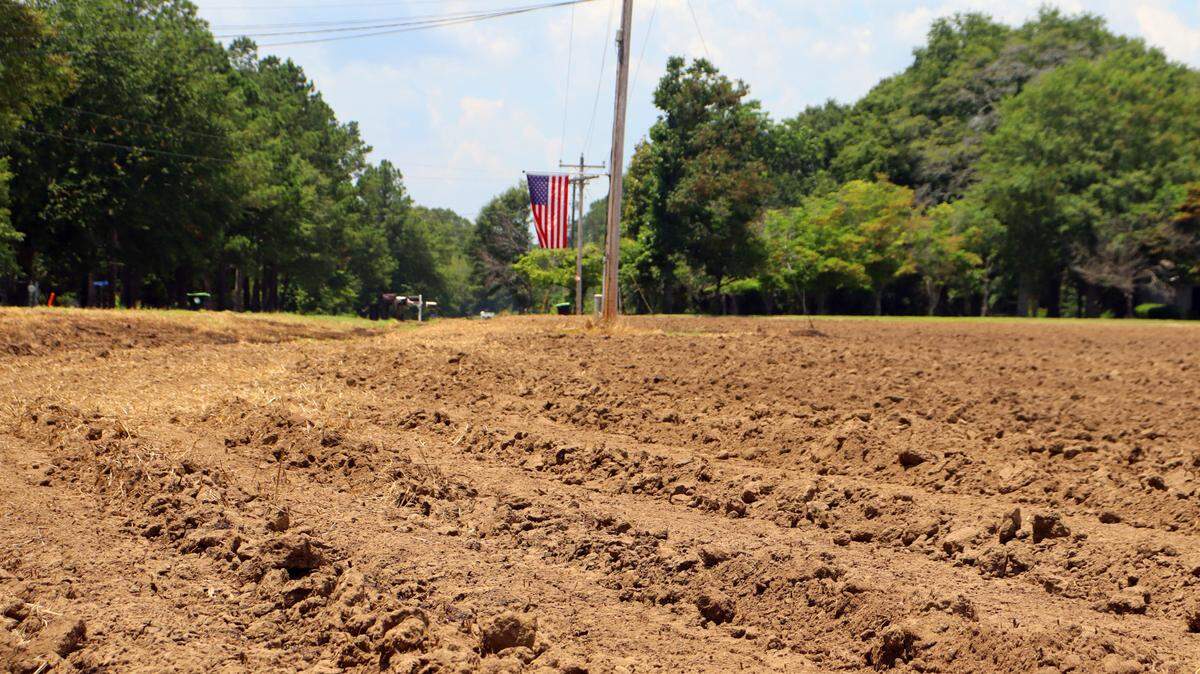
Muggy, humid days and nights that define summers in the South have been amiss in Columbus this season.
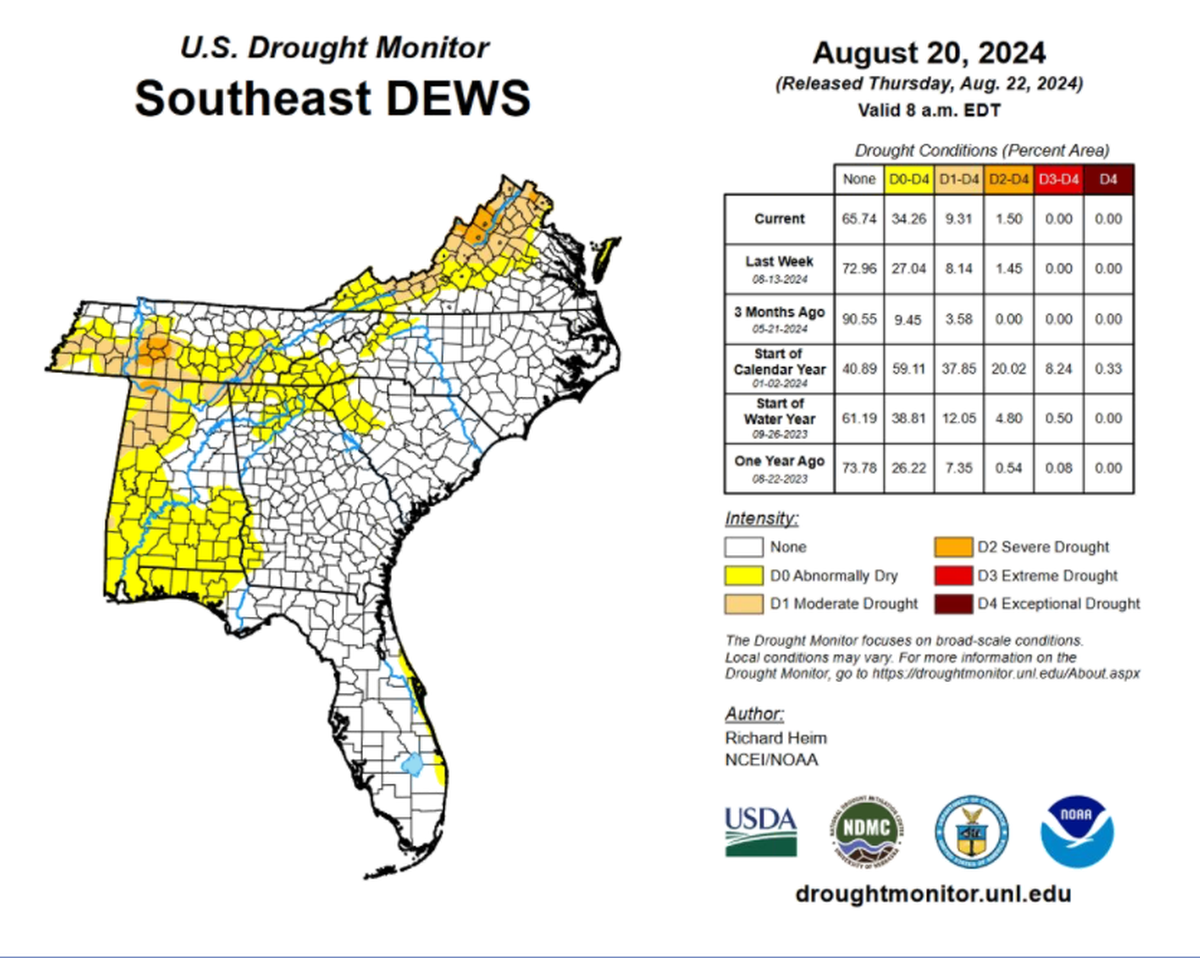
The past three months have been unusually dry for Columbus, parts of northern Georgia, and a swath of Alabama, putting a quarter of Muscogee County residents in near-drought weather.
As of Aug. 27, 25.7% of Muscogee County is considered abnormally dry, according to the U.S. Drought Monitor.
Dry conditions have been around since June 11. The county experienced moderate drought conditions from June 25 to July 23, Georgia State Climatologist Eleanor Partington said in an email.
Columbus sees extremes in rain, dry conditions
The earlier part of the year was very wet — the wettest January through March on record for Columbus, Partington said.
That heavy rain contributed to Chattahoochee River floods in February and March. But the dry conditions since June and days of extreme heat this meteorological summer (which spans June 1 to Sept. 1) can still put the area in drought.
“We haven’t had the afternoon pop-up thunderstorms or rainfall across the southeast that we usually have,” Tod Hamill, hydrologist at the Southeast River Forecast Center, said.
The southeast part of Georgia is still recovering from extremely saturated soils after Tropical Storm Debby flooded dozens of counties in Georgia. Columbus was left with a dry air mass, contributing to some dryness in parts of the Chattahoochee Valley.
“Savannah has flip-flopped between extreme dryness and extreme wetness this year, causing both droughts and flooding,” Partington said. “Columbus is often on the west side of hurricanes and these dry air masses can cause fall flash droughts”
“As Debby came through it dried out a lot of Alabama, Mississippi, and parts of Georgia,” Hamill said. “The last few weeks have been really dry.”
Columbus usually receives nearly 4 inches more rain than it did between June and September.
Columbus’ rainfall in July was 1.01 inches less than normal in July, acccording to the NOAA National Center for Environmental Information. If dry conditions persist through the end of August, the city will have 3.03 fewer inches of rain this month compared to a typical August.
Both streamflow gauges at West Point Lake outfall and the 14th street bridge in Columbus are “much below normal” for this time of year, according to the U.S. Geological Survey.
“Extreme temperatures and short, intense rainfalls followed by periods without precipitation contribute to rapid onset droughts,” Partington said. “Climate change causes higher temps, heat waves, droughts, and flooding.”
Drought can last anywhere from a few weeks to months or years. Muscogee County saw prolonged droughts in 2010 and part of 2013.
Drought is expected to persist across Alabama, Mississippi and parts of Tennessee, but rain early next week could put most of Georgia out of drought, experts said.
Columbus Water Works encourages citizens to irrigate outdoors daily only between the hours of 4:00 p.m. and 10:00 a.m. as a means to conserve water.
This story was originally published August 27, 2024 at 1:45 PM.