$6 billion lifeline from federal gov. means Rivian will finish new EV plant in Georgia
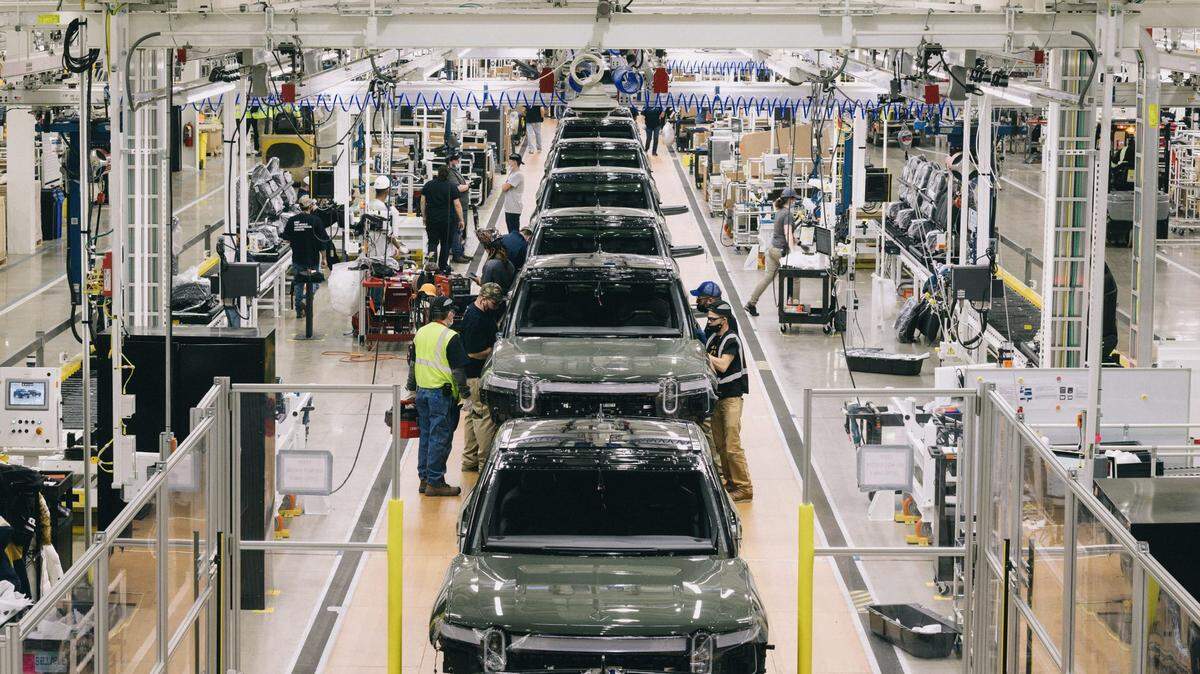
A stalled effort to bring a multibillion-dollar electric vehicle plant to Georgia is back on, with a Georgia senator enthusiastic about the benefits the state will see from Rivian’s “Project Horizon.”
The plans to construct the 9 million square-foot plant near Social Circle, Georgia, were announced in 2021, according to media reports. But the project was put on a nine-month pause before Tuesday’s announcement from Rivian officials and Democratic Sen. Jon Ossoff.
“This is a crucial part of Georgia’s economic future and a major step forward to ensure the plant is built in Georgia,” Ossoff said.
The state offered a $1.5 billion incentive package that would give the company tax breaks in exchange for employees, investments and jobs.
Project Horizon, the $5 billion plant, paused construction operations in March 2024. Rivian said it would rather focus on manufacturing its R2 vehicle in its Normal, Illinois plant.
“We determined we could have more capital-efficiency and more timely launch of R2 by beginning production in Normal, versus setting up an entirely new factory for the launch of the vehicle,” said Peebles Squire, spokesperson for Rivian.
After months of calling and writing to Secretary of Energy Jennifer Granholm, Ossoff said the Department of Energy Loan Programs Office will support a conditional commitment loan of up to $6.57 billion to finance the development and construction of Project Horizon.
“The economic incentives and infrastructure law are meant to supercharge Georgia economic development and support Georgia manufacturing and that’s why I engaged with the Secretary of Energy,” Ossoff said.
Ossoff said the state has already committed billions and spent hundreds of millions of dollars on the project, and the loan gives taxpayers an opportunity to recoup the investment. The senator also called the stalling of Rivian’s Project Horizon, “a threat to Georgia’s economic future.”
The facility will produce up to 400,000 SUV and crossover vehicles annually, including its R2 and R3 models. The first phase of the project will give the company capacity for 200,000 vehicles, the company said.
A conditional commitment
Project Horizon is expected to fill 2,000 full-time jobs through construction and 7,500 operation jobs with an average salary of $56,000 annually by 2030, as part of its incentive package agreement.
“We have to close the loan as quickly as we can,” Squire said. “The DOE has been a good partner. The conditional commitment offers a favorable outcome. It’s a staged process.”
Squire could not offer a construction timeline, but said they expect to start building the R2 midsize SUV and R3 crossovers in 2028.
The federal loan requires Rivian to have a community benefits plan, which Rivian will fulfill by hiring at least a quarter of its employees from the local communities and will contribute to the Justice40 initiative, an endeavor that requires 40% of the overall benefit of clean energy investments to flow to disadvantaged communities.
“We are excited to arrive at this important chapter in our growth and look forward to building our next generation of vehicles in this great country,” RJ Scaringe, Rivian founder and CEO, said in a statement. “We are grateful for our strong partnership in Georgia and will continue to work closely with them as we bring this landmark facility to life.”
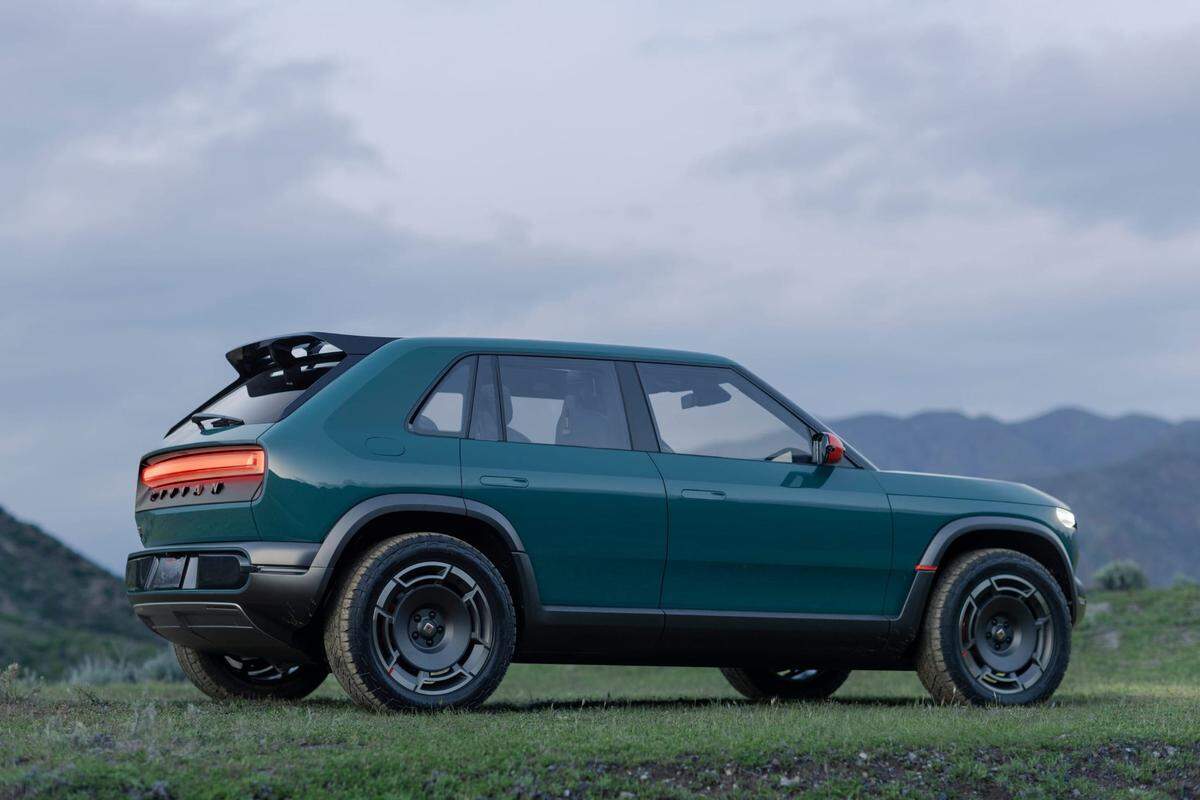
This facility supports an effort from President Joe Biden’s administration to have zero-emission vehicles make up half of all new vehicles sold in 2030.
What to know about Rivian’s vehicles
The first R1-2 model was the first ever all-electric pickup truck in the U.S. to hit the market, followed six months later by the R1-S SUV. They are designed for work and play “with the goal of accelerating the global transition to zero-emission transportation and energy,” the company says.
“These vehicles are extremely high-performance,” Squire said. “The high-end models go 0-60 in three seconds and can drive through up to three feet of water. They have adjustable air suspension that invites you to go and do whatever you like.”
The charging range from the R1T and R1S is 420 miles, only about 6% of EVs have that range, and most have 250 miles, according to InsideEVs.
“We are capacity strained in Normal,” Squire said. “Georgia is the linchpin.”
The loan program office estimates that 146 million gallons of petroleum will be saved annually from the new facility, around 3.4 million barrels of oil. In 2023, The U.S. consumed approximately 6.93 billion barrels of oil.
Buyers of some of these vehicles could be eligible for the $7,500 clean vehicle tax credit stemming from the 2022 Inflation Reduction Act. The tax credit is aimed at curbing emissions and enhancing growth of EVs in the U.S.
The higher-end Rivian vehicles are not eligible for the $7,500 tax credit, but the R2 is intended to be compliant at an MSRP of $45,000, Squire said.
There has been opposition to this project by local development groups in Morgan County and Congress members during 2022 meetings when the construction was well on its way. Residents claimed the plant would, “destroy their way of life and turn it into Gwinnett county” according to media reports.
President-elect Trump has vocalized his opposition to EV production and has threatened to remove the tax credit. Ossoff said he would oppose any policy steps by the incoming administration that threaten Georgia’s economic development.
This story was originally published November 26, 2024 at 12:26 PM.
CORRECTION: Peebles Squire’s name, as well as manufacturing capacity for Rivian plants, were incorrect in a previous version of this story.