This salamander, which is native to Georgia, may soon be named an endangered species
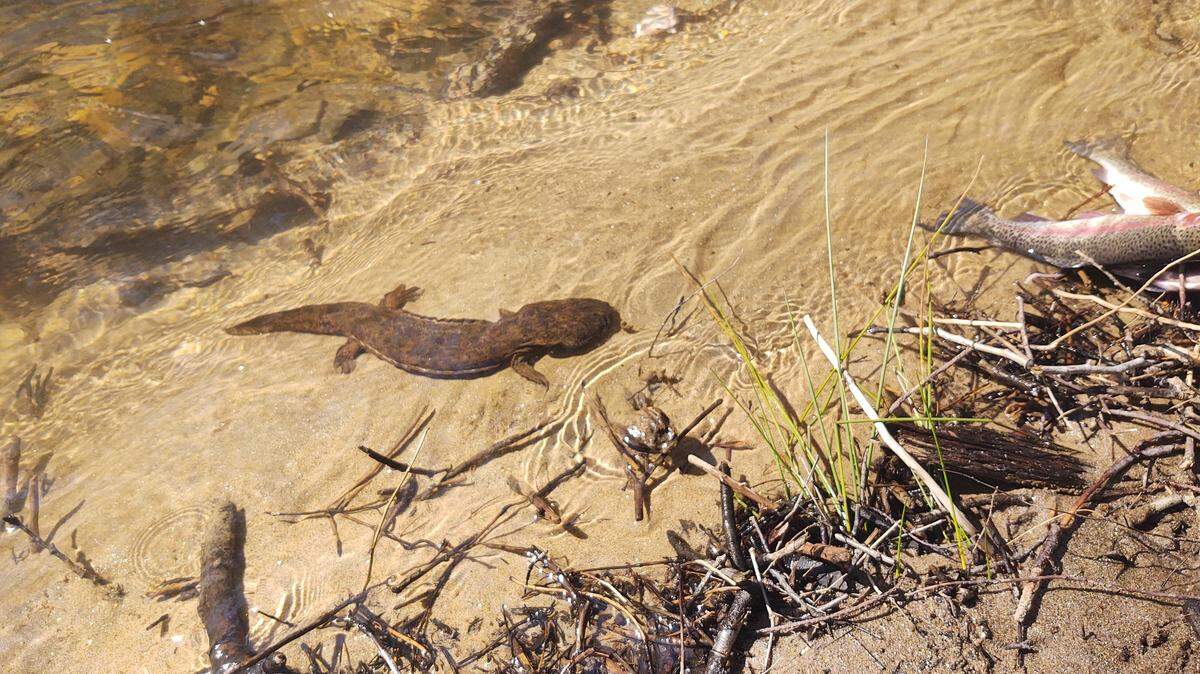
The U.S. Fish and Wildlife Service announced a proposal last week to list a salamander found in Georgia on the Endangered Species List.
The eastern hellbender can be found in northern Georgia and 14 other states. Recent data shows that only 59% of their populations remain, and among the remaining populations, only 12% are stable and nearly 60% are in decline, according to the release. The Fish and Wildlife Service is seeking public comment about listing this salamander as an endangered species.
“The eastern hellbender is a unique salamander that plays a crucial role in maintaining healthy freshwater ecosystems,” said Will Meeks, the Midwest regional director of the US Fish and Wildlife Service. “As key indicators of stream and river health, hellbenders need protection that also will help support healthier ecosystems across their range.”
Hellbenders play a vital role as predators, and sometimes even prey, in the food web of healthy stream ecosystems, according to Thomas Floyd, Georgia’s lead hellbender biologist.
“Since hellbenders have permeable skin, they act has our sentinels for environmental health and are often considered the proverbial “canary in the coal mine” for water quality,” Floyd said. “Healthy hellbender populations are indicative of clean water.”
The biggest threats to eastern hellbenders include stream sedimentation, poor water quality, disease, habitat loss and pet trade collection, which is when people capture animals from the wild to be sold or traded as pets.
“Georgia is fortunate is have some of the highest quality hellbender habitat and healthiest hellbender populations anywhere, but as the state’s human population and urban footprint continues to expand, this is threatened by an ever increasing residential development pressure,” Floyd said.
The increased sedimentation and pollution in water is linked to a reduction in forest cover, and human development results in a loss of natural filtering properties. Reduced water quality produces stressors that make hellbenders more susceptible to diseases and emerging pathogens in the environment, according to Floyd.
The eastern hellbender is one of two subspecies of hellbenders in the United States. The Ozark hellbender, the other subspecies, was listed as an endangered species in 2011, according to a news release from U.S. Fish and Wildlife.
Hellbenders are the largest of North America’s salamanders and grow up to 29 inches. They can live up to 30 years and spend their entire lives in flowing streams and rivers of the eastern and central U.S.
Cool, clear water is crucial to the species, according to the release.
The Endangered Species Act prohibits the “take” of species that are listed as endangered, which includes harming, harassing (such as removing from the wild), or killing the species. The listing also mandates that federal agencies consult with the U.S. Fish and Wildlife Service to ensure the species’ conservation.
The proposal to list the eastern hellbender as endangered appeared in the Federal Register on Dec. 13, which started a 60-day comment period. Information on how to submit comments can be found on regulations.gov by searching docket number FWS–R3–ES–2024–0152.
This story was originally published December 20, 2024 at 7:19 AM with the headline "This salamander, which is native to Georgia, may soon be named an endangered species."