Flooding is the most common and most expensive natural disaster in the U.S.
Two inches of flood water can cost up to $25,000 of damage, according to FEMA. And because of climate change, flooding is becoming more likely and more expensive.
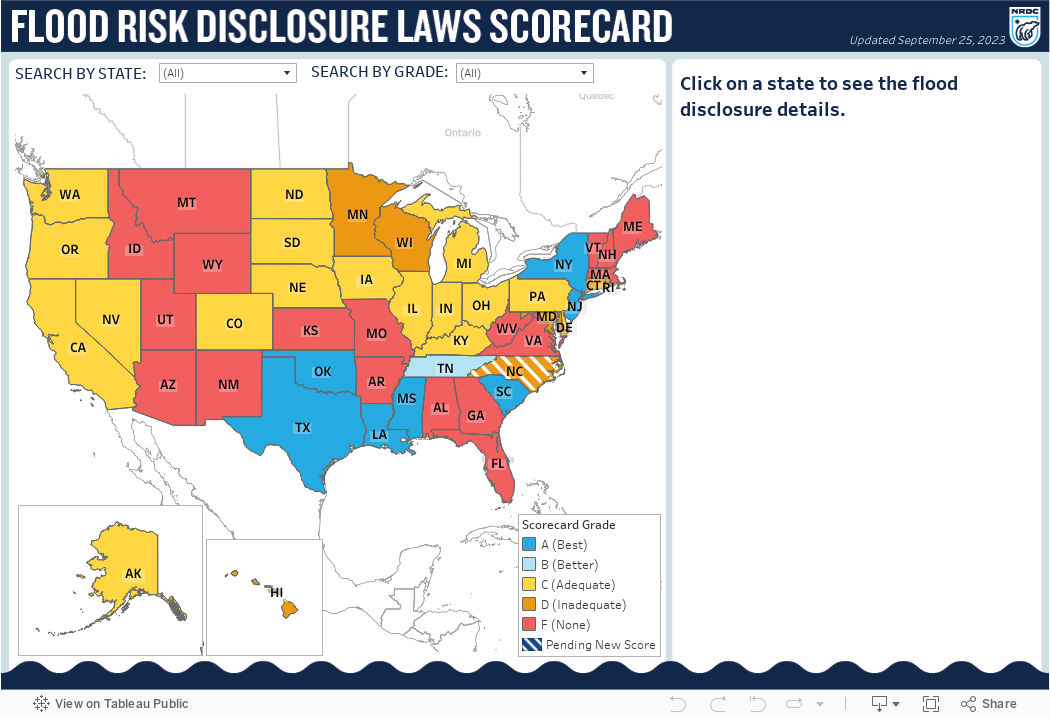
But there are no federal laws to provide potential home buyers with information about whether the home has had flood damage before, nor whether it’s in a flood plain and requires flood insurance. Though several states have implemented laws to protect home buyers, though Georgia hasn’t, according to the National Resource Defense Council.
“Weak or non-existent flood disclosure laws basically keep home buyers in the dark about flood risks, undermining their ability to make informed decisions such as whether to buy flood insurance, or whether to even buy the property in the first place,” said Joel Scata, senior environmental lawyer with NRDC.
Scata said this could come at a great cost to unknowing home buyers in Georgia. The NRDC and a consulting firm, Mililman, found that Georgia has an average estimated flood damage cost of $142,000. That’s the third highest after Alabama and Connecticut, which also have inadequate or nonexistent flood disclosure laws.
The NRDC partnered with and commissioned Milliman, a consulting firm, to evaluate Georgia along with 24 other states to understand the risk and cost of not disclosing flood insurance.
A 2025 report from the groups gave Georgia an “F” over this issue on its scorecard. Other states with such low scores have changed legislation before.
“The report presented how drastic flood costs can be,” Scata said. “We were able to get these states to get disclosure laws.”
In 2022 alone, Georgia had the highest single-family home policy count of National Flood Insurance Program payouts at 62,321 policies.
Milliman also indicated that the cost for homeowners is dependent on how much climate change worsens over time, using two scenarios. A “medium” scenario, as described by the International Panel on Climate Change, would be a moderate scenario in which carbon emissions peak in 2040 and decline. The “high” scenario would occur if emissions kept rising throughout the 21st century. A “high” scenario brings with it additional cost.
The $142,000 cost incurred over a 30-year period mentioned above jumps to $164,000 under a high scenario, according to Milliman.
Brunswick had an average annual loss of $38,000 from flooding, and the largest number of flood damaged homes in Georgia is in Atlanta, Sandy Springs and Alpharetta, the report showed.
“Due to the impacts of climate change, your costs as a home buyer of buying a previously flooded home, especially in coastal areas or close to the rivers where flooding is getting worse, are going to go up,” Scata said.
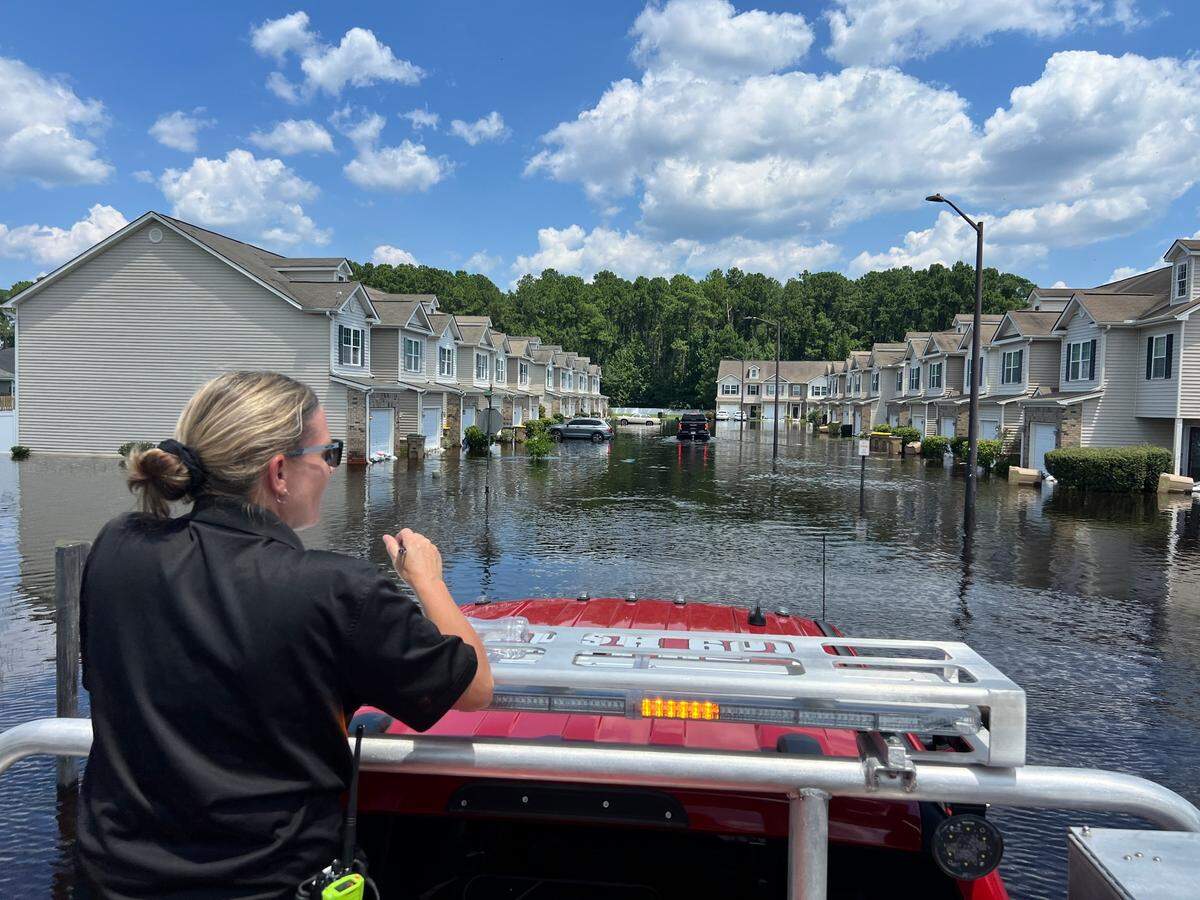
Tropical Storm Debby, which drowned parts of southeast Georgia in August, is expected to cost nearly $40 million in flood damage, according to Karen & Clark Company.
Field Coordinator for GEMA assessing damage in Bryan and Chatham Counties on August 7th. GEMA
Renters have some protection
There is a voluntary disclosure form from the Georgia Association of Realtors to ask about past flooding and underground streams or detention ponds or dams on the property, the NRDC scorecard said.
Additionally, rental tenants are given some disclosure under state law, but the scenario is extreme.
“Georgia is one of the few states that has tenant protection, ” Scata said. Basically if you are renter in Georgia a landlord is required to tell a renter whether the property has flooded three times in the last five years.”
“If it flooded two times in the past five years, they wouldn’t have to disclose that,” Scata added.
Where is change happening?
Scata told the Ledger-Enquirer that Vermont, Maine and New Hampshire noticed flooding was becoming more severe and acted on their own to add disclosure laws.
“Once people realize how costly it can be, there is a pressure on the legislature that constituents get the info they need,” he said.
In May 2024, Florida enacted flood disclosure legislation with help from the Environmental Defense Fund.
Scata said he’s seen pushback from realtors wanting this disclosure.
“It’s clear that without action, not only to mitigate the impacts of climate change through resistance, reductions, but without actions to adapt there’s going to be a number of people who are buying homes that are going to be flooded and not know in the future just how much worse it can get,” Scata said.
Kala Hunter is a reporter covering climate change and environmental news in Columbus and throughout the state of Georgia. She has her master’s of science in journalism from Northwestern, Medill School of Journalism. She has her bachelor’s in environmental studies from Fort Lewis College in Colorado. She’s worked in green infrastructure in California and Nevada. Her work appears in the Bulletin of Atomic Science, Chicago Health Magazine, and Illinois Latino News Network.