Columbus tree planting grant focused on urban parks is in jeopardy after Trump freeze
For seven years, Trees Columbus Executive Director Dorothy McDaniel and her board members have longed to bring a new generation of urban trees to the Fountain City.
In early 2024, the vision became a reality when the urban tree planting nonprofit was awarded a $900,000 Trees Across Georgia grant to plant and maintain 500 trees across dozens of Columbus parks from 2024 to 2028. The money was quickly put to use: in the first year, McDaniel hired a project coordinator, planted 300 trees, started training a second arborist, and educated over 200 elementary school students about trees. McDaniel said she did that with just a third of the grant money distributed, about $295,000.
In January, McDaniel shared a video of those successes with the Georgia Forestry Commission, which receives funding from the U.S. Forest Service and provides Trees Columbus with its grant money.
Amid freezes on certain federal grants, McDaniel said she was notified two weeks after showcasing her successes that her money was suspended.
“The US Forest Service is not processing reimbursements and the Georgia Forestry Commission is suspending all ‘pass-through’ reimbursements,” the Georgia Forest Commission emailed McDaniel on Feb. 11.
President Donald Trump’s executive order “Unleashing American Energy,” signed on inauguration day, directed all federal agencies to pause the disbursement of funds that funneled from the Inflation Reduction Act to the U.S. Forest Service.
“There was a sense of dread,” McDaniel said she felt when she opened the email. “It’s a disappointment because this project has been going so well. We hate to have to stop when there’s been so much momentum.”
McDaniel and Trees Columbus isn’t alone. There are 20 other Trees Across Georgia recipients, including groups in Tifton, Macon, Atlanta and Savannah.
In total, Trees Across Georgia was set to receive $6.9 million in grants through 2028. As of January, just $1 million has been distributed and 1,031 trees have been planted across Georgia, according to Wendy Burnett, the public relations director for the Georgia Forestry Commission.
“Finally, with this grant we had the money to actually implement this program the way it was designed,” McDaniel told the Ledger-Enquirer. “We didn’t have to do anything halfway. We were able to actually plant and maintain trees the way they should be and people enjoyed being involved with the program.”
Despite these funds from the Inflation Reduction Act approved by Congress in 2022, a U.S. Department of Agriculture spokesperson did not say whether pausing the funds was illegal. Only that Trump “rightfully asked for a comprehensive review of all contracts, work and personnel across federal agencies.”
The spokesperson said newly-appointed Department of Agriculture Secretary Brooke Rollins, which the US Forest Service falls under, has not yet had the opportunity to analyze these reviews. And until then a response about the money would not be provided.
The Trees Across Georgia grant required recipients to plant trees in areas that fit the EPA Justice40 Initiative, which requires 40% of federal climate investments to flow to communities that haven’t seen enough investment to fight an overburden of pollution.
For Columbus, that included: Carver Park, Shirley Winston Park, Theo McGee Park, River Road Elementary and Lakebottom Park.
Those areas fell under census tracts within the Environmental Justice screening tool. That initiative and screening tool website and the Justice40 page have been taken down since Trump’s executive order was signed.
The grant was not just about planting trees, it was about workforce development and building capacity, McDaniel said. Workforce development meant hiring project coordinators, training more arborists and educating the youth near the parks about why tree maintenance is important.
“Clubs, scout groups and partnership with FAB Arts, which uses art to enhance learning and teaching, were all possible from this grant,” McDaniel said.
Reese Road Elementary, JD Davis Elementary, River Road Elementary and Forrest Road Elementary all received in-classroom learning and opportunities to do some of the planting.
“A lot of kids were really interested in what our arborist does, a lot didn’t know that there was a career in tree planting and care,” McDaniel said.
Not only will the remaining 280 trees that were supposed to be planted potentially be stymied by this federal funding pause, but the maintenance of the 300 trees in the ground are of great concern to McDaniel.
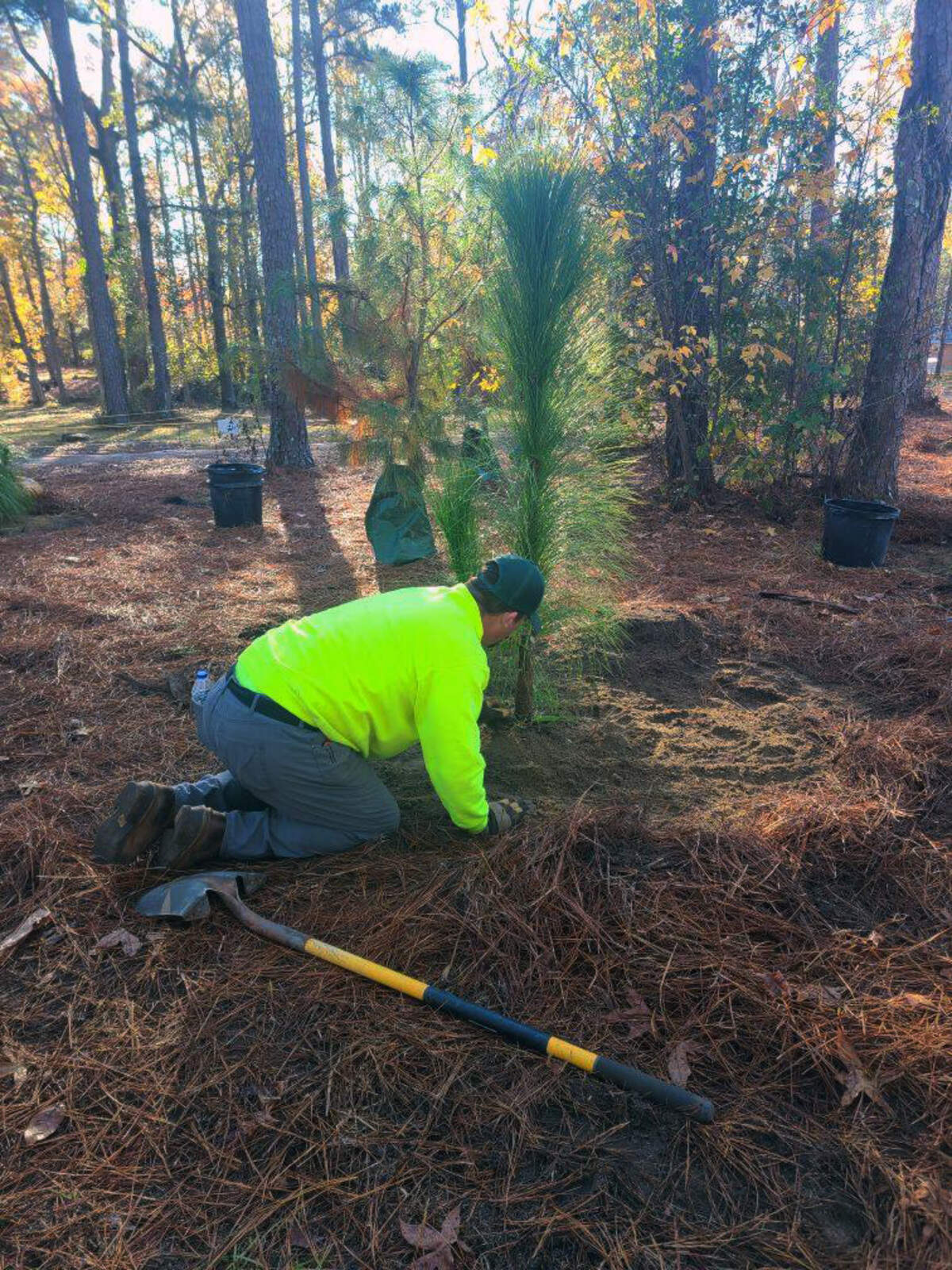
“Maintenance on trees is done by certified arborists and we need to pay them for expertise and time,” she said. “Our arborist is trying to help us get coordinated for next year. Plantings on this scale take months to prepare and maintain.”
Some of the other items on Trees Columbus list were to remove hazardous trees at Carver Park, Lakebottom Park and Theo McGee and coordinate with Columbus Consolidated Government who just has one arborist right now.
The project coordinator McDaniel hired last year is working on outreach events that showcase tree care, natural history and careers in urban forestry and McDaniel is concerned about losing her position without getting more funding.
“None of these things will happen without the funding, so our immediate plan is to find funding to bridge the gap and continue the program,” McDaniel said.
Feb. 22 is the annual Arbor Day planting event at Lakebottom Park. McDaniel said she expected 20 trees to be planted and encouraged volunteers to come plant a tree because it is such an “exceptionally fond experience.”
“Until we raise more money it’s our only planting on the calendar for a while.”
This story was originally published February 21, 2025 at 10:54 AM.