Watchdog group joins lawsuit against Phenix City over water contamination
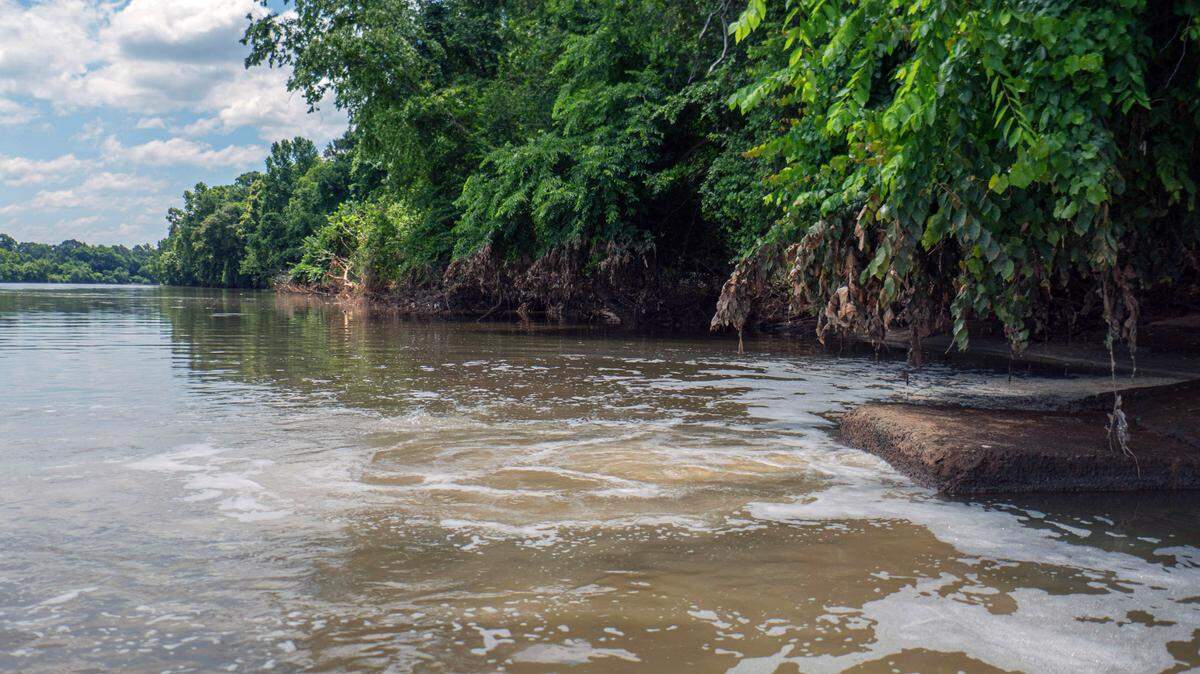
The river watchdog nonprofit, Chattahoochee Riverkeeper, now has a seat at the courtroom table to intervene in a lawsuit that the Alabama Department of Environmental Management filed against the Phenix City Department of Public Utilities.
The suit deals with alleged violations of the Clean Water Act and the Alabama Water Pollution Control Act. Both the Chattahoochee Riverkeeper and the Alabama Department of Environmental Management have accused Phenix City in court documents of polluting the Chattahoochee River with water that has illegally high levels of contamination.
In September, both the Chattahoochee Riverkeeper and Alabama Department of Environmental Management filed lawsuits over the quality of water coming out of the Phenix City Waste Water Treatment Plant throughout 2024.
Phenix City said it shouldn’t have to face both lawsuits, calling them “duplicative.” The city also said it was “working with ADEM to modernize the sewer system to continually meet the needs of the growing population in the City’s service area.”
The Riverkeeper group said it was surprised by the simultaneous suit by ADEM and said it “reinforced” the decision to sue. The group would have preferred proceeding with its own lawsuit, but due to a clause in the Clean Water Act, Alabama’s lawsuit superseded the Riverkeeper’s federal lawsuit.
In December, the Riverkeeper filed a motion to intervene, according to Barry Brock, senior environmental lawyer at Southern Environmental Law Center’s Alabama office representing the Riverkeeper.
Since then, the Riverkeeper hasn’t had access to documents and discovery rights, and the group hasn’t been able to intervene in the process.
That changed March 31 when Russell County Circuit Judge David Johnson granted the river watchdog group the right to join the lawsuit.
“CRK will hold Phenix City and others accountable to ensure that necessary infrastructure upgrades are made to protect water quality and all of us who depend on the Chattahoochee River for drinking water, fishing and recreation,” Jason Ulseth, CRK’s executive director, said in a statement.
Now the city and the state have to share the same documents they’ve been privy to with CRK.
“Before this they didn’t have much information, now they’ve been admitted to the party,” Brock said. “The state and the city will have to provide Riverkeeper the documents and discovery that they’ve been engaged in.”
How could Chattahoochee Riverkeeper impact case?
CRK wants to ensure Phenix City creates meaningful and permanent solutions to ongoing failures that are causing water pollution.
Since the September lawsuit, there have been 50 additional total violations, according to Stephanie Stutts, general counselor of CRK. She added Phenix City has had violations for E. coli in all months but January, and March data is not yet available.
Prior to the lawsuit, E. coli results were greater than permitted in the following months; January, 2020, March 2021, April 2022, January 2023, October 2023, November 2023, January 2024, February 2024, March 2024, April 2024, May 2024, June 2024, and July 2024.
Chattahoochee Riverkeeper said the plant has not properly maintained infrastructure and has had non-permitted discharges of raw sewage in the the form of sanitary sewer overflows.
Brock said ADEM isn’t as stringent as citizen groups.
“Typically when entering a settlement with a city ADEM says, ‘You Will do better,’ they do a study, an engineering report, and then they ask the defendant to ‘get around to implement it,” Brock said.
But now that CRK is involved, there will have to be a consent decree that features specific requirements.
“It’s a higher level of detail than what ADEM will do,” Brock said. “The decree might have projects to do, timelines, budget, you’ll do x to fix y and you need to do that within a certain number of months.”
What’s next for Phenix City water case
It’s tough to say whether the addition of CRK will speed up or slow down the lawsuit, Brock said.
“Our approach is it’s better to have a remedy that means something than have a quick remedy that doesn’t,” he said.
If found guilty of these violations, Phenix City could pay a statutory penalty per violation of $25,000. Brock said that number isn’t typically adhered to, and changes through a calculation that ADEM creates. That payment would go to the state.
The Riverkeeper group isn’t financially motivated, he said. SELC’s legal advocacy is not charging a legal fee either according to Brock.
“The only way CRK would receive money is negotiating their out of pocket cost,” Brock said, “which would make it a wash.”
The consent decree is being worked up by the city and state over the next few weeks..
Brock called it potentially robust and detailed.