This new back country nature reserve near Columbus is set to open in the fall
Since the 1960s, a special swath of land in Talbot County, 25 minutes east of Columbus, has been in the hands of timber companies managed for profit, in an area known as the Upatoi Ravines.
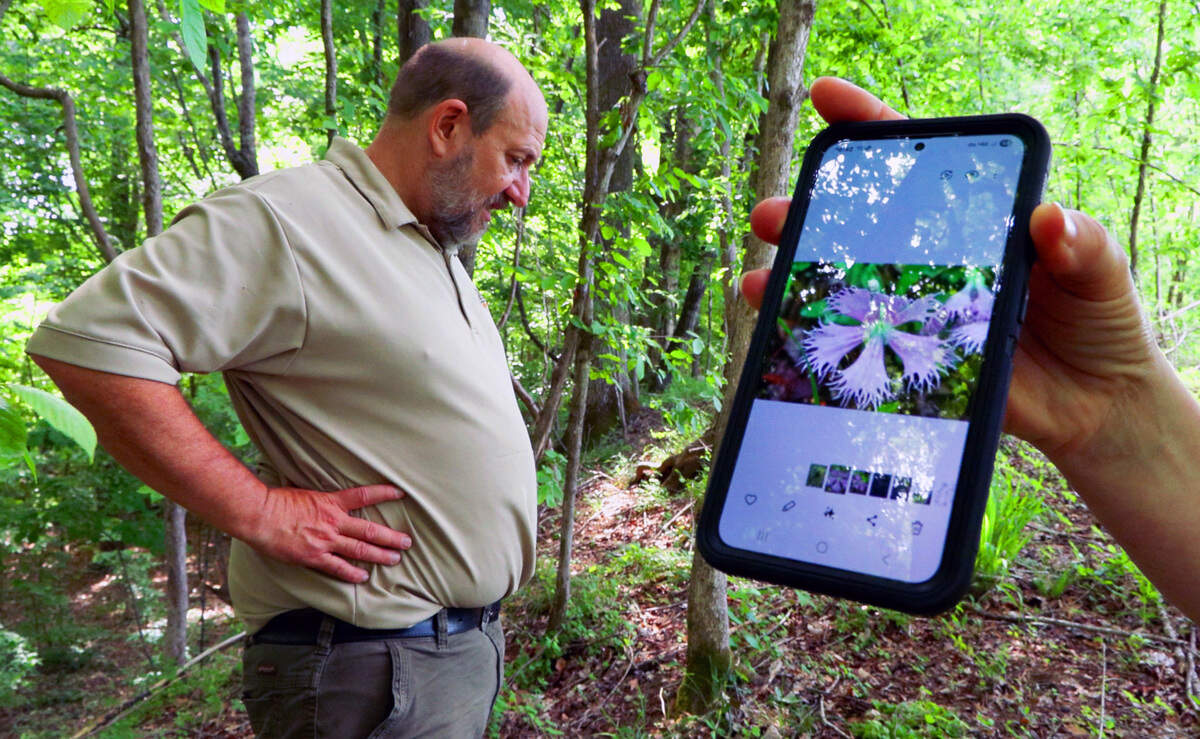
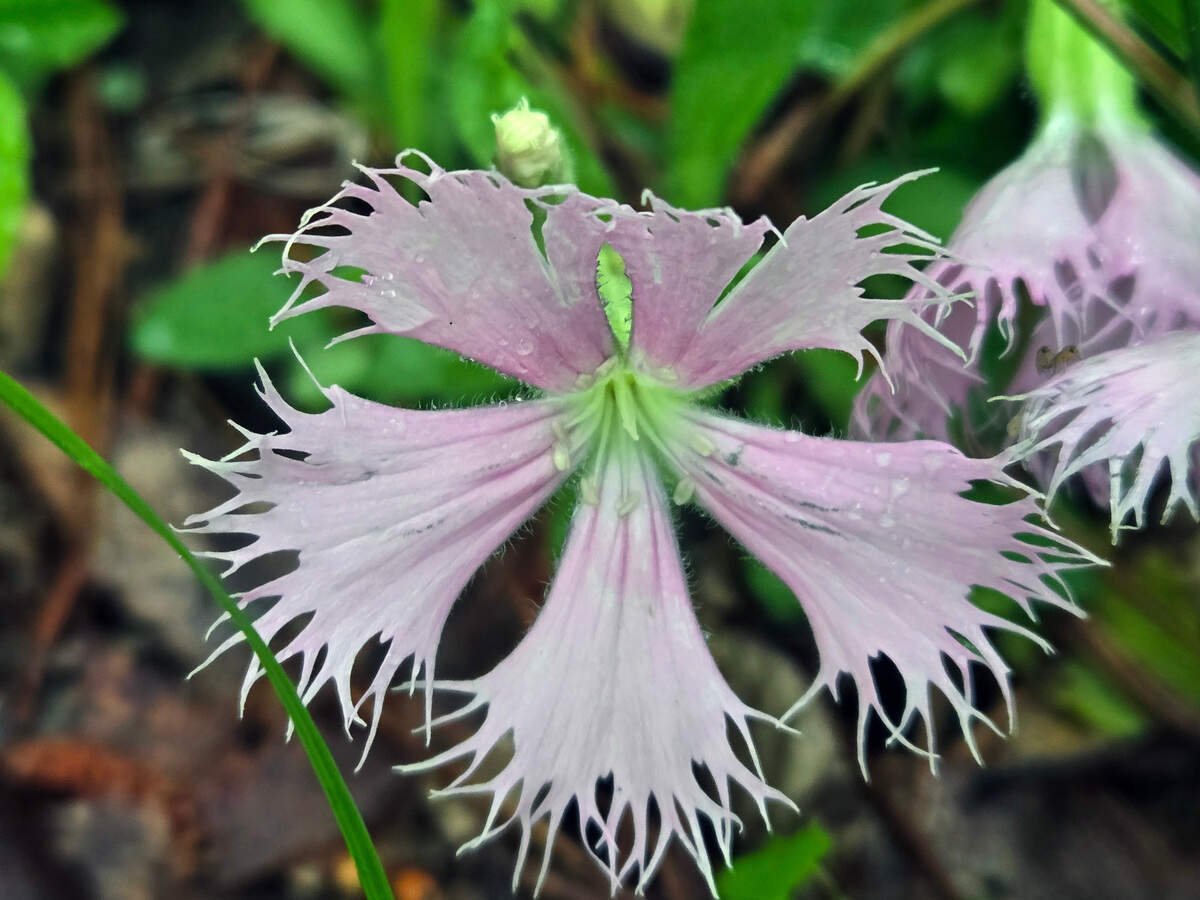
But away from scars of timber production, tucked in the ravines and creeks, is a rare and endangered plant that has protected parts of the land from any industrial threat. The plant, fringed campion (saline), is what helped the Georgia Department of Natural Resources receive a $5 million dollar grant to acquire 9,000 acres which they are calling the Upatoi Ravines Natural Area. The state is buying it from timber company PotlatchDeltic for a total of $29 million.
The Georgia DNR has had its eyes on the land for decades. The department hopes the acquisition will allow for the promotion of conservation and hunting, but they also have a vision for a “back country experience” to allow people to explore and camp.
“Yes, it will be open for hunters, but when that season ends, there is a lot of unexplored, mature forest in the ravines, that I think lends itself pretty well to a back country area to explore,” Matt Elliott, chief of wildlife conservation at Georgia DNR, said. “That’s something y’all don’t have much of around here (in Columbus).”
The Georgia DNR plans to have the land ready for what Elliott called “primitive camping” – no water or restrooms. It would be free to camp, and anyone who has a hunting license is permitted, starting this fall. He said mountain biking is possible on the vehicle-accessible roads, but horseback riding wouldn’t be permitted.
The Upatoi Ravines Natural Area will technically be a Wildlife Management Area. There are currently two other such areas near Columbus, both around 5,000 acres and at least 35 minutes away: Blanton Creek in Harris County and Hannahachee, south of Columbus near Lumpkin.
But the Upatoi Ravines offer something neither of these places, nor any places south of the Fall Line, have: hardwood deciduous trees such as oaks and hickories, and fresh running water.
Elliott said these trees offer habitat to wildlife or game species like deer and turkey.
“Hardwood ravines in this part of the state are pretty unique and rare,” said Joyce Klaus, owner and conservation scientist at Terra-Ignea Enterprises. “Hardwood habitats in the Piedmont have been converted; first to agriculture, now to pine plantations.”
Klaus said the reason the fringed campion is endangered is because its habitat is endangered.
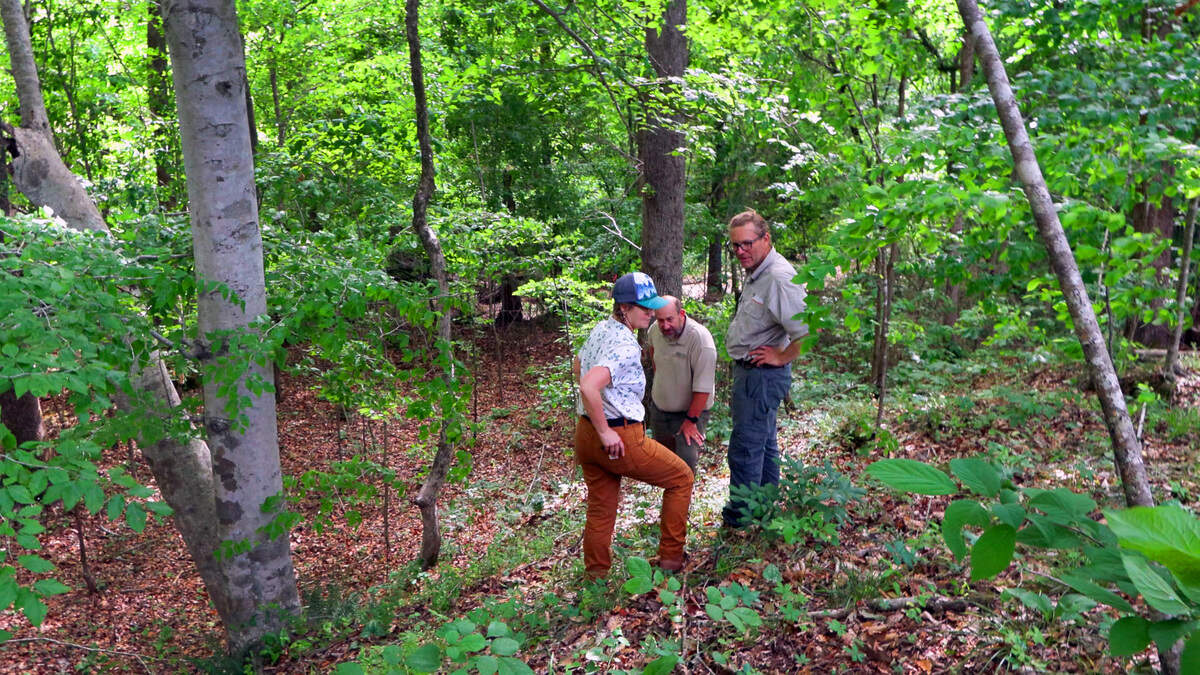
When the Ledger-Enquirer visited the land with Klaus and Elliott, the fringed campion was just 50 feet from a tree stump that was cut down by the timber company.
“The change in habitat so close to the plant was a little bit threatening,” she said. “When you bring equipment in here, you bring invasive species. (The timber cut) is letting a lot of light in here that maybe wasn’t exactly what the plant wanted, right? You get erosion and runoff, which is not necessarily a good thing.”
The plant is endemic. It only lives in the Southwest corner of Georgia, near Lake Seminole, and a bit into Florida, Klause said. It only blooms for three weeks in early May.
Who pays for this land? Tax dollars allow free camping
Long before timber companies owned the land, Muscogee (Creek) Nation wandered the enchanting ravines, once called Hatcheethlucco, which translates to “Big Creek.”
Upatoi translates to “on the fringe” or “sheet-like covering,” according to Kenneth Krakow’s 1975 book, “Georgia Place-Names: Their History and Origins.”
Fast forward to the mid-20th century and timber companies for pine were prolific throughout Georgia.
“Sometimes it’s hard to get to the bottom of who actually owned it,” Elliott said. “There’s a whole succession of timber companies going back to the ‘60s. We’ve known about this spot for a while and it’s one we’ve wanted to protect. The Nature Conservancy started doing surveys back in the ‘90s.”
The $5 million dollar grant, which Elliott called the “final piece of the puzzle” came from the Georgia Outdoor Stewardship Program.
The Georgia Outdoor Stewardship Program, established in 2018 by the Georgia General Assembly, was the state’s first funding mechanism dedicated to supporting parks, trails, protecting wildlife and acquiring land for outdoor recreation.
Upatoi Ravines was the largest recipients for the 2024-2025 round.
“It’s a competitive program,” said Soheila Naji, the stewardship program’s grants unit supervisor. There have been 74 funded projects since its inception. Seventeen have been by DNR, totaling 57,680 acres across Georgia. Around $44 million has been allocated to the 17 projects.
In her email, Naji said they selected Upatoi Ravines because of the ecologically important natural communities and species, including the hardwood and oak-hickory-pine forest.
She added, “the project will increase connectivity among several protected state lands, provide recreational opportunities and boost the region’s economy, reinforcing the connection between health and quality of life.”
The rest of the $24 million comes from several different partnerships.
“The largest chunk is from a Forest Legacy Grant from the U.S. Forest Service,” Elliot said. “We have several million dollars in private foundation funding, we have a recovery land acquisition grant for the endangered species, we have some Pittman Roberston money (an excise tax on guns and ammunition), Stone Mountain Industrial Parks, and about $4.8 million from the Georgia Department of Transportation.”
Naji and Elliott both mentioned that this space was a “military buffer zone” due to its proximity to Fort Benning. Now that the land is in the hands of DNR, it won’t be able to be developed, “especially residential development,” Elliot said, “because it’s loud.”
When walking through the unmanaged topography of the steep ravines, the booms of artillery at Fort Benning gave subtle echoes through the woods.
Fort Benning didn’t contribute any money to the pot to purchase the land, but they did write a letter of support to the stewardship program to help get the grant, Elliot said.
The DNR has a lot of preparation and surveying to do by the time the Upatoi Ravines open in the fall, when they aim to have it ready.
Nine-thousand acres of surveying by just a handful of wildlife and conservation biologists is no small feat.
The Ledger-Enquirer spent the day in mid-May with Elliot and Joyce and Nathan Klaus traversing down Baker Creek.
“Botanists have been going gaga for this place for years,” Nathan Klaus, senior wildlife biologist at the Georgia DNR, said.
They haven’t seen any long-life pine, the native pine tree that looks like something from a Dr. Seuss book.
“I may still run into one, but I haven’t run into a long-leaf yet,” Nathan Klaus said.
Klaus’ wife, Joyce, is still surveying for invasive or native plants. Near Baker Creek, she searched for fringed campion, because she still doesn’t know if it’s in that part of the 9,000-acre reserve.
Elliott said throughout the next year they are going to develop the management plan for the property that would include ecological stewardship.
“We’re going to work on converting it to a natural state, maybe using a bit of prescribed fire, stabilizing roads, preventing erosion, making sure we have good access points for people,” he said. “We’ll have some decent access points by this fall.”
This story was originally published May 20, 2025 at 11:12 AM.