The endangered shoal lily is being revived on its native waterways in Columbus
AI-generated summary reviewed by our newsroom.
- Shoal lily populations on the Chattahoochee rebounded after dam removals.
- Chattahoochee River restoration efforts increased shoal lily counts by 45% in 2024.
- Shoal lily planting and tourism contribute to Georgia's river-based economy.
Around the beginning of May, something beautiful starts blooming in Alabama, Georgia and South Carolina – but not on land.
In shallow, turbulent waters, delicate white lilies about four and a half feet tall, known as the rocky shoals spider lily, begin revealing themselves to the world.
Only in bloom for six weeks, rivergoers and plant-loving spectators from all around the country come to visit rivers such as the Cahaba in Alabama, the Catawba in South Carolina, or the Flint River in Georgia to experience the unique lily.
At one point, the Chattahoochee River had an abundant shoal lily population, but a century of dams scattered throughout the river from West Point to Eufaula and the small dams on the stretch of Columbus portion of the Chattahoochee made conditions intolerable for the delicate shoal lily.
Sightings on the Chattahoochee were rare. Now, the species is endangered and protected by the state.
But that’s changing. A combination of removing the Columbus dams, constructing the whitewater course in 2013, educating and engaging the public on the plant’s unique role in the ecosystem, and conservation groups planting thousands every year, is bringing back shoal lilies to the Chattahoochee.
“They are a little known treasure here,” said Sarah Tash, shoal lily researcher from Auburn University’s wetland and riparian lab.
The three states where the shoal lilies, also called spider lilies, grow have a metamorphic, heavy granite-like rock where the plant nestles its seed. That rock came to the area when two continents merged during the Mesozoic era.
The fractures in the rocks end up being perfect places for “golf ball sized seeds” that wedge into crevices and “furrow into river beds to grow roots,” Tash said.
Their dense vegetation provides habitat and shelter, allowing shoal bass to nest and lay eggs downstream. The lilies cycle nutrients in the water and disperse sediment. Plus other macroinvertebrates such as mussels can co-exist in the shoal, according to Tash.
“They don’t like still water,” Natalie Downey, director of the Chattahoochee River Conservancy, said. “The man made dams altered and changed the flow of the river.”
Tash said any shoal lilly that is in the Columbus stretch of the Chattahoochee today has been placed there, unnaturally.
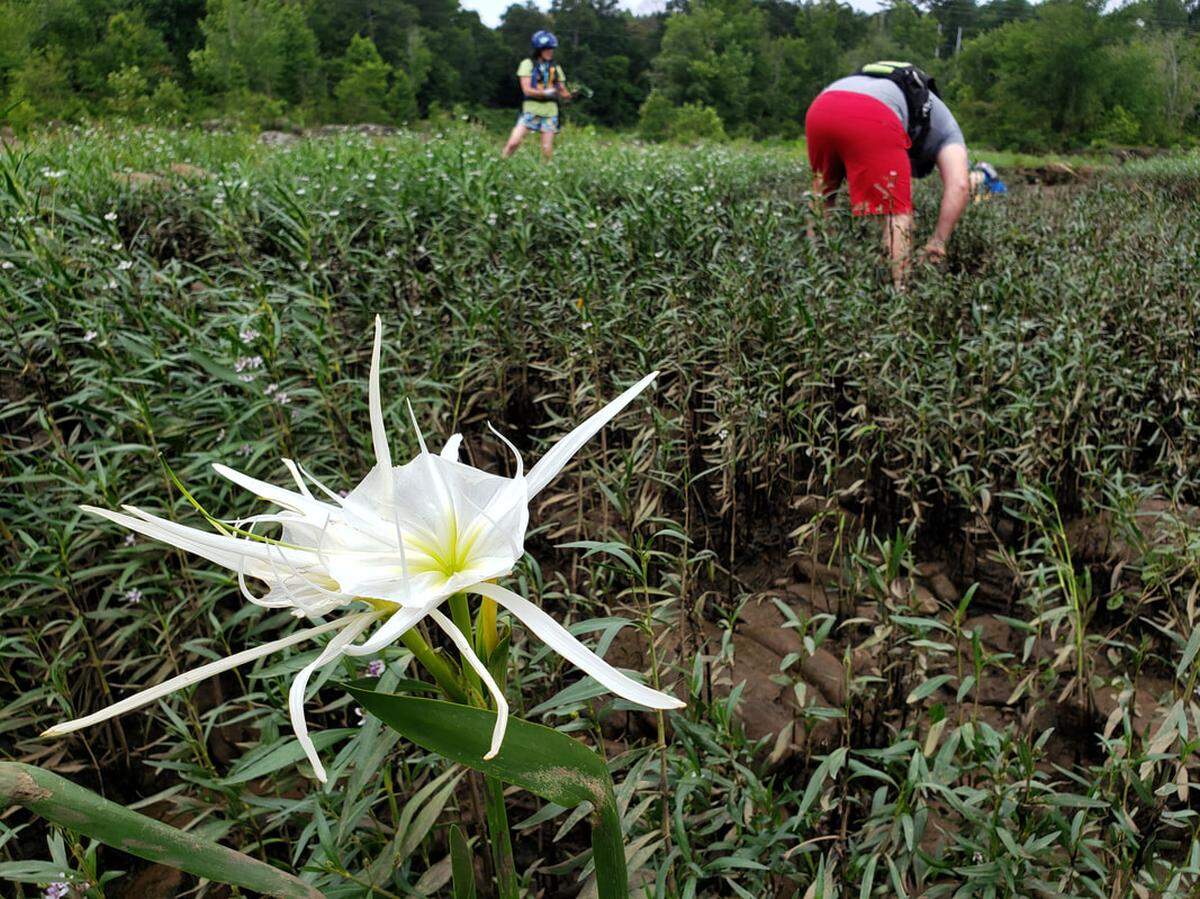
Restorating the shoal lilies on the Chattahoochee
Downey came on board the Chattahoochee River Conservancy five years ago, and recalls at least two or three years before that, the group started focusing on restoring shoal lilies.
Downey and her handful of volunteers have planted 10,000 shoal lily seeds over the past seven years in the 2.5 mile whitewater stretch of the Chattahoochee.
When the volunteers go out in kayaks to plant the seed pods, they also count how many have survived from the planting the year before.
Downey said 1,000 healthy stocks were counted in the spring of 2023, and in 2024 that number grew to 1,453.
“That is an impressive increase,” she said. “That may not sound like a lot but with river flooding that happens over the winter and other extreme events, we’re happy with that (number) and call it a success.”
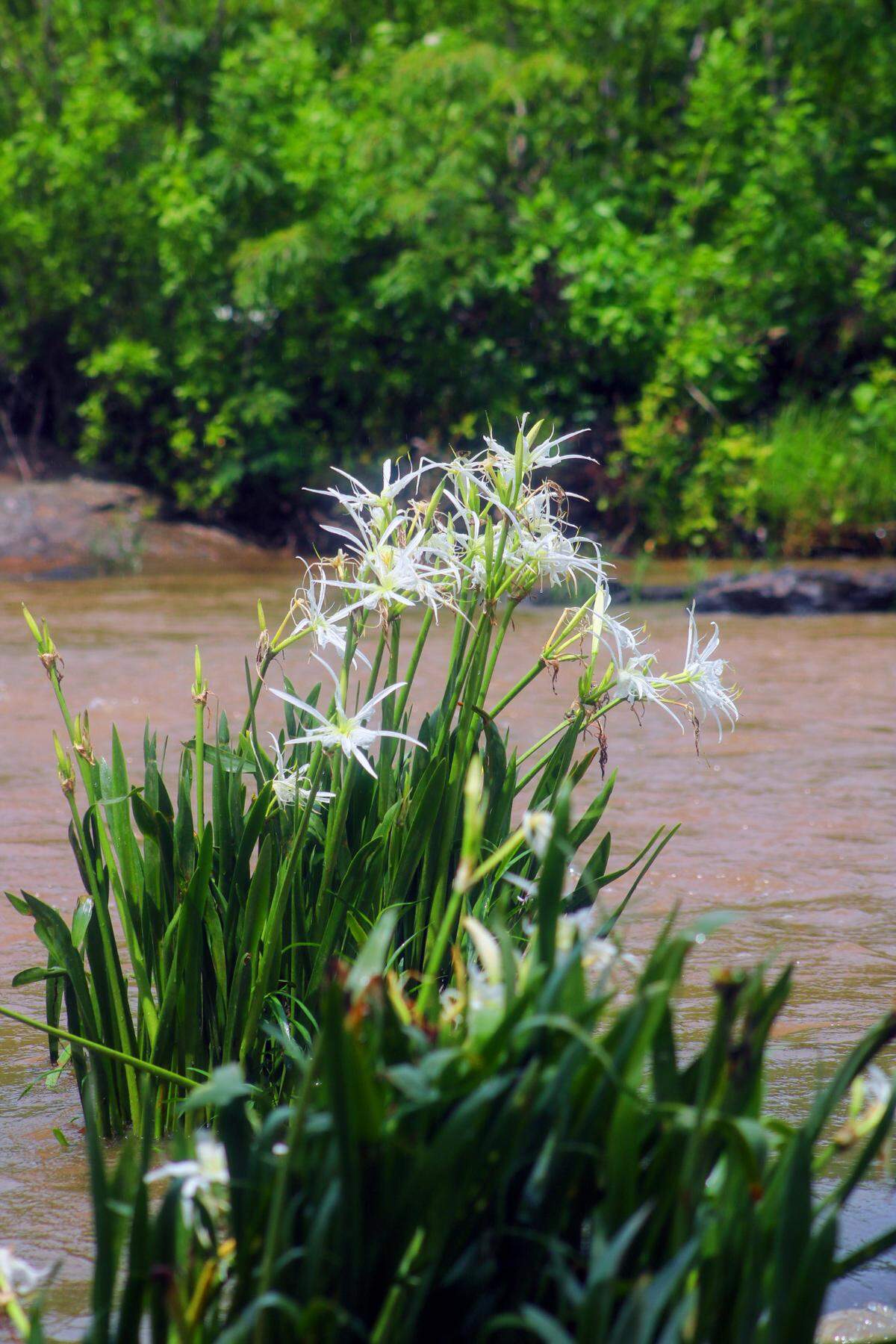
Downey partnered with Nearly Native Nursery in Fayetteville to incubate the seeds for months in slow moving water. When it’s time to go pick them up, they leave them in water and drive them back down – akin to a human organ being shipped by helicopter to a doctor’s office for a transplant – and then quickly plant them.
This year Downey said the Chattahoochee River Conservancy will start a nursery in Columbus to avoid the long transit ride and “bring the program to Columbus” because the Nearly Native Nursery owners are retiring.
Downey said the shoal lilies are starting to show up in parts of the river where they didn’t plant them, which isn’t a bad thing, it just means their root ball was moved down the river and found another crevice on its own.
This year she’s seen them near the Phenix City amphitheater, near the waveshaper island, and by City Mills.
We “don’t know what we have here”
On May 21, 2025 Whitewater Express hosted a group of 28 University of Georgia ecology students on a raft trip. Whitewater Express manager Daniel Gilbert said they scheduled their trip based around the shoal lily season.
“We catered their trip to show the clusters that are currently blooming on the river,” he said. “They came all the way from Athens to Columbus, I don’t think people in Columbus fully understand what we have here.”
The nonprofit that supports healthy rivers, Georgia River Network, said while it doesn’t have specific numbers about what shoal lily restoration projects bring to Georgia’s economy, river and stream tourism supports 70 small business outfitters scattered around the state.
“The Flint and Broad River are boating destinations each May when the lilies bloom,” Joe Cook, Georgia River Network coordinator, said in an email. “Establishing new populations on streams that once supported this rare and beautiful lily will undoubtedly make tourist destinations out of other locations. If the colonies of lilies can be established there it will add yet another draw to Columbus’s already robust river tourism economy.”
The Cahaba River in Alabama has an annual “Cahaba Lily” (another name for the shoal lily) festival. In 2022, the Fish and Wildlife Service estimated it drew over 1,000 people from around the country.
Tash is doing her best to educate about the plant and get the word out locally.
On May 17, Tash took a group of enthusiastic botanists, all members of the Columbus Botanical Garden, to Flat Shoals Creek (a tributary of the Chattahoochee north of Columbus). Five days later she gave a shoal lily talk at St. Thomas Episcopal Church in La Grange. Collectively, the outing and the talk had at least 50 people in attendance.
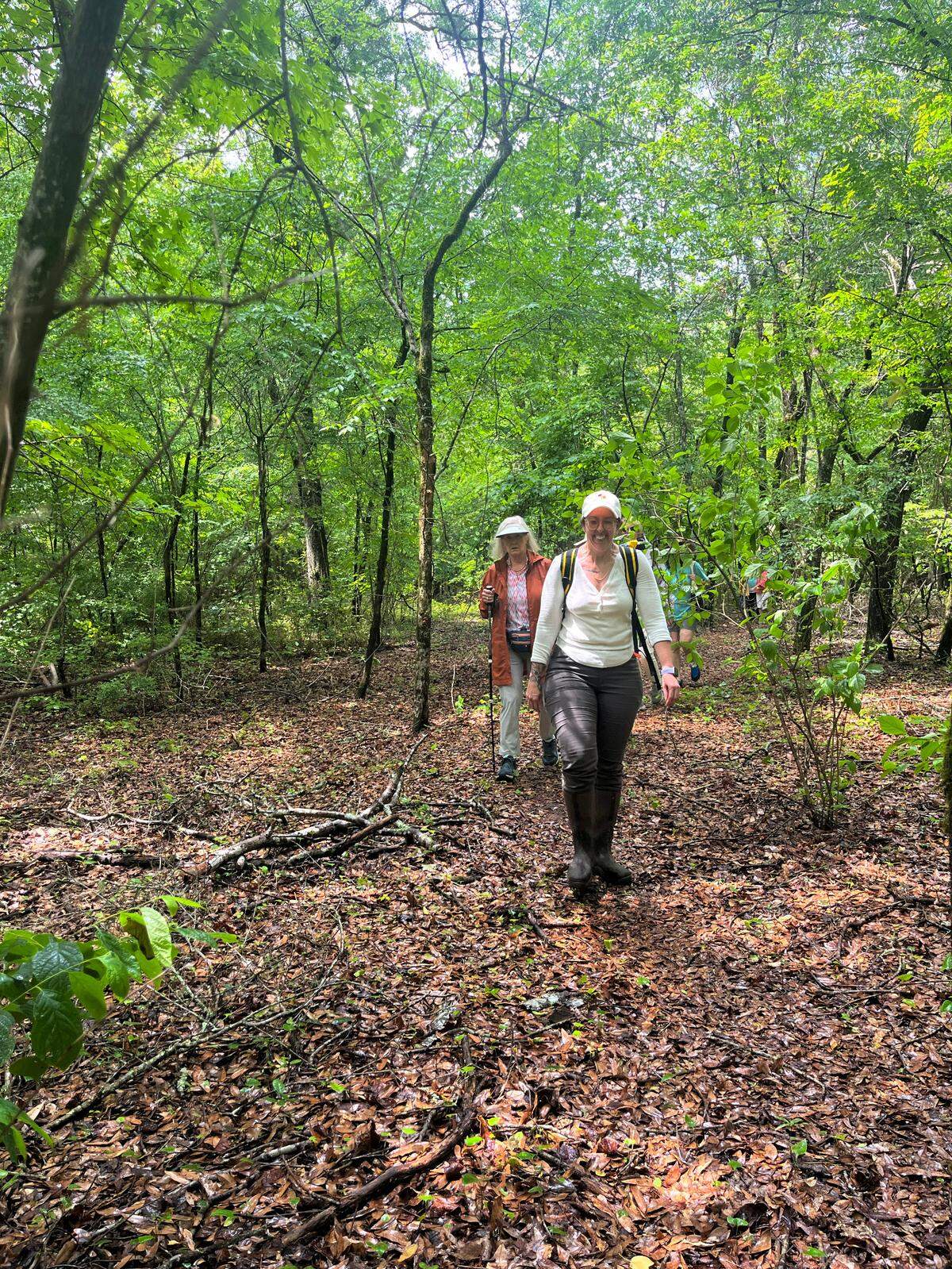
Her message at both of these meetings: don’t take and don’t try to replant.
Even though the lilies are not federally endangered (though attempts have been made to get them federally registered), state law does not allow takings.
“These are fully aquatic plants, they can’t be taken and replanted in your yard,” Tash said. “They’ll just die.”
Tash’s other project is working to create a shoal lily map to show the “spatial breadth” of the locations.
She said this fall she will launch a website called slcoalition.org with the purpose of simply sharing shoal lily information.
“It will be a data sharing program that I want to share with the public,” she said. “Want to learn more about the flower? These are trips going on every spring, this is who to get in contact with, this is what we know,” she explained.
Downey is doing her part in education too. She recently visited a 3rd grade class at South Columbus Elementary to educate students about the restoration work the Chattahoochee River Conservancy is doing.
Next week Downey and her volunteers at the conservancy will do their annual planting and count how many lilies are still thriving.