Columbus gets its first water trash trap, collecting garbage and hosting plants
AI-generated summary reviewed by our newsroom.
- Chattahoochee Riverkeeper installed Columbus’ first trash trap at Cooper Creek.
- Australia-based Atlan Stormwater floating wetland collects trash & supports native plants.
- CSU students and CRK staff will manage the donated wetland & other sponsporships available
On Tuesday, the Chattahoochee Riverkeeper, a river watchdog nonprofit, installed its 15th trash trap along the Chattahoochee River watershed in Cooper Creek, marking the first one in Columbus.
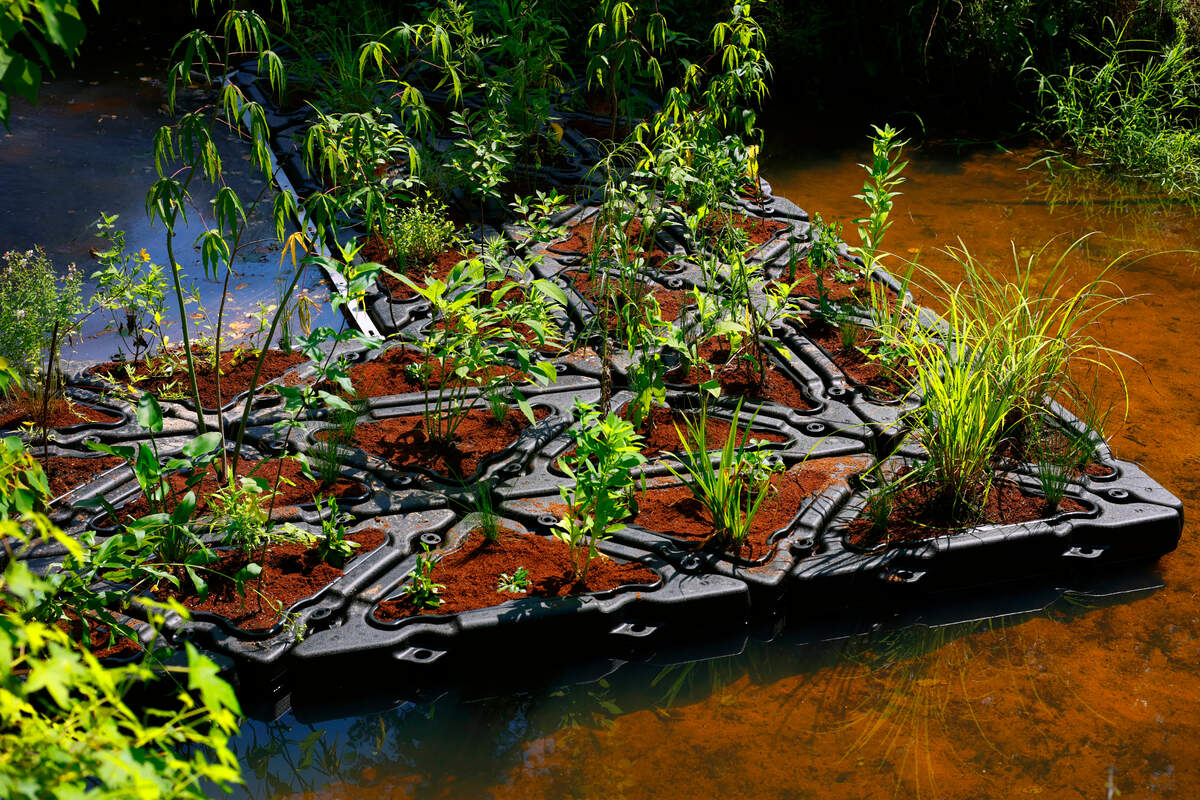
This floating trash trap is no ordinary river trash receptacle. Yes, it collects trash that floats on the waterway. But it also hosts native plants that create a healthy ecosystem, helping with water quality, beautification and educating passersby.
The floating triangle modules have room for plants to add green beauty and help clean the water.
It was donated to the Chattahoochee Rivekeeper by Australian-based product manufacturer Atlan Stormwater. Its installation isn’t just a first in Columbus, but it is the first-ever Atlan floating wetland installation in North America.
“(Chattahoochee Riverkeepers) are doing great work with in-stream gross pollutant traps, and I could tell from their social media content that they really look after their systems and they are passionate about it,” Andy Hornbuckle, CEO of Atlan Stormwater, said. “The work that the Chattahoochee Riverkeeper does is so important because the pollution damage goes all the way to the ocean.
“So whilst I applaud the work of taking plastic out of the ocean, I think it’s far better to catch it up in the catchment and not let it get into the ocean in the first place.”
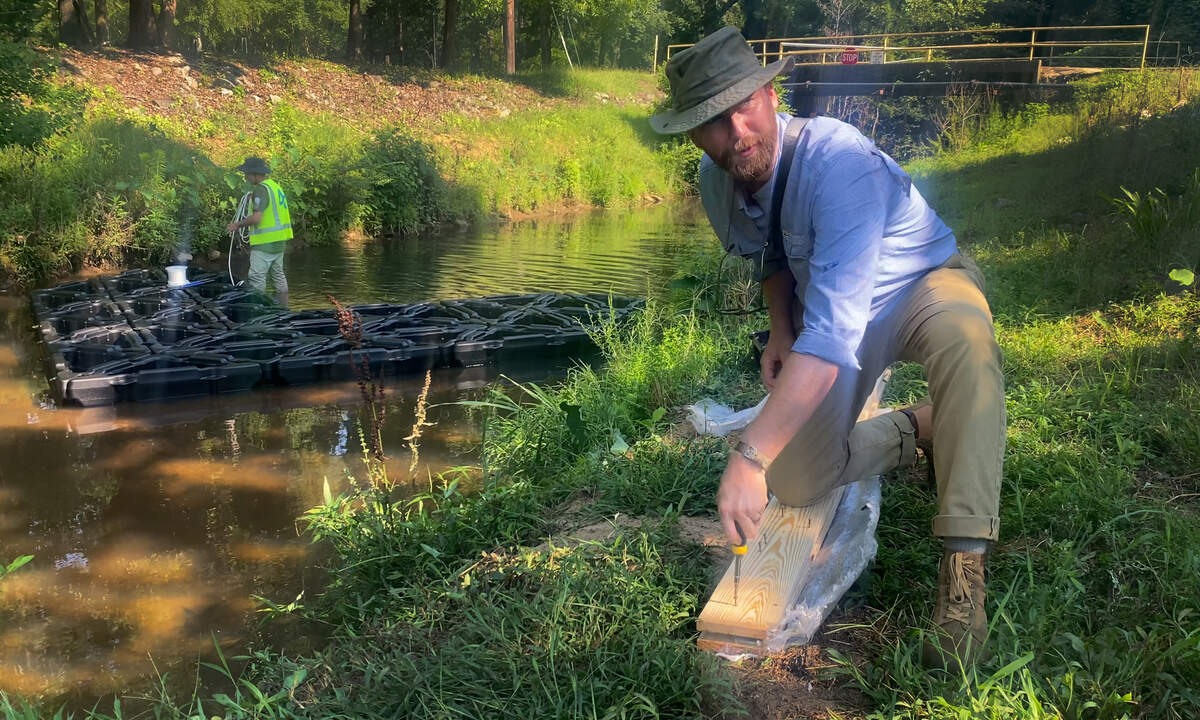
The floating wetland is tied to the river banks. It can rise and fall with the water flow during rainstorms or low water level periods.
The other 14 trash traps that the Chattahoochee Riverkeeper have are mostly based in Atlanta and are floating booms that have a cage in the middle, said Henry Jacobs, deputy director of the Chattahoochee Riverkeeper.
“For us, it’s really important to keep trash out of our waterways, out of the river, out of the creeks,” Jacobs said. “(At Cooper Creek) you have a lot of urban areas, neighborhoods, parking lots, so when it rains, a lot of plastic bottles and other trash push into the creeks.”
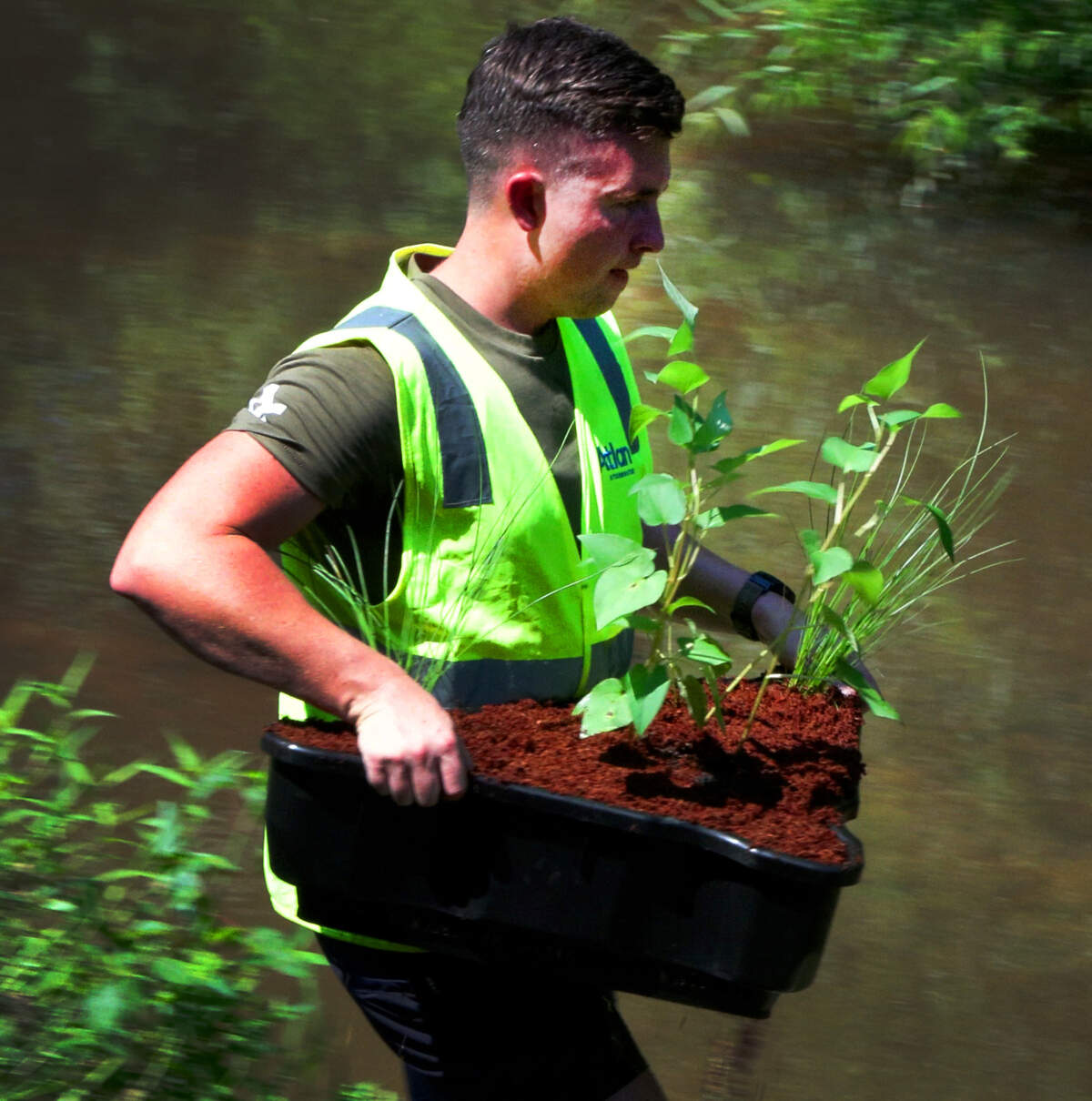
The trash trap is V-shaped, so the water naturally pushes trash toward the middle while the edges of the “V” touch the river banks, blocking any trash from moving past it. Atop the black HDPE plastic triangle modules are two dozen native plants.
“This is going to help a lot,” Jacobs said. “It looks nice, but also, it’s a functional thing that is helping keep the creek and the park clean. The plants are by far the coolest thing about this trash trap, and we’re excited to see it, and it should help improve water quality (a bit).”
Atlan has been working to remove pollutants from water since the mid-1990s, and installing floating wetlands in Australia and New Zealand since 2012, with hundreds of projects under their belt. In that time they’ve had extensive studies by the University of the Sunshine Coast that test how plant roots end up treating the water quality, according to Hornbuckle.
“Plant roots are nature’s liver that treat the water naturally,” Hornbuckle said. “They host the microbes that are in the water and treat the water.”
The native plants on the floating wetland are great for “beautification, the birds and the bees and insects,” he said.
Technical program director and native plant biologist Ashley Desensi took charge of selecting which plants would go in the modules.
“Native plants are supposed to be here, they are local to Columbus and evolved here so they do well to support an ecosystem,” Desensi said. “Instead of planting ornamentals and things you may get at a big box store, we went with plants you naturally find in the environment. Our hope is they will spread within the wetland and beyond the banks of Cooper Creek.”
Some of the plants will grow up to 10 or 12 feet tall and others will stay short and host butterfly eggs and caterpillars, Desensi said.
“The goal is to have something blooming almost year-round,” Desensi said.
Desensi listed a dozen plant species, including: joe pye, false indigo, lizard’s tail, button bush.
The lizard’s tail and button bush were collected by Desensi from the park last year. She grew them and returned them back for this project.
“It’s about as local as you can get,” she said. “We grew them up and now they’re back.”
Desensi, along with students from Columbus State University, are maintaining the project to watch and observe the wetland and remove the trash every week. Jacobs got approval from Columbus City Council a few months ago to install it and ensure it would be maintained.
Jacobs hopes people support the efforts through small donations to the organization or becoming sponsors.
“We have Microsoft and UPS supporting other installations, if something breaks, we come out and fix it and that’s staff time,” he said. “So if people want to see more of these, or want to see this one stay here long term, then definitely supporting them is the way to do that.”
Jacobs said they will likely be installing another at Weracoba Creek next month.
This story was originally published June 26, 2025 at 1:02 PM.