What’s behind Georgia’s particularly hot week? Scientists have an answer
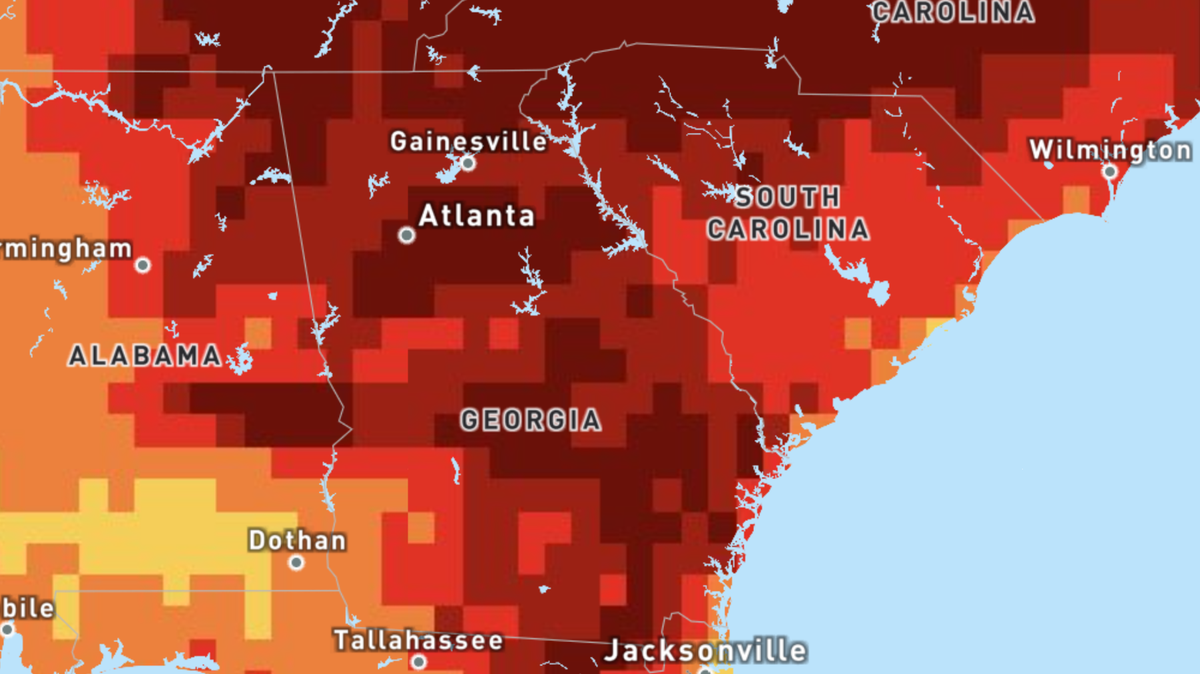
This week, much of the Peach State has seen high temperatures in the mid-90s and heat indexes nearing or exceeding 100 degrees, with temperatures made at least four times more likely due to human-caused climate change, according to the Climate Shift Index.
The Climate Shift Index, developed by Climate Central, uses a combination of historical weather observations and advanced climate models to show how climate change is affecting the chances of certain temperatures occurring each day.
The models simulate two versions of the climate: one that includes human-caused greenhouse gas emissions and one that doesn’t. By comparing these simulations, scientists can determine how much climate change has shifted the odds of particular daily temperatures.
Macon, Columbus, Atlanta and most of the state experienced temperatures this week exacerbated by climate change, according to the Climate Shift Index.
“Days like (Tuesday and Wednesday) are more common now because of an overheated world driven by carbon pollution,” said Shel Winkley, meteorologist, and weather and climate engagement specialist.
Albany is one of nine cities in the U.S. to experience at least 50 more days above normal than it did in 1970, according to Climate Central.
Summer has gotten hotter in 97% of U.S. cities by an average of 2.6 degrees, according to Winkley.
“In a stable climate, extreme highs and lows would each account for about half of all records,” Climate Central’s website reads. “But since the late 1970s, daily heat records have become increasingly more common than daily cold records across the U.S. — a trend that is projected to increase with additional warming.”
In 2024, the U.S. has experienced about three times more daily heat records than cold records, according to the National Oceanic Atmospheric Administration.
Hot summer temperatures are known to raise the risk of various health problems and even result in death, especially for older adults, pregnant women and children, according to the Fourth National Climate Assessment, a report published by the U.S. Global Change Research Program.
People in cities often experience even higher temperatures due to the heat-trapping effects of buildings and pavement, making the risks even greater, according to the report. As the climate warms further, the number of heat-related deaths is expected to rise.
Health data shows that extremely hot days lead to more emergency room visits and hospital stays, according to the report.
These days are linked to a range of heat-related health issues, including heart and lung problems, kidney failure, imbalanced body salts, kidney stones and complications during pregnancy such as preterm birth.
This story was originally published June 25, 2025 at 2:43 PM with the headline "What’s behind Georgia’s particularly hot week? Scientists have an answer."