Trump EPA says pollution isn’t a danger. Scientists are concerned for Georgia
AI-generated summary reviewed by our newsroom.
- EPA proposes repeal of 2009 Endangerment Finding, sparking scientific backlash.
- Repeal could halt vehicle emissions rules, harming Georgia air quality and health.
- Critics warn move may stall EV market, cost jobs and weaken U.S. climate leadership.
Last week, the Environmental Protection Agency declared the jury is still out on whether carbon dioxide and other greenhouse gases are dangerous for Americans’ public health and whether the gases contribute to global climate change.
EPA Administrator Lee Zeldin proposed to rescind the body of scientific findings, known as the 2009 Endangerment Finding, that explicitly states the dangers of pollutants on people and the planet. This proposal has baffled scientists, alarmed environmental lawyers and stunned climate policy directors.
The evidence that was codified 16 years ago was built on more than a century of “durable evidence,” according to Noah Diffenbaugh, a professor and senior fellow at Stanford University in the Doerr School of Sustainability.
“The finding is an assessment based on published, peer-reviewed scientific research from across literature,” he said. “There are literally thousands of papers now investigating how greenhouse gases affect both the global energy balance, the global temperature, global warming. The basic energy balance can be calculated in an introductory science class.”
Peter Zalzal, counsel and associate vice president for clean air strategies at the Environmental Defense Fund said this is “one of the most extreme and dangerous actions” the EPA has ever taken.
If the finding is rescinded, it would repeal all greenhouse gas emission regulations for motor vehicles and engines, reinstating consumer choice, the EPA said in a press release. Trump’s EPA believes the finding needs to be reviewed again because “much has changed since 2009.”
But Zealan Hoover, a former senior adviser for the EPA appointed during former President Joe Biden’s administration and White House Chief of Staff during the Obama administration, called this a massive giveaway to polluting industries.
“If they succeed in undoing the endangerment finding, then (the Trump administration) will be able to say that EPA could no longer regulate tail pipe emissions from light duty under the Clean Air Act,” Hoover said. “They are attempting, in one fell swoop, to kick the legs out from underneath a whole set of critical public health safeguards.”
Georgia is a state that could be uniquely affected by this: Regions of the state both coastal and inland have become more susceptible to extreme weather events due to climate change, and the state has seen major financial investments in a clean energy economy that could wither if there’s less emphasis placed on electrifying automobiles.
Still, advocates of greater customer freedoms are pushing for this EPA change. Mike Sommers, American Petroleum Institute president and CEO, applauded the proposal to repeal the endangerment finding, saying it would restore consumer choice.
“We support Administrator Zeldin’s proposal to repeal the Biden administration’s costly and unrealistic tailpipe rules, which would have effectively banned new gas-powered vehicles,” he said in a statement. “This is a critical step toward restoring consumer choice and protecting the freedom of all Americans to decide what they drive.”
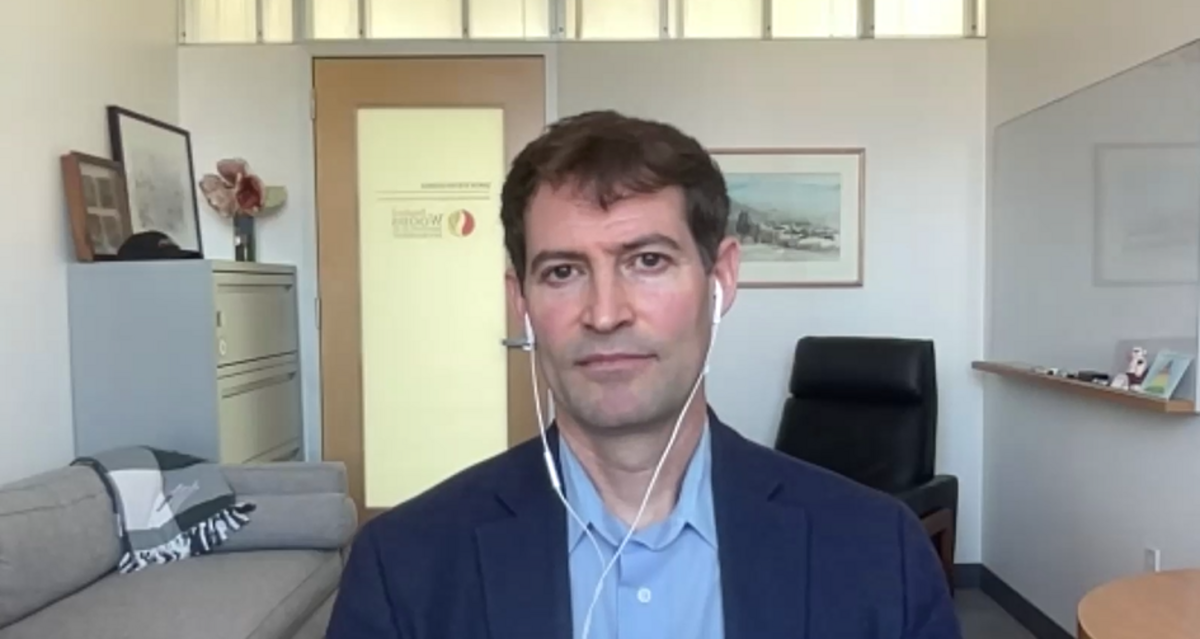
Shannon Baker-Branstetter, senior director of Domestic Climate at the Center for American Progress, told the Ledger-Enquirer that this move by Zeldin is a “relinquishing and surrendering of any federal government action on climate change.”
Baker-Branstetter and Hoover both said if the Endangerment Finding were to be removed, it would start with vehicle regulations but it could eventually undo regulations for power plants.
EPA savings equation is missing calculations in costs
The EPA press release said rescinding the old finding could save Americans $54 billion by repealing all greenhouse as standards and Biden’s electric vehicle mandate. The agency also said the regulations have cost $1 trillion since its finding in 2009.
Baker-Branstetter, Hoover and Zalzal said these amounts are missing crucial factors in the equation.
Baker-Branstetter said fossil fuel companies have made trillions of dollars in profit, while the public pays with health, higher insurance premiums and higher food costs from drought and floods.
“When you remove vital limits on pollution, you get more of it, and that will make Americans’ lives more expensive and more dangerous,” Zalzal said. “Zeldin’s proposal to repeal vital pollution limits on new passenger vehicles and new heavy duty trucks and buses would result in 10 billion tons of additional climate pollution through 2055. That’s twice the amount the U.S emitted in all of last year. It adds harmful smog and soot forming pollution.”
In Georgia, that looks like 30 additional premature deaths, 26,000 non-fatal illnesses and $580 million in economic damages if greenhouse gas emissions standards for power plants are repealed.
That is according to Gaige Kerr, an assistant research professor and professorial lecturer in the Department of Environmental and Occupational Health at George Washington University. He authored a study that looked into the growing burden of air pollution among communities of color.
Zalzal said repealing the vital action would mean $2.1 trillion in additional costs from extreme weather events, premature deaths and asthma attacks.
Georgia’s energy economy
Transportation accounts for about 31% of America’s emissions, per the Energy Information Administration’s 2024 report.
“If U.S. on-road-vehicles were a country they would be the 6th highest emitting country,” Zalzal said.
In Georgia, it’s also the highest form of pollution, accounting for more than residential and industrial pollution combined at 14.5 million metric tons of greenhouse gas emissions in 2024, according to Drawdown Georgia, which pulls information from various government agencies.
Residents near major highways and power plants are most likely to feel acute public health impacts if the endangerment finding is rescinded, according to Hoover.
“We are talking about fence line communities adjacent to major power plants or communities with major arterials (highways),” Hoover said.
In Muscogee County, transportation is the highest form of greenhouse gas pollution, producing 200,000 metric tons annually.
The Southeast has had its share of disasters that were exacerbated by climate change.
“...Far too many families and communities such as those in the Texas floods and Hurricane Helene’s path across the Southeast face deadly and tragic consequences,” The Southern Alliance for Clean Energy executive director, Stephen Smith, said. “It defies logic and common sense for the Trump administration to remove the foundational pillars of our pollution rules when the EPA’s sole job is to protect the people and places we love.”
Companies throughout Georgia are moving to decarbonize through electric vehicle manufacturing and battery manufacturing for those electric vehicles.
Baker-Branstetter and Hoover say the repeal of the endangerment finding could negatively impact the clean transportation market.
“In Georgia in particular, the battery manufacturing has grown tremendously,” Baker-Branstetter said. “These companies expect automakers to buy the batteries and if they don’t those plants could close. If they put those technologies on the shelf, or don’t invest as much in research and development as we expected that means that the US market will become increasingly isolated, and exports will be harmed. We’re already seeing a decrease in exports in China, for example, and elsewhere.”
Like the American Petroleum Institute, the Specialty Equipment Market Association, a leading voice for the worldwide car culture, supports this “significant policy shift” by Zeldin.
“This announcement marks a significant policy shift that preserves vehicle choice and strikes a blow to the coordinated, nationwide efforts of unelected activist policymakers and environmental groups to dictate the kinds of vehicles Americans can drive,” the group said in a statement. “SEMA is not, nor will it ever be, anti-EV; rather, it champions a technology-neutral approach that fosters innovation and ingenuity.”
Prior to advising the EPA, Hoover was part of the team coordinating and preparing for the Paris Climate negotiations in 2015 – a landmark climate deal to get countries to agree to limit their emission levels to targets deemed less impactful by scientists.
“Rolling this back is a short term sugar high, but it’s going to leave us poorly positioned to compete with Chinese automakers in the years to come,” Hoover said. “When we completely take our foot off of the accelerator, slow the path to decarbonization, that sends a signal to other countries that they can do the same.”
Public participation is encouraged
The public can email or submit public comments through Sept. 15.
The EPA will also hold virtual public hearings on August 19 and 20 and, if necessary, Aug. 21, pre-registration to testify for the hearing is requested by August 12.
Baker-Branstetter said this time period is crucial to express views, especially because the EPA hears a lot from businesses and industry and regular voices can get “drowned out.”
But Hoover said to go beyond the comment portal.
“Comments are very technical for the average reader or listener, my advice would be to contact your elected officials, your members of Congress, your senators, and also call the White House directly, let them know that this is not what you wanted,” he said.
Hoover said Trump supporters are concerned about actions he is taking to roll back protections.
According to a Yale Climate Communications poll in 2024, 73% of Americans support regulating carbon dioxide as a pollutant.
This story was originally published August 6, 2025 at 6:00 AM.