EPA cancels low-income Solar For All, removing ‘energy democracy’ in GA, critics say
AI-generated summary reviewed by our newsroom.
- EPA canceled Georgia’s $156M Solar for All grant days after its August 2025 launch.
- Loss of funds halts solar access for low-income homes amid rising Georgia power rates.
- Critics cite political interference and legal concerns over federally allocated grants.
As electric power bills soar in Georgia, on par with monthly car payments or grocery bills; up to $600 for some Georgia Power customers, a solution to ease the financial burden for those deemed low-income was just terminated by the Environmental Protection Agency.
The grant, called Solar for All, was officially announced last September, a legacy from the Joe Biden-era signature climate law, the Inflation Reduction Act. It was meant to provide $7 billion in funding across the country to implement rooftop solar to 900,000 homeowners and save at least 20% on high power bills. Georgia was to receive $156 million of the grant.
But Lee Zeldin, administrator of the Environmental Protection Agency, said the funding allocated through the IRA’s Greenhouse Gas Reduction Fund was eliminated in the One Big Beautiful Bill, therefore ending “statutory authority to administer the funds,” he said in a statement on X Thursday afternoon.
He called the grant program a “boondoggle” and said ending the program would save “US taxpayers ANOTHER $7 BILLION!”
Zeldin announced the termination just three days after grant recipient, Georgia BRIGHT officially launched the program on Aug. 4.
“The current administration has sent notices terminating the federal Solar for All Program, effective August 7, 2025,” Alicia Brown, Georgia BRIGHT executive director, said in a statement on Friday. “We are deeply disappointed and fully prepared to use every avenue legally available to us to regain access to the funds. “
Canceling the funds goes against what some Georgians have asked for – clean energy options – and it leaves disadvantaged Georgians without energy autonomy in an area where rates have increased six times in two years.
Within 24 hours of the launch on Monday, 500 people signed up for the program.
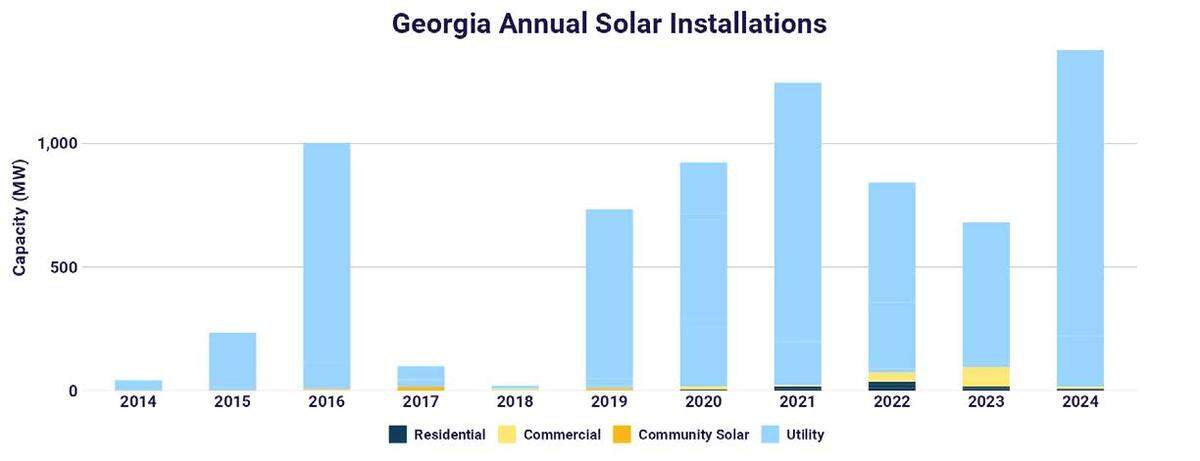
Georgia ranks 47th in the country in the rate of homes with rooftop solar per capita, according to the Solar Energy Industries Association. Less than half of 1% of of homes in the state have it, and there aren’t any state incentives for installing it.
Critics of the move by the EPA are saying the termination is not just an attack on affordable energy in the South, but it’s illegal, according to the Southern Environmental Law Center.
“If leaders in the (President Donald) Trump administration move forward with this unlawful attempt to strip critical funding from communities across the United States, we will see them in court,” said Kym Meyer, SELC litigation director. “We have already seen the immense good this program has done on the ground and we won’t let it be snatched away to score political points.”
The good that Meyer is referring to is the two years of piloting Georgia BRIGHT and their funding partner, Capital Good Fund, worked on throughout the Peach State.
Christine Difeliciantonio, 67-year-old retired educator at Fort Benning and owner of a 1958 abode in Midtown Columbus, was one of the 103 Georgians to participate in the pilot.
She started the process in the fall of 2024 with Capital Good Fund and Georgia BRIGHT, and by March her roof shimmered with 27 panels. This summer, her Georgia Power bills dropped dramatically in comparison to the summer before.
“$200 to $20, from July 2024 to July 2025,” Difeliciantonio said, referring to her Georgia Power bill.
However, the pilot program required a 25-year lease with Capital Good Fund of around $150 per month. But with her utility bill down to $20, it was still cheaper than her previous bill.
The Georgia BRIGHT Residential Solar Savings Program is similar, but instead of Capital Good Fund helping fund the lease, the EPA grant money was meant to help with savings.
The lease payment will be set such that the homeowner saves at least 20% per month, net of the lease payment, Georgia BRIGHT spokesperson Deborah Colbert explained.
Difeliciantonio is disappointed and angry that the EPA terminated the grant
“It’s unfortunate and I have to get past the emotions of anger and outrage for all the obvious reasons,” she said. “If we’re trying to make a difference in this climate crisis we find ourselves, I can’t think of a bigger obstacle than an unreliable political system.”
Georgia BRIGHT has been through an on again, off again whiplash since January when the Trump administration froze federal funding that affected this program. Six weeks later, the funding was unfrozen – without any explanation.
The $7 billion being pulled back comes from the 2022 Inflation Reduction Act, which was approved by Congress, during former President Joe Biden’s administration. It was meant to address several concerns: high bills, energy choice, clean air and lowering greenhouse gas emissions.
“It appears that the Trump administration is acting in the interest of their friends in the fossil fuel industry, not in the interests of average Georgians or any Americans,” Margie Alt, Climate Action Campaign director, said in an email. “(The grant) is relatively small, but they have the potential to transform communities that have traditionally been left behind. The EPA’s efforts to terminate billions in congressionally authorized grants is cruel, bad for the climate, and bad for the economy.”
Difeliciantonio said this program is not just about saving money but it’s about “energy democracy,” which, she said, is about providing equal benefits and lessening the burden on people less fortunate.
Rev. Jessica Moerman president and CEO of Evangelical Environmental Network, called this decision by the EPA “short-sighted.” She said it would keep “nearly a million families trapped in an impossible choice” between food medicine or keeping the lights on.
“Should the program be restored, we look forward to continuing our first Solar for All product, a No-Cost Solar Plan for low-income Georgians, and launching our three remaining programs that will directly benefit Georgia families and small businesses,” Brown said in a statement on Friday. “Within the first 72 hours of our August 4 launch, nearly 1,000 families, covering 70+ percent of counties statewide, signed up to participate.”
This story was originally published August 7, 2025 at 7:16 PM.