PSC staff cut deal with Georgia Power after criticizing new request. Will it cost you more?
AI-generated summary reviewed by our newsroom.
- PSC staff and Georgia Power filed a last-minute stipulation to allow 10 GW build
- Agreement shifts decades of gas plant costs onto customers through 2075 rate spread
- Environmental groups warn the buildout risks speculative excess capacity and pollution
Weeks after urging the Public Service Commission to deny most of a new major power request from Georgia Power, the state’s PSC staff have reached an agreement with the utility company that would let the company move forward generating 10 GW of power by 2031.
The agreement came moments before the PSC began listening to public arguments about whether commissioners should approve or deny the request.
Georgia Power lawyers, energy experts, lawyers representing environmental nonprofit groups, and the staff of the Georgia Public Service Commission were set to debate the largest certification request in the history of the energy company with a price tag of at least $20 billion, according to PSC staff testimony. But just before the hearing began, the power company sent out a stipulation agreement reached between PSC staff and the company.
A stipulation is essentially a negotiation between two parties, which have become more common over the years in the PSC room, according to former Georgia Public Service Commissioner Bobby Baker.
“It was submitted at 8:00 a.m. the day before the rebuttal hearing, so now none of the parties who were prepared to cross-examine Georgia Power witnesses are really going to have an opportunity to do that,” Baker told the Ledger-Enquirer. “It undermines the entire purpose of the hearing.”
Isabella Ariza, a lawyer for the Sierra Club and the Southern Alliance for Clean Energy, (also representing Southern Alliance for Clean Energy) said in an email it is “highly unusual” to file a stipulation right before the hearing.
According to Ariza, this agreement means PSC staff and Georgia Power agree to settle before the PSC hears testimony and parties cross-examine witnesses.
What is in the agreement?
Georgia Power wants to source its new energy through a mix of battery energy storage systems and gas, which releases methane, a known global warming pollutant. The make-up of the proposed 10 GW is roughly 60% gas and 40% batteries, according to Georgia Power testimony. Of the nearly 10 GW of new energy Georgia Power is seeking permission to create, 3.7 GW would be supplied by Georgia Power-owned natural gas plants at plants Bowen, Wansley and McIntosh, which have a 45-year life span.
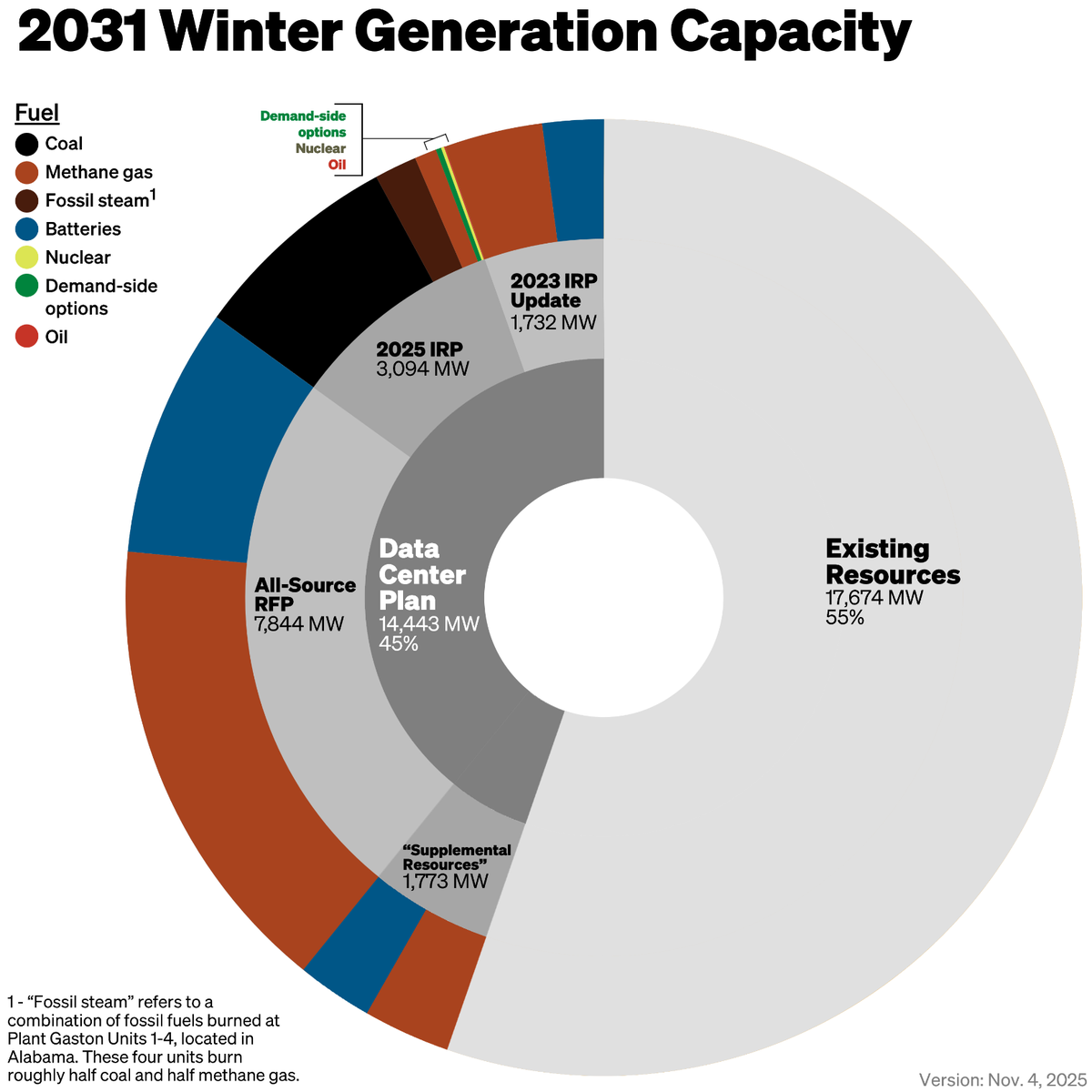
Georgia Power proposed to spread the cost of this power generation over the lifespan, so customers would see costs reflected in their payments until 2075.
Jennifer Whitfield, a lawyer for the Southern Environmental Law Center who’s representing Georgia Interfaith Power and Light and Southface, told the Ledger-Enquirer shortly after getting the stipulation agreement, “This agreement exchanges four decades of costs for three years of potential future bill relief.”
“ Bill relief is desperately needed, but it is impossible to look past the reality that this agreement greenlights Georgia Power to massively overbuild energy resources with devastating environmental and financial risks,” Whitfield said. “This agreement guarantees dirtier air, water, and health threats for communities living where these new methane plants would be built.”
Georgia Power has argued in company documents that it needs to generate this new energy because of an influx of data centers in Georgia. The company said in a rebuttal for its 10 GW request that it has more than 70 data centers in its portfolio.
Sierra Club, the Southern Alliance for Clean Energy and the Southern Environmental Law Center have argued over the past few months that the 10 GW request is coming without any sort of proof that this many data centers or “large load” customers will commit to setting up shop and operating in the Peach State.
“If data center load materializes at a slower rate than expected, it will bring significant financial burdens for Georgia Power’s ratepayers, who risk being on the hook for the infrastructure that, according to expert testimony is ‘speculative,’ and ‘may sit idle for their operational life,’” Ariza said in a statement.
But Georgia Power said in a news release this stipulation agreement is a “good thing,” arguing the company will take revenue from data centers to give customers an extra $8.50 per month.
“The stipulated agreement would allow the company to proceed with procuring diverse, cost-effective resources, most of which were procured through a competitive bid process,” Georgia Power said. “When the company files its next base rate case in 2028, it will do so in a manner that ensures incremental revenue from large-load customers of at least $556 million per year will put downward pressure on rates of at least $8.50 per month.”
Georgia Power CEO Kim Greene said “we know every dollar counts” in the statement, and added it means “more money stays in your pocket while we power Georgia’s future.”
“This stipulated agreement helps ensure we leverage Georgia’s growth in a way that lowers costs for customers,” Greene said. “Large energy users are paying more so families and small businesses can pay less, and that’s a great result for Georgians.”
While the PSC staff have agreed to this stipulaton, the PSC’s five-member voting commission still has to approve or reject the plan. Hearings this week will help them decide how they should vote, and the vote will take place next week.
What do the PSC staff do?
The stipulation was announced just weeks after the PSC staff released findings that urged commissioners not to approve all of Georgia Power’s 10 GW request.
The staff, who are also called public interest advocacy staff, of the PSC are supposed to do the “hard analysis” and bring the “best case they can to what they honestly think about the utility company’s proposal,” Baker said.
There are 82 staff in addition to the five elected commissioners, according to the 2024 PSC annual report, and a handful are part of the electric unit, which would work with other consultants to present the PSC their findings.
Baker said these staff members can be fired if three commissioners vote to do so.
“There’s no protection for them,” he said.
Last month in an 87-page testimony done by the staff, PSC staff member Tom Newsome, the director of utility finance, and consultants from Kennedy Associates explained that the costs associated with these 10 GW would cause Georgia Power customers to pay $20 more a month and $50 to $60 billion more over the lifetime of this electricity generation, not including the cost of transportation and fuel. The staff recommended the commission certify only one-third of what Georgia Power requested, about 3,000 megawatts. The staff did not recommend that Georgia Power expand more energy use from gas plants.
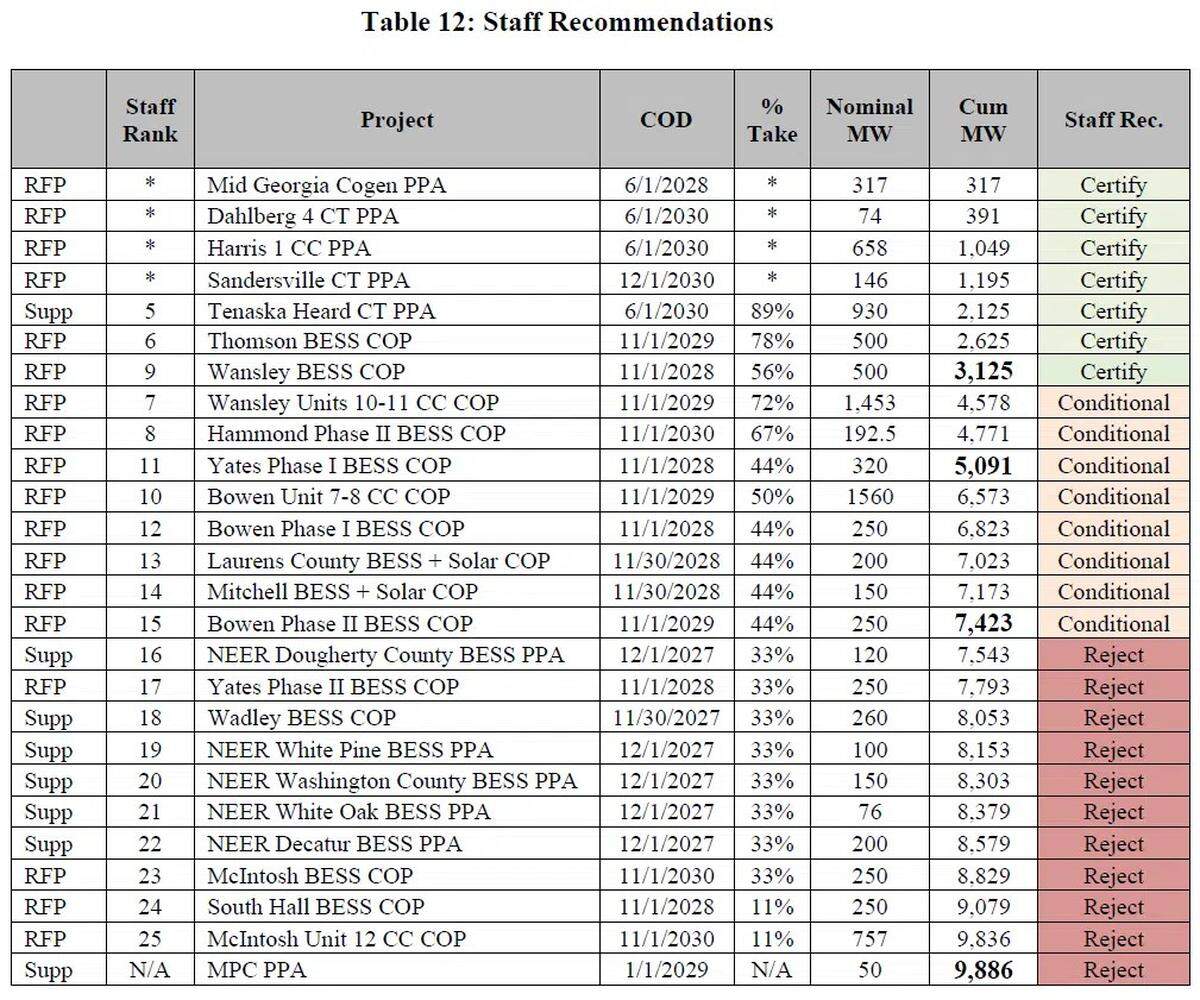
However, representatives for the PSC staff signed the stipulated agreement with Georgia Power Tuesday.
“It’s bad, it’s bad for consumers, but great for Georgia Power Company,” Baker said. “It’s not fair to intervenors or other parties, they have no time to prepare. So much for that hardball staff testimony.”
The negotiated agreement adds that there can be a rate reduction in 2028 through a new rate case, but Baker called it a “hollow promise.”
The stipulation also agrees that in the next rate case residential customers will receive at least $8.50 per month in 2029, 2030 and 2031.
“That’s peanuts compared to the other costs were going to be dealing with, if that even happens,” Rob Wilkey said to staff and commissioners at the hearing.
Last-minute remarks, protesters removed
Both environmental advocates and some on the PSC said they needed more time to review this new agreement, as the hearings were just beginning Wednesday when people became aware of the agreement. Whitfield said she needed more time, and PSC Chair Jason Shaw said the same.
“This morning as I was driving into the commission, a stipulation matter was filed into the docket and the parties have not had time to review or digest it before conducting cross-examination before this important hearing,” Whitfield requested.
The hearing also had a minor disruption in the beginning. Chants of disruption echoed in the chamber.
About six people stood up after Shaw and Commissioner Bubba McDonald entered the chamber and held signs in protest against prior PSC votes, according to Wilkey, who was standing in the adjacent room. They also chanted about reining in Georgia Power.
PSC spokesman Tom Krause provided more information on the incident, telling the Ledger-Enquirer that the protestors were standing “in an area where the public is not allowed to stand without specific invitation.”
Krause said state law and a PSC rule allows for people to be barred from these meetings if they’re exhibiting “indecorous or improper conduct”
“Their actions and vocals were preventing (Shaw) from starting the meeting and the (recorded video online) doesn’t begin until after the Chairman calls the meeting to order,” Krause said in an email.
Krause also said the demonstrators were told they were out of order, and then law enforcement asked the chanters to step outside “several times” before they complied.
Wilkey recalled four of the demonstrators did not leave and sat down in seats.
Public witnesses chanted: “Let them stay,” as four of them were escorted out by police.
Commissioner Bubba McDonald said “bye” and waved off the disruptors.
This story was originally published December 10, 2025 at 11:57 AM.