Columbus data center Project Ruby would require more power than all of city’s usage
The developer of a planned data center in Columbus requested an energy feasibility study for up to 600 megawatts of energy to power a hyperscale campus in the northeast corner of Muscogee County, an official with Electric Membership Co-op Flint Energies told the Ledger-Enquirer.
Project Ruby’s 600 MW request would be more than the entire resource needs of all of Columbus. Georgia Power communications specialist Mathew Kent said Columbus residential and commercial users total 550 MW.
The developer for Project Ruby, Habitat Real Estate Partners, requested a method of service study, according to the vice president of power supply at Flint Energies, Jake Hopkins.
The service request was to determine whether energy could be transmitted in three tranches, 200 MW starting in 2029, reaching 600 MW by 2034.
“The study confirmed that the transmission facilities could handle that request,” Hopkins said.
However, the current energy capacity of Flint Energies is around 450 MW, 500 MW at peak capacity. The power generation in Flint Energies gives power to 80,000 members (100,000 usage meters) from Houston County to the outskirts of Columbus.
The majority of the resources that give power to Flint Energies EMC members is natural gas. Natural gas makes up 78%, according to Hopkins. The remainder is 10% solar, 5% coal, 4% nuclear and 3% hydro.
.png "Flint Energy(11).png")
Natural gas is made up of methane which is a potent greenhouse gas that contributes to human-caused climate change. When natural gas is burned, it emits carbon dioxide, a less potent greenhouse gas. But when it leaks during transmission in pipelines, which MIT Climate reported is more common than previously known, it adds to the greenhouse effect.
Hopkins did not say what type of source would power the 600 MW, only that they would be able to accommodate it so long as it doesn’t “put current membership at risk.”
If the developer wants onsite power generation (solar arrays atop or adjacent to the data center warehouses), Hopkins said Flint Energies is open to that.
Flint Energies is one of 38 Georgia electric cooperatives (EMCs), wholesale power purchasers that buy power from Oglethorpe Power.
One plant owned by Oglethorpe Power, Talbot Energy Facility, is near the planned data center and a natural gas plant but not within Flint Energies portfolio and would not be part of the Project Ruby power, Hopkins confirmed.
Who pays for the electricity? Hopkins said it’s hard to say whether a data center would affect the electric bills of Flint Energies customers.
“We are a not-for-profit, and our goal is to put downward pressure on rates,” Hopkins said.
Flint Energies is neither for against data centers, Hopkins said.
“When someone asks us for power, we don’t really have the ability to say no,” Hopkins said. “If (Columbus) has the desire for data centers and would like Flint to serve it, then we would. It requires our community to want it and desire it. We are not out attracting any to the area. “
Choose Columbus CEO presents data center facts to council
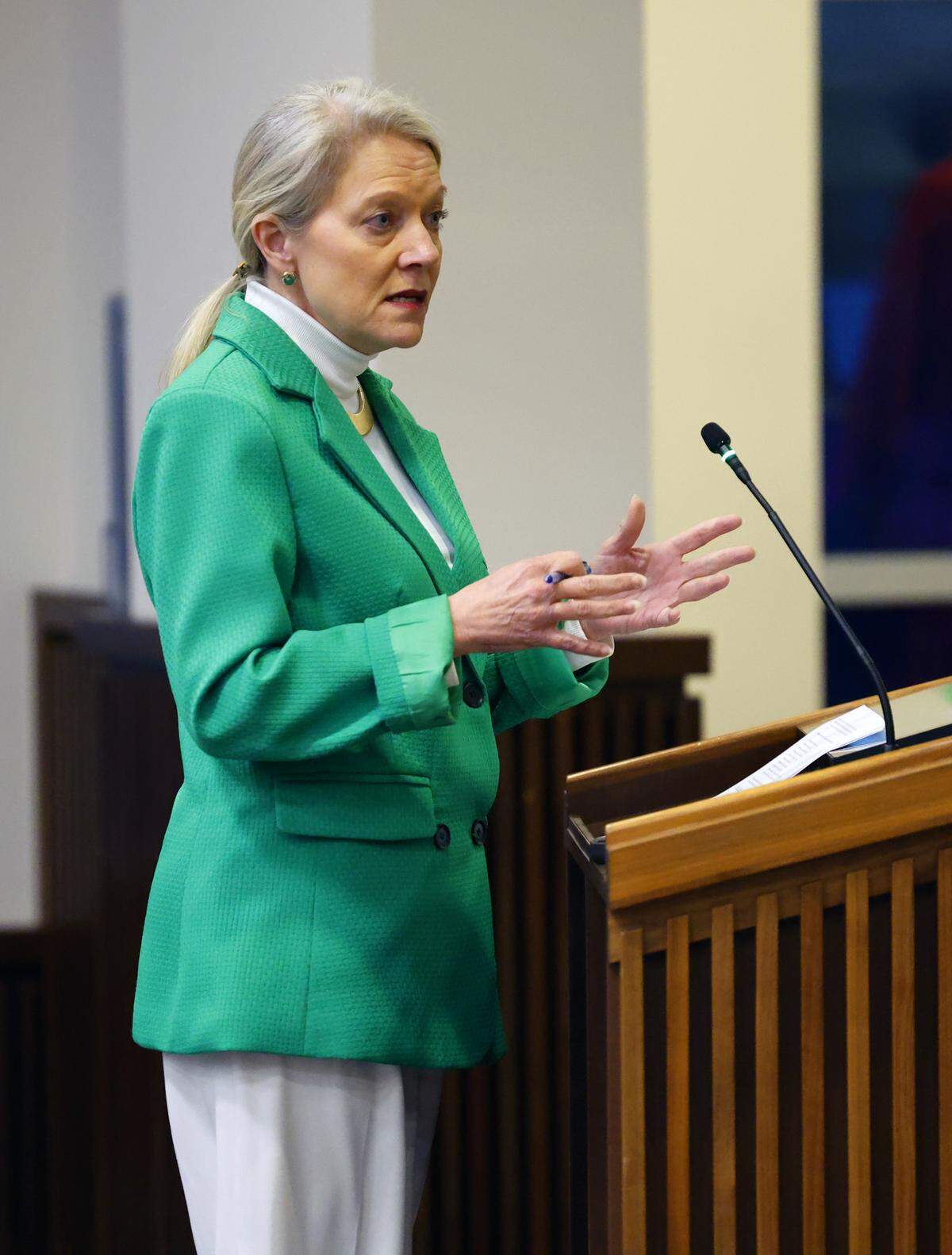
During the Columbus Council meeting Tuesday night, Choose Columbus president and CEO Missy Kendrick gave a presentation about Project Ruby at Mayor Skip Henderson’s request.
She said Flint Energies will create a separate contract for Project Ruby, if it goes forward.
“Flint Energies is taking all of their customers, everything that they currently have in place now, and they’re keeping it all in place on one contract,” she said. “They’re putting this data center on a completely separate contract. I think that they’re probably doing that to try to make sure there’s a separation, and make sure that they can allocate expenses and costs to each group.“
This story was originally published February 25, 2026 at 9:31 AM.