Chattahoochee River water treatment plant owner charged with falsifying tests
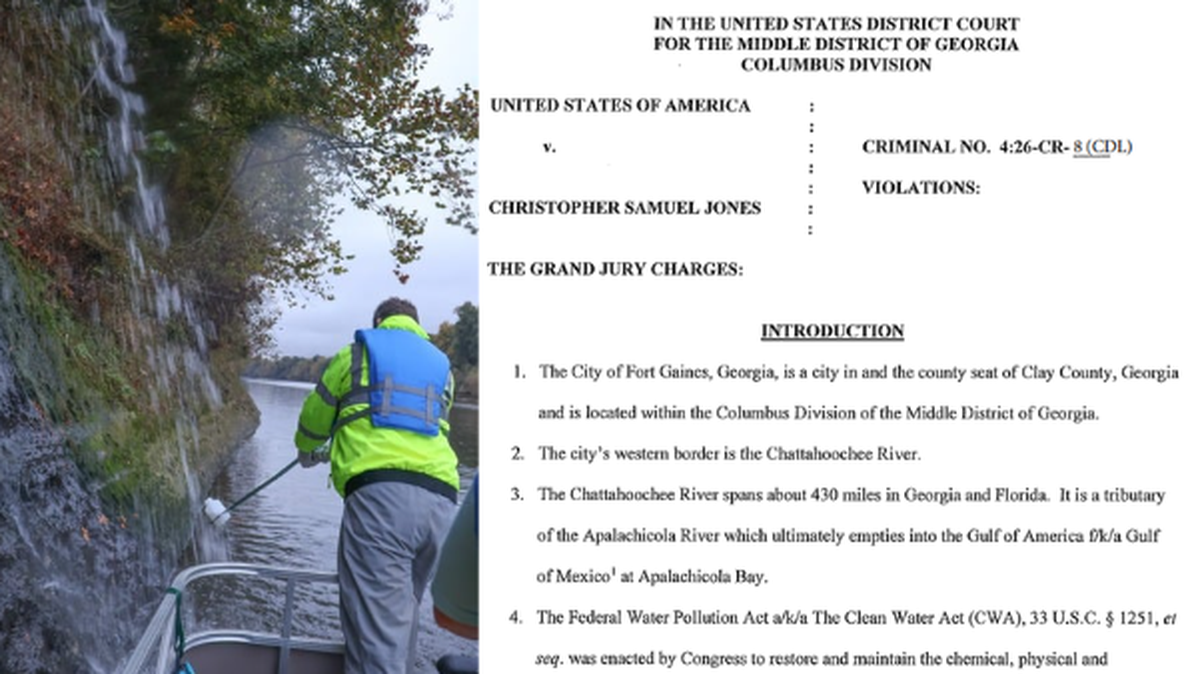
The U.S. Attorney’s Office has filed criminal charges against the operator of a Fort Gaines wastewater treatment plant, Christopher Samuel Jones of Jones Water and Wastewater Consulting, accusing him of polluting the Chattahoochee River and falsifying water test reports for water that exits the treatment plant, violating the Clean Water Act.
A grand jury in the Columbus Division of the U.S. District Court for the Middle District of Georgia indicted Jones on April 15.
About 70 miles south of Columbus, Fort Gaines is a town of around 1,000 residents at the end of Lake Eufala, just below the Walter F. George Dam.
“There is the actual alteration of documents sent into regulators,” Jason Ulseth, executive director of the Chattahoochee Riverkeeper, told the Ledger-Enquirer. “This is criminal.”
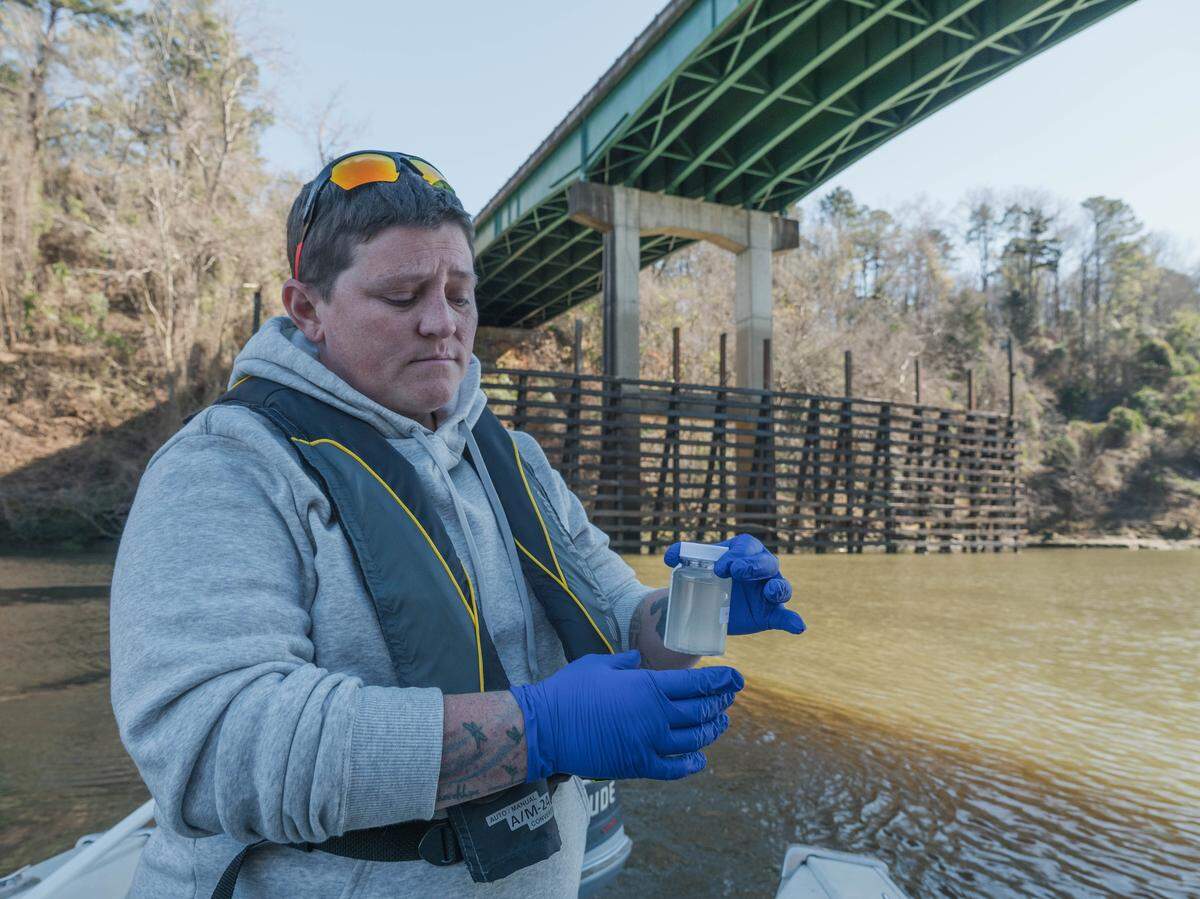
The Chattahoochee Riverkeeper began taking samples in November 2024 after hearing reports of visible sewage entering the river from a Fort Gaines plant pipe.
Their lab tests confirmed bacteria levels in the samples exceeded the legal amount of pollution like E.coli and bacteria by 600 times (on a monthly average) and 300 times (on weekly limits), according to the CRK news release Tuesday.
The U.S. Environmental Protection Agency was made aware of the situation from the river watchdog nonprofit not long after the Chattahoochee Riverkeeper began taking samples near the treatment plant pipe where there were reports of visible raw sewage, according to Jason Ulseth, executive director of CRK.
The plant, like all along the Chattahoochee, are required to follow what Ulseth called “an honor system” of reporting tests to the Georgia Environmental Protection Division. But Ulseth sees the system as flawed and about three years ago sent dedicated teams of testers to water treatment plant pipes along the Chattahoochee.
“The (EPD) is always relying on operators’ data to determine if discharge is in compliance or not,” Ulseth said. “We noticed discrepancies of data at a number of local governments, and it doesn’t match the data.”
Because the Fort Gaines water treatment plant is privately owned, not owned by the city, CRK notified the EPA of these discrepancies shortly after the November testing.
“(The City of Fort Gaines) contracted to a professional company that essentially lied to the city and said they were properly treating sewage and taking money at the same time they were pouring raw sewage into the river,” Ulseth said.
“Concerned with the great discrepancy between the plant’s reported data and CRK’s testing results, CRK reported the facility to the EPA Criminal Investigation Division,” the news releasys says.
The indictment report says EPA found tests on July 8 and 9, 2025, where levels were well over the legal limit.
Ulseth suspects the EPA was sent out to take samples around that time, even though limits were well above the legal amount for many more months than that.
The watchdog nonprofit said they continued to take samples from November 2024 to February 2026, and every sample was above the limit.
“The wheels of federal justice move very slow,” Ulseth said in response to why the EPA is only now getting involved.
As far as whether the river water is any healthier, Ulseth said the water has improved since they first notified the treatment plant and EPA.
“CRK is on the water monitoring every wastewater discharge, and we’re prepared to work with federal agencies to investigate polluters who falsify reports, harm the river and endanger people and wildlife,” Ulseth said in the news release.
This story was originally published May 5, 2026 at 2:39 PM.