Why Columbus needs at least $500 million for new wastewater treatment plant. And who pays
The time has come to replace Columbus’ 62-year-old wastewater treatment plant.
Since 1964, the South Columbus Water Resources Facility on South Lumpkin Road has been treating tens of millions of gallons of water per day coming from flushed toilets, kitchen sinks and street gutters of Columbus, Harris County and Fort Benning homes and businesses.
During the plant’s lifespan, Columbus' population has grown by 50,000 people, to approximately 200,000. Meanwhile, new environmental regulations to protect Georgia’s rivers challenge the facility’s ability to comply, requiring what Columbus Water Works president and CEO Jeremy Cummings called “a substantial investment” in a new treatment plant.
The plant is treating 38-42 million gallons of water per day on average, Cummings said, which will increase to 65 million when the new plant is finished.
To operate the facility, the federal Clean Water Act and Georgia’s Water Quality Control Act require compliance with a National Pollutant Discharge Elimination System (NPDES) permit, which limits amounts of pollutants like E. coli (bacteria), ammonia, copper, mercury, zinc, chlorine and nutrients like phosphorus and nitrogen.
In 2023, nitrogen and phosphorus were met with stricter standards by the Georgia Environmental Protection Division’s creation of the Nutrient Reduction Strategy as a way to manage the onslaught of fertilizer coming into Georgia’s streams.
Phosphorous and nitrogen mainly come from fertilizers for agricultural runoff and homes, Cummings said. Too much of these nutrients create a process called eutrophication, a fancy way of saying algae blooms, that can starve aquatic life of oxygen and create dead zones.
Now that the treatment plant needs this in the next iteration of its NPDES permit (issued every five years), Cummings aims to build a new plant that will handle the nutrient requirements and increased flow capacity. Engineers told Cummings after he became CWW’s president in 2024 it would be cheaper to just build a whole new plant because of the facility’s aging infrastructure.
“It’’s not that we haven’t maintained what we have,” he told the Ledger-Enquirer. “But because of the flows capacity and the growth in Columbus , taking on more customers, we need a bigger plant, and we need more advanced treatment to meet the nutrient requirements that the EPD wants to put in our permit.”

It’s not the equipment that’s the problem, he said, it’s the infrastructure.
“Walls, floors, rebar, things that corrode and rust, exacerbated by hydrogen sulfide gas,” Cummings said.
Rates could double, but only for a few years
Cummings estimates the new plant, starting this year to cover design and construction, will cost $250 million, and after the plant completes construction in 2031, the total cost will be between $500 million and $750 million, he said.
The project team comprises engineering firm Barge Design Solutions of Columbus and construction contractor Brasfield & Gorrie, which is headquartered in Birmingham but has a Columbus office. They are using a CMAR (construction manager at risk) method, instead of design-build, which Cummings said is a “maximum price for project. You select the contractor very early in the design, so they can sit at the table with you and help you find resourceful ways to save money.”
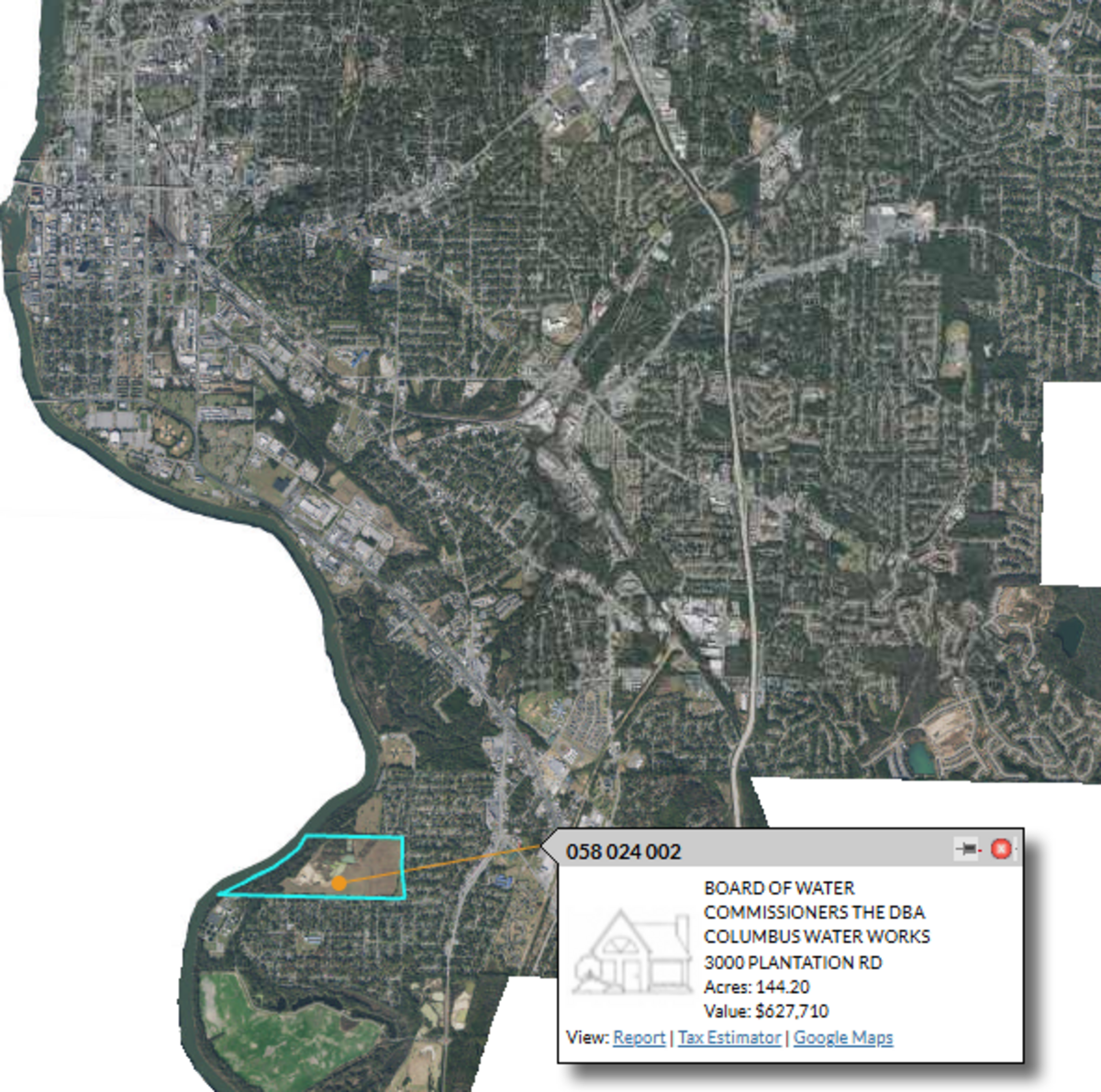
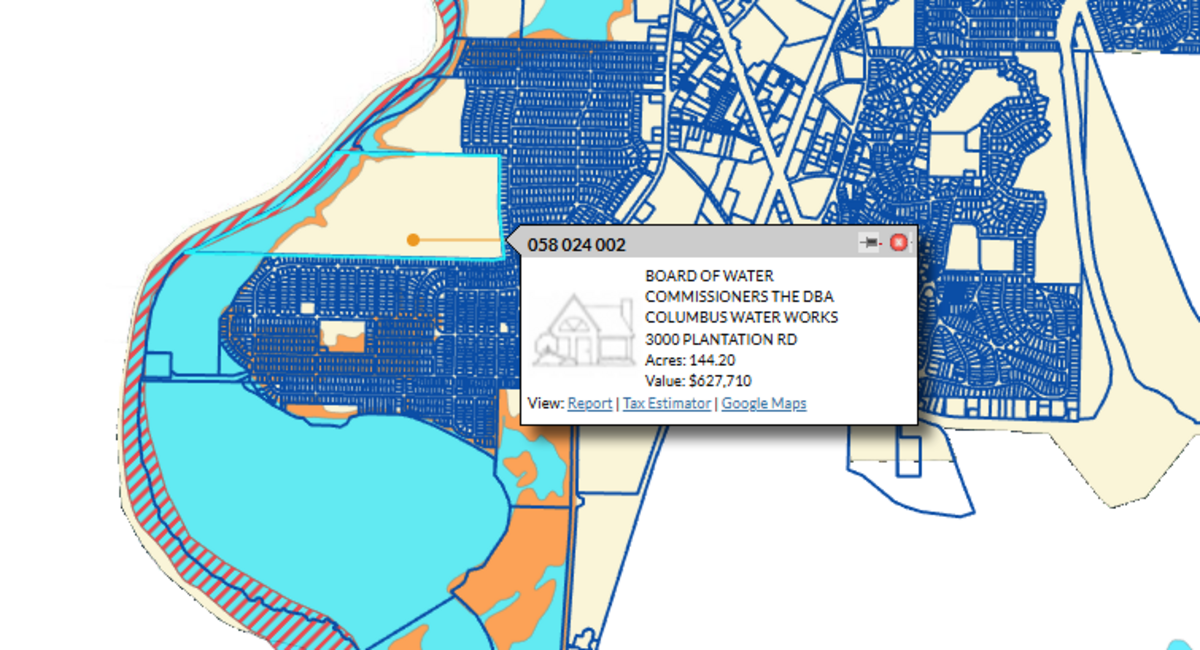
Some of the older plant equipment will be kept, like an effluent pump, to save on costs. The new plant will be half a mile north on Plantation Road, where Meridian Brick company used to mine clay.
That’s a more ideal location because the current plant is in a flood plain, Cummings said. It’s also “prime real estate” because it’s not “in community” and zoned.
Columbus Water Works bought the 144-acre property for $2.8 million, Cummings said.
The project team met in early June to start discussing design, technologies and construction. It’s in “very early stages” with no renderings of the design yet, Cummings said.
The CWW customer rate increase in December helps pay for the engineering and the land sale that adds up to about $4 million for now.
The rate increase was an average of $7 to $9 per month for customers, which includes the regulatory compliance fee of $5 for residents, $10 for small businesses and $25 for large businesses.
To continue to cover costs, Cummings expects those rate increases to “double” each year “for the next four or five years until (the debt) flattens out”.
But that could change if more large businesses come to Columbus.
“If we bring some big industries that are using a lot of water, they can help offset those costs, and the rates wouldn’t have to increase,” he said. “But, based on projections now with the population and the users we have, it will increase.”
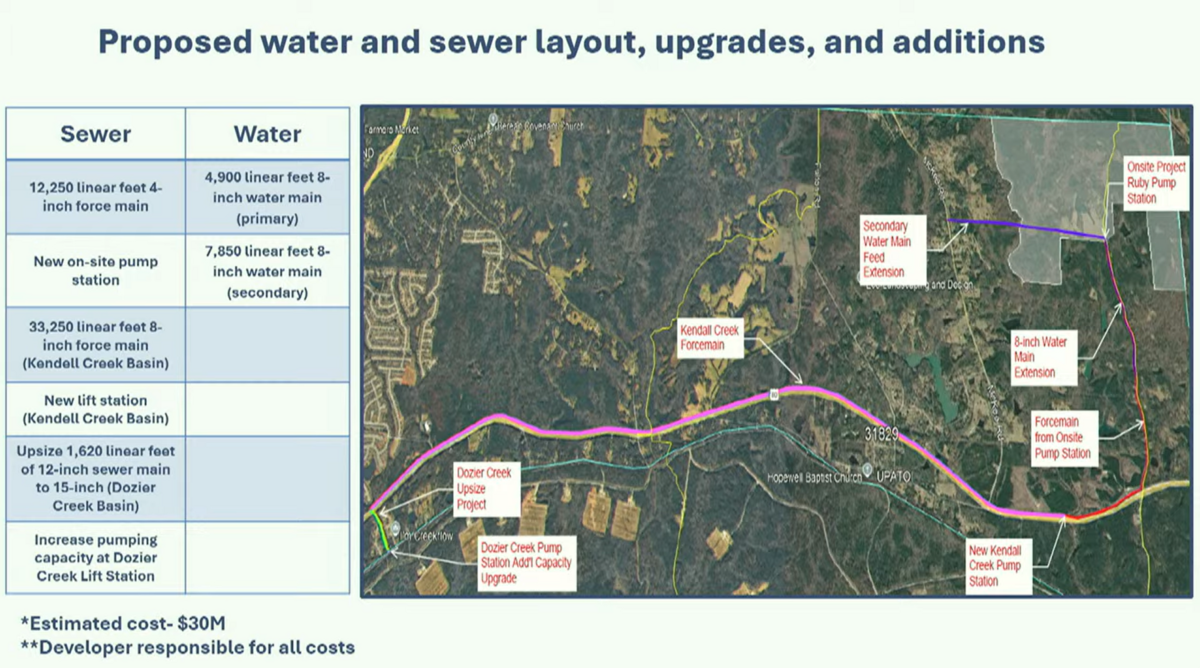
The biggest economic development project proposed in Columbus is called Project Ruby, a proposed $5.18 billion hyperscale data center in northeast Muscogee County.
Cummings and Choose Columbus president and CEO Missy Kendrick have said, if Project Ruby is built, it would require running eight miles of sewage line and a sewage station to rural Muscogee County. However, the company that develops the data center would pay for all of it, which Cummings and Kendrick estimate would cost $30 million to pay for sewage lines for the 300,000 gallons per day of water that the proposed data center would use.
Another source of revenue for CWW to build the new wastewater treatment plan is through a $3.12 million appropriations bill in January from Sen. Jon Ossoff’s Georgia Stormwater Management Act.
Cummings said the water organization will have to borrow the rest of the funds through bonds over the next eight years as another form of financing the new treatment plant. He expects the plant to last 50 to 100 years, but with new technologies and “coatings and stainless steal you get a longer life expectancy, which comes with a sticker price.”
What about PFAS?
Forever chemicals, colloquially called PFAS or PFOS, are a group of synthetic chemicals that don’t break down. Products such as nonstick coatings, types of plastics and other man-made materials have added PFAS to water systems throughout the globe.
But, in Georgia, the state EPD is requiring filtration of forever chemicals in only drinking water plants, rather than in wastewater plants, according to Cummings.
He doesn’t believe the federal requirements, which are being reviewed with input for public comment in July, will ask wastewater plants to treat PFAS. Rather, he speculated, “the industries themselves will have to regulate PFAS.”
Columbus Water Works conducted a pilot PFAS program at Fort Benning, which revealed two processes worked to remove PFAS: granular activated carbon and reverse osmosis. CWW submitted those results to EPD and will start removing PFAS in the north drinking water plant when it’s approved., engineering so the water treatment would be in compliance. They did this at Fort Benning.
River watchdog weighs in
Jason Ulseth, executive director of the Chattahoochee Riverkeeper, an environmental nonprofit trying to the river’s water safe and clean, told the Ledger-Enquirer it could still be another 10 years on proposed federal regulation for PFAS. He called the forever chemicals “carcinogenic” and not Columbus’ most “significant problems.”
The problem at CWW’s outfall is the high nutrients, Ulseth said.
“CWW has a high limit for phosphorus for their discharge compared to others in the state,” he said. “It’s an older plant, and it has older plant permit limits. The amount of phosphorous allowed needs to be ratcheted down significantly.”
The permit for Columbus’ wastewater treatment facility was issued in 2018 but is “administratively extended,” Georgia EPD communications director Sara Lips told the Ledger-Enquirer via email.
A draft permit for the facility was issued in January but has not been finalized, and the current phosphorous strategy from 2011 “does not require a phosphorus limit unless the facility is expanding” Lips said. The permit for Columbus South Water Reclamation Facility was issued in 2018, and is “administratively extended.”
Ulseth has seen firsthand the impairment it’s caused in Lake Eufaula, adding invasive species like water hyacinth, which is getting “food from the treatment plant.”
The CRK director said he is seeing more and more treatment plants struggling to meet their permit requirements across the state. He said the solution isn’t always spending millions of dollars to fix a broken plant, and he acknowledges these are “long-term fixes”.
“We’re happy about the upgrades,” he said. “The sooner, the better.”