
‘No physical record of deeds’: Columbus cemeteries audited after complaints
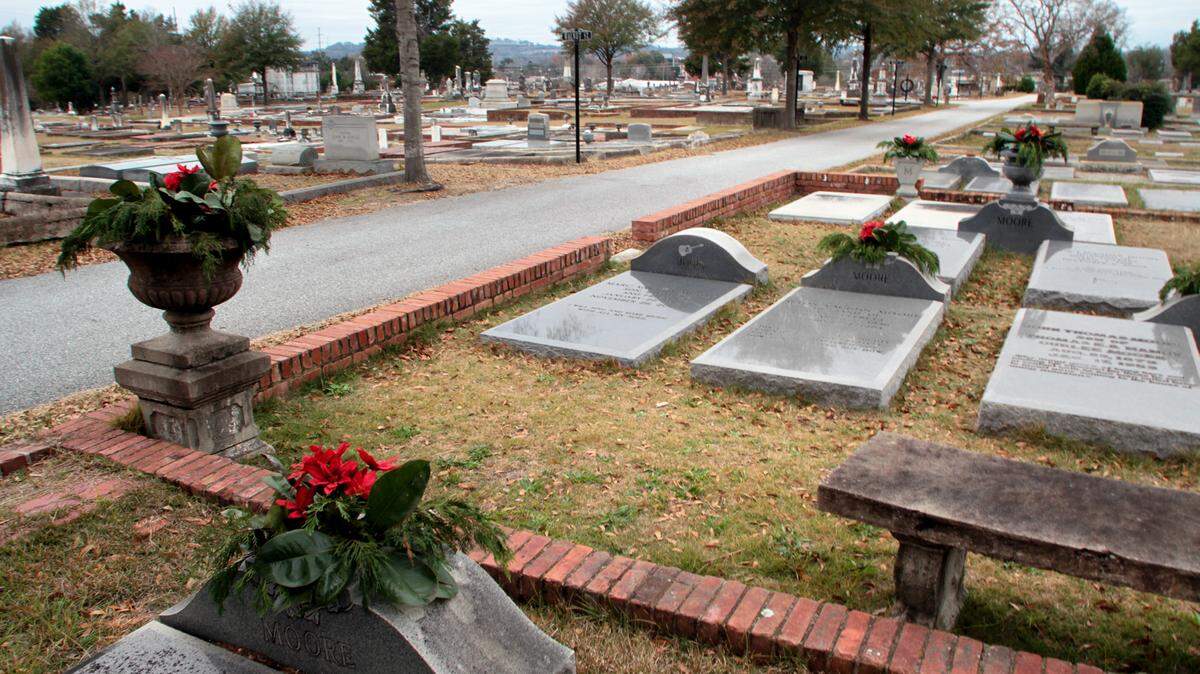
Two whistleblower complaints about operations at Columbus cemeteries resulted in an audit that could mean significant changes.
Elizabeth Barfield, an executive internal auditor with the Columbus Consolidated Government, presented the findings at a recent Columbus Council meeting, calling for better financial oversight and record keeping, among other things.
Barfield said the audit was launched after Public Works Director Pat Biegler reported two whistleblower complaints that she received in June. One complaint raised concerns about income fluctuations in the financials and the other about confusion over burial site locations.
“Earlier this year, a family came out and said, ‘Grandmother has passed. We’ve got a family section here. We want to go out before we schedule the funeral, want to come out and make sure everything looks like we want it to look,’” Barfield said. “... Well, when we went out there, we found that someone else had been buried in her spot.
“... These people got their situation rectified,” she said. “They were satisfied with the service; it was resolved. But with the record keeping and the processes that we currently have in place, there’s no way that we could start being proactive and try to avoid these issues.”
Barfield said the field work for the audit began in July, and it covered all four city cemeteries, consisting of 117 acres. The cemeteries are Riverdale, 54 acres; Porterdale, 21 acres; East Porterdale, 12 acres; and Linwood, 30 acres.
Linwood, the city’s oldest cemetery, was established in 1828.
Auditors looked at budget vs. actual revenues and expenses, the perpetual care fund, internal controls, cemeteries operations, building maintenance and upkeep, said Barfield. She said the city has an outstanding cemetery staff dedicated to making the burial process smooth for customers, but there are changes that have to be made.
Barfield said the average annual budget for the cemetery division over the past 10 years has been about $275,000 — two thirds of the money for employment expenses and the other third for operations and maintenance.
During that period, the division has been about $25,000 over budget in expenses, and $81,293 over budget in revenue.
She said the city performs 200 services at the cemeteries annually. Of that number, 60 percent of the services are for pauper services, 40 percent are paid services. Thirty-five percent of the services are for cremations.
The income fluctuations reported by the first whistleblower were due to changes in management in the coroner’s office and renegotiation with funeral homes over pricing for cremation and other services.
“So in 2014, we saw a huge increase in the expense associated with that and reimbursement for some of those fees,” she said.
Barfield said the city also doesn’t have a mechanism for people to pay by credit cards when making burial arrangements at the cemeteries. So the division sends the families to the coroner’s office, where the money is credited as miscellaneous income instead of burial services, reducing income for the division.
She said the coroner’s office should be contacted so the changes could be made.
“I don’t think it’s an intentional mistake,” she said. “I think it’s just the way they’ve always done it.”
There’s also the issue of pauper cremations, she said, for which the cemetery division bears the expense. Funeral homes process the cremains and sends them to the cemetery so families can come and pick them up or have them stored in one of the city’s columbariums. The funeral homes then invoice the city for payment.
If a family decides to retrieve their loved ones’ remains, they must reimburse the city for the expense. But instead of the money going in the income account for burial services, it has been netted against the expense.
“Pauper burial expense has been understated due to incorrect coding of revenue,” according to information in a PowerPoint presentation given by Barfield. “Income for the cemetery has been understated due to all income not accounted for.
“Under new management at the cemetery, they started trying to correct things,” she said. “They coded to correct revenue accounts and they saw a huge change in revenue numbers.”
To address the financial issues, the audit called for the new cemetery division chief to review the budget performance report monthly and a review of the detailed transactions of cemetery accounts to help identify errors and enable their correction.
“The new division chief, Darrell Meadows, does, in fact, review the operating budget expenditure report monthly and has reported overages in expenditures to the director,” she said. “However, he has not received or reviewed the revenue reports. This recommended change has now been implemented.”
Addressing the second whistleblower complaint regarding the confusion over burial plots, Barfield showed council a large antique book from the Clerk of Council’s Office. The book was so fragile that the assistant clerk had to handle it with gloves.
Barfield said it contains names of all the people who purchased lots at the cemeteries. But it doesn’t account for any secondary sales or transfers.
“There are absolutely no physical records of any of the deeds that have been prepared for the sale of these lots,” she said.
There is no physical record of deeds prepared at the date of sale; no proof of ownership provided by customers prior to burials; no coordination of financial statements with operations.
“When you buy a piece of property normally you get a deed; there are no deeds,” she said. “What we can assume happened is when they purchased a lot they got one copy of a deed and they walked out with it.
“We don’t have a copy in the Clerk of Council’s Office. We don’t have a copy at the cemetery,” she continued. “So in 20 or 30 years when someone comes in and says, ‘I don’t have a deed.’ Well, we really have no way of proving ownership.”
The book in the Clerk of Council’s office records point of sale, she said. The division uses Lotus Notes to record burials when they happen, and the two systems aren’t merged.
Barfield said the cemetery division is already looking into possibly getting new software that would provide a physical record of the cemeteries, as well as which plots are sold and which ones are available. It would also help insure the process is being followed consistently, completely and accurately.
In reviewing the perpetual care funds, the audit found money that could be available for the software, which one company has priced at less than $100,000, Barfield said.
So, now all of a sudden, we could see who bought the plot, and we can see when and who was buried there. ... That might give us an idea that we do have space available to sell.
Barfield
“So, now all of a sudden, we could see who bought the plot, and we can see when and who was buried there,” she explained. “... That might give us an idea that we do have space available to sell.
“Right now we don’t think we do,” she said. “We don’t know, but if we got software at least that would give us some idea so that we could plan and forecast for the future.”
She said the city is running out of burial space, and she recommended a change in a city ordinance that would allow the city to offer cremain storage space for $200 to help fund the building and maintenance of future columbariums.
The city currently has a columbarium at East Porterdale with capacity to hold about 700 cremains. There’s also a new veterans columbarium at Riverdale that can store about 1,400. She said there’s land around the two structures to build more columbarium space.
She also recommended two other ordinance changes for better cash flow and record keeping. City Attorney Clifton Fay said he would work with auditors to develop amendments that could be brought before council.
City Manager Isaiah Hugley assured council that he and his staff takes such audits seriously.
“Every single item is addressed with corrective action,” he said. “And so, certainly, the ordinances that have been talked about, we’ll work with the auditor’s office and city attorney to make sure we bring back what needs to be brought back.”
Alva James-Johnson: 706-571-8521, @amjreporter
City auditors recommend the following changes to city cemetery-related ordinances:
- Sec. 9-4 — Require that secondary sales of lots by original owners to another party be recorded by the Clerk of Council, and the original deed canceled and re-issued to secondary purchaser.
- Sec. 9-13 — Allow the city to offer cremain storage for $200 to help fund the building and maintenance of future columbariums.
- Sec. 9-44 — Remove a provision that allows funeral directors in good business standing with the city to accrue fees to the last day of the month and be payable the tenth day of the following month.
This story was originally published December 17, 2017 at 7:00 PM with the headline "‘No physical record of deeds’: Columbus cemeteries audited after complaints."