
Columbus soldier’s remains ‘unknown’ for 68 years. Now he’s finally coming home.
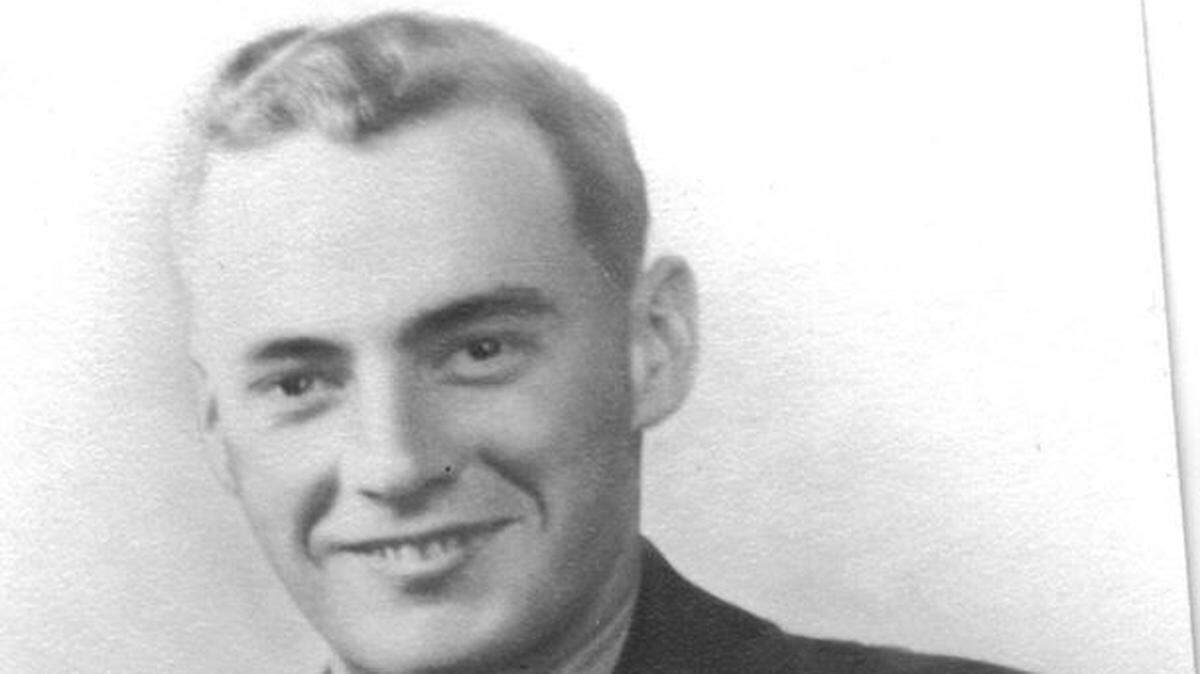
More than 68 years after losing his life within the first month of the Korean War, Columbus-born Sgt. 1st Class James Silas Streetman Jr. soon will be coming home.
The remains of Streetman, who was only 20 years old when he died in July 1950, were finally identified on Aug. 31 by the Defense Department using DNA analysis and other X-rays, materials and information.
“In 1994, we had a memorial service for him at Fort Benning. But this time we’re going to be celebrating his life, the life that he gave for his country,” Streetman’s baby sister and Columbus resident Sharon Streetman Ray said Monday.
Ray, now 71 years old, said the remains of her brother, who attended Baker High School and once delivered newspapers for the Ledger-Enquirer, are now at the National Cemetery of the Pacific in Honolulu, known as the “Punchbowl,” where they have rested for decades. He was simply referred to in the military system as “Unknown X-162.”
Streetman now is to be buried with honors at Fort Benning, where he has a memorial marker and a space reserved for him since the 1994 service to honor the young soldier who already had been declared deceased, but missing in action years ago, Ray said. The military’s official death date is July 22, 1950, less than a month after the U.S. entered the Korean War on June 25 of that year.
“We will be having a briefing (from the military) within the next two weeks. Then they’ll begin the process of sending him back. He’s going to be coming to Columbus and he’s going to be buried at Fort Benning,” said Ray, whose family is looking to hold their loved one’s funeral in November as the autumn leaves are falling.
Ray said the mental journey for the family to this moment — including the initial hopes of her mother, Lillian, that her son somehow might be found alive — has been a roller-coaster of emotions. It was in 2001 that the mother and daughter submitted DNA testing in hopes that it might turn up a match from remains somewhere, anywhere.
“After that, they told us he was not in the Punchbowl cemetery,” Ray said. “We still had hopes all this time that they would find him wherever he was. My mother waited for 55 years, but she died in 2005 and has been with him 13 years.”
At one point, the family even received a letter from Kim Dae-Jung, then-president of the Republic of Korea, with the document accompanying a Korean War Service Medal. The package included a letter from the U.S. Department of the Army.
“My mother always thought that he had been captured and he would come back home alive,” Ray said. “That’s what she hoped for many years. She always scanned all the papers where they put the lists of people who were released” as prisoners of war.
Ray, who was 7 years old when her brother was killed, recalls that he was only 16 when a sister told recruiters that he was old enough to serve his country, just two years into his education at Baker High. After training, he was assigned to Japan for a time, then left the service briefly before re-enlisting and returning to Japan, where fate would put him and others in harm’s way.
“He was there about seven months and they sent some guys from Japan there (to Korea) and they called it a police action. They thought they would just go over there and it wouldn’t be long and they would be back in Japan,” she said. “They were not really prepared for what was happening. They were outnumbered by about 10 to 1, and they didn’t have the armor either that the North Koreans and the Chinese had.”
The Defense POW/MIA Accounting Agency, which makes announcements that remains have been identified, did so for Streetman on Sept. 6. It says the Columbus-born soldier, who was assigned to 1st Battalion, 24th Infantry Division, was among those defending the Kum River Line against the Korean People’s Army near the town of Taejon, South Korea.
“Outmaneuvered and overwhelmed,” the regiment was forced to fight fiercely as it withdrew through enemy lines. Streetman was first reported killed in action on Aug. 14, 1950, but a review of historical records placed his death on July 22, 1950.
His remains were among those who could not be identified by the American Graves Registration Services. They were labeled as non-recoverable, then ultimately transferred to the cemetery in Hawaii where he and others have long been resting as “unknowns.”
Last year, however, Streetman’s remains were among 10 that were disinterred from the Punchbowl cemetery and sent to a laboratory for review by experts from the Defense POW/MIA Accounting Agency and the Armed Forces Medical Examiner System. The results came from an analysis that included mitochondrial DNA, dental, a chest radiograph and an anthropological exam. Circumstantial and material evidence also are used to make a determination on the identity of remains.
“It’s been 18 years and technology has advanced, so they started identifying a few of them out there,” Ray said Monday. “I hoped that he was somewhere and they would discover him. But I didn’t know where.”
Asked to describe the brother she never truly got to know before he died at such a young age himself, Ray said he was “friendly” and “really a sweet guy” who enjoyed playing softball, even pitching his military team to victory. He never owned a car, having returned home from the service once via train and taking a taxi to their residence in Columbus, arriving at night and waking her up to let his kid sister know he was home.
As Streetman’s remains were officially identified in early September, the federal agency in charge of doing so for others said that nearly 7,700 Americans are still unaccounted for from the Korean War.
Ray and two of her siblings are expected to receive a resolution from Columbus Council Tuesday expressing appreciation from the city for his service to the residents of his hometown and to the nation.
This story was originally published October 1, 2018 at 6:06 PM.