
Redemption and rebirth: A couple escaping heroin addiction builds a new life in Columbus
If you ever woke up sick from a stomach flu, weak, vomiting, with body aches, stomach cramps and muscle spasms, then you’ve had just a taste of what it’s like to be hooked on heroin.
You wake up sick from withdrawal, and stay so until you get another dose. And if you get one dose but don’t get another in a few hours, you get sick again.
When you’re in deep, you have to shoot up several times a day.
People who’ve not been through this think you do heroin for the momentary euphoria, but that high devolves into the relief of just not being sick for a few hours.
“Even when we were doing it, we didn’t want to be,” says Megan Casciaro, recalling the addiction she and husband, David, shared for five years. “We would have given anything to not be addicts. We didn’t enjoy any day of that. There was nothing we liked about it. But after a certain point, you just don’t have a choice. If you want to function in any way, you don’t have a choice.”
Megan and David know, because they’ve been there, and back.
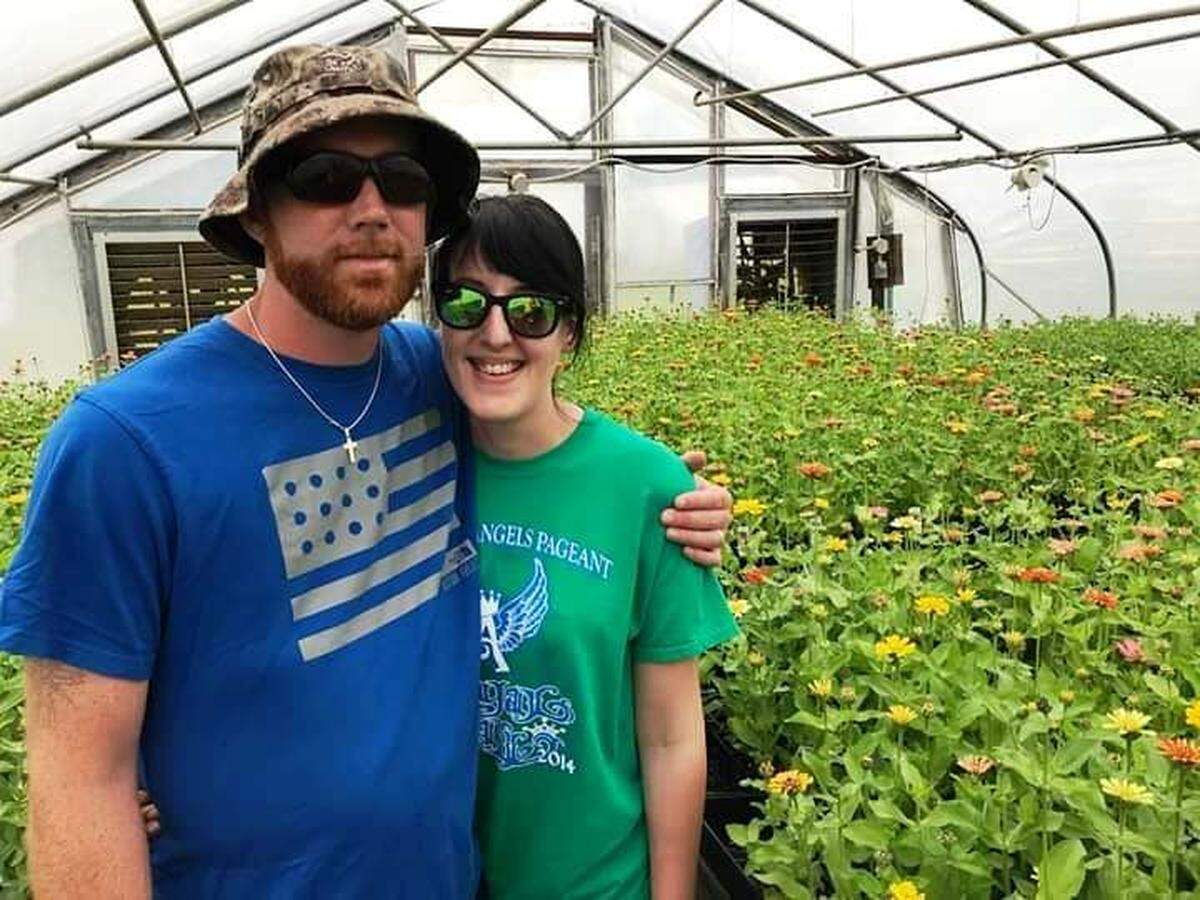
David, 32, is from Harris County. Megan, 30, is from upstate New York. They met in rehab, in Atlanta, in 2012, and fell in love. Their love lasted, but their rehab did not.
As soon as they got out, in January 2013, they got wasted, drinking at a hotel bar before catching a shuttle to the Atlanta airport. They flew to New York, where Megan’s mother was having surgery, and where an old friend hooked Megan up with some heroin.
When they returned to Georgia, a week later, they moved into an apartment in Marietta. Megan, a registered nurse, went to work at a hospital, and David, a welder and carpenter, got a job with a gutter installation company.
Their mornings began not with coffee and eggs, but with a drive to a place in Atlanta called “The Bluff,” near the Georgia Dome, to get heroin.
If they got enough to get through the day, they’d go home, shoot up, shower, eat, go to work, shoot up again at lunch, go home, shoot up again, and then maybe once more, before they went to bed, hoping to sleep through the night before they woke up the next morning, sick, and started all over again.
“We’re probably sticking a needle in our arm like six or seven times a day,” David said. The high lasted 30 to 45 minutes, and they could go up to five hours before they needed another hit.
Every day was the same, starting with throwing up in the morning. “It’s like the worst flu you’ve ever had,” Megan says of withdrawal.
“Then we’d have to get up and leave, and we’d end up going to The Bluff, when we lived in Atlanta, like every day, which is not a good part of town, but they knew us there, so we didn’t ever have any trouble. It’s not a place you want to be known.”
It seems like a routine, but it was not, David says, because they were always on edge:
“You’ve got to try to divert any crisis, because if you do go without, things could get bad very quickly. It becomes more than a routine. It’s what you’ve got to do to maintain.”
Adds Megan: “If you wait too long, then physically driving there is going to be like a huge struggle, if you have to throw up every 10 minutes driving through Atlanta traffic. So you’ve got to plan ahead to make it there before that happens.”
The odds against them eventually played out, as they started getting arrested: Not just for drug possession, but offenses such as driving without a license, David says.
Eventually David got sent off to jail, where Megan mailed him heroin, by hiding it in greeting cards.
The ruse was never discovered. Megan always put a photo or written note in the card, so when officers opened it, they would be distracted by what fell out, and not look further.
Megan had an ulterior motive: “If I kept him using in jail, then he couldn’t be mad at me being on the outside, and not getting clean.”
This codependency always impeded their efforts to dry out: If one got sick, the other would get heroin to ease the pain. They could not bear to let each other suffer.
When David got busted, their car was impounded. Megan couldn’t drive to work, so she lost her nursing job, and wound up living with David’s mother in Harris County. When David got out of jail, he moved there.
Still they needed their fix, and when they got their car back, they drove to Atlanta to get it. If they had no car, they took a shuttle from Columbus to the Atlanta airport, and caught a bus.
The daily grind resumed:
“You wake up sick, sweating, throwing up,” David says. “I would have to drive to Atlanta to get what we were using, heroin, and travel an hour and half, get it, spend a few hundred dollars, just to be able to eat and sleep.”
Adds Megan: “Sometimes he’d have to go twice a day, because no matter how much money we spent or how much we got, we’d do it, and still six hours later, we’d start getting sick again.”
Their lives dragged on like this until March 20, 2017, when David overdosed in the bathroom of his mother’s home, with the door locked.
And then everything changed.
Opioids
According to the U.S. Department of Health and Human Services, 2.1 million Americans in 2016 and 2017 had an opioid use disorder; about 15,500 overdosed on heroin, 17,000 on prescription opioids, and almost 20,000 on synthetics.
Around 130 die from an overdose each day.
Growing up, David attended Harris County High School and Pacelli, but didn’t graduate. He got a welding certificate from Columbus Tech, and and went to work doing odd jobs, whatever came along.
He injured his back playing high school sports, and around the time he turned 23, the pain worsened to a constant ache. Doctors prescribed Oxycontin and Xanax. David got to where he just needed more and more. “It was just never enough,” he said. Soon he started buying pills from others.
Born Megan Patrick, Megan grew up in Hudson, N.Y., south of Albany. She graduated from Ichabod Crane High School, took courses to be a licensed practical nurse and started at a nursing home. She went on to college to become a registered nurse, and got a job at a hospital.
She used other drugs before opioids, but like David, she also started with pills.
“I started using prescription pain meds like Oxycontin at 14, and by 16 I was going heroin,” she said, of the painkillers adding, “It seemed like it was OK, because I didn’t think smoking weed was that bad, and pain medicine came from a doctor. How bad can it be? Until you run out, and then you find out how bad it can be. It’s the same exact feeling as running out of heroin.”
Eventually her addiction got to be more than she could afford.
“Even as much money as I was making as an RN, living at home with my parents with no bills, I was still not making enough money to support my habit. I was throwing up at work because I was running out. I just was not able to maintain anymore.”
She started shopping for rehab, and found it too expensive in New York, up to $20,000 for a month. Finally she found a program in Atlanta that her family could afford, and off she went.
David already was there. He started in January 2012. She came the following October.
“We connected right away, after the withdrawals wore off,” Megan said. “It took me a while to get acclimated.”
They stayed in some apartments the rehab center used for patient housing, and spent each day, 9 a.m. to 6 p.m., learning to stay clean.
So that was where their paths crossed, and they carried on together, enabling each other’s habit, as David went from taking pills to shooting up, until the day he overdosed, in Harris County.
David thinks he got heroin laced with the synthetic opioid Fentanyl, and that’s what left him dying in his mother’s bathroom, with the door locked.
His mother could hear him, but he wouldn’t respond when she called to him. So she got Megan.
Megan popped the door lock. “He was in there purple and not breathing,” she recalls. She knew some of the overdose drug Narcan or Naloxone is in the Suboxone doctors gave them for withdrawal, so she slipped some under his tongue and gave him mouth to mouth, breathing for him until an ambulance arrived. He was released from the hospital that night.
The next day, they were sitting on his mother’s front porch when four or five sheriff’s cars drove up. The officers searched the house, found their stash, and took them to jail.
Turning point
Meagan had to do two months. Having violated his probation, David got more time.
The next rehab they got into was free: It was the Valley Rescue Mission’s addiction recovery program.
“It’s very faith-based, a lot of Bible study,” says Mitzi Oxford, the mission’s development director. “A lot of the classes that are taught, they could be by preachers that come in and teach, in both the men’s and the women’s recovery program, and it’s basically to show you that you can’t do this alone, and I think that David and Megan both learned that lesson really well.”
They each did 10 months, in the sex-segregated programs. Megan started May 16, 2017. David began the following July 21.
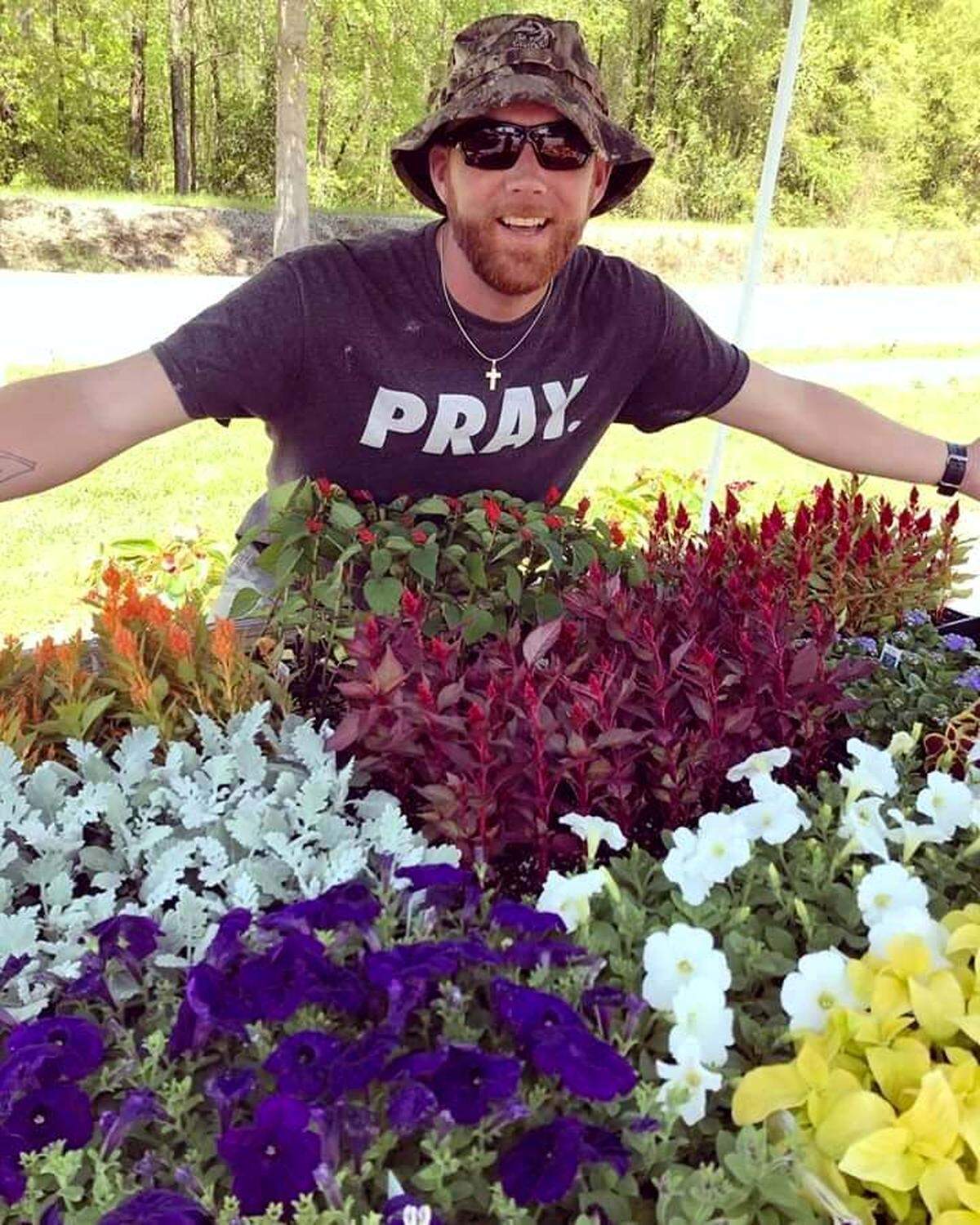
The women’s program is in Columbus, the men’s in Harris County. Part of David’s rehabilitation was working in the Hamilton center’s greenhouse. He liked the quiet introspection that came with the job.
“I was planting a lot of flowers, which was really, really cool. ... I thoroughly loved the greenhouse there, just being able to be alone with God, and I think the representation of planting and growing was a lot like what needed to happen with my life and changes that needed to be made, and just starting from the bottom.”
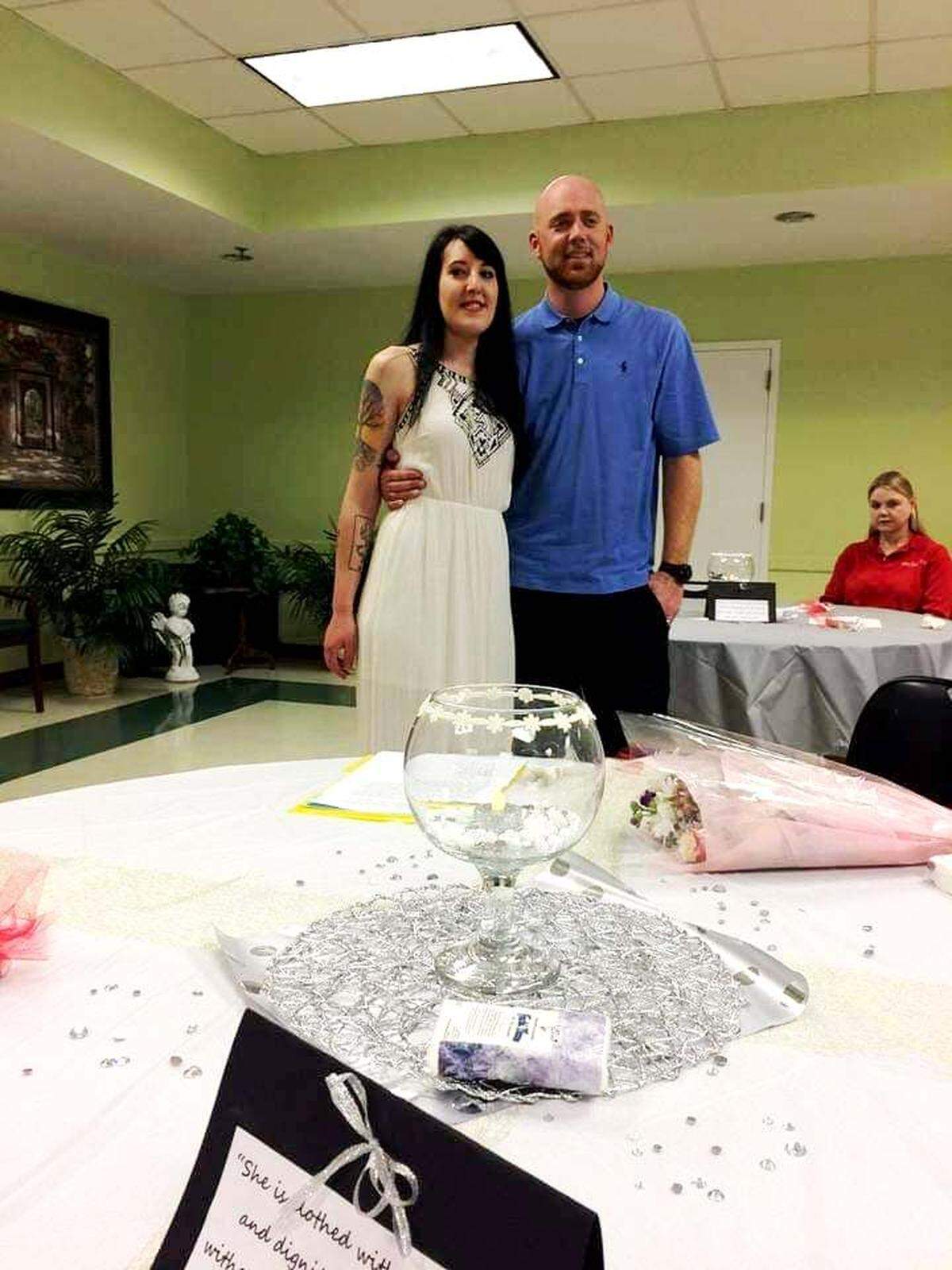
Megan graduated first, and they got a weekend’s furlough together, before David went back to Hamilton, and Megan stayed on at the women’s shelter here.
In her volunteer work, she started helping the staff compile photos of their clients and activities. When Mitzi learned one of her employees, an Army spouse, would soon be leaving town with her husband, Megan seemed like a good prospect.
Mitzi suggested the departing employee work with Megan, to see how it went. Ever the good student, Megan picked up on the duties immediately, assembling material for newsletters and fundraising for the mission’s donor base.
“In two weeks, she absorbed what it was going to take to do that,” Mitzi says. “So she is a quick study, very smart, very smart.”
Megan took the job this past March.
Then the Casciaros’ lives took another turn: On March 21, exactly a year after their last arrest, Megan learned she was four weeks’ pregnant, dating back to that weekend furlough they’d spent together.
“We were very excited,” she recalls. With all she had put her body through, she wasn’t sure pregnancy would be possible: “I honestly didn’t think it could happen.”
They felt blessed, and a little scared.
At the time, Megan still was staying at the women’s shelter, and David was still in rehab in Hamilton. They had no home together, no place to raise a child. “We didn’t have anything,” Megan says. “We didn’t know where we were going to live.”
Megan was fortunate to have accumulated $2,000 in paid time off from a previous job, and one day the check came in the mail, an unexpected windfall. She bought a car so she could drive to doctor’s appointments.
Friends helped them find an apartment in midtown, a tall hurdle for former addicts with felony arrests and evictions on their records. “We had a lot going against us, but we were blessed that somebody gave us another chance,” Megan says.
They were blessed also to have friends who were eager to help them start their new lives.
“Just people rallied around us,” Megan said. “We didn’t buy anything. Everything was from friends and family that we thought had all actually given up on us: ‘Oh I have a couch that you can have.’ ‘Here’s a mattress.’ ‘Here’s plates and dishes.’ It just all came together.”
On May 17, David graduated from the men’s recovery program. A friend who had been through it before hooked him up, with a construction job in Auburn.
But the couple’s path was not entirely clear, yet: With her pregnancy at 37 weeks, Megan had a sudden spike in her blood pressure, and spent a night in the hospital. Two days later, she had another, and doctors decided it was time to deliver.
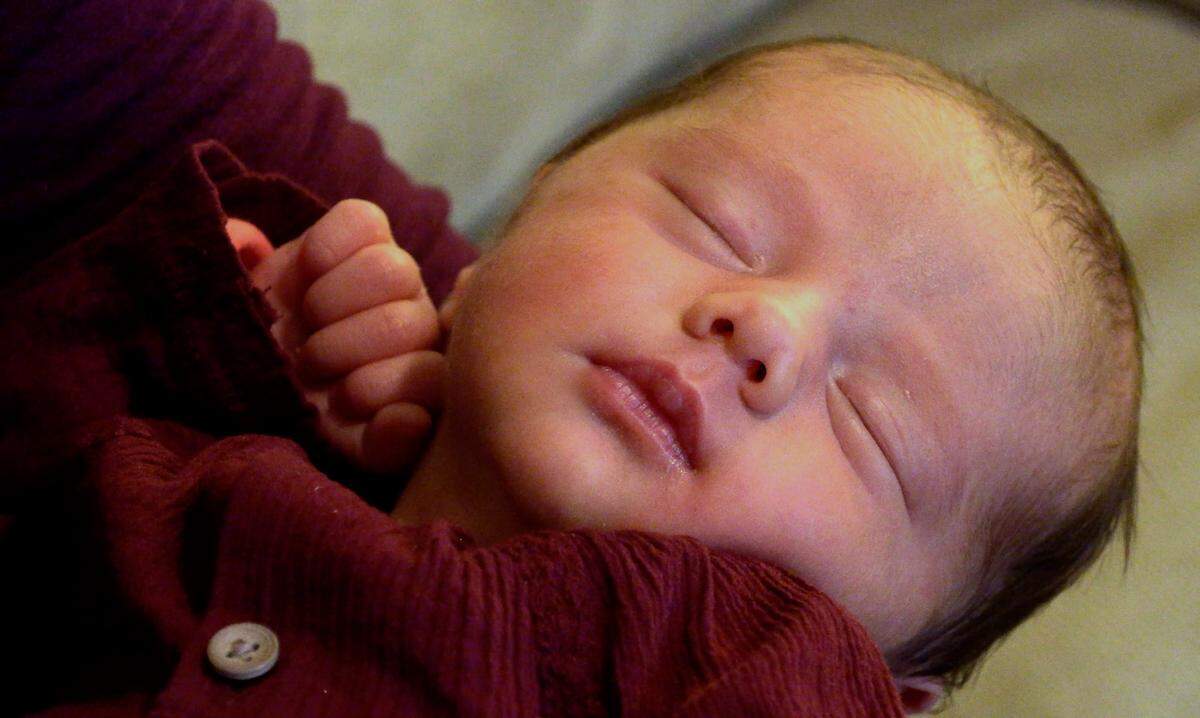
The delivery went well, but inducing labor took time. She spent 36 hours in the hospital, but finally, on Nov. 3, she had a baby girl, 6 pounds, 5 ounces, whom they named Elizabeth – “Ellie” for short – the name of John the Baptist’s mother.
It means “oath from God,” Megan said: “She’s kind of like our promise from God, that after you suffer a while I’m going to restore you, and it was David’s grandmother’s name.”
The girl’s middle name is “Ryann.”
“We really couldn’t decide on one,” Megan says of that.
“It sounds cool,” David adds.
The week before Thanksgiving, they sat together, with Ellie cradled in her mother’s arms, on a coach in their apartment overlooking Dinglewood Park, and talked about how different their lives are now.
“It’s like night and day,” Megan says. “I’d never thought that this was possible. For how long we tried to get clean, and how long we couldn’t, and how long I had been an addict, I kind of just came to the conclusion that this is how I’m going to be the rest of my life. It’s probably not going to be a long life, but this is just how I’m going to be. And I think it was because I was always trying to do it myself. I didn’t realize the strength that I can get through Jesus.”
Says David: “I guess being in the program, I learned a lot about my identity. I think I always struggled with that, whether it was trying to impress people, or I wasn’t sure who I was or what I was meant to be. Building that relationship with Christ, and just learning that it doesn’t matter what people think about me, what’s important is what God knows about me. That was the beginning for me to start making a big change in my life.”
They have no cravings for the drug that once took everything they had, except for each other.
They never wanted to be addicts to begin with, but no one does.
“I always tell people, I don’t know anybody who just woke up and was like, ‘I can’t wait to be a heroin addict,’” David says. “It sneaks up on you. By the time it does happen, you’re in it too deep.”