
Beaver Run Road, tiny homes and idle equipment among top Inquirers of 2018
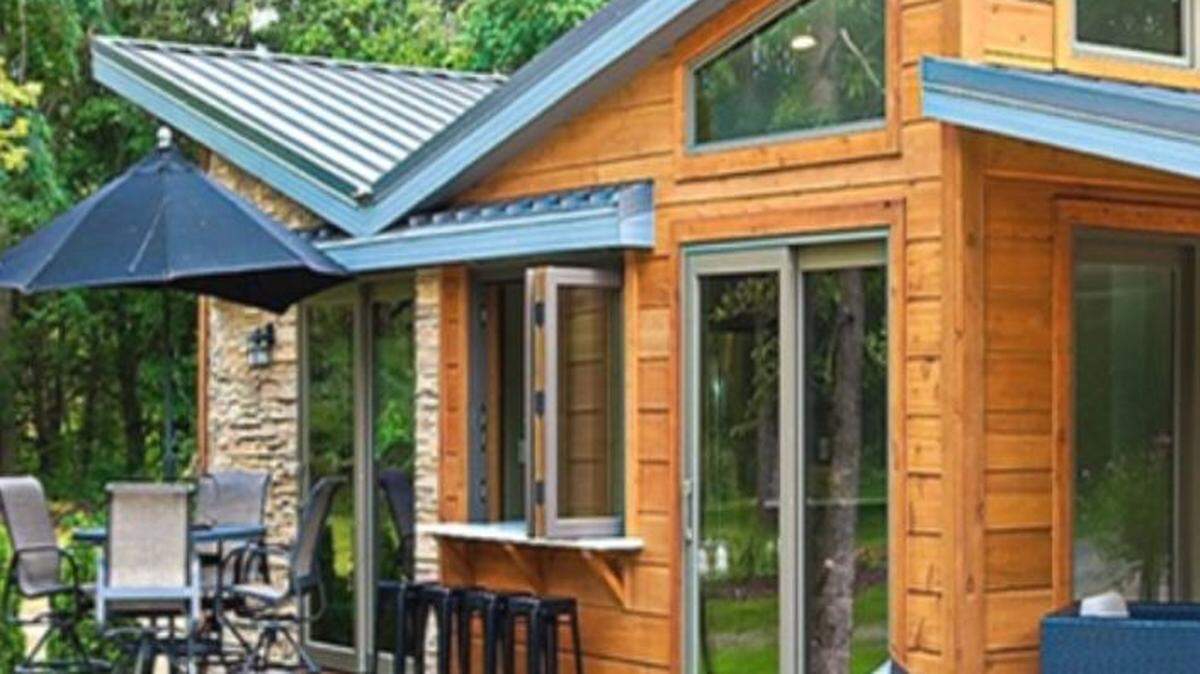
Big changes along Beaver Run Road, a tiny homes proposal at Columbus Council and idled construction equipment along the south end of Farr Road are among the top five Inquirer stories of 2018.
1. Beaver Run Road
A 1.5-mile stretch along Beaver Run Road, U.S. 80 and the route also known as Ga. 22 will look like no other corridor in Muscogee County when the Georgia Department of Transportation completes new designs to make the road safer. Just days after the DOT announced plans in October to construct Reduced Conflict U-Turn, or RCUT, at the intersections of Mallard Drive/Wynfield Way and Beaver Trail/Woodbriar Lane, engineers analyzed the Psalmond Road intersection and said a third RCUT is planned along the busy corridor. Officials faced growing concerns from Midland residents about RCUTs, forcing traffic to Psalmond Road to make a U-Turn to travel westbound.
The DOT responded by stating plans are in development at the Psalmond Road intersection and engineers expect construction to start in the first quarter of 2019. Work is already under way on two designs at Mallard Drive/Wynfield Way and Beaver Trail/Woodbriar Lane. RCUTS are used to reduce angle crashes at intersections along divided highways, the GDOT said. Using a raised concrete island, the design keeps motorists from making “dangerous” left turns or attempting to drive across the four lanes in any manner.
2. Tiny homes proposal
A proposal that could pave the way for 400-square-foot tiny homes in the Columbus Historic District and other neighborhoods was stalled after some big questions from city council members.
John Hudgison, director of the Inspections and Code Enforcement, was directed by City Manager Isaiah Hugley to get more answers to questions after an Oct. 30 presentation instead of returning to the 10-member council with a proposed ordinance. He said an individual has expressed interest in building tiny homes on a lot along with people looking to help the homeless and area veterans.
Calling for a delay on the proposal until early 2019, Hugley said he supports the idea but would like to get questions answered when it returns to city council. “I think it’s going to be a situation perhaps people are not paying attention right now and then it’s going to be not in my back yard, not next door to me and my $300,000 house is what I see,” he said.
3. Wild Hogs in Columbia Heights
The Columbus Consolidated Government went scrambling for a trapper in early March after wild hogs invaded the Columbia Heights neighborhood. They were preventing health care workers from entering a home in the 400 block of Bowen Boulevard where an elderly woman uses a wheel .
“This is getting to be a very scary problem,” a disabled woman said. “They are scared to come into my house and take care of me.”
Drale Short, the city’s Special Enforcement manager, said Jager Pro Hog Control Systems in Fortson was able to catch 18 wild hogs from three locations, including Pierce Road, Macon Road and Vista Drive during a May roundup. The trapper killed three boars, six sows and nine small piglets, but Short said there is no way of knowing whether they were the same ones doing damage on Bowen Boulevard.
Rod Pinkston, founder and CEO of Jager Pro, said wild hogs continue to leave the Fort Benning military reservation and go into nearby neighborhoods. It’s easier to kill the pigs and not let them come off the installation, he said.
To roundup the hogs, trappers used a 35-foot diameter Manually Initiated Nuisance Elimination, or MINE. Trapping System with a camera and automatic feeder valued at $5,000, Pinkston said. Hogs enter the system and the doors capture them. Property owners who may have wild hogs can expect to pay $75 to $100 per pig for a trappers to capture a whole sounder. That would put the cost of the latest trapping at $1,350 to $1,800.
4. Diamond Interchange at Buena Vista Road and I-185
In an effort to reduce traffic on Buena Vista Road bridge at Interstate 185, the city is moving forward with what is called a Diverging Diamond Interchange or DDI, the first in Columbus. The $47 million project is considered a popular choice for high-volume interchanges like the one on Buena Vista Road. It can move traffic in more than one direction at once while reducing the chances for crashes.
In the current construction of the interchange at I-185, studies show there are 26 potential conflict points for crashes. With the DDI, those points are reduced by almost 50 percent. A DOT map shows there are 19,000 vehicles traveling west from the bridge and 30,000 going east from the bridge daily.
“The idea is to alleviate some but not all traffic congestion on the bridge,” said Rick Jones, director of the city’s Planning Department. “Folks try to get on it and get off in the afternoon. Hopefully this is going to alleviate some of those issues up there.”
5. Idled Construction Equipment on Farr Road
After questions were raised about abandoned construction equipment on Farr Road, the city of Columbus is still working with the owner on a solution.
John Hudgison, director of the city’s Inspections & Code Enforcement Department, said the equipment on the south end of Farr Road is operational while inspectors are still working with materials stored on the north end of the property.
A city ordinance defines solid waste as items or materials that are no longer useable. Owner Raymond Cline proved to an inspector that the equipment is useable although pieces are rusted, the color is faded and weeds are growing around them.
Hudgison confirmed in July the vehicles are operational after looking over a report. “All the pieces cleared,” he said. “The owner got all of them running.”
City inspectors continue to check the property.
If you have seen something that needs attention, give me a call at 706-571-8576.